
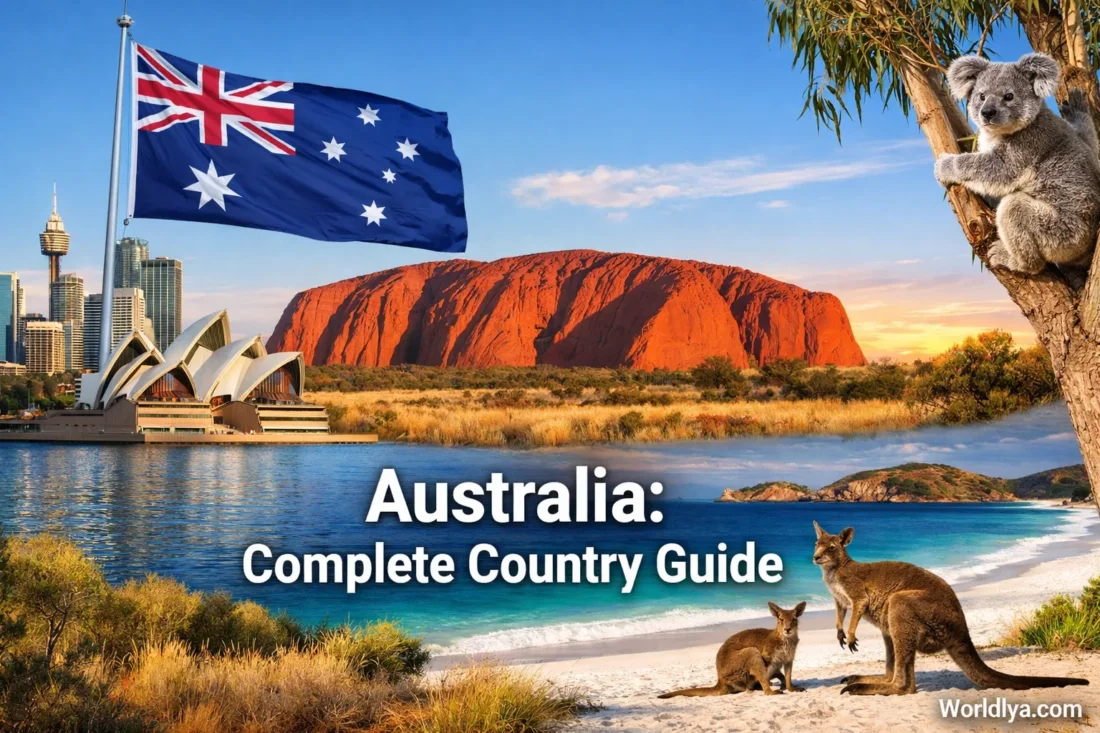
Australia rarely fits into a neat one-line summary. It is a country where reef, rainforest, red desert, surf beaches, wine regions, design-led cities and cool southern islands all sit inside one national map. That is exactly why planning an Australia trip, move or study journey feels exciting and a little messy at first. The smartest way to understand it is not as one single destination, but as a set of very different regions, seasons and lifestyles that happen to share the same passport stamp.
Bu kategoride henüz yayınlanmış yazı bulunmuyor.
Fast Snapshot of Australia
- Population: 27,724,744 people
- Land Area: 7,688,287 km²
- Political Map: 6 states and 2 main territories
- Time Zones: 3 standard time zones
- Population Pattern: nearly 80% of residents live in eastern Australia
- Urban Pattern: about two-thirds live in Greater Capital Cities
- World Heritage: 21 UNESCO-listed properties
- Everyday Language: English is the main language you will hear day to day
Those numbers help, but they do not tell the full story. Australia feels big because it is big, yes, but also because its regions behave like different countries when it comes to weather, travel style, distances, food scenes and daily pace.
Treat Australia as a collection of regions, not one single climate or one single trip style.
Why Australia Feels So Different From One Place to the Next
A lot of first-time visitors make the same mistake: they picture Australia as beaches, sunshine and maybe a kangaroo in the distance. Then they start planning and realize the map is doing something much bigger. The tropical north runs on wet and dry seasons. The southeast has proper cool winters. The interior can feel dry, remote and cinematic in a very real way. Western Australia has its own rhythm, and Tasmania brings a cooler, greener mood that surprises people who expected only heat.
That is why a Sydney city break, a Cairns reef trip, a Red Centre road journey and a Hobart food-and-nature escape feel like totally different holidays. Same country. Very different energy.
Understanding Australia by Region
Tropical North and Reef Coast
Think Cairns, the Great Barrier Reef, the Daintree, Darwin and the Top End. This part of Australia is warm, lush and very seasonal. The north follows a tropical pattern, so dry-season timing matters much more here than the simple idea of “summer” or “winter.” If you want reef time, rainforest walks and that warm-air, open-sky feeling, this region often becomes the emotional high point of a first trip.
East Coast and Beach Cities
This is the classic first-time corridor: Sydney, Brisbane, the Gold Coast, the Sunshine Coast, Byron Bay and plenty of stops in between. It is strong on beaches, coastal drives, city breaks, surf culture and easy-moving travel plans. If you want Australia to feel familiar on day one, the east coast is often the easiest starting point.
Southeast and the Cultural City Belt
Melbourne, regional Victoria, parts of New South Wales and the alpine fringe give you a different side of the country. This is where you notice café culture, sports, arts spaces, cool-season travel, wine country and a stronger “live here” feeling. If Sydney often wins on postcard views, Melbourne usually wins on neighborhood life and city texture. People argue about that. Constantly.
The Red Centre and the Outback
This is where Australia feels ancient, open and stripped back to the essentials. Uluru, Kata Tjuta, desert skies, long drives and enormous distance are the point. The Outback is not a side note. It changes how many people understand the country. If the coast shows you leisure, the interior shows you scale.
West Coast and the Indian Ocean Side
Perth, Margaret River, Ningaloo and the wider west offer more room, fewer crowds in many places and some of the country’s prettiest ocean-and-desert contrasts. It feels physically separate for a reason: Australia uses three standard time zones, and Western Australia has its own clock and its own vibe.
Tasmania and the Cooler South
Tasmania is where many travelers find a quieter version of Australia: cool air, local produce, walking tracks, historic towns, wildlife and coastal drama without the tropical storyline. It is excellent for people who want nature and food together, or for repeat visitors who want Australia to feel gentler and more intimate.
| Region | Best For | Feels Like | Trip Style |
|---|---|---|---|
| Tropical North | Reef, rainforest, warm-weather escapes | Humid, lush, vivid | Nature-heavy, resort, diving |
| East Coast | First trips, beaches, city hopping | Easygoing, social, scenic | Multi-stop travel, road trips |
| Southeast | Culture, food, sports, neighborhoods | Urban, stylish, seasonal | City break, slow travel |
| Outback | Big landscapes, iconic rock country | Dry, open, unforgettable | Bucket-list interior trip |
| West Coast | Space, ocean, road journeys | Relaxed, sunlit, expansive | Self-drive, coast-and-nature |
| Tasmania | Cool-weather nature and food | Green, crisp, local | Walking, eating, unwinding |
Best Time to Visit and What Each Season Actually Means
Australia’s seasons run opposite to the Northern Hemisphere. Summer is December to February, autumn is March to May, winter is June to August, and spring is September to November. The catch? Those labels only help if you also know where in Australia you are going.
For a trip that covers several regions, March to May and September to November are often the easiest all-round windows. They work well because city temperatures are usually comfortable, the tropical north is more appealing than in peak wet-season stretches, and you get better flexibility than you often do in peak holiday periods.
| Season | Where It Works Best | Good If You Want | What to Keep in Mind |
|---|---|---|---|
| Summer Dec–Feb | Sydney, Melbourne, Tasmania, southern beaches | Beach time, city energy, school-holiday buzz | Tropical north is in wet season; some places get hot fast |
| Autumn Mar–May | Most of the country | Balanced weather, easier planning, mixed itineraries | One of the easiest windows for first-time visitors |
| Winter Jun–Aug | Tropical north, Outback, reef coast, ski areas in the south | Dry-season north, desert trips, cooler city breaks | Southern cities are cooler; alpine areas can be snowy |
| Spring Sep–Nov | Most regions, especially mixed city-and-nature trips | Shoulder-season value, flowers, comfortable temperatures | Popular with travelers who want broad flexibility |
Simple planning rule: If your dream trip mixes cities, coast and one major nature stop, choose autumn or spring. If your dream trip is mostly the tropical north or the Red Centre, winter often feels easier.
Major Cities Compared Without the Noise
| City | Feel | Best If You Want | Short Read |
|---|---|---|---|
| Sydney | Iconic, outdoorsy, polished | Landmarks, harbor views, beach-city balance | Often the easiest first stop |
| Melbourne | Creative, café-led, neighborhood-focused | Food, arts, sport, laneway culture | Strong choice for repeat visitors too |
| Brisbane | Warm, open, easygoing | Subtropical pace, river city life, easy access to Queensland | Feels relaxed fast |
| Perth | Sunny, spacious, coastal | Indian Ocean sunsets, western road trips | Excellent if you like breathing room |
| Adelaide | Calm, food-friendly, elegant | Festivals, wine regions, a slower city rhythm | Quietly rewarding |
| Hobart | Compact, cool-climate, character-rich | Tasmania entry point, local produce, short scenic escapes | Small city, big personality |
| Canberra | Ordered, thoughtful, green | Museums, galleries, planned-city ease | Often better than people expect |
| Darwin | Tropical, outdoorsy, distinct | Top End access, dry-season adventure | Best used with region-focused planning |
If you only have one city stop, Sydney is the broadest first-timer pick. If you care more about food, neighborhoods and city culture, Melbourne often feels like the better match. If you want warmth and an easier pace, Brisbane makes a lot of sense. If you want an Australia plan that sidesteps the most obvious path, Perth, Adelaide or Hobart can be the right move.
What Australia Is Best Known For
- World-famous natural icons such as the Great Barrier Reef, Uluru, the Blue Mountains, K’gari and Kakadu
- A coastline-first way of life, with a large share of Australians living near the coast
- Outdoor culture that blends beaches, walking tracks, sport, barbecues and public open space
- City life that still feels close to nature, especially in Sydney, Perth, Brisbane and Hobart
- Aboriginal and Torres Strait Islander cultures, the First Peoples of Australia, with living cultural traditions connected to Country for more than 60,000 years
- A multicultural food scene shaped by migration, local produce, seafood, Asian influences, Mediterranean influences and a serious coffee habit
A useful surprise for many visitors is that Australia is not “just nature” and not “just cities.” It is the overlap that makes it memorable. You can do a museum morning, a beach afternoon and a really good dinner without turning the day into a logistical project. That matters.
Travel Basics That Make a Real Difference
| Topic | What to Know |
|---|---|
| Currency | Australia uses the AUD. Cards are widely used, though a little cash still helps in some situations. |
| Driving | Australians drive on the left. This matters more than you think after a long flight. |
| Time Zones | Australia has three standard time zones, and daylight saving is not observed everywhere. |
| Electricity | Australia uses the Type I plug, with 220–240V, AC 50Hz. |
| Getting Around | Domestic flights make sense for long distances. Cars work well for regional travel. Major cities have solid public transport. |
| Emergency Number | The emergency number is 000. |
| Public Holidays | National public holidays exist, but states and territories also add their own dates, which can affect opening times and pricing. |
Small thing, big payoff: check your route on a map before you get excited about “just adding one more stop.” Distances in Australia look innocent on screen. Then they turn into full travel days.
Is Australia Expensive? The Honest Budget Picture
Australia can feel expensive, especially in the biggest cities and in peak travel periods. But the cost story is not one flat national rule. Your budget changes a lot based on city choice, season, transport style and whether you are aiming for resort travel, road travel or apartment-based slow travel.
- Sydney and Melbourne usually feel pricier first.
- Adelaide, Hobart and some regional bases can feel easier on the budget, especially for accommodation.
- Public transport is often a better-value move than taxis or rideshare in major cities.
- Flights inside Australia can be worth it because time really is money on a map this size.
One useful national data point: in the latest ABS Household Expenditure Survey summary, households in greater capital city areas spent an average of AUD 1,537 per week, compared with AUD 1,216 in non-capital city areas. That gap helps explain why “Australia is expensive” and “Australia was manageable” can both be true, depending on where and how someone traveled or lived.
Food, Coffee and Everyday Culture
Australia’s food reputation is broader than visitors often expect. Yes, you will see meat pies, barbecue culture and beach-town fish-and-chips. You will also run straight into excellent brunch menus, strong specialty coffee, seafood, Asian-Australian dining, Greek and Italian influences, Middle Eastern flavors, regional wine and produce-led cooking that changes from state to state.
Culture-wise, the easy shorthand is this: people are usually direct, friendly and fairly informal in everyday interactions. Outdoor time matters. Coffee matters. Good produce matters. Weekends matter. And in many places, especially coastal ones, life can feel less performative and more lived-in than visitors expect from a major travel country.
- Coffee culture is serious. Ordering a flat white is a very normal move.
- Multicultural eating is part of daily life. It is not a side scene.
- Regional produce shapes local identity. Wine regions, seafood areas and market culture are worth making time for.
- Respect for Country matters. Many visitors now seek Aboriginal-guided experiences to understand place more deeply, not just visually.
Studying, Working and Living in Australia
This is where many travel-focused country pages stop too early. Australia is not only a holiday destination. For many people it is also a study base, a working holiday choice or a longer-term relocation idea. If that is your angle, daily systems matter as much as beaches do.
Education
Australia remains a major destination for international students because it offers universities, vocational education, English-language pathways and student cities with very different personalities. If you are comparing places, do not look only at rankings. Compare city cost, housing pressure, transport and the day-to-day feel of the place. The official CRICOS register is the practical checkpoint for overseas students because it lists approved providers and courses.
Work
For adult employees not covered by an award or enterprise agreement, the National Minimum Wage is AUD 24.95 per hour or AUD 948 per week from 1 July 2025. In practice, many workers fall under industry awards, so actual minimum pay rules depend on the job. That is why “the wage” is only step one; the award matters too.
Healthcare
Australia’s healthcare system mixes public and private services. Medicare gives Australian citizens, permanent residents and other eligible people access to a wide range of hospital and health services at no cost or lower cost. Public hospital care is free for citizens and permanent residents. Visitors should always check visa conditions, insurance and any reciprocal healthcare arrangements before arrival.
Visas and Entry Planning
Visa rules depend on nationality, purpose of visit and length of stay. Some visitor visa options allow stays of up to 12 months, but the right visa depends on your exact plan. Use the official Visa Finder rather than relying on second-hand summaries. It saves time and avoids very fixable mistakes.
Three Easy Trip Shapes That Work Well
- 7 days: one major city plus one nearby nature or beach area. Example shape: Sydney + Blue Mountains or Melbourne + Great Ocean Road.
- 10 days: one city, one coast or reef stop, one regional contrast. Example shape: Melbourne + Cairns + a short tropical add-on.
- 14 days or more: city + coast + interior, or east coast + Tasmania, or west coast with a self-drive section. This is where Australia starts to feel less rushed and more coherent.
If you are unsure, build your plan around one city anchor, one signature landscape and one slower stretch. That usually gives better memories than trying to tick off too many pins on a map.
Common Questions People Ask Before Choosing Australia
Is Australia a Good Place for a First Long-Haul Trip?
Yes, especially if you like a mix of comfort, scenery and clear infrastructure. The only real planning trick is respecting the size of the country and not packing too many regions into one short trip.
Which Part of Australia Should You Visit First?
For many people, the easiest first answer is Sydney plus a nearby nature extension, or Queensland for beach-and-reef travel. If you prefer city culture over icons, Melbourne can be the better first base.
How Many Days Do You Need in Australia?
A week is enough for one city-and-region pairing. Ten days gives you more shape. Two weeks is where the trip starts to breathe. Longer is even better if you want Australia to feel less like a fast sample and more like a lived place.
Can You Visit Australia Year-Round?
Yes. The better question is not “Can I go?” but “Which region matches this month?” Australia is one of those places where season choice should be made after you choose the region, not before.
Is Australia Good for Students and Longer Stays?
Yes, but the city choice matters almost as much as the course or job. Compare living costs, transport, housing and lifestyle, not just the headline reputation of the place.
What Australia Is Best For, Really
Australia works best for people who want variety without chaos. It suits travelers who like cities but do not want to lose contact with nature. It suits students who want internationally recognized education but still care about lifestyle. It suits long-stay planners who want English-speaking daily life, strong urban systems and the option to swap one regional mood for another without leaving the country.
And maybe that is the cleanest summary of all: Australia gives you range. Not fake range. Real range. Warm north, cool south, city streets, reef water, red earth, island air, coffee mornings, long drives and world-class nature that still leaves room for ordinary daily comfort.
Sources
- Australian Bureau of Statistics — National, State and Territory Population
- Australian Bureau of Statistics — Snapshot of Australia
- Australian Bureau of Statistics — Household Expenditure Survey Summary Results
- Geoscience Australia — Australia’s Size Compared
- Bureau of Meteorology — Australian Climate Zones
- Tourism Australia — Best Times to Visit Australia
- Tourism Australia — Travel Around Australia
- Tourism Australia — Australian Time Zones
- Tourism Australia — Travel Tips and Australian Currency
- Department of Home Affairs — Visa Finder
- healthdirect — What Is Medicare?
- healthdirect — Public and Private Hospitals Overview
- Study Australia — Living and Education Costs
- CRICOS — Commonwealth Register of Institutions and Courses for Overseas Students
- Fair Work Ombudsman — Minimum Wages
- UNESCO World Heritage Centre — Australia
- AIATSIS — First Peoples of Australia