
Australia rewards travelers who choose fewer places and do them properly. That is the real difference between a trip that feels unforgettable and one that turns into a blur of airports, highways, and rushed photos. In the year ending December 2025, Australia recorded 8.3 million international trips, including 3.6 million holiday trips, which tells you something simple: many people come here, but the ones who enjoy it most usually build their trip around places that can hold attention for a full day or more. If you want the attractions that truly earn your time, start with the ones below. They are not famous by accident, and more importantly, they still feel rewarding after the first photo.
What Is Worth Your Time First
If you only remember one thing, let it be this: Australia is better in pairs. Pair a city with nearby nature. Pair an iconic landmark with a hands-on experience. Pair a famous place with enough time to see it in good light, at a calm pace, and without sprinting back to your hotel.
- Best first-time pairing: Sydney Harbour + Blue Mountains
- Best nature pairing: Great Barrier Reef + Daintree Rainforest
- Best open-space experience: Uluṟu + Kata Tjuṯa
- Best classic road trip: Great Ocean Road + Twelve Apostles
- Best wildlife-and-landscape mix: Kakadu National Park
A Better Shortlist Than a Random Top 10
| Place | Best For | Give It | Why It Delivers | Concrete Detail |
|---|---|---|---|---|
| Sydney Harbour and the Opera House | First trips, city scenery, architecture, ferry views | 2 days | It feels iconic from multiple angles, not just one photo point | 10.9M+ visitors a year at the Opera House precinct |
| Great Barrier Reef and the Cairns Region | Snorkeling, diving, island days, tropical scenery | 3 to 4 days | The reef is huge, varied, and easy to pair with rainforest | 344,400 sq km and 2,300+ km long |
| Uluṟu and Kata Tjuṯa | Desert landscapes, sunrise and sunset, cultural depth | 2 to 3 days | It changes by the hour and rewards slow viewing | Kata Tjuṯa has 36 domes rising up to 546 m |
| Great Ocean Road and the Twelve Apostles | Scenic driving, sea cliffs, classic southern coast views | 2 days | The road itself is the attraction, not just the final stop | 243 km end to end |
| Blue Mountains | Easy escape from Sydney, walks, lookouts, waterfalls | 1 full day or overnight | High visual payoff without huge travel effort | 1.03 million ha of plateaux, gorges, and eucalypt country |
| Daintree Rainforest and Cape Tribulation | Rainforest walks, scenic drives, boardwalks, culture | 2 days | Rainforest and reef sit side by side in one trip | Plant and animal evolution recorded over 140 million years |
| Kakadu National Park | Wetlands, wildlife, escarpments, huge landscapes | 3 days | It feels vast in a way few places do | Almost 20,000 sq km; more than one-third of Australia’s bird species are found here |
Sydney Harbour and the Opera House
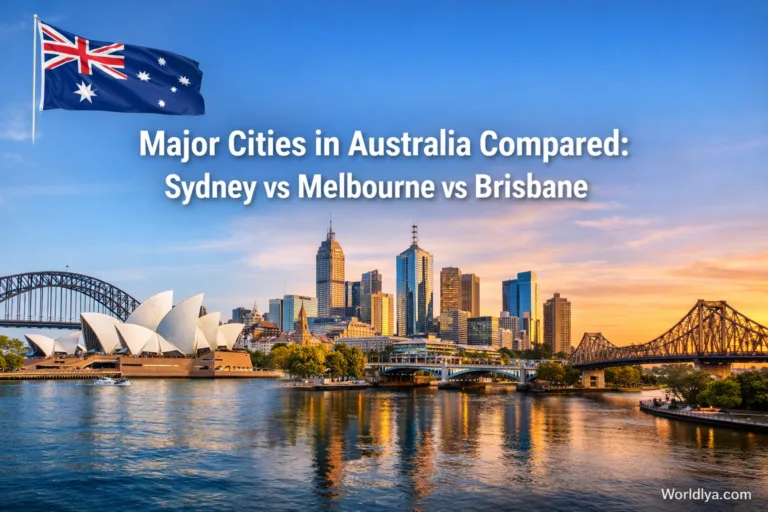
If this is your first time in Australia, Sydney Harbour is still one of the smartest places to begin. That is not because it is famous. It is because the area keeps giving you reasons to stay out longer. The Opera House alone welcomes more than 10.9 million visitors a year, stages more than 1,800 performances, and draws more than 1.4 million people to those performances. That scale matters because it shows how much is happening here beyond the postcard shot.
The best version of Sydney is not a rushed stop at Circular Quay. It is a day that layers together the Opera House forecourt, a harbour ferry, a waterside walk, and time to simply watch the city move. The Opera House has been on the UNESCO World Heritage List since 2007, and it earns that status in person. The curves look different from every angle, especially from the water.
- Give it: 2 days, not a half-day sprint
- Worth doing most: a harbour ferry, an Opera House tour or performance, and a walk through the quay and botanical garden edges
- Why it stays with people: the scenery feels active and lived-in, not staged
- Best for: first-timers, architecture fans, couples, solo travelers, and anyone who likes a city with water in the frame
Actually worth it? Yes—especially if you treat the harbour as the attraction, not only the building. The Opera House is the anchor, but the ferry ride is often the moment people replay later.
Great Barrier Reef and the Cairns Region
This part of Australia earns a place near the top because it gives you two headline experiences in one region: reef and rainforest. The Great Barrier Reef is more than 2,300 kilometers long and covers 344,400 square kilometers. It includes around 3,000 individual reefs, 300 coral cays, and 600 continental islands. Numbers like that explain why it does not feel like one attraction. It feels like a whole marine landscape with different moods, colors, and ways to enter it.
A full-day reef trip is where the place starts to pay off. You get enough time for the water to stop feeling cold, for the coral shapes to stop looking abstract, and for the fish life to become the point rather than background decoration. Tourism Australia also places the wider Cairns and Great Barrier Reef region high on its shortlist because the rainforest meets the sea here, which is exactly why this region works so well. You can spend one day offshore and the next on shaded boardwalks or scenic roads through green mountain country.
- Give it: 3 to 4 days
- Worth doing most: one full reef day, one slower day on land, and one rainforest day
- Best season feel: June to October is usually the easiest window for reef travel
- Best for: swimmers, snorkelers, divers, families, and travelers who want warm-weather nature without needing a long inland transfer
Actually worth it? Very much so—if you go beyond a short scenic cruise. The reef becomes memorable when you spend long enough in and around the water to notice its scale and texture.
Uluṟu and Kata Tjuṯa
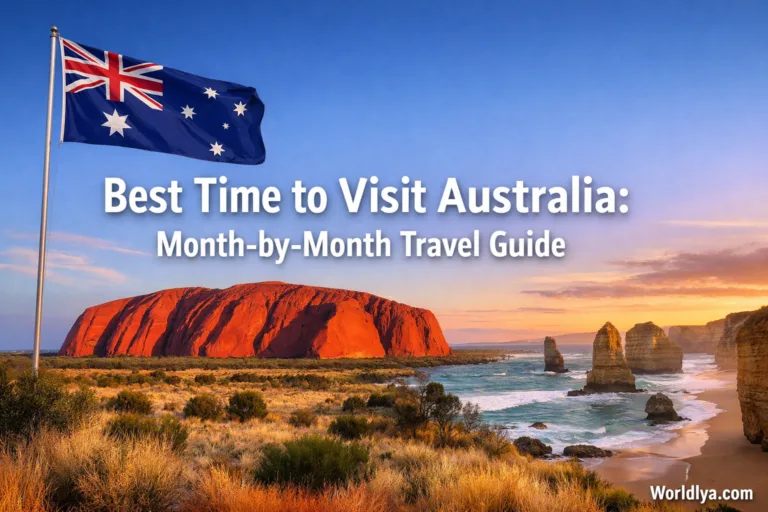
Some attractions win on detail. Uluṟu wins on presence. You can see photographs for years and still be surprised by how grounded, calm, and vast the place feels when you arrive. The national park covers 1,325 square kilometers, and the surrounding desert light does half the storytelling. Nearby Kata Tjuṯa gives the visit more depth again: its 36 domes spread across more than 20 square kilometers and rise up to 546 meters above the plain.
What makes this part of Australia worth visiting is not speed. It is rhythm. Sunrise, late-afternoon light, a walk, a pause, then another view. That slower pattern is what lets the place settle in. The park is also home to a rich cultural landscape connected to Aṉangu, and visitors who start at the Cultural Centre usually understand the place better from the beginning. If you only fly in, take one photo, and leave, you will miss what makes it special.
- Give it: 2 to 3 days
- Worth doing most: sunrise, sunset, the Cultural Centre, and either a base walk section or a Kata Tjuṯa walk
- Best season feel: June to August is usually the easiest stretch for daytime exploring
- Best for: travelers who like silence, light, geology, and places that feel emotionally larger than their map pin
Actually worth it? Yes—especially if you stay long enough to see the rock and domes change color and mood. This is one of those places where time of day is part of the attraction.
Great Ocean Road and the Twelve Apostles
This one works because the journey and the landmark both matter. The Great Ocean Road stretches for 243 kilometers, and that distance is part of the pleasure. It gives you room for beaches, forest detours, sea cliffs, café stops, and those big southern-ocean lookouts that make you pull over without being told. The Twelve Apostles are the headline stop, but they are better seen as the grand finale of a route rather than the only reason to drive it.
At the Twelve Apostles, the sealed path to the lower viewing platform ranges from 600 meters to 1.2 kilometers return, and the walk is friendly for many visitors, including families. The road is often treated like a day trip from Melbourne, but it becomes far more satisfying with an overnight stay. That gives you softer light, more breathing room, and time for the Otways or a smaller coastal town instead of constant clock-watching.
- Give it: 2 days if you can, 1 very long day only if you must
- Worth doing most: multiple lookout stops, one beach town, and the Twelve Apostles around sunrise or sunset
- Best season feel: shoulder months can feel calmer, while late December and January are the busiest
- Best for: couples, self-drivers, photographers, and travelers who like coastlines with real variety
Actually worth it? Yes—provided you let the road be the experience. Treating it like a straight dash to one viewpoint undersells what makes it good.
Blue Mountains
The Blue Mountains are one of the best-value additions to an Australia itinerary because they sit within easy reach of Sydney while still feeling like a real landscape shift. UNESCO describes the Greater Blue Mountains Area as 1.03 million hectares of sandstone plateaux, escarpments, and gorges. NSW National Parks points to 300-meter sandstone cliffs, slot canyons, waterfalls, and a million hectares of park and wilderness. In plain language: the place looks big, textured, and satisfying almost immediately.
What makes the Blue Mountains worth it is the ratio of effort to reward. You do not need a long internal flight or a major logistics day. You can see dramatic views, short walks, town cafés, and forest edges in one trip. Katoomba is often the entry point, but the best visits usually add another lookout, another trail, or an overnight stay so the area feels like more than a single lookout photo.
- Give it: 1 full day at minimum, overnight if you want the region to breathe
- Worth doing most: one major lookout, one waterfall or valley walk, and time in a mountain town
- Why people stay longer than planned: the scenery changes quickly from town edge to wild escarpment
- Best for: first-time visitors, families, walkers, and anyone who wants a nature day without heavy planning
Actually worth it? Absolutely—because it adds serious scenery to a Sydney trip without turning the whole itinerary upside down.
Daintree Rainforest and Cape Tribulation
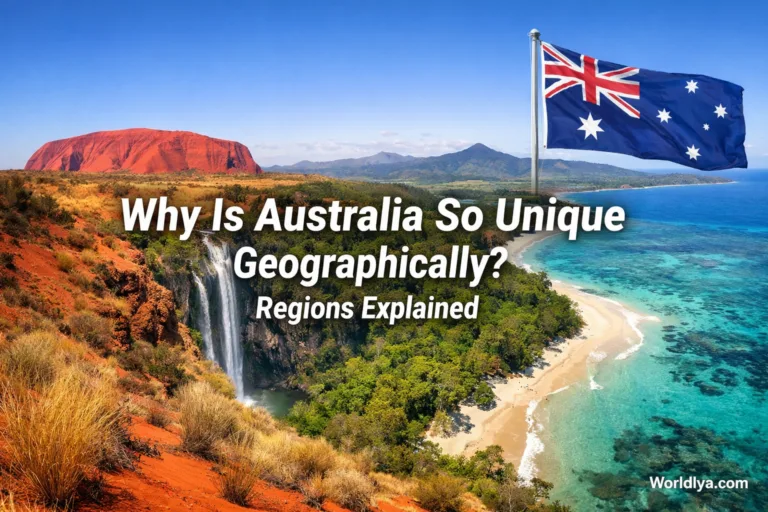
If you like the idea of tropical Australia but want more than a beach scene, this is where the trip gets interesting. The Wet Tropics are described by the Wet Tropics Management Authority as home to the oldest continuously surviving tropical rainforests on Earth, with plant and animal evolution visible over at least 140 million years. The area also carries an ongoing Rainforest Aboriginal connection reaching back 40,000 years. Those details give the landscape extra weight without making it feel heavy. You can sense that this is not just pretty greenery. It is a living place with depth.
Daintree National Park itself is split into Mossman Gorge and Cape Tribulation, roughly 80 to 150 kilometers north of Cairns. That layout makes it easy to build a trip with different textures: river and boulders one moment, boardwalk and mangroves the next, then a beach where the rainforest slopes almost into the sea. This is also one of the places where a local cultural experience can add a lot, especially when it comes through an Aboriginal guide who knows how to read the land in a way most visitors never will.
- Give it: 2 days
- Worth doing most: Mossman Gorge, one or two Cape Tribulation boardwalks, a scenic lookout, and plenty of unhurried stops
- Why it works so well: it pairs naturally with reef time but feels completely different
- Best for: nature lovers, families, photographers, and travelers who prefer walking, swimming holes, and green landscapes over city pace
Actually worth it? Yes—especially if you want tropical Australia to feel textured and varied rather than only beach-focused.
Kakadu National Park
Kakadu feels different from the other places on this list because it wins through scale and variety. The park covers almost 20,000 square kilometers and includes coasts, estuaries, floodplains, billabongs, lowlands, ridges, and stone country. Parks Australia notes that more than one-third of Australia’s bird species and around one-quarter of its freshwater and estuarine fish species occur here. That alone helps explain why people who like wildlife and huge open landscapes tend to rate Kakadu so highly.
It also proves that “worth visiting” does not always mean “easy.” Kakadu asks for time, road patience, and some planning. Then it pays that back with wetlands that feel almost cinematic, lookout points that stretch forever, and a sense that you are inside a living landscape rather than just passing through it. The park recorded 208,056 visitors in 2022, its highest total in 13 years, which says plenty about how strongly people respond once they go.
- Give it: 3 days if possible
- Worth doing most: a wetland cruise, a lookout at dawn or late afternoon, and time for the park’s shifting scenery to register
- Best season feel: May to October is usually the easiest season for broad access and cooler exploring
- Best for: wildlife lovers, repeat visitors to Australia, photographers, and travelers who want room to think
Actually worth it? Yes—especially for travelers who want one place to feel huge, layered, and deeply tied to the land around it.
Smart Itineraries That Work Better Than a Giant Checklist
If You Have 7 to 9 Days
- Option A: Sydney + Blue Mountains + Cairns/Reef
- Option B: Melbourne + Great Ocean Road + one extra city day
- Why this works: you get one city base and one big nature hit without constant transit fatigue
If You Have 10 to 14 Days
- Option A: Sydney + Blue Mountains + Cairns/Reef + Daintree
- Option B: Melbourne + Great Ocean Road + Uluṟu
- Why this works: each stop feels different, but none of them wastes the previous one
If You Want Open Space
- Option A: Darwin + Kakadu + Uluṟu
- Option B: Cairns/Reef + Daintree + Uluṟu
- Why this works: Australia starts to feel truly spacious without turning the trip into a marathon
When These Places Feel Their Best
- Sydney often feels especially easy between October and May, with whale season running June to September.
- Great Barrier Reef and Cairns are often most comfortable between June and October.
- Uluṟu is usually easiest between June and August, when daytime conditions are milder.
- Kakadu is usually most accessible between May and October.
- Great Ocean Road works year-round, but late December to January is busiest.
The best attractions in Australia are not always the ones with the loudest name. They are the places that keep offering something new after the first ten minutes. Sydney Harbour keeps changing as you move around it. The Reef opens up only when you give it a full day. Uluṟu changes with light. The Great Ocean Road rewards the stops between the stops. The Blue Mountains make a city trip feel bigger. The Daintree layers rainforest, coast, and culture. Kakadu gives you scale that is hard to compare with anything else. If you build your itinerary around those kinds of places, Australia usually delivers.
Sources
- Tourism Research Australia – International Tourism Results
- Sydney Opera House – Annual Reports
- UNESCO – Sydney Opera House
- Great Barrier Reef Marine Park Authority – Fascinating Facts About the Great Barrier Reef
- Tourism Australia – 10 Australian Destinations You Can’t Miss
- UNESCO – Greater Blue Mountains Area
- NSW National Parks – Greater Blue Mountains Area
- Visit Great Ocean Road – Frequently Asked Questions
- Visit Great Ocean Road – Twelve Apostles
- Queensland Parks – Daintree National Park
- Wet Tropics Management Authority – Exploring the Area
- Parks Australia – Uluṟu-Kata Tjuṯa National Park
- Parks Australia – Kata Tjuṯa
- Parks Australia – Kakadu National Park
- Parks Australia – Kakadu Visitor Boom