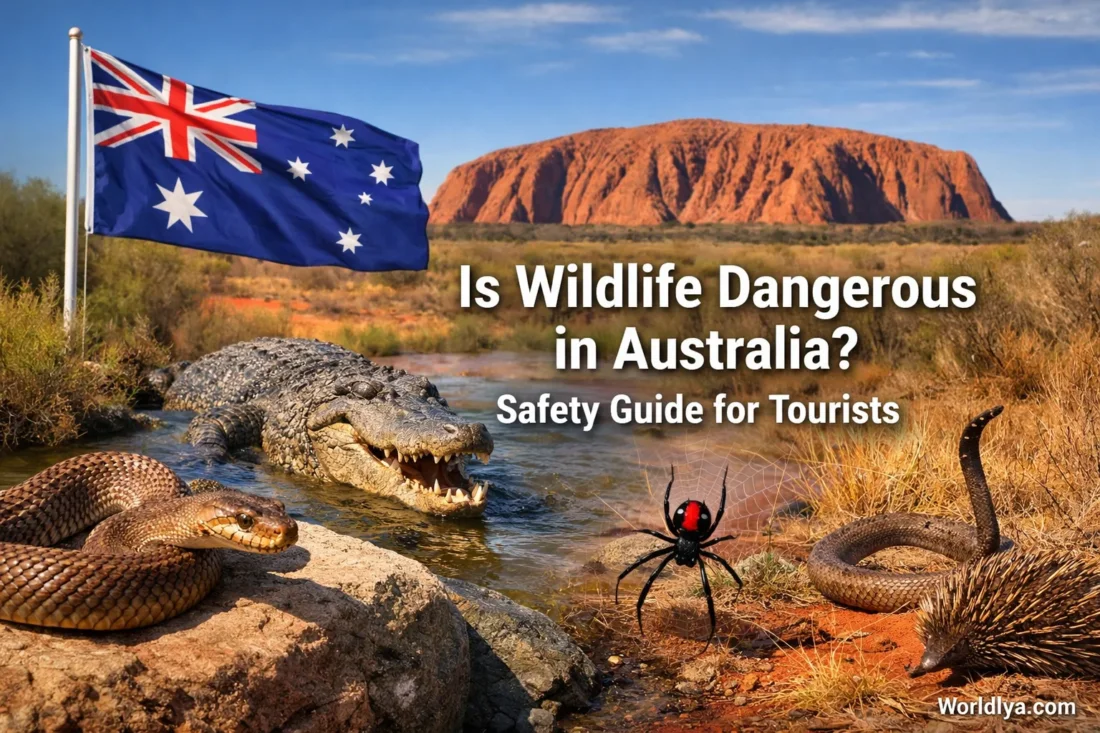
Australia’s wildlife is real, visible, and worth respecting—but it is not something that should ruin a holiday. For most visitors, the smart mindset is simple: stay aware, follow local signs, keep your distance, and do not improvise around water. Do that, and Australia feels far less like a scary headline and much more like what it really is: a place where nature is close, memorable, and usually easy to enjoy safely.
The Short Answer Tourists Actually Need
Yes, some wildlife in Australia can be dangerous, but the risk is highly location-based, not constant. A beach in Sydney, a bush track in Victoria, and a tropical estuary in the far north do not come with the same rules. That is the whole point. You do not need fear. You need context.
The visitors who run into trouble are usually not the ones quietly watching a kangaroo from a distance. They are the ones who ignore a beach flag, treat a warning sign like decoration, wander too close to the water’s edge in crocodile country, or step off a track without thinking. Australia rewards calm habits.
What Tourists Should Worry About Most
If you ask the practical question rather than the dramatic one, the picture gets clearer fast. For many travellers, the day-to-day issues are surf conditions, strong sun, heat, dehydration, and poor choices near water. Wildlife matters too, of course. It just matters most in the right place at the wrong moment.
| Situation | How Much Attention It Deserves | Smart Move |
|---|---|---|
| Swimming at beaches | Very high | Choose patrolled beaches and stay between the red and yellow flags. |
| Tropical north waterways | Very high | Treat warning signs seriously. Swim only where the area is clearly marked safe. |
| Bushwalking | Moderate | Stay on tracks, wear closed shoes, watch where you place hands and feet. |
| Road trips at dawn and dusk | Moderate | Slow down and stay alert for kangaroos and other animals near roadsides. |
| Casual city sightseeing | Usually low | Use normal common sense. Wildlife rarely becomes the main issue in urban areas. |
The Habits That Prevent Most Problems
- Read every sign near beaches, rivers, mangroves, estuaries, and lookouts.
- Never feed wildlife. It changes animal behaviour and pulls them closer to people.
- Keep space. A photo is never worth crowding an animal.
- Stay on marked tracks. Shortcuts are where people lose the easy safety margin.
- Wear closed shoes on walks. Sandals are fine in town, less ideal in scrub or rocky ground.
- Carry more water than feels necessary. Heat can turn a simple walk into a hard one fast.
- Swim where lifeguards or lifesavers are present.
- Drive more carefully at dawn, dusk, and night. Wildlife movement rises when light drops.
A good rule: if local people have put up a warning sign, treat it like hard-earned local knowledge, not scenery.
Where Risk Changes Fast
Beaches and Surf Zones
Australia has beautiful beaches, but water conditions can change quickly. Rips, shore break, waves, and shifting sandbanks often deserve more attention than the animal list in your head. The safest move is refreshingly boring: swim between the red and yellow flags at a patrolled beach. That single habit removes a lot of guesswork.
Sharks get most of the headlines, yet most beach days pass without any shark issue at all. The more useful tourist habit is this: follow the beach system that already exists. Lifeguards, flags, signs, and local closures are there for a reason.
The Tropical North
This is where tourists need the clearest mental reset. In parts of northern Australia, waterways can involve saltwater crocodiles, and tropical waters can involve marine stingers. That does not mean “do not go.” It means “do not freestyle your safety plan.”
- Do not stand right at the edge of rivers, creeks, estuaries, boat ramps, or muddy banks in crocodile areas.
- Do not assume calm water is safe water.
- Only swim where the area is clearly marked or managed as safe.
- In tropical Queensland, pay extra attention to marine stinger advice, especially from November to May.
Walking Tracks, Bushland, and Campgrounds
Snakes, spiders, and ticks are part of the outdoor picture, but panic is the wrong tool. On marked tracks, daytime walks are usually straightforward. Problems rise when people step into long grass, reach into hidden spaces, move logs, or wander around campsites in poor light without looking down.
- Wear closed shoes.
- Use a torch at night around campsites.
- Do not put hands where you cannot see.
- Keep tents zipped and bags closed.
- Shake out shoes left outside.
Roads at Dawn and Dusk
Wildlife danger is not only about bites or stings. For road-trippers, one of the more practical risks is an animal moving onto the road when visibility drops. Kangaroos are the classic example. If you are driving outside major cities, especially around sunrise, sunset, or after dark, reduce speed and scan the roadside instead of driving on autopilot.
Sun and Heat Still Matter
A lot of visitors arrive focused on snakes and sharks, then get surprised by the sun. In Australia, UV and heat can wear you down quickly, even on a nice-looking day. When the UV Index is 3 or above, use proper sun protection. On hot days, drink water often, seek shade, and do not turn a simple walk into a stubborn endurance test.
The Main Animals Tourists Ask About
| Animal or Group | Where Tourists Notice It | What Matters Most |
|---|---|---|
| Crocodiles | Far northern waterways, estuaries, boat ramps, river edges | Never assume water is safe without local confirmation. |
| Marine stingers | Tropical Queensland waters | Check local advice, use protected swimming areas, consider stinger suits where recommended. |
| Snakes | Bush tracks, grass, rocks, scrub, some suburban edges | Give them space, stay calm, and keep to tracks. |
| Sharks | Open coastal waters | Use patrolled beaches and obey closures and warnings. |
| Spiders | Sheds, outdoor gear, hidden corners, campsites | Avoid blind grabbing. Check gear and shoes before use. |
| Kangaroos and Wombats | Roadside areas, open grassland, dawn and dusk | The bigger issue is vehicle impact, not a close-up attack. |
| Ticks and Insects | Bushland, grass, humid outdoor areas | Cover up, use repellent, and check skin after walks. |
No need to memorise every species. The easier approach is to remember the pattern: water, heat, distance, and local signs. Those four ideas do most of the heavy lifting.
What to Do if Something Goes Wrong
- Move away from the animal or hazard. Do not try to catch, touch, or photograph your way out of the situation.
- Call for help fast if symptoms are strong, sudden, or getting worse.
- Use local first-aid advice, not guesswork. Snake bite, marine stings, and allergic reactions do not all work the same way.
- For emergencies in Australia, call 000.
- For poisons and bites-and-stings advice, call 13 11 26 when appropriate.
If someone has trouble breathing, collapses, becomes confused, has severe pain after a sting or bite, or shows signs of heatstroke, treat it as urgent. Fast action matters far more than heroic improvisation.
Simple Safety Advice by Travel Style
For Swimmers
- Pick patrolled beaches.
- Swim between the flags.
- Check local signs before entering the water.
- Do not assume a quiet beach is a safer beach.
For Bushwalkers
- Wear closed shoes.
- Carry water and a charged phone.
- Stay on the track.
- Look before you step, sit, or reach.
For Road-Trippers
- Slow down at dawn and dusk.
- Do not drive tired in wildlife-heavy areas.
- Watch roadsides, not just the lane ahead.
- Plan longer drives in daylight when possible.
Australian Wildlife Myths Tourists Can Drop
- “Every Animal Is a Threat.” No. Most animals avoid people when given space.
- “If there is no sign, I can assume it is safe.” Also no. Some places require local knowledge, especially around water.
- “Spiders are the top problem on every trip.” Usually not. Water safety, heat, and road awareness often deserve more day-to-day attention.
- “A close photo is harmless.” Not always. Crowding wildlife is bad for you and bad for the animal.
The calm version of Australia is usually the accurate version. Respect beats drama every time.
FAQ
Is Australia Safe for Tourists Who Want to See Wildlife?
Yes. For most visitors, wildlife watching is safe when it happens from a respectful distance and in places set up for visitors. Guided tours, marked lookouts, patrolled beaches, and managed parks make a big difference.
Are Spiders a Major Problem for Tourists?
Usually no. They deserve respect, but they are not the thing most travellers deal with every day. A more useful habit is checking shoes, outdoor gear, and hidden corners instead of worrying about every garden or balcony.
Can You Swim Safely in Australia?
Absolutely—when you choose the right place. Patrolled beaches, flagged swimming areas, and local advice are the real safety tools. In the tropical north, water rules can change by region, so local signs matter even more.
Should Tourists Be Afraid of Snakes?
Fear is not very useful. Awareness is. Snakes are part of the landscape in many outdoor areas, but most problems can be avoided by staying on tracks, wearing proper shoes, and not trying to handle them.
What Is the Smartest One-Line Rule?
Respect local signs, local water advice, and local distance. That one sentence covers a surprising amount.
Sources
- Tourism Australia — Top Myths About Dangerous Animals in Australia
- healthdirect — Beach Safety
- healthdirect — Snake Bites
- healthdirect — Jellyfish Stings
- Queensland Government — Dangerous Marine Life
- Northern Territory Government — Be Crocwise: Stay Safe While Swimming
- Beachsafe — Flags and Signs
- Bureau of Meteorology — About the UV Index