
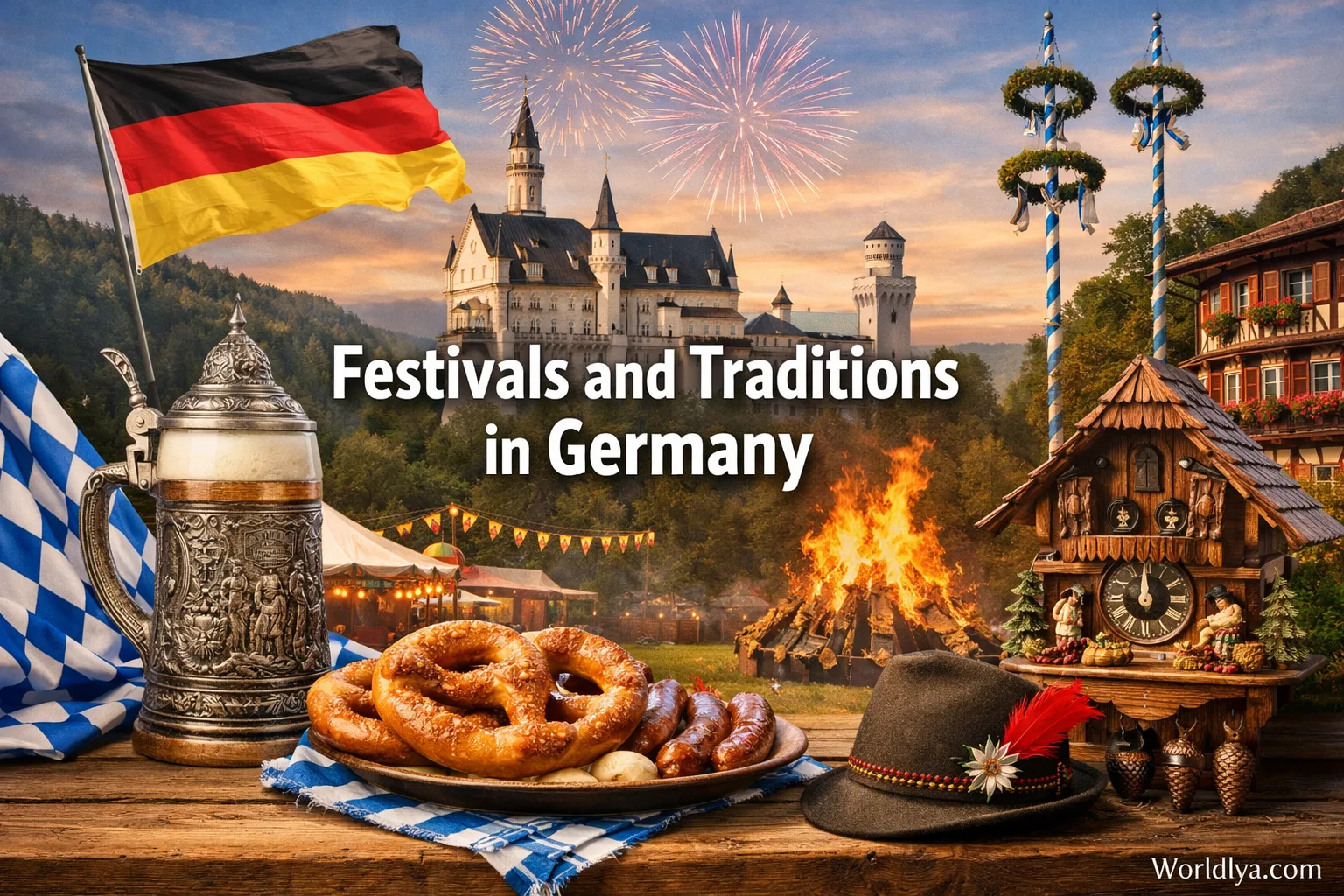
Germany does celebrations like a well-rehearsed band: everyone knows their part, yet it still feels spontaneous. From lantern-lit streets in November to flower-covered maypoles in spring, festivals here aren’t “events” you watch—they’re moments you step into. Ready to catch the rhythm?
Quick Snapshot
This page covers:
- Major festivals worth planning around (and what they feel like)
- Regional traditions that surprise first-time visitors
- Practical tips for joining in comfortably and respectfully
- A season-by-season table you can use to map your year
Why German Festivals Feel So Personal
Many German celebrations grow from local clubs, neighborhoods, and traditions passed along like a favorite family recipe. That’s why even huge gatherings can feel oddly cozy—there’s usually a shared set of rituals, songs, foods, and little “rules” that locals happily explain if you ask.
- Seasonal energy: spring blossoms, summer fairs, autumn harvest vibes, winter lights.
- Regional flavor: the same holiday can look different in Cologne, Munich, or the Black Forest.
- Community first: parades and markets often fundraise for local groups or keep old crafts alive.
Fast Planning Checklist
- Pick a season that matches your vibe (cozy lights vs. outdoor parades).
- Choose a city known for that tradition.
- Check dates early (some events shift each year).
- Pack smart: layers, comfy shoes, a small umbrella.
- Learn 3 words: “Danke”, “Bitte”, and the local greeting.
Small trick: ask “Is there a family area?” Many festivals have calmer spots that feel like a little oasis.
Festival Calendar Overview
If Germany’s traditions were a playlist, each season would be a different genre. Use this table to spot the best time to visit, then scroll for deeper details and local etiquette.
| Season | What You’ll See | Typical Timing | Where It Shines |
|---|---|---|---|
| Spring | Easter customs, maypoles, spring fairs | Mar–May | Villages, Bavaria, southern regions |
| Summer | Folk fairs, Schützenfest, open-air markets | Jun–Aug | Hannover, towns across Germany |
| Autumn | Harvest celebrations, Oktoberfest-style Volksfeste | Sep–Oct | Munich, many regional fairgrounds |
| Winter | Christmas markets, Advent traditions, lights | Late Nov–Dec | Nuremberg, Dresden, Cologne, many cities |
At its best, a German festival feels like stepping into a living postcard—music on the air, warm snacks in hand, and strangers smiling like neighbors.
Oktoberfest and the Volksfest Spirit
Let’s start with the one everyone recognizes. Oktoberfest in Munich is a giant folk festival with parades, traditional outfits, rides, and long tables that turn chatting into a sport. It usually runs from September into early October, with dates that change slightly each year.
What It’s Really Like
- Morning: families, food stands, fairground rides.
- Afternoon: music, cheerful crowds, people-watching gold.
- Evening: louder, livelier—plan your comfort level.
Try this: Want the Volksfest feeling without the biggest crowds? Many cities host their own Volksfeste—smaller fairs with the same warm, community vibe.
Etiquette that helps: keep your group together, be patient in lines, and follow staff instructions in busy areas. A friendly “Entschuldigung” goes a long way.
Carnival Season: Karneval, Fasching, and Fastnacht
Ever watched a city turn into a costume party before lunch? Carnival season can feel like that—especially in the Rhineland. You’ll hear different names depending on the region: Karneval, Fasching, or Fastnacht. The most famous street celebrations and parades often happen in the weeks leading up to Lent.
- Cologne: big energy, big traditions, big smiles.
- Mainz & Düsseldorf: strong parade culture and local humor.
- Southern Germany: Fasching and Fastnacht with distinct regional styles.
Quick Carnival Do’s
- Join in: a simple costume helps you blend in and feel part of the fun.
- Learn the local cheer: “Alaaf” (Cologne) and “Helau” (many other places).
- Go earlier: daytime is often calmer and more family-friendly.
One of the nicest surprises? People often treat Carnival like a big neighborhood reunion. You’ll see teh streets fill with music, confetti, and pure silliness—no fancy invitation needed.
Christmas Markets and Advent Traditions
German winter traditions are built for atmosphere. Christmas markets (Weihnachtsmärkte) bring wooden stalls, handmade crafts, seasonal treats, and that soft glow that makes cold air feel friendly. Many run from late November through December, often closing around December 24.
Classic Things to Look For
- Advent wreaths and seasonal decorations
- Craft stalls with woodwork, ornaments, candles
- Sweet scents: gingerbread, roasted nuts, warm pastries
- Carousel corners and kid-friendly areas in many cities
Mini Tradition: St. Nicholas Day
In many families, December 6 comes with a sweet little ritual: kids set out clean boots or shoes the night before and wake up hoping for small treats. It’s like a tiny warm-up act before the bigger holiday season.
Nuremberg’s Christkindlesmarkt is one of the most famous markets, known for its traditional feel and classic holiday treats. If you want that “snow globe” mood, this is a strong pick.
Schützenfest and Local Folk Fairs
Not every big tradition is internationally famous—and that’s part of the charm. Schützenfeste are traditional festivals tied to local shooting clubs, but today they’re often enjoyed as community fairs with parades, music, and rides. Hannover hosts one of the best-known versions, typically in July.
What Makes These Fairs Easy to Love
- They’re local-first: you’ll hear dialect, see hometown pride, and get a real slice of everyday Germany.
- They’re flexible: you can stay for an hour or for the whole evening.
- They’re welcoming: families, friends, visitors—everyone mixes naturally.
Food Seasons That Turn Into Traditions
Some German traditions don’t need fireworks. They just need a calendar and a craving. When a seasonal ingredient arrives, menus change, markets shift, and suddenly everyone’s talking about the same thing.
Spargelzeit: Asparagus Season
From April to June, many regions celebrate Spargelzeit (asparagus season). Restaurants highlight special dishes, roadside stands pop up, and locals treat it like an annual milestone. Think of it as spring’s “limited edition” flavor—here today, gone by early summer.
- Best place to spot it: farmers’ markets and seasonal menus
- What to expect: simple, fresh dishes that let the ingredient shine
Harvest Time and Autumn Comfort
Autumn brings a cozy wave of harvest-themed fairs, local specialties, and market days. Even if you don’t chase a specific festival, you’ll feel the shift in food stalls, bakeries, and small-town events.
Tip: If you see “Markt” or “Fest” signs in a town square, follow them. That’s often where the best surprises hide.
Everyday Traditions You’ll Notice
Germany’s culture isn’t only in the big festivals. It’s also in small habits that make daily life feel orderly and warm at the same time.
- Sunday calm: many people treat Sundays as a slower, quieter day—perfect for walks, cafés, and family time.
- Seasonal decorating: windows, doors, and tables change with the calendar, especially during Advent.
- Local pride: towns love their own traditions, from small parades to neighborhood markets.
How to Join In Comfortably
You don’t need to “perform” tradition to enjoy it. You just need a little awareness and a curious attitude. Ask questions. Smile. Try the local snack. Done.
- Dress for the ground, not the photo: cobblestones and long walks are common.
- Carry cash: some stalls still prefer it, especially at markets.
- Respect queues: lines can be strict, and that keeps everything smooth.
- Mind personal space: crowded festivals happen, yet people still appreciate polite distance when possible.
- Choose your time: early afternoon is often ideal for a relaxed experience.
Family-Friendly Picks
- Christmas markets with lights, crafts, and gentle rides
- Daytime Volksfeste with fairground games and snacks
- Spring markets and maypole events in smaller towns
Nice bonus: smaller towns often feel more relaxed, and you’ll get more chances to chat with locals.
FAQ
Do I need tickets for German festivals?
Many markets and fairs are free to enter. Some concerts, seating areas, or special events may require reservations or tickets. If you’re planning around a major festival, checking the official event page is the safest move.
When’s the best season for first-time visitors?
Late November to December is great if you love cozy atmospheres and lights. September to October is perfect for autumn fairs and harvest vibes. Spring is calmer and full of local traditions.
Is traditional clothing required?
No. You’ll see traditional outfits in certain regions and festivals, but comfortable everyday clothing is always fine. If you want to participate a bit more, try a small touch—like a festive scarf or accessory.
Sources
- Official Oktoberfest Website (City of Munich)
- Oktoberfest Info (muenchen.de)
- Nuremberg Christkindlesmarkt (Official Site)
- Christkindlesmarkt Visitor Information (Nuremberg Tourism)
- Schützenfest Hannover (hannover.de)
- Asparagus Season Information (landwirtschaft.de)
- Carnival in Germany: Terms and Customs (deutschland.de)