
Updated: August 19, 2026 What changed?
Worldlya Travel Guide
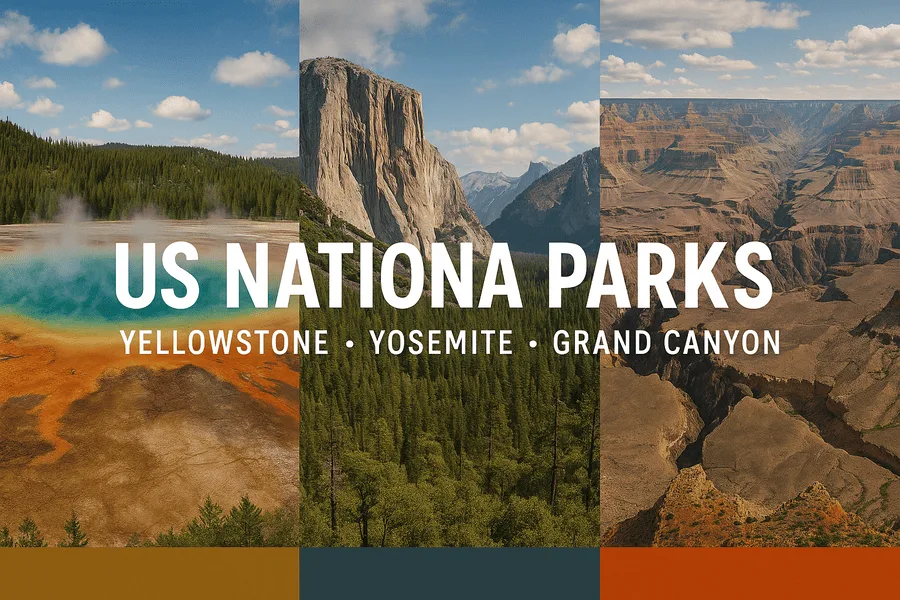
National Parks in the USA
The ultimate, traveler-tested guide to Yellowstone, Yosemite, and the Grand Canyon—what to see, when to go, how to plan, and how to visit responsibly.
Quick navigation
- Why U.S. national parks?
- Best time to visit
- Park passes & fees
- Sample itineraries
- Yellowstone guide
- Yosemite guide
- Grand Canyon guide
- Bonus: St. Andrews State Park
- Safety & ethics
- FAQ
- Sources
Why national parks?
America’s national parks protect world-class landscapes and wildlife while offering accessible trails, scenic drives, and ranger programs. They’re ideal for first-time visitors and seasoned trekkers alike.
Top 3 for first timers: Yellowstone (geysers & megafauna), Yosemite (granite cathedrals), Grand Canyon (one of Earth’s great erosional wonders).
Trip Planning Overview
- Book early: Lodging & campgrounds sell out months ahead.
- Start at sunrise: Beat crowds & heat.
- Stay flexible: Weather, smoke, or road works can change plans.
Leave it better
Stick to trails, give wildlife space, pack out trash, and be fire-aware. Small choices scale up to huge impact.
Best time to visit (season by season)
Spring
Pros: Waterfalls peak, wildlife activity rises, temps are mild in many parks.
Cons: Some high roads/trails remain snow-covered; services may be limited early.
Summer
Pros: Long daylight, most facilities open, classic road-trip season.
Cons: Crowds, heat in desert parks, afternoon storms in some regions.
Fall
Pros: Fewer visitors, crisp air, foliage in the Sierra & Rockies.
Cons: Early snow can close passes; daylight shortens.
Winter
Pros: Solitude, unique snow experiences (snowshoe, cross-country ski).
Cons: Road closures, cold temps, specialized gear & skills required.
Park fees, passes & reservations
Budget tip: If you’ll visit multiple parks within a year, compare the annual pass for your residency status with the entrance fees for the parks on your route.
- Entry fees: Most parks charge per vehicle for a set number of days.
- Annual pass: Covers entrance fees to 2,000+ federal sites (not lodging or tours).
- Reservations: Some parks/attractions use timed entry or limited permits in peak months. Book ASAP.
2026 Fees for International Visitors
From January 1, 2026, the America the Beautiful Annual Pass costs $80 for U.S. citizens and residents and $250 for non-U.S. residents.
Non-U.S. residents age 16 and older who enter one of 11 designated national parks without a pass that covers the nonresident fee must pay the park’s regular entrance fee plus $100 per person. The 11 parks are Acadia, Bryce Canyon, Everglades, Glacier, Grand Canyon, Grand Teton, Rocky Mountain, Sequoia & Kings Canyon, Yellowstone, Yosemite, and Zion.
The $250 Non-Resident Annual Pass covers the nonresident fee as well as applicable entrance fees. It can cover an entire private vehicle or two motorcycles; where fees are charged per person, it covers the passholder plus up to three additional adults.
Smart itineraries (1–3 days each park)
| Time | Yellowstone | Yosemite | Grand Canyon |
|---|---|---|---|
| 1 day | Upper Geyser Basin & Old Faithful at dawn → Grand Prismatic overlook → wildlife drive near Hayden or Lamar at dusk. | Tunnel View sunrise → Yosemite Valley loop (Lower Yosemite Fall, Cook’s Meadow) → Glacier Point (if open). | South Rim viewpoints (Mather, Yavapai) → short rim hike at sunrise/sunset → Desert View drive. |
| 2 days | Add Norris Geyser Basin, Mammoth Hot Springs terraces; picnic by Yellowstone Lake. | Add Mist Trail to Vernal/Nevada (start early) or Mirror Lake → Mariposa Grove (if open). | Add Hermit Road shuttle viewpoints → short below-rim hike (Ooh Aah Point via South Kaibab). |
| 3 days | Wildlife sunrise in Lamar Valley → Canyon area (Artist Point) → soak in scenery, no rushing. | Tioga Road high country (Tenaya Lake, Tuolumne Meadows) when open → sunset at Olmsted Point. | Sunrise at Hopi Point → Desert View Watchtower → ranger program or geology museum. |
Pro move: In summer, structure days around early starts and midday breaks. Crowds and heat peak from late morning to mid-afternoon.
Yellowstone National Park — hydrothermal wonderland
Signature sights: Old Faithful eruptions, Grand Prismatic Spring, Mammoth terraces, Yellowstone Falls, wildlife in Hayden & Lamar Valleys.
Best seasons: Late spring–early fall for full access; winter for guided snow experiences and silence.
Don’t miss: Boardwalk loops around geyser basins; sunrise wildlife watching (binoculars help!).
Logistics & tips
- Distances are large—plan zones per day (Old Faithful, Canyon, Norris, Mammoth, Lake, Lamar/Hayden).
- Thermal areas are fragile and dangerous. Stay on boardwalks and keep pets/children close.
- Carry layers; mountain weather swings quickly.
Photography windows
- Morning: Steam + low angle light in geyser basins.
- Midday: Overlook of Grand Prismatic (colors pop under high sun).
- Evening: Wildlife activity increases; use pullouts and long lenses.
Yosemite National Park — granite giants & roaring falls
Signature sights: Half Dome, El Capitan, Yosemite & Bridalveil Falls, Glacier Point, Mariposa Grove.
Best seasons: Spring for waterfalls, summer for high country, fall for calm shoulder season. Winter brings quiet and snow play.
Don’t miss: Valley floor loop on foot or bike; sunrise at Tunnel View; sunset from Glacier Point (when road is open).
Reservations & traffic
Peak-season days may require timed entry. Arrive before 7 a.m. for easier parking; use shuttles where available.
Trail ideas
- Short: Lower Yosemite Fall loop; Cook’s Meadow boardwalk.
- Half-day: Mist Trail to Vernal Fall (wet stairs; grippy shoes).
- Full-day: Panorama Trail (from Glacier Point toward the Valley) when transit runs.
Grand Canyon National Park — a mile-deep masterpiece
Signature sights: South Rim viewpoints (Mather, Yavapai, Hopi), Desert View Watchtower, below-rim trails like South Kaibab/Bright Angel.
Best seasons: Spring and fall for comfortable temps; summer is hot below the rim; winter can bring snow to the South Rim.
Don’t miss: Sunrise or sunset on the rim, a short below-the-rim hike (turn around well before you tire), geology museum exhibits.
Hiking reality check
Descending is easy; climbing out is hard. Carry more water than you think, fuel often, and set a strict turnaround time.
Rim or river?
- South Rim: Most services, classic views, shuttles.
- North Rim: Shorter season, far fewer crowds, alpine feel.
- River trips: Multi-day, permit or commercial outfit; book far in advance.
St. Andrews State Park — Florida’s coastal side of the American outdoors
Important note: St. Andrews State Park is not a U.S. national park. It is a Florida state park, but it fits naturally into a broader American parks trip because it shows a completely different side of outdoor travel: warm Gulf water, white sand, coastal wildlife, and easy beach-based recreation.
Located near Panama City Beach, St. Andrews is the kind of place that balances comfort and wildness. One side faces the Gulf of Mexico, while the other connects with St. Andrews Bay, giving visitors a mix of beach time, calm-water views, fishing spots, dunes, birdlife, and classic Florida sunsets.
Best for: travelers who want a softer, beach-focused break after big landscape parks like Yellowstone, Yosemite, or the Grand Canyon.
What to do at St. Andrews State Park
- Swim or sunbathe: The park is known for its Gulf beaches and clear coastal water.
- Snorkel near protected areas: Calm conditions can make this one of the friendlier Florida Panhandle spots for casual snorkeling.
- Visit Shell Island: Seasonal shuttle options may connect visitors with Shell Island, an undeveloped barrier island experience.
- Watch wildlife: Look for shorebirds, butterflies, coastal plants, and lagoon-side wildlife from a respectful distance.
- Stay for sunset: If your schedule allows, late afternoon light over the water is one of the easiest wins here.
How it fits into this guide
Think of St. Andrews as a bonus coastal contrast. The big three parks in this article deliver geysers, granite cliffs, and canyon geology. St. Andrews delivers something simpler but still memorable: sand under your feet, salt air, shallow-water exploring, and a slower Florida rhythm.
- Trip style: beach day, family stop, camping add-on, or road-trip pause.
- Best mood: relaxed, warm, low-pressure outdoor time.
- Planning tip: Check current hours, fees, weather, water conditions, and Shell Island access details before going.
Stay safe, travel kindly
Wildlife etiquette
- Give animals space; use binoculars or a telephoto lens.
- Never feed wildlife—human food harms animals.
- Drive slowly at dawn/dusk; animals may cross roads.
Weather & elevation
- Mountains/deserts swing from hot to cold quickly; pack layers.
- Hydrate and pace yourself at altitude; rest if you feel off.
- Check official forecasts and road statuses before you go.
Trail & fire awareness
- Stay on marked paths to protect fragile soils & springs.
- Observe fire restrictions; never leave flames unattended.
- Pack out all trash; disperse use at crowded hotspots.
Rule of thumb: Your choices should help the next visitor have an even better day than you did.
FAQ
How many days do I need?
With one day, focus on a single area and the golden hours. With two–three days, add a sunrise, a marquee hike, and a scenic drive. Longer stays reward patience and weather flexibility.
Do I need a car?
A car is the most flexible option for these three parks. Park shuttles help at busy hubs; verify seasonal schedules in advance.
Can I do all three on one trip?
Yes, but build in driving days and select one highlight per park. Fly open-jaw if possible (different arrival/departure airports).
Is winter worth it?
Absolutely, with the right gear and expectations. Services are limited, and some roads close, but the serenity is unforgettable.
Is St. Andrews State Park a national park?
No. St. Andrews State Park is a Florida state park, not a U.S. national park. It is included here as a useful bonus stop for travelers who want to compare America’s famous national parks with a more relaxed coastal park experience.
Traveler’s checklist
- Book lodging/campsites early
- Confirm park/road conditions
- Download offline maps
- Start hikes at sunrise
- Water, snacks, sun protection
- Layers & rain shell
- Binoculars/long lens
- Headlamp & spare batteries
- Emergency kit & first aid
- Respect closures & wildlife
Sources
- NPS — Plan Your Visit: Yellowstone National Park
- NPS — Plan Your Visit: Yosemite National Park
- St. Andrews State Park – Visitor Guide, Beaches and Activities
- NPS — Plan Your Visit: Grand Canyon National Park
- NPS — America the Beautiful: National Parks & Federal Recreational Lands Pass
- NPS — Nonresident Fees
- NPS — Wildlife Watching Safety
- USGS — Yellowstone Volcano Observatory
More from USA Guide
- 50 States of the US: Capitals and Key Features
- The US Education System: Public Schools, Colleges & Universities
- Top US Holidays & Festivals: July 4th, Thanksgiving, Christmas
- Accommodation in the USA (Hotels, Motels, Airbnb & Hostels)
- US Geography: Regions, Mountains, Rivers, Borders
- US Wildlife: Where to See Bison, Eagles, and Bears