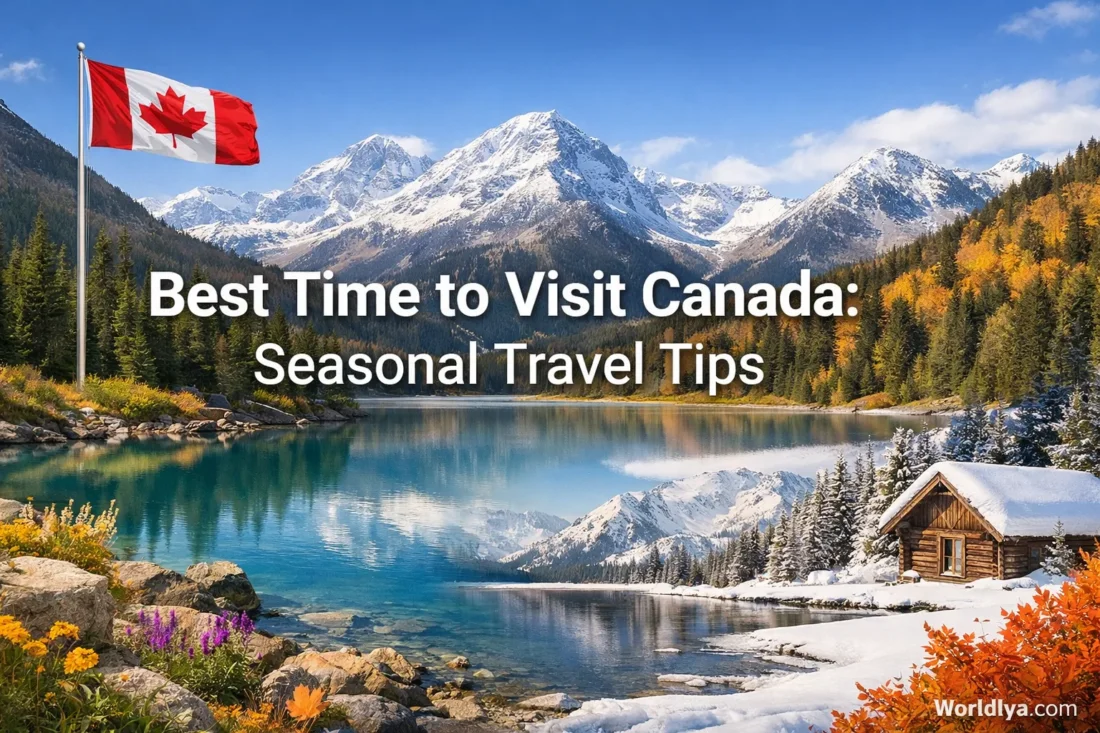
Canada is so big that “best time to visit” really means “best time for you.” Want sunny patio days, crisp fall hikes, cozy winter snow, or that fresh spring energy when cities and trails wake up? This guide helps you match season + region + travel style so your trip feels easy, not like a weather gamble.
Quick Answer: Best Time to Visit Canada
- For Warm Weather and Classic Road Trips: June to August (long days, festivals, lakes, national parks).
- For Fewer Crowds and Great Weather: late May to June and September (shoulder season sweet spot).
- For Fall Colors and Cozy Vibes: mid-September to October (golden forests, harvest season, crisp hikes).
- For Snow Adventures and Winter Cities: December to March (skiing, skating, winter festivals).
Tip: Canada’s weather changes fast with latitude and elevation. A week in Vancouver can feel like a different planet from a week in Banff.
Canada’s Seasonal Overview
Spring
Best vibe: fresh air, fewer lines, cities feel lively again.
- When: April to May (sometimes early June in colder areas)
- Great for: city breaks, waterfalls, early hiking, food scenes
- Pack mindset: layers, a light rain jacket, comfortable walking shoes
Summer
Best vibe: long daylight, lakes, patios, road trips that actually make sense.
- When: June to August
- Great for: national parks, camping, coastal drives, city festivals
- Pack mindset: sunscreen, a light sweater for evenings, bug spray for lakes/forests
Fall
Best vibe: crisp hikes, glowing forests, “just one more photo” energy.
- When: September to October (sometimes early November)
- Great for: fall colors, food and wine regions, scenic drives
- Pack mindset: light jacket, layers, a warm hat for cooler mornings
Winter
Best vibe: snow sports, cozy cafés, and cities that know how to do winter.
- When: December to March (often longer in mountain and northern regions)
- Great for: skiing, skating, northern lights trips, winter festivals
- Pack mindset: warm base layers, insulated boots, gloves, and a real winter coat
Pick Your Perfect Season by Travel Style
Not sure where to start? Use your travel personality. Think of it like choosing the soundtrack before you hit play.
| What You Want | Best Months | Where It Shines | Why It Works |
|---|---|---|---|
| Warm Days + Lake Time | June–August | Ontario cottage country, Québec countryside, Alberta/B.C. lakes | Long daylight, outdoor dining, easy road-trip logistics |
| Hiking and Scenic Drives | June–October | Rockies, Vancouver Island, Cape Breton, national parks | Trail access is best from summer into early fall |
| City Breaks + Museums + Food | April–June, September | Toronto, Montréal, Vancouver, Québec City | Comfortable walking weather and plenty happening |
| Snow Sports and Winter Magic | December–March | Whistler, Banff/Lake Louise area, Mont-Tremblant | Peak winter conditions and lively resort towns |
| Northern Lights Feel | late August–March | Northern territories and far-north communities | Darker nights increase your chances, especially outside major cities |
| Family-Friendly Easy Travel | June, September | Major cities + nearby nature day trips | Balanced weather without the peak-season intensity |
Regional Timing: Where Seasons Feel Different
Canada isn’t one climate. It’s a whole playlist. Here’s the regional cheat sheet so you don’t pack for the wrong song.
| Region | Best Time for Most Travelers | Season Highlights |
|---|---|---|
| British Columbia Coast (Vancouver, Vancouver Island) | May–October | Mild temperatures, coastal drives, city + nature combos |
| Canadian Rockies (Banff, Jasper) | July–September | Best access to alpine trails; winter is excellent for snow sports |
| Prairies (Alberta plains, Saskatchewan, Manitoba) | June–September | Big skies, summer road trips, lively city events |
| Ontario and Québec (Toronto, Ottawa, Montréal, Québec City) | May–June, September–October | Walkable city weather; fall colors can be stunning |
| Atlantic Canada (Nova Scotia, New Brunswick, P.E.I., Newfoundland and Labrador) | July–September | Coastal drives, seafood season, charming towns and beaches |
| Northern Canada (far north and remote regions) | February–March or late August–October | Long winter nights and crisp shoulder seasons are popular for aurora-style trips |
Month-by-Month Cheat Sheet
If you’re choosing travel dates, this section is your shortcut. You don’t need perfect weather. You just need the right match.
April to May (Spring Start)
Great for city trips and lighter crowds. Parks and trails begin opening up, but conditions vary by region. If you love walking tours, cafés, and museums with some outdoor time mixed in, spring can feel refreshingly calm.
- Best for: Toronto, Montréal, Vancouver, Québec City
- Also nice for: waterfalls, gardens, coastal drives
- Pack: layers + a light rain jacket
June (The Sweet Spot)
June is often that “why doesn’t everyone do this?” month. Days are long, nature feels alive, and many regions are comfortably warm. It’s a strong choice if you want summer energy without the most intense peak season vibe.
- Best for: road trips, city + nature combos
- Great for: national parks as access improves
- Pack: comfortable layers for day-to-evening swings
July to August (Peak Summer)
This is classic Canada travel season: lakes, patios, festivals, and the kind of daylight that makes you forget to check the time. If you want the most straightforward outdoor planning, summer makes it easy. Booking early helps a lot in popular areas.
- Best for: family trips, festivals, lakes, coastal towns
- Great for: hiking in many regions, especially with longer days
- Pack: sunscreen, a light sweater, and bug spray for nature spots
September (Shoulder Season Gold)
September is a favorite for a reason. Weather can still feel pleasantly warm in many places, but the pace often softens. If you like a trip that feels smooth—easy restaurant reservations, comfortable walking, scenic drives—September is hard to beat.
- Best for: cities, wine regions, hiking, scenic rail/road trips
- Great for: early fall colors in some regions
- Pack: light jacket for evenings
October (Fall Colors Season)
October is when Canada can look like a postcard without trying. Fall color timing varies by region, but this month often brings crisp air and beautiful landscapes. It’s ideal if your perfect day is a scenic drive, a warm drink, and a hike with gold-and-red views.
- Best for: Ontario and Québec countryside, Atlantic coastal drives
- Also nice for: food-focused trips and cozy city stays
- Pack: layers, warmer socks, and a wind-resistant jacket
December to March (Winter Adventures)
Winter is for travelers who want a different kind of wow. Think ski towns, snowy forests, sparkling city lights, and the quiet beauty of cold air. If you’ve ever wanted to try a true winter getaway, Canada does it with confidence.
- Best for: skiing, snowboarding, winter festivals, cozy city breaks
- Great for: mountain resorts and winter landscapes
- Pack: insulated boots, gloves, hat, and thermal base layers
A Simple Decision Guide
Answer these quickly. No overthinking. Your best time is hiding in plain sight.
If You Want Warm Days
- Choose June–August for classic summer.
- Choose June if you like a calmer pace.
- Pick coastal areas if you want milder evenings.
If You Want Comfortable Exploring
- Choose April–May for city breaks with fresh energy.
- Choose September for a “just right” trip.
- Plan a mix of neighborhoods + easy day trips.
If You Want Fall Colors
- Choose mid-September–October in many regions.
- Plan a scenic drive day and a slower “coffee and viewpoints” day.
- Bring layers so you’re comfortable from morning to evening.
If You Want Snow Fun
- Choose January–March for strong winter conditions.
- Pick a ski town if you want “wake up and play” energy.
- Plan cozy indoor options for balance.
What to Pack by Season
Packing for Canada isn’t about bringing more. It’s about bringing the right layers. Think of your clothes like adjustable settings, not a single outfit plan.
Spring Checklist
- Light rain jacket
- Layering tops (t-shirt + sweater combo)
- Comfortable walking shoes
- Small umbrella (optional)
Summer Checklist
- Sunscreen + sunglasses
- Light sweater for evenings
- Comfortable sandals or breathable shoes
- Bug spray for forest and lake areas
Fall Checklist
- Warm mid-layer (fleece or sweater)
- Light jacket (wind-friendly)
- Comfortable shoes for trails and city walking
- Warm socks (you’ll thank yourself)
Winter Checklist
- Thermal base layers
- Insulated winter coat
- Waterproof insulated boots
- Hat + gloves + scarf
Smart Booking Tips That Keep Your Trip Smooth
- Summer and winter holidays fill up faster. If you want popular national parks or ski resorts, booking earlier usually gives you more choices.
- Shoulder season is your “value meets comfort” zone. Many travelers love late May–June and September because plans feel easier.
- Build a flexible day. One day with fewer fixed reservations lets you follow the weather and your energy.
- Think in clusters. Canada is huge. Staying in one region longer often feels better than racing across the map.
Seasonal Mini-Itinerary Ideas
These are short, flexible templates. Swap cities or parks based on your route. The goal is to keep your days balanced so you don’t burn out halfway through the trip.
Spring City Escape
- Day 1: Neighborhood walk + food market
- Day 2: Museum morning + café afternoon + sunset viewpoint
- Day 3: Day trip to nature (gardens, waterfalls, coastal trail)
Best months: April–May
Summer Road Trip Days
- Day 1: Drive + scenic stops + lakeside evening
- Day 2: Big outdoor day (hike, canoe, beach)
- Day 3: Slow morning + local town + sunset picnic
Best months: June–August
Fall Scenic Weekender
- Day 1: Scenic drive + lookout points + cozy dinner
- Day 2: Morning hike + small-town bakery + photo stops
- Day 3: Easy museum or market + relaxed departure
Best months: September–October
Winter Snow Getaway
- Day 1: Arrive + hot drink + evening stroll
- Day 2: Ski or winter activity + spa or cozy dinner
- Day 3: Scenic viewpoint + easy indoor afternoon
Best months: December–March
Helpful FAQs
Is Summer Always the Best Time to Visit Canada?
Summer is the most straightforward for outdoor planning, but it’s not automatically “best.” If you prefer comfortable walking weather and a calmer pace, late spring or September can feel even better.
What Is Shoulder Season in Canada?
Shoulder season usually means the months around peak summer: late May–June and September. You often get a great balance of comfortable weather and smoother travel days.
When Do Fall Colors Peak in Canada?
Fall color timing changes by region and year, but many travelers plan around mid-September through October. Higher elevations and more northern areas can change earlier than warmer regions.
Is Canada a Good Winter Destination for First-Timers?
Yes—especially if you pick a winter-friendly city or a well-known mountain resort area. Build your days with a mix of outdoor fun and cozy indoor time. Winter trips feel best when they’re balanced, not rushed.
How Should I Plan If I’m Visiting More Than One Region?
Choose one main region and one nearby add-on. Canada rewards slower travel. You’ll remember the relaxed scenic moments more than the long transit days.
Your Best Time, in One Sentence
If you want classic Canada, go in June–August. If you want the smoothest overall experience, choose June or September. If you want a storybook vibe, aim for October in a region known for fall scenery. If snow makes you happy, January–March is your playground.
More from Canada Guide
- Popular Sports in Canada: From Lacrosse to Basketball
- Travel Safety in Canada: Tips for International Visitors
- Tourist Attractions in Canada: Niagara Falls and Beyond
- Canada Economy: Major Industries and Natural Resources
- Driving in Canada: Road Signs and Winter Driving Tips
- Camping and Outdoor Life in Canada