
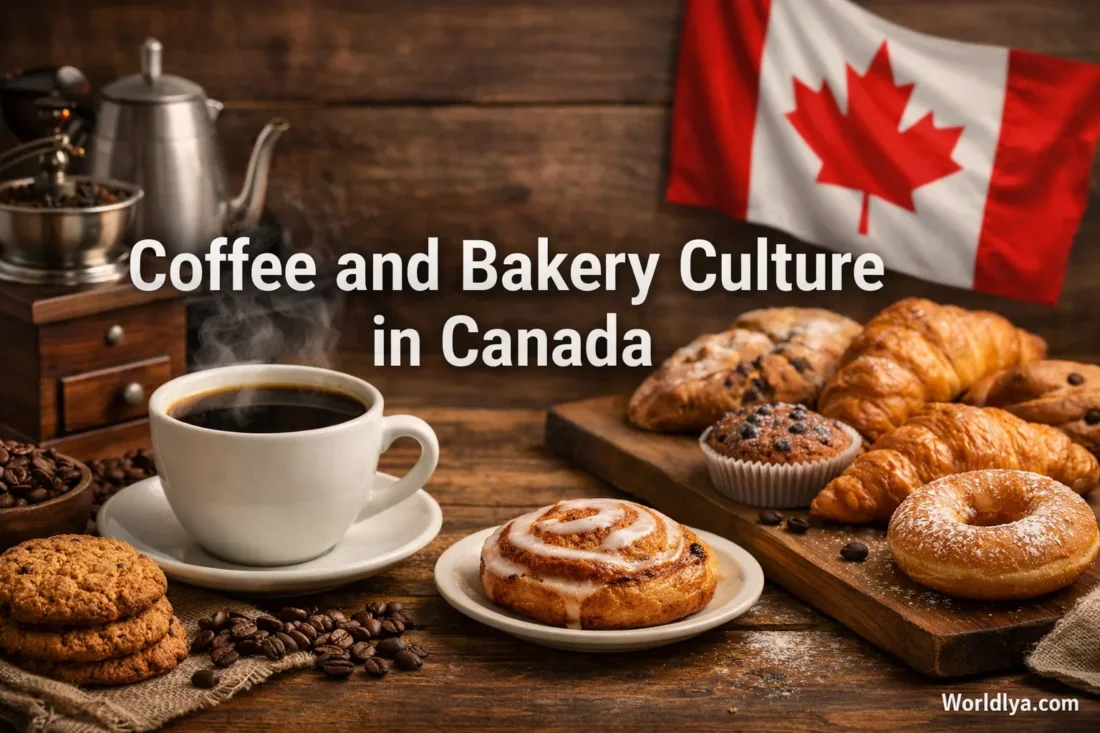
Coffee and baked goods in Canada aren’t just “a quick bite.” They’re a daily rhythm. A warm cup in your hands when the air feels crisp. The smell of fresh bread drifting out of a neighborhood bakery. A pastry case that makes you pause, even when you promised yourself you wouldn’t.
Quick Jump: Pick what you’re curious about and hop around. Or read it straight through like a slow sip.
The Canada Coffee Scene: Fast, Friendly, and Surprisingly Deep
Canada’s coffee habits live in two worlds that happily overlap:
- Grab-and-go coffee that fits into busy mornings, road trips, and quick meetups.
- Specialty cafés where beans, roasting styles, and brew methods get real attention.
That mix is the magic. One day you might want a simple, comforting cup. Another day you want a bright, fruity pour-over that tastes like someone bottled a sunrise. Both belong.
The “Coffee Run” Feeling
In many places across Canada, coffee is a social shortcut. “Want to grab a coffee?” often means let’s catch up—no big plan needed. It’s like meeting on a park bench, except the bench is warm and smells like espresso.
Small detail that matters: cafés tend to feel welcoming for short visits and long ones. Quick hello? Perfect. Laptop and a pastry for an hour? Also perfect.
Common Coffee Orders You’ll Hear
If you’re new to Canada’s coffee vocabulary, a few phrases pop up again and again:
- Double-double — brewed coffee with two creams and two sugars. It’s simple, sweet, and widely recognized.
- Regular coffee — usually brewed coffee; sweetness and milk/cream vary by place.
- Latte / cappuccino — espresso-based drinks with steamed milk (and foam for cappuccino).
- Americano — espresso diluted with hot water; clean and straightforward.
- Pour-over — hand-brewed coffee, often chosen for clarity and flavor detail.
Here’s a fun way to think about it: brewed coffee is the hoodie, espresso drinks are the tailored jacket, and pour-over is the chef’s tasting menu. Same category, different mood.
Watch idea: Seeing beans roasted and packed makes café culture feel more real. It’s oddly relaxing—like a screensaver you can smell.
The Bakery Counter: Where Canada Gets Cozy
Canadian bakery culture has a comforting everyday side—muffins, cookies, cinnamon buns—and a “local classic” side where each region quietly shows off.
Everyday Favorites
- Muffins (blueberry is a classic)
- Scones (often paired with coffee or tea)
- Cinnamon buns with soft centers
- Donuts and cake-style treats
- Fresh bread you can smell from the doorway
Signature Canadian Treats
- Butter tarts — small pastry tarts with a rich, sweet filling.
- Nanaimo bars — a layered, no-bake dessert bar with a chocolate top.
- Montreal-style bagels — smaller, denser, hand-rolled bagels, boiled in sweetened water and baked hot (often wood-fired).
- Maple-forward baking — pastries and cookies where maple adds warmth and depth.
One lovely thing: bakeries in Canada often feel community-sized. You’ll see regulars who know exactly what they’re ordering, and staff who recognize the “usual” without making it a big show. Quietly friendly is a vibe.
A good café-bakery combo is like a duet: coffee brings the melody, pastry brings the harmony.
Regional Snapshot: Five Places, Five Delicious Personalities
Canada is huge, so the “one true coffee-and-bakery culture” doesn’t exist. Instead, you get a set of flavors and habits that shift by region—like a playlist that changes as you travel.
West Coast Energy
Vibe: specialty coffee, local roasters, café patios when the weather cooperates.
Bakery moment: artisan bread, flaky pastries, and dessert bars you’ll “just try” and then think about later.
Prairie Comfort
Vibe: cozy cafés, warm drinks, and baked goods that feel like a hug.
Bakery moment: pies and berry-based desserts (Saskatoon berry shows up a lot in the best way).
Ontario Variety
Vibe: everything from quick chain coffee to serious third-wave cafés.
Bakery moment: butter tarts feel right at home here, alongside modern pastry shops and classic family bakeries.
Quebec Craft
Vibe: bakeries with strong traditions, plus cafés that take espresso seriously.
Bakery moment: Montreal-style bagels—hot, chewy, slightly sweet, and hard to stop at one.
Atlantic Warmth
Vibe: smaller cafés, friendly chats, and bakeries where the smell of fresh goods feels like an invitation.
Bakery moment: hearty breads, sweet squares, and local desserts that show up at gatherings and markets.
Coffee and Bakery Pairing Guide That Actually Works
If you’ve ever taken one sip of coffee and thought, “Wait… why is this suddenly better?”—that’s pairing doing its thing. The goal isn’t rules. It’s balance.
| Coffee Choice | What It Tastes Like | Best Bakery Match |
|---|---|---|
| Drip / Brewed Coffee | Comforting, familiar, easy-going | Muffin, donut, or a simple cookie |
| Latte | Creamy, mellow, slightly sweet | Cinnamon bun or a buttery pastry |
| Cappuccino | Foamy, toasty, espresso-forward | Croissant or a flaky danish |
| Americano | Clean, bold, less milky | Butter tart (sweet meets sharp) |
| Pour-over | Clear flavors, often fruity or floral | Shortbread or a light pastry (let the coffee shine) |
| Cold Brew | Smooth, low bite, quietly strong | Nanaimo bar or chocolate-forward dessert |
A Tiny Pairing Trick You Can Use Anywhere
- If the coffee is bitter or bold, pair it with something sweet.
- If the coffee is bright or fruity, pair it with something buttery.
- If the pastry is very rich, choose a coffee that feels clean (Americano or pour-over).
Try it once and you’ll start doing it automatically. Like matching socks, but tastier.
Build a Mini Café Tasting at Home (No Fancy Gear Needed)
You don’t need to copy a café. You can borrow the feeling. Here’s a simple way to make coffee-and-bakery culture part of your week.
- Pick one coffee style you like (brewed, latte, Americano, cold brew).
- Choose two small baked items with different textures (something flaky + something dense).
- Take one sip, one bite, then switch the order. You’ll notice new flavors.
- Write one sentence about what surprised you. That’s it.
Little challenge: Can you describe your coffee without saying “good” or “strong”? Try toasty, caramel-like, cocoa, berry, nutty. Your brain starts tasting more clearly when you name things.
Café and Bakery Etiquette: The Unwritten Rules
No stress here. Most places are easygoing. Still, a few habits make the experience smoother—for you and everyone around you.
- Order first (common in many cafés), then pick a seat.
- If it’s busy, keep your table footprint small—bags and coats tucked in.
- Ask questions if you’re curious. Baristas and bakers usually enjoy a simple, friendly “What do you recommend today?”
- Try one local item when you can. It’s the fastest way to feel the place.
Maple and the Sweet Side of Canada (A Quick, True Fact)
Maple shows up in Canadian baking for a reason: Canada is a major maple syrup producer. In 2024, Canada accounted for around 73% of global maple syrup production, and most Canadian production came from Quebec. In the same year, Canadian producers harvested 19.9 million gallons (about 75.3 million litres) of maple syrup.
Where Maple Fits Best
- In dough (subtle sweetness, warm aroma)
- In glazes for pastries and buns
- With nuts (maple + walnut is a classic-feeling combo)
Caffeine Smart Tips (Keep It Simple)
Coffee is part of the joy, so it helps to know your comfort zone. Health Canada notes that most healthy adults can keep total caffeine intake at or under 400 mg per day. If you’re sensitive to caffeine or have specific needs, checking official guidance is a calm, practical move.
- Hydrate normally (water plus coffee tends to feel best).
- Go smaller if you’re trying a stronger brew method.
- Try decaf when you want the ritual more than the buzz.
Quick Questions People Ask (And Honest Answers)
Is “double-double” always the same everywhere?
It’s most closely associated with Tim Hortons and usually means two creams and two sugars in brewed coffee. Other cafés may not use the phrase, but they’ll happily make the same idea if you ask clearly.
What makes a Montreal-style bagel different?
It’s typically smaller, denser, and a bit sweeter, with a larger hole. Many are boiled in sweetened water before baking, often at high heat (sometimes wood-fired), which helps create that distinctive chew and shine.
Do Canadian cafés only serve coffee?
Not at all. Many cafés have espresso, tea, and seasonal drinks—plus a rotating lineup of baked goods. If you don’t want coffee that day, you can still enjoy the café feeling.
What’s the easiest “Canadian-style” café pairing to try first?
Start simple: brewed coffee with a butter tart or a classic muffin. It’s approachable, cozy, and it teaches your taste buds how pairing changes the experience.