
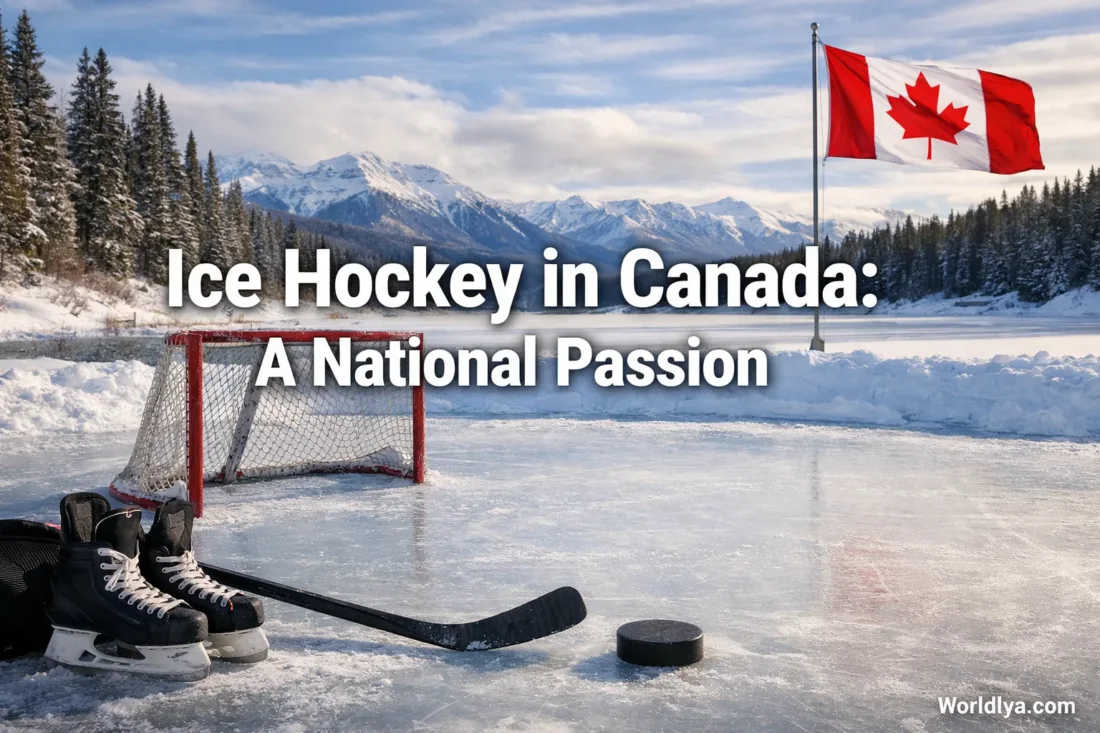
There’s a moment in Canada when winter stops feeling like “weather” and starts feeling like a season—freshly scraped ice, the crisp crack of a puck, and that little hush right before a breakaway. Ice hockey isn’t just a sport here. It’s more like a shared playlist everyone somehow knows by heart, whether you’re lacing skates for the first time or simply watching from the warmest seat in the building.
Overview
Vibe: Fast, skillful, community-driven.
Best For: Families, friends, travelers, and curious beginners.
Watch Tip: Follow one player for a whole shift—suddenly the game “clicks.”
What You’ll Learn
- Why hockey became a national habit
- The simplest way to understand off-side and icing
- How to watch a game and feel “in on it”
Tiny Challenge
Next time you watch hockey, count three quick passes in a row. That’s the game’s “rhythm section.” Once you hear it, you can’t un-hear it.
Why Hockey Feels Like Home In Canada
Canada has long winters, plenty of ice, and a deep love for gathering—so hockey fit like a glove. It’s a sport you can play in a big arena or on a small neighborhood rink, and it still feels like the same game. That accessibility matters. When a country can practice a skill together, year after year, it turns into culture.
Hockey also rewards the kinds of instincts winter teaches: balance, patience, and quick thinking. The puck can slide away like a secret you almost caught—then a teammate finds it and suddenly the whole play flips. That constant reset keeps fans leaning forward. You’re never far from the next surprise.
Hockey In Canada, Explained In One Sentence
It’s a social glue: a game that makes it easy to show up, cheer, learn, and belong—whether you’re on the ice or in the stands.
A True Timeline In Four Big Dates
You don’t need to memorize hockey history to enjoy the sport. Still, a few anchor points make everything feel more real—like learning the origin story of your favorite song.
| Year | What Happened | Why It Matters |
|---|---|---|
| 1875 | A widely recognized first organized indoor game is played at Victoria Skating Rink in Montreal. | It connects “early ice games” to the structured sport people recognize today. |
| 1893 | The Stanley Cup is first awarded. | It becomes hockey’s most famous trophy and a symbol of top-level excellence. |
| 1917 | The NHL is organized in Montreal. | Pro hockey gains a central league that helps shape the modern game. |
| 1994 | Ice hockey is officially recognized as Canada’s national winter sport. | It reflects how deeply hockey is woven into everyday Canadian life. |
Want a quick “wow” moment? The Hockey Hall of Fame has a short video about the original Stanley Cup. It’s the kind of clip you start watching “for a second” and finish five minutes later with a grin.
Hockey Basics Without The Headache
Here’s the simple core: two teams try to score by sending the puck into the opponent’s net. On the ice, a team normally has five skaters and one goalie at a time. The game is usually played in three periods.
If you ever feel lost, pick one thing to track: the blue line. That one line explains a lot of what people shout about.
The Two Rules Everyone Mentions
- Off-side: attackers can’t enter the offensive zone (past the blue line) before the puck does.
- Icing: you can’t just fire the puck all the way down the rink from your own half to kill time; it stops play.
Think of it like this: off-side protects timing, icing protects effort. Both keep the game moving.
Quick Roles On The Ice
- Forwards push offense and hunt for scoring chances.
- Defense protect their zone and start breakouts.
- Goalie guards the net and directs traffic.
A good shift looks like a relay race—one line bursts out, then swaps quickly so the speed stays high.
A Simple Watching Trick That Works
When the puck crosses into the offensive zone, ask yourself one question: Did the puck get in first? If yes, keep watching. If not, that whistle you hear is usually off-side. It’s a small habit that makes you feel surprisingly fluent.
Where To Experience Hockey Like A Local
You can experience Canadian hockey in more than one “volume level.” Some people love the bright lights of pro arenas. Others prefer the cozy energy of local rinks where you can hear skates carving the ice.
Big Arena Night
If you’re visiting Canada, a professional game is pure spectacle—music, fast pace, and a crowd that reacts like a single organism.
- Arrive early to watch warmups.
- Look up at the big screen during stoppages for replays and quick explanations.
- Dress smart: arenas can feel cool even indoors.
Community Rink Energy
Local games are where you feel the “heartbeat” of hockey—families, friends, and the easy kindness of people sharing hot drinks between periods.
- Sit close and you’ll hear the game’s natural soundtrack.
- Watch line changes—they’re like pit stops in a race.
- Ask questions—people usually love explaining hockey.
Outdoor “Shinny”
“Shinny” is casual pick-up hockey—less formality, more laughter. If you ever see a neighborhood rink full of skaters swapping in and out, you’re basically watching Canada do what it does best: turning winter into play.
Friendly note: outdoor rules can be flexible. The goal is fun and flow.
Canada’s Hockey “Pipeline,” Minus The Jargon
- Learn-To-Skate programs build confidence on ice.
- Minor Hockey introduces teamwork and simple systems.
- Teen Leagues sharpen skills and game sense.
- Major Junior (CHL) is a top development level with major fan energy.
- University and Pro pathways open up for players who keep climbing.
A Quick “Pro Tip” For New Fans
Watch two shifts in a row without looking at the puck. Track spacing instead—who’s open, who’s pressuring, who’s changing lines. It’s like watching a chessboard where every piece can sprint.
Starter Gear Checklist
Thinking about trying hockey (or a casual skate-and-shoot session)? Gear can feel overwhelming at first. The trick is to focus on the basics that make you feel stable, protected, and ready to enjoy the ice.
Must-Haves
- Skates that fit snug (no painful pressure points).
- Helmet (often with a face cage for beginners).
- Gloves for grip and comfort.
- Stick at a comfortable height (shops can help size it).
Nice-To-Haves
- Shin guards and elbow pads for extra confidence.
- Mouthguard if you’re playing contact-free practice games.
- Practice puck for off-ice stickhandling drills.
Simple truth: comfort keeps you coming back. The more relaxed you feel, the faster you improve.
Beginner Glossary You’ll Actually Use
| Term | Meaning | Quick Way To Remember It |
|---|---|---|
| Blue Line | Divides the rink into zones. | It’s the “timing gate” for off-side. |
| Faceoff | Restart of play when the puck is dropped. | Like a jump ball—quick battle for possession. |
| Power Play | One team has more skaters due to a penalty. | More space often means more chances. |
| Forecheck | Pressure applied in the opponent’s zone. | Hunting the puck before the other team sets up. |
| Shift | A player’s time on ice before changing lines. | Short bursts keep speed high. |
Fast FAQ
Is hockey only popular in big cities?
Not at all. Hockey culture thrives in small towns and suburbs too, especially where community rinks are social hubs during winter.
Do I need to know all the rules to enjoy a game?
No. Start with the blue line (off-side) and the idea of icing. Then let the rest come naturally—like learning lyrics by hearing the chorus a few times.
What’s the easiest way to follow the action on TV?
Watch the players, not just the puck. Teams move in patterns—once you notice those shapes, the game feels slower (in a good way).
Is it okay to attend a game if I’m new to hockey?
Absolutely. Hockey crowds are used to first-timers. If you’re curious and respectful, you’ll fit right in.
What makes Canadian hockey feel different?
It’s the mix of community rinks, winter tradition, and a long-running pro scene. You can feel the same spirit at many levels of play.
References
- National Sports of Canada Act (Justice Laws Website)
- Official Symbols of Canada: Hockey (Government of Canada)
- March 3, 1875: First Organized Hockey Game (McGill University)
- A Brief History of the NHL (NHL.com)
- Stanley Cup History (Hockey Hall of Fame)
- Off-side Rule (Hockey Canada Rulebook)
- Icing Rule (Hockey Canada Rulebook)
- About the CHL (Canadian Hockey League)
- Stanley Cup (The Canadian Encyclopedia)