
Niagara Falls hits you like a live concert you didn’t know you bought tickets for. You hear the roar first, then the mist, then that sudden grin when you realize: yes, this is real. And once you’ve soaked up the classic views, Canada keeps handing you encore after encore—mountain drives that feel unreal, coastal trails that smell like cedar and sea spray, and cities that know how to entertain without trying too hard.
Quick Navigation
- Niagara Falls: The Classic, Done Right
- Toronto and The Great Lakes
- Québec City and Montmorency Falls
- The Canadian Rockies: Banff, Jasper, and The Icefields Parkway
- Vancouver Island: Beaches and Rainforest
- Atlantic Canada: PEI, Fundy, and The Cabot Trail
- Gros Morne: Wild Geology, Big Views
- Build Your “Beyond Niagara” Itinerary
- Practical Planning That Feels Effortless
Read This If You Want…
- Real planning help, not fluff
- Ideas that fit short trips and big adventures
- Scenery, neighborhoods, and nature—kept safe and family-friendly
Your Canada Mood Board
- Mist + Thunder at Niagara
- High Peaks in the Rockies
- Rainforest + Ocean on Vancouver Island
- Coastal Drives in Atlantic Canada
Niagara Falls: The Classic, Done Right
Niagara Falls is actually three waterfalls—Horseshoe Falls (the biggest), American Falls, and Bridal Veil Falls. That detail matters because it changes how you plan your views: different angles, different vibes, different “wow” moments.
Niagara Fast Facts
- The Canadian Horseshoe Falls drops about 57 metres.
- During peak daytime tourist hours, more than 168,000 cubic metres of water can go over the crest each minute.
- Bring a light waterproof layer—mist is basically the local confetti.
How To Get the “I’m Really Here” Feeling
If you do one thing, make it a close-up experience. The mist, the sound, the vibration under your shoes—photos can’t replicate that. Think of it like watching a storm from a window versus stepping onto the porch. Same storm. Totally different story.
- Go low for the full-body effect: river-level viewpoints and walkways give you the scale.
- Go behind for a new angle: tunnel-style experiences let you feel the power from the side and behind the water.
- Go early if you like breathing room: mornings often feel calmer and more personal.
A Two-Day Niagara Plan That Doesn’t Feel Rushed
Day 1: The Big Hits
- Start with a classic overlook and let your eyes adjust to the scale.
- Do a close-up falls experience (mist-friendly clothes help).
- Take an easy riverside stroll—short distances deliver huge views.
- After dark, catch the falls illumination if it’s running that night.
Day 2: The “Beyond the Falls” Day
- Choose one nature stop (gorge trails, gardens, or a scenic parkway stretch).
- Book a relaxed lunch—Niagara days are better with pauses.
- Pick one extra: a lookout tower, a historic spot, or a family attraction.
- Finish with a sunset viewpoint if the skies cooperate.
| Niagara Moment | Best Time | Why It Works | Bring |
|---|---|---|---|
| Mist Close-Up | Late morning | Strong light + full energy | Light waterproof layer |
| Riverside Walk | Afternoon | Easy pace, lots of viewpoints | Comfortable shoes |
| Evening Glow | After dark | Illumination turns it cinematic | Warm layer in cooler seasons |
Small Tip, Big Payoff If you’re choosing between “more activities” and “more time looking,” pick the looking. Niagara is one of those places where lingering is the upgrade.
Toronto and The Great Lakes: Easy Wins After Niagara
Toronto is the kind of city that lets you be spontaneous. Want skyline views? You’ve got them. Want neighborhoods with coffee, parks, and people-watching? Also covered. And if you like a single landmark that instantly orients you, the CN Tower rises about 553 metres above the city.
What To Do in Half a Day
- Skyline viewpoint (day or night—different mood).
- Waterfront walk for fresh air and open space.
- One neighborhood loop: browse, snack, repeat.
What To Do in a Full Day
- Add a museum or gallery for an indoor reset.
- Take a short ferry ride for a mini “getaway” feeling.
- Finish with dinner in a lively area and an easy evening stroll.
Quick Question Are you a “see everything” traveler, or a “feel the place” traveler? Toronto rewards the second type. Pick fewer stops, walk more, and you’ll remember the day as a story—not a checklist.
Québec City and Montmorency Falls: Cobblestones and a Surprise Waterfall
Québec City can feel like stepping into a postcard—stone buildings, scenic viewpoints, and streets that invite slow walking. Then, just outside the core, Montmorency Falls drops about 83 metres, which is taller than Niagara. Different style, different setting, same instant “wow.”
A Simple Way To Spend a Day Here
- Start in the historic district and take it slow—this is a “look up” city.
- Walk along a scenic promenade or viewpoint route.
- Head to Montmorency Falls for boardwalks, bridges, and fresh-air views.
- End with a cozy meal and an evening wander under warm lights.
Some places are loud in a fun way. Québec City is quieter—like a great book you can’t put down.
The Canadian Rockies: Banff, Jasper, and The Icefields Parkway
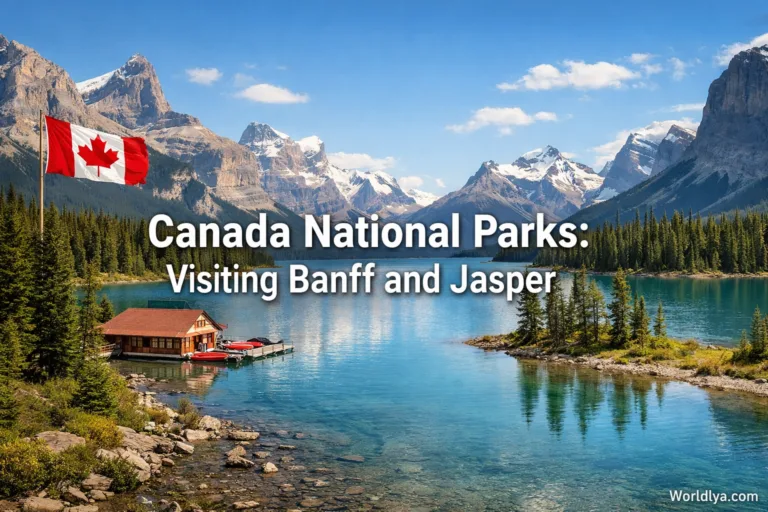
If Niagara is the headline act, the Rockies are the multi-day festival. Banff National Park is Canada’s first national park, and the landscapes are the kind that make you stop mid-sentence. Lakes glow, peaks cut the sky, and short hikes can deliver views that feel like you earned them.
Banff and Jasper: How To Choose
| Pick This If You Want… | Banff Area | Jasper Area |
|---|---|---|
| Classic Alpine Lakes | Strong match | Great options too |
| More Space to Breathe | Busy in peak season | Often feels more spread out |
| Road-Trip Flow | Perfect starting point | Great finishing point |
The Icefields Parkway: A Drive Worth Planning Around
The Icefields Parkway (Highway 93 North) runs about 232 km between the Lake Louise area and Jasper. It’s not “just a drive.” It’s a full day of viewpoints, short walks, and that repeated moment of pulling over because the next curve looks even better than the last.
Icefields Parkway Know-Before-You-Go
- Services can be limited along the route in certain seasons—fuel up and pack snacks.
- Give yourself permission to stop a lot. That’s the point.
- Layer up—mountain weather loves surprises.
A Rocky Mountains Mini-Itinerary
- Day 1–2: Base yourself near Banff/Lake Louise for lakes, viewpoints, and short hikes.
- Day 3: Drive the Icefields Parkway slowly—think “scenic day,” not “transfer day.”
- Day 4–5: Explore Jasper’s trails, lakes, and wide-open views.
Vancouver Island: Beaches and Rainforest in the Same Day
Vancouver Island feels like nature turned the saturation up. In Pacific Rim National Park Reserve, you’ll find long sandy beaches and temperate rainforest trails—two totally different textures, minutes apart. One moment you’re walking boardwalk paths under mossy trees, the next you’re staring at a horizon that looks endless.
Do This If You Have 3–4 Hours
- A short rainforest loop (boardwalk sections are great for easy pacing).
- Beach walk with a thermos drink and zero agenda.
- A viewpoint stop right before sunset if you can time it.
Do This If You Have a Full Day
- Mix rainforest trails, beach time, and a relaxed meal break.
- Check tide times if you’re exploring rocky shoreline areas.
- End with a scenic lookout—coastlines do “dramatic” naturally.
Little Metaphor The island is like a playlist with two perfect tracks back-to-back: forest, then ocean. Don’t skip either.
Atlantic Canada: PEI, Fundy, and The Cabot Trail
If your idea of a perfect day includes salty air and scenic roads, Atlantic Canada delivers. You can go from gentle beaches to dramatic tides to a looping coastal drive that keeps making you pull over for “one more photo.”
Prince Edward Island National Park: Red Cliffs and Dunes
Prince Edward Island National Park is an easygoing kind of beautiful—sandy beaches, dunes, and calm coastal scenes that feel made for long walks. It’s the “exhale” part of a Canada trip.
Fundy National Park: The Tide Show
At the Bay of Fundy, the tides are the main event. At the head of the bay, the tide can rise as much as 16 metres—about the height of a four-story building. That’s not a trivia fact. You feel it when the shoreline changes shape in front of you.
Fundy Tide Game Plan
- Check tide times before you go—timing changes the whole experience.
- Plan two visits if you can: one at low tide, one at high tide.
- Choose guided walks where offered for a smoother, more informative visit.
The Cabot Trail: A Loop Drive With a Reputation
The Cabot Trail is a scenic 298 km loop on Cape Breton Island, and parts of it run through Cape Breton Highlands National Park. It’s cliffs, ocean, lookoffs, and that satisfying road-trip rhythm: drive, stop, breathe, repeat.
- Give it time. A couple of days lets the trail feel like a journey, not a race.
- Chase viewpoints. Even quick stops can feel huge.
- Stay flexible. Coastal weather can change the mood—in a good way.
Gros Morne: Wild Geology, Big Views
Gros Morne National Park in Newfoundland and Labrador is a place where the land looks like it’s still being built. Fjords, cliffs, wide-open vistas—then you learn it’s also recognized as a UNESCO World Heritage Site. It’s scenic, yes. It’s also the kind of landscape that makes you curious while you’re staring at it.
How To Enjoy Gros Morne Without Overplanning
- Pick one “big view” trail or lookout as your anchor for the day.
- Add one easy walk for extra texture—bogs, coastal paths, forest loops.
- Leave time for spontaneous stops. Gros Morne rewards detours.
Some places show you nature. Gros Morne shows you the bones of the planet—without needing a science degree to enjoy it.
Build Your “Beyond Niagara” Itinerary
Canada is enormous, so the secret is choosing a shape for your trip. Are you stitching together highlights across the country, or going deep in one region? Either works. The best trip is the one that matches your energy.
| Your Travel Style | Best-Fit Route Idea | Ideal Trip Length | Signature Moment |
|---|---|---|---|
| Waterfall Lover | Niagara + Toronto + Québec City + Montmorency Falls | 6–9 days | Seeing two very different waterfall worlds |
| Mountain Dreamer | Banff + Icefields Parkway + Jasper | 5–10 days | A full day on the Icefields Parkway |
| Coast and Forest | Vancouver Island + Pacific Rim | 4–8 days | Rainforest walk, then beach sunset |
| Ocean Road-Trip | PEI + Fundy + Cabot Trail | 7–12 days | Timing the Bay of Fundy tides perfectly |
| Epic and Unusual | Newfoundland + Gros Morne | 6–12 days | Landscapes that feel otherworldly |
Mini Challenge
Pick one “must-see” (the big icon) and two “slow moments” (a long walk, a scenic drive, a relaxed neighborhood). That balance keeps the trip feeling rich instead of hectic.
Practical Planning That Feels Effortless
When To Go: The Vibe by Season
- Spring: Fresh energy, comfortable sightseeing, and fewer peak crowds.
- Summer: Long days, full schedules, and lively cities—book earlier for popular regions.
- Fall: Crisp air, beautiful colors, and great walking weather.
- Winter: Cozy cities and dramatic scenery in many regions—pack layers and plan indoor breaks.
Getting Around: What Works Best
City-Heavy Trips
- Public transit + walking keeps things simple.
- Choose hotels where you can step out and start exploring immediately.
- Use day tours or short rentals for a single big day trip.
Nature and Road Trips
- Car travel gives you the most freedom in parks and coastal regions.
- Plan one “scenic day” in the middle—no tight schedule, just stops.
- Check official park pages for seasonal conditions and services.
What To Pack: A Simple Checklist
- Layers (cities and mountains both love temperature swings)
- Comfortable shoes (you’ll walk more than you think)
- Light waterproof shell (Niagara mist, coastal drizzle, surprise showers)
- Reusable water bottle (easy win for long days)
- Small day bag (snacks, camera, extra layer)
Safety and Comfort Tips That Keep the Day Smooth
- Stay on marked paths and behind railings at waterfalls and cliffs—views are better when you’re relaxed.
- In parks, give wildlife lots of space and enjoy it from a respectful distance.
- Carry a few snacks and extra water on long scenic drives.
- If you’re traveling with kids, build in short “free time” breaks—playgrounds, beaches, easy trails.
Sources
- Niagara Parks Commission — Niagara Falls Geology, Facts & Figures
- CN Tower — History
- Parks Canada — Banff National Park
- Parks Canada — Jasper National Park
- Parks Canada — Icefields Parkway (Highway 93 North)
- Parks Canada — Pacific Rim National Park Reserve
- Parks Canada — Tides in Fundy National Park
- Tourism Nova Scotia — Explore the Cabot Trail
- Parks Canada — Prince Edward Island National Park
- Parks Canada — Gros Morne National Park
- Ville de Québec — Parc de la Chute-Montmorency
More from Canada Guide
- Canadian Inventions: Innovation and Famous Discoveries
- Major Canadian Cities: Toronto, Vancouver and Montreal
- Canada National Parks: Visiting Banff and Jasper
- Canadian Social Etiquette: Politeness and Public Manners
- Universities in Canada: Campus Life and Academic Culture
- Cost of Living in Canada: Daily Expenses and Shopping