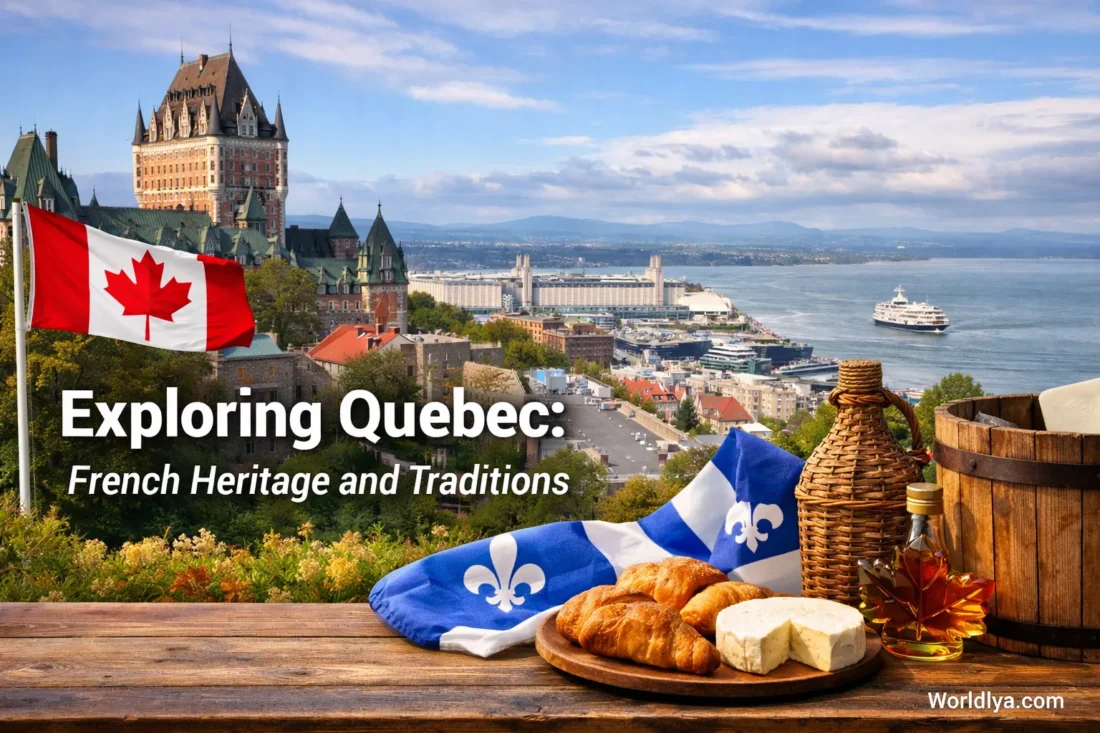
Quebec has a funny talent: it can make you feel like you’ve crossed an ocean without ever leaving North America. One minute you’re hearing French float out of a café doorway, the next you’re following the smell of fresh bread down a cobblestone street. If you’re curious about French heritage and the traditions that keep it alive, Quebec is the kind of place that rewards slow travel—lingering, tasting, listening, smiling back.
Quebec In A Glance
Vibe
Warm, welcoming, and proudly French-speaking
Signature Traditions
Winter Carnival, sugar shack season, music and food festivals
Iconic Place
Old Québec: ramparts, upper and lower town, river views
Easy Win
Learn a few French phrases and watch doors open
Want a quick path through this guide?
Why Quebec Feels Like A Little Slice Of France In North America
Quebec’s French heritage isn’t a museum display—it’s everyday life. You’ll notice it in the rhythm of conversation, in neighborhood bakeries, in the way people greet you with a quick bonjour, and in traditions that show up year after year like a favorite song. The province has its own personality, too: a mix of European-style charm and modern Canadian comfort.
If you’re wondering where to feel that heritage most intensely, point your compass toward Québec City and the historic streets of Old Québec. That said, you don’t have to stay in one place. Quebec’s French identity stretches from city neighborhoods to small towns, countryside markets, and riverside villages where time seems to walk a little slower.
Old Québec: Stone Streets, French Flair, and Storybook Views
Old Québec is the kind of place where you catch yourself slowing down—without even trying. The historic district is famously divided into Upper Town and Lower Town, linked by steep streets, staircases, and lookout points that beg for a photo. Think: boutique-lined lanes, cozy cafés, and stone buildings that make the whole area feel like a living postcard.
What makes it extra special is how complete it feels. The district is a UNESCO World Heritage Site, celebrated as a remarkably well-preserved example of a fortified colonial town. Instead of rushing from landmark to landmark, try this: pick one small area (Place Royale is a favorite), then let your curiosity do the steering.
A Simple Walk That Works
- Start in Upper Town for wide views and easy wandering.
- Follow the streets down toward Lower Town for photogenic corners and river energy.
- Pause for something warm—coffee, cocoa, a pastry—and do a little people-watching.
- Loop back by strolling near the historic walls and gates (especially beautiful at golden hour).
Rhetorical question time: why treat a place like this like a checklist? Let it be a slow experience. Your camera roll will thank you.
The French Language: Enjoy The Sound Without Stress
Yes, Quebec is proudly French-speaking. No, you don’t need perfect French to have a great time. In many visitor-friendly areas, you’ll find people who can switch to English—especially in major cities and popular attractions. Still, a small effort in French can feel like a magic key: it unlocks warmer smiles, smoother interactions, and a sense that you’re participating instead of just observing.
Mini Phrase Kit That Goes A Long Way
| Say This | Meaning | When To Use It |
|---|---|---|
| Bonjour | Hello / Good day | Walking into shops, cafés, hotels |
| Merci | Thank you | Anytime (seriously, anytime) |
| S’il vous plaît | Please | Ordering, asking for help |
| Excusez-moi | Excuse me | Getting attention politely |
| Parlez-vous anglais? | Do you speak English? | When you need a language bridge |
Tip: Start every interaction with bonjour. It’s small, it’s easy, and it sets a friendly tone instantly.
Quebec Flavors: Comfort Food With French Roots
Food is one of the fastest ways to understand a place, and Quebec makes that deliciously easy. You’ll see French influence in pastries and sauces, but you’ll also find a down-to-earth love for hearty comfort. It’s the kind of cuisine that fits a snowy day and a sunny patio equally well.
Classic Bites To Look For
- Poutine: fries, cheese curds, gravy—simple, iconic, and oddly addictive.
- Tourtière: a traditional meat pie often enjoyed in colder months.
- Split pea soup: cozy, filling, and perfect after a long walk.
- Fresh bread and pastries: baguettes, croissants, and local bakeries that smell like heaven.
- Local cheeses: ask for a tasting plate if you spot one.
Where Food Culture Shines
- Public markets for fresh produce, local treats, and giftable snacks.
- Neighborhood cafés for slow mornings and people-watching.
- Family-style dining that feels like you got invited to someone’s table.
- Seasonal festivals where street food meets local pride.
Food in Quebec isn’t just fuel—it’s a friendly conversation you can taste.
Sugar Shack Season: Quebec’s Sweetest Tradition
When early spring arrives, Quebec leans into a tradition that feels both cozy and celebratory: the sugar shack (often called cabane à sucre). Families and friends gather for a hearty meal, maple-flavored treats, and that unmistakable “we’re finally thawing out” energy. If you’ve ever wanted to eat something that tastes like a warm hug, this is your moment.
Maple By The Numbers (Quick And Real)
- In 2024, Canada produced about 73% of the world’s maple syrup.
- In 2024, about 90% of Canada’s maple syrup production came from Quebec.
That’s not just a fun fact—it’s a clue to how deeply maple traditions run here.
Traditions That Keep Quebec’s French Heritage Feeling Alive
Quebec traditions aren’t shy. They’re playful, social, and designed for participation. Even if you arrive as a spectator, you’ll probably leave feeling like you were pulled into the dance—sometimes literally.
Québec Winter Carnival: Joy On Ice
One of Quebec’s most famous winter celebrations is the Québec Winter Carnival, known for its bright energy in the coldest season. Its cheerful mascot, Bonhomme, is a true local icon—white as snow, often seen with a red winter hat and a traditional sash. If you want winter to feel less like a challenge and more like a party, this is the vibe.
Make It Feel Like A Tradition
- Dress in layers so you can stay outside longer (comfort keeps your mood bright).
- Try a warm treat and a sweet maple snack while you wander.
- Snap a photo with Bonhomme if you spot him—yes, it’s delightfully touristy. Do it anyway.
Everyday Traditions You’ll Notice Fast
Not every tradition comes with a festival schedule. Some show up in small, daily moments—the kind that make you feel like you’re getting a real glimpse of Quebec life.
- The greeting ritual: a quick bonjour when you enter a shop is normal and appreciated.
- Lingering meals: people take their time, especially when it’s cozy outside.
- Seasonal excitement: winter celebrations, spring maple season, summer markets, autumn colors—each season has its own personality.
- Music that moves: traditional fiddle tunes and toe-tapping rhythms still pop up, especially at community events.
French Heritage Spots Worth Building A Day Around
If you like places where architecture does half the storytelling, Quebec is going to feel like a feast. You’ll find stone façades, charming squares, and viewpoints that make you stop mid-sentence. Try treating your day like a playlist: a few “big hits,” then plenty of slow, surprising tracks in between.
| Place | Why It Feels French | How To Enjoy It |
|---|---|---|
| Old Québec | Historic streets, classic architecture, and a “European” city feel | Walk slowly, take breaks, follow your curiosity |
| Riverside Promenades | Big views, fresh air, and a cinematic backdrop | Go at sunrise or golden hour for the best atmosphere |
| Village-Style Towns | Local bakeries, small markets, and warm community energy | Plan a relaxed day trip and leave space to explore |
| Local Museums | Art, design, and culture presented with Quebec’s distinct voice | Pick one museum and take your time instead of rushing |
Nature Escapes That Still Feel Like Quebec
Quebec’s French heritage isn’t limited to cities. Step outside and you’ll find landscapes that feel made for slow drives, small inns, and scenic stops that turn into accidental highlights. Mountains, rivers, forests—everything feels bigger here, yet somehow still intimate when you find a quiet lookout or a lakeside trail.
- The Laurentians: classic outdoor time—especially loved for fresh air and seasonal color.
- Charlevoix: picturesque roads, viewpoints, and charming villages with a strong local identity.
- Saguenay: dramatic scenery and a chance to feel truly “away.”
- Gaspé Peninsula: coastal views that make you want to roll the windows down and play your favorite song.
Little Habit That Changes Everything
Plan one “must-do” outdoors, then let the rest of the day be flexible. Quebec is at its best when you give it room to surprise you—like a good song that gets better the longer you listen.
A Friendly 3-Day Quebec Plan
Not sure how to tie heritage, food, and traditions into one smooth trip? Use this as a flexible template. Swap pieces around based on season and your energy level.
Day 1: Old Québec Slow Walk
- Morning: choose one neighborhood in Old Québec and explore without rushing.
- Afternoon: markets, cafés, and a relaxed meal.
- Evening: a scenic viewpoint and a gentle nighttime stroll.
Day 2: Traditions and Tastes
- Morning: museum or cultural center to get context and stories.
- Afternoon: local specialties—try a few small bites instead of one big meal.
- Evening: seasonal event if available (winter celebrations, summer festivals, market nights).
Day 3: Nature With A Quebec Twist
- Morning: day trip to a nearby scenic region.
- Afternoon: photo stops, short trail, and a calm lunch.
- Evening: back in town—one last café moment to soak it all in.
Practical Tips For A Smooth, Happy Quebec Experience
- Open with “bonjour” before switching languages. It’s a small courtesy that goes a long way.
- Dress for the season. In winter, prioritize warmth; in shoulder seasons, pack layers.
- Walk more than you drive in historic areas. The best moments often happen on foot.
- Try “one new thing” per day: a dish, a phrase, a neighborhood, a small day trip.
- Leave breathing room. Quebec rewards slow travel. Rushing is the quickest way to miss the charm.
Quick Questions People Usually Ask
Is Quebec “only” for French speakers?
Not at all. French is central to daily life, but visitors can have an easy experience—especially in major tourist areas. A few polite French phrases help you connect, even if you rely on English after that.
When is the best time to feel the traditions?
Winter is famous for festive energy (including Carnival season), spring is beloved for maple traditions, summer is lively with markets and festivals, and autumn brings crisp air and brilliant scenery. Choose based on the mood you want.
What’s one tradition that feels truly “Quebec” fast?
Sugar shack season is a strong contender. It’s warm, social, food-centered, and genuinely local—exactly the kind of tradition that turns a trip into a memory.
What should I do if I feel shy about speaking French?
Keep it simple: say bonjour, smile, and try one short sentence. Most people appreciate the effort. If you get stuck, Parlez-vous anglais? is a polite bridge.
Sources
- UNESCO World Heritage Centre — Historic District Of Old Québec
- Parks Canada — Historic District Of Old Québec
- Parks Canada — Fortifications Of Québec National Historic Site
- Carnaval De Québec — Bonhomme
- Agriculture And Agri-Food Canada — Statistical Overview Of The Canadian Maple Industry (2024)
- Institut De La Statistique Du Québec — The Languages Spoken In Québec In 2024 (Highlights)
- Université Laval — Research Project On Maple Syrup Yield
More from Canada Guide
- Lakes and Rivers of Canada: Spectacular Natural Wonders
- Winter in Canada: Best Activities and Experiences
- Canada Economy: Major Industries and Natural Resources
- Popular Sports in Canada: From Lacrosse to Basketball
- Major Canadian Cities: Toronto, Vancouver and Montreal
- Canada Government Structure: A Simple Overview