Driving in Germany can feel like stepping onto a well-run train platform: everyone moves fast, yet it still looks orderly. The Autobahn gets most of the spotlight, but the real secret is simple—learn the rhythm, follow the signs, and you’ll blend in comfortably.
Quick Snapshot of Autobahn Etiquette
- Keep right as your default habit; use the left lane mainly for passing.
- Many sections have posted limits or variable electronic limits—always follow the current sign.
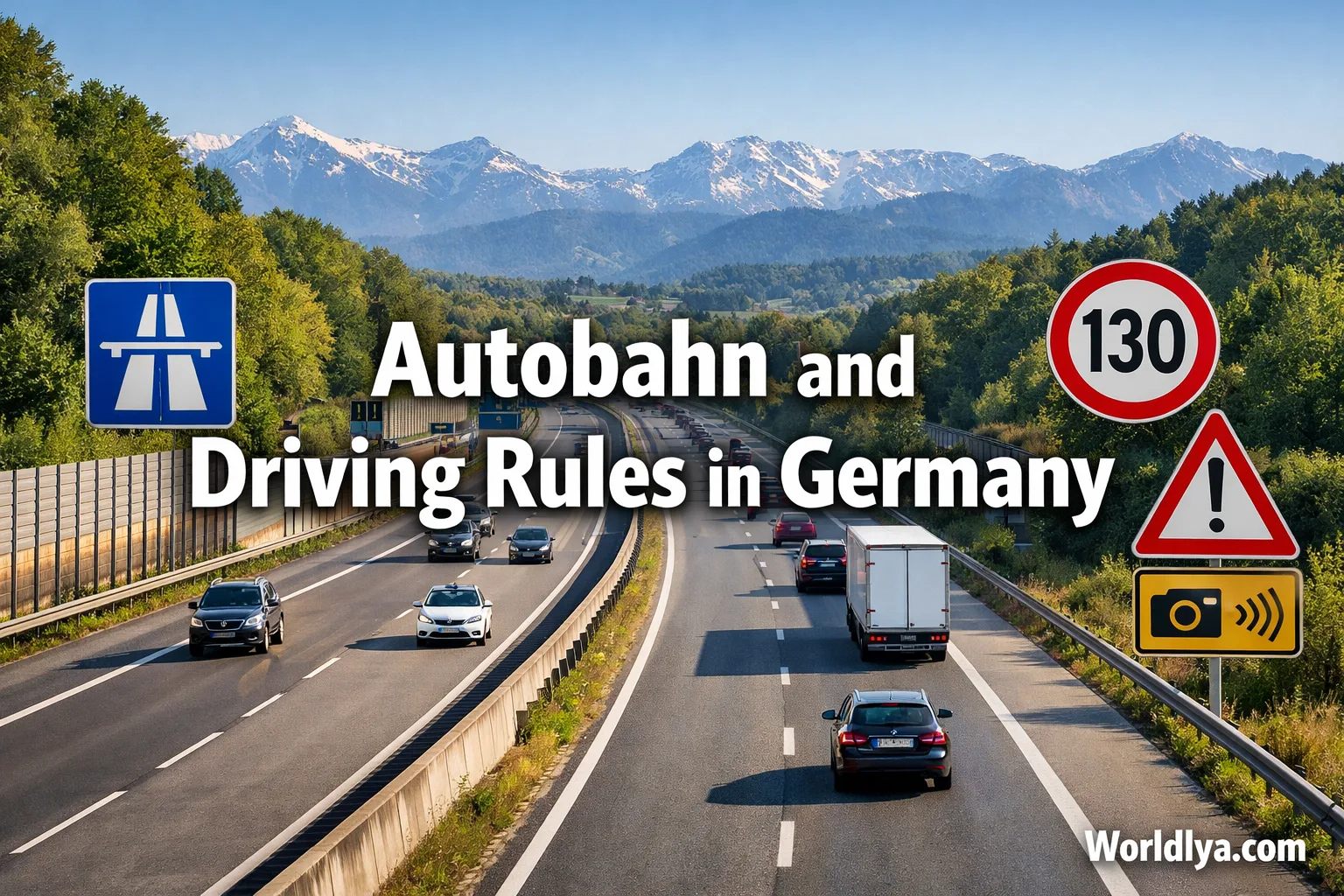
- In unrestricted stretches, 130 km/h is the well-known advisory speed (Richtgeschwindigkeit).
- In slow or stopped traffic, drivers create an emergency corridor (Rettungsgasse) early—don’t wait for sirens.
- In wintry road conditions, Germany has a winter tire requirement (it’s based on conditions, not a fixed date).
Autobahn Basics: What Makes It Different
The Autobahn is Germany’s high-speed highway network. Some parts have no general speed limit for cars, which sounds wild… until you notice how seriously people take lane discipline. Think of it like a fast-moving river: the current is smooth when everyone stays predictable.
You’ll also see lots of limit changes—especially near cities, interchanges, curves, bridges, and construction zones. If you’re waiting for a “one rule forever,” you’ll be disappointed (and a bit stressed). Let the signs lead.
Little Detail That Saves Big Stress
The “end of all restrictions” sign (white circle with diagonal black stripes) often means you’re back to the default rule: follow conditions and drive responsibly—yet still watch for the next posted limit.
Ever seen a speed limit vanish and felt your foot get “itchy”? Totally normal. Just keep your space cushion and stay calm—traffic can change in seconds.
Typical Speed Limits Overview
Here’s a practical overview you can memorize in one sip of coffee. Real-world limits still depend on signs, vehicle type, weather, and local rules.
| Road Type | Common Default | What You’ll Actually See |
|---|---|---|
| Built-up areas (cities/towns) | 50 km/h | 30 zones near schools/neighborhoods are common |
| Rural roads (outside towns) | 100 km/h | Lower limits near curves, villages, or narrow stretches |
| Autobahn | No single default limit | Posted limits (often 80–130), variable signs, and some unrestricted sections |
| Unrestricted Autobahn stretch | 130 km/h (advisory) | Many drivers go faster; your job is to stay predictable and spaced out |
On the Autobahn, speed matters less than discipline. The smoothest drivers aren’t the fastest—they’re the most consistent.
Joining and Leaving: Merging Without Drama
German on-ramps are designed for acceleration, so use them. The merge is not a polite negotiation; it’s a timing exercise.
- Accelerate early on the ramp to match Autobahn speed as closely as you safely can.
- Scan mirrors and shoulder-check; aim for a gap, not a “please let me in” moment.
- Signal clearly, merge smoothly, then settle into the right lane.
- When exiting, move right in advance; avoid last-second lane changes.
Fast Lane Reality Check
If you move left to pass, do it with purpose. The closing speeds can be surprising—someone may appear in your mirror like a dot, then suddenly they’re right there. Give yourself a comfortable margin. It’s just smarter.
Lane Discipline: Keep Right, Pass Left
This is the Autobahn’s “unwritten rule” that’s actually very real in practice: the left lane is a passing tool, not a long-term home. Treat it like a sharp kitchen knife—use it, then put it back where it belongs.
Do This
- Keep right when you’re not passing.
- Pass smoothly, then return right when safe.
- Use signals early; make your plan obvious.
- Leave generous room at high speed.
Avoid This
- Camping in the left lane “just because.”
- Passing on the right (except in specific slow-traffic situations).
- Tailgating to “push” someone to move.
- Sudden lane darts near exits.
Distance and Speed: The Two Big Safety Levers
If you only remember one thing, make it this: space buys time. On fast roads, time is everything. A simple “two-second gap” is a nice baseline, and going faster means you’ll want more.
- Keep a bigger gap in rain, fog, darkness, or heavy traffic.
- Watch brake lights ahead like you’re reading subtitles—early signals help you react smoothly.
- Use hazard lights when approaching sudden slowdowns or traffic jams. It’s a common, expected warning.
Signs and Signals You’ll See All the Time
German road signage is consistent, so once you learn a few patterns, everything gets easier. Here are the ones that matter most on long drives.
- Round sign with red border: a mandatory limit (speed, no entry, restrictions).
- Electronic gantry signs: variable limits that can change with traffic and weather.
- White circle with diagonal black stripes: end of certain restrictions (watch what comes next).
- Baustelle: construction zone—expect narrow lanes and lower limits.
- Umleitung: detour—follow the arrows, not your instincts.
Rettungsgasse: The Emergency Corridor Rule
This is one of the most important habits to learn in Germany, and it’s easy once you see the pattern. When traffic slows to a crawl or stops on multi-lane roads, drivers create a clear path for emergency services. Do it early, do it calmly.
2 Lanes
Left lane moves left. Right lane moves right. The corridor forms in the middle.
3+ Lanes
Leftmost lane moves left. All other lanes move right. The corridor forms between lane 1 and lane 2.
One more thing: the shoulder is not the emergency corridor. Keep it clear unless you truly need it for a breakdown.
Weather, Night Driving, and Winter Tires
Germany’s driving culture is confident, yet it’s also very weather-aware. Rain, fog, and winter conditions change the whole game, especially at Autobahn speeds.
- Winter tires are required in wintry road conditions (snow, slush, black ice). It’s not about the calendar—it’s about what’s on the road.
- If visibility drops, slow down early and keep your lane changes minimal.
- Rest areas are your friend. A short stop can reset your focus better than powering through.
A Quick Note on “Going Fast”
You don’t need to chase high speeds to enjoy Germany’s roads. The trip still feels smooth at moderate speeds, and it’s definately more relaxing when you’re learning the flow.
Documents and Road-Trip Essentials
Before you hit the road, make sure the basics are handled. This list keeps things simple and practical.
Bring With You
- Valid driver’s license (some visitors may need an International Driving Permit depending on where the license was issued).
- ID (passport or national ID).
- Vehicle registration and insurance documents.
- Payment method for fuel and tolls in neighboring countries (Germany’s Autobahn is generally toll-free for cars, yet rules can differ elsewhere).
Keep in the Car
- Warning triangle
- High-visibility vest (easy to grab before stepping out)
- First-aid kit
- If you plan city driving: check if an Umweltplakette (emissions sticker) is needed for certain environmental zones
Fuel, Rest Stops, and Service Areas
Autobahn service areas are convenient, and they’re built for long-distance comfort. You’ll typically find fuel, food, toilets, and parking. Prices can vary, so if you’re budgeting, you might top up near towns instead of directly on the highway.
- Raststätte: full service area with facilities
- Parkplatz: parking area, sometimes with limited services
- Take breaks before you feel tired; it keeps your reactions crisp
First-Time Autobahn Driver Checklist
If you want one clean routine to follow, this is it. Save it, screenshot it, make it yours.
- Set mirrors, buckle up, and get comfortable before moving.
- On the ramp: accelerate, scan, signal, merge.
- Stay right unless you’re passing.
- Keep a healthy gap, then increase it when speeds rise.
- Watch for variable signs and construction zones.
- When traffic slows suddenly, warn behind you and slow smoothly.
- In a traffic jam: form the Rettungsgasse early.
- Exit calmly and early; don’t make last-second decisions.
Mini FAQ
Is It True the Autobahn Has No Speed Limit?
Some sections don’t have a general limit for cars, yes. Many sections still have posted or variable limits. The safest mindset is: the sign you see now is the rule you follow now.
Do I Need to Drive Very Fast to “Fit In”?
Nope. You can drive comfortably at reasonable speeds, keep right, pass when needed, and you’ll feel surprisingly at home. The Autobahn rewards calm consistency more than bravery.
What’s the Biggest Beginner Mistake?
Lingering in the left lane. It raises stress for you and everyone behind you. Pass, then move back right. Simple habit, huge payoff.
Sources
- Straßenverkehrs-Ordnung (StVO) – § 2 (Use of Lanes / Keep Right)
- StVO – § 16 (Warning Signals, Including Hazard Lights for Traffic Jams)
- StVO – § 5 (Overtaking Rules)
- BMV (Federal Ministry) – Emergency Corridor Information
- Kraftfahrt-Bundesamt (KBA) – Promille Limits
- BMV – Winter Tire Requirement (Winterreifenpflicht)