
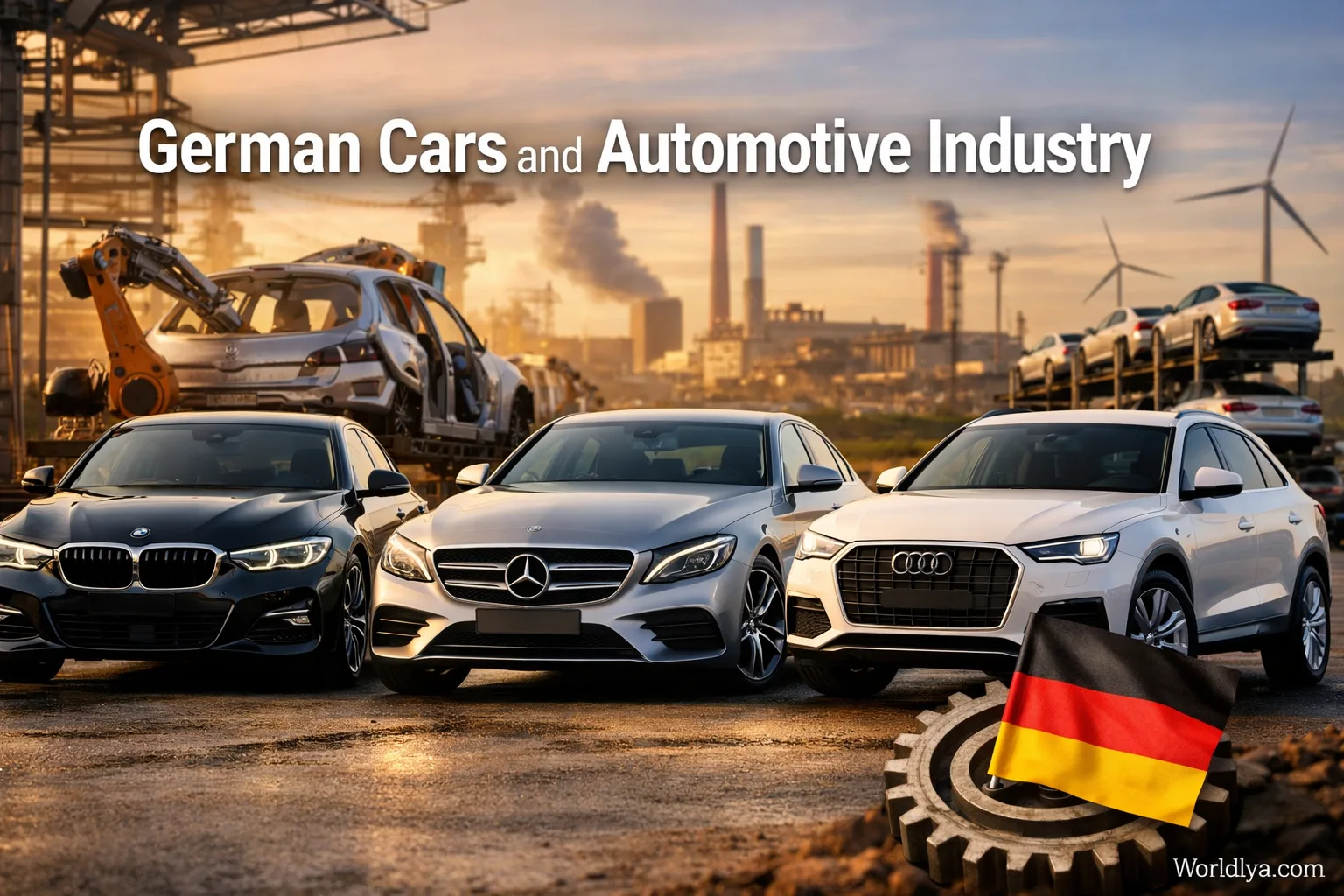
German cars have a certain vibe. Close the door and you get that solid thunk. Take a corner and the car feels like it’s reading the road a split-second before you do. Is it magic? Not really. It’s a mix of engineering culture, obsessive testing, and a whole industry that treats details like they matter (because they do).
Quick Snapshot
- Core idea: build cars that feel confident at speed and calm in daily use
- Big strengths: powertrain engineering, chassis tuning, premium interiors, safety tech
- Industry shape: major brands + a deep supplier ecosystem (lots of specialist companies)
- Driver experience: steady handling, tidy ergonomics, and features designed for long trips
Useful Terms You’ll See
- OEM (Original Equipment Manufacturer): the brand building the car
- Powertrain: engine or motor + transmission + drivetrain
- Chassis: the “bones” of handling—suspension, steering, structure
- TÜV: a well-known inspection system and label drivers recognize
- Autobahn: Germany’s highway network, famous for smooth long-distance travel
Why German Cars Feel Different
Think of a German car like a well-rehearsed orchestra: every section can play loud, but the real skill is staying balanced. You’ll often notice tight body control, precise steering, and cabins that feel intentionally laid out—buttons where your hand expects them, screens angled for the driver, seats built for hours, not minutes.
Another part is the testing mindset. German brands tend to tune for high-speed stability and long-distance comfort. Even if you never drive fast, you still benefit: the car often feels planted, quiet, and predictable in normal city and highway conditions.
Small detail that says a lot: German cars often put effort into things you don’t brag about at dinner—door seals, cabin insulation, seat foam density, and switchgear feel. Boring? Maybe. Also the reason the car still feels “right” years later.
The Brands You’ll Hear Most
Germany’s automotive world is bigger than a few logos, but these names come up again and again:
- Volkswagen — mainstream models with a strong engineering backbone
- Audi — tech-forward design, premium feel, often a sporty edge
- BMW — driver-focused handling and performance heritage
- Mercedes-Benz — comfort, refinement, and safety-led innovation
- Porsche — sports car DNA, sharp chassis tuning, iconic design language
- Opel — practical, approachable vehicles with a long German history
What’s fun is how distinct they can feel. Two cars can have similar power on paper, yet one feels like a calm commuter and the other feels like it’s gently nudging you to take the scenic route home.
Suppliers and the Mittelstand Network
A lot of German automotive strength comes from companies most drivers never see. Germany has a deep “Mittelstand” culture—specialist firms that focus on one thing and get really, really good at it. That’s how you end up with world-class components: braking systems, steering racks, sensors, lighting, transmissions, bearings, and interior materials.
Big suppliers you might recognize include Bosch, Continental, ZF, Schaeffler, and MAHLE. They don’t just “provide parts.” They often co-develop technology with the brands—especially in areas like driver assistance, vehicle software, and efficiency improvements.
If the car is the headline act, the supply chain is the stage crew—quietly making sure everything works when it matters.
Where the Work Happens: Automotive Regions
Germany’s automotive activity is spread out, but a few regions show up often in manufacturing, engineering, and R&D conversations.
| Region | Often Known For | Why It Matters to Drivers |
|---|---|---|
| Baden-Württemberg | Premium engineering, performance, suppliers | Strong influence on handling, interiors, and refinement |
| Bavaria | Engineering hubs, testing culture, innovation | Driver-focused tuning and new tech rollout |
| Lower Saxony | Large-scale manufacturing and logistics | Efficient production of high-volume models |
| North Rhine-Westphalia | Industrial suppliers and engineering services | Component quality and industrial know-how |
From Sketch to Street: How a German Car Gets Built
So how does a model go from an idea to something you can actually drive? The steps vary by brand, but the rhythm is usually familiar:
- Concept and design — packaging, ergonomics, and brand “feel” get defined early
- Engineering validation — powertrain, chassis, and structure are tested relentlessly
- Prototype builds — early cars are assembled to spot real-world issues fast
- Durability and comfort testing — heat, cold, vibration, noise, and long-distance simulation
- Manufacturing prep — tooling, supplier coordination, and quality checkpoints
- Quality control — measurement systems, inspection routines, and process audits
What This Means for You
You don’t need to be an engineer to feel the payoff. Strong testing tends to show up as fewer surprises: stable braking feel, consistent steering response, and fewer weird rattles when the road gets rough.
Technology Themes You’ll Notice
German cars aren’t “one style fits all,” but a few themes pop up across many models:
Driving Feel
- Chassis tuning that stays composed over bumps
- Braking consistency and pedal feel
- High-speed confidence (even at normal speeds, it feels secure)
Everyday Comfort
- Supportive seats designed for long drives
- Quiet cabins with careful sealing and insulation
- Clear ergonomics—controls that make sense quickly
Then there’s the tech layer: infotainment, driver assistance, and software updates. Some models feel like a smartphone on wheels. Others keep it simple and put the “wow” into how smoothly everything works together.
Electric Mobility and What’s Next
Germany’s industry is pushing hard on electrification—new EV platforms, battery supply chains, and charging-friendly features. A modern German EV often aims for efficient cruising, easy daily usability, and solid build quality that still feels “German,” even without an engine sound.
At the same time, lots of effort is going into software: smoother navigation, better route planning, and driver assistance that’s designed to reduce stress. The goal is simple—make the car feel like a helpful co-pilot, not a noisy backseat driver.
Buying or Renting a German Car: Practical Checklist
If you’re choosing a German car—new, used, or rental—this quick list helps you land on a model that fits your life (not just your wishlist).
- Pick your “use case” first: city commuting, road trips, family hauling, or weekend fun?
- Check cabin fit: seat comfort, visibility, and back-seat space matter more than you think
- Understand trims: the same model can feel totally different depending on options
- Ask about maintenance history (used cars): consistent service records are gold
- Test the tech: pair your phone, try navigation, adjust driver assistance settings
- Budget for tires and brakes: higher-performance variants often use pricier consumables
Friendly reality check: A German car can be wonderfully rewarding, but it’s happiest when you treat it like a well-made tool—use the right fluids, keep up with service, and it’ll usually return the favor.
Driving in Germany: Everyday Tips
Planning to drive in Germany? You’ll enjoy the smooth infrastructure and clear signage. A few habits make the experience even better:
- Keep right, pass left on multi-lane roads—it keeps traffic flowing naturally
- Watch for speed signs and lane guidance; it can change quickly near cities
- Use rest stops on long trips—Germany is built for comfortable travel breaks
- Stay calm in busy merges; it often feels fast, but it’s also remarkably structured
And yes, the Autobahn reputation is real. Some stretches have no general speed limit, and there’s also a commonly referenced recommended cruising speed. Either way, the main idea is simple: drive smoothly, stay alert, and let the road do its thing.
Mini FAQ
Are German Cars Only About Performance?
Nope. Performance is part of the story, but a lot of German engineering focuses on comfort at speed, predictable handling, and daily usability. Many models are basically long-distance travel specialists in disguise.
Why Do Options Matter So Much?
Because many German brands treat options as modular components. Suspension, seats, wheels, and driver assistance packages can change how the car behaves and feels. Two “same” cars can be surprisingly different.
What’s the “Secret” Behind the Build Quality Feel?
It’s rarely one thing. It’s thousands of little decisions—materials, tolerances, seals, testing routines, and manufacturing discipline. It’s a culture built to accomodate both the engineer and the driver.