
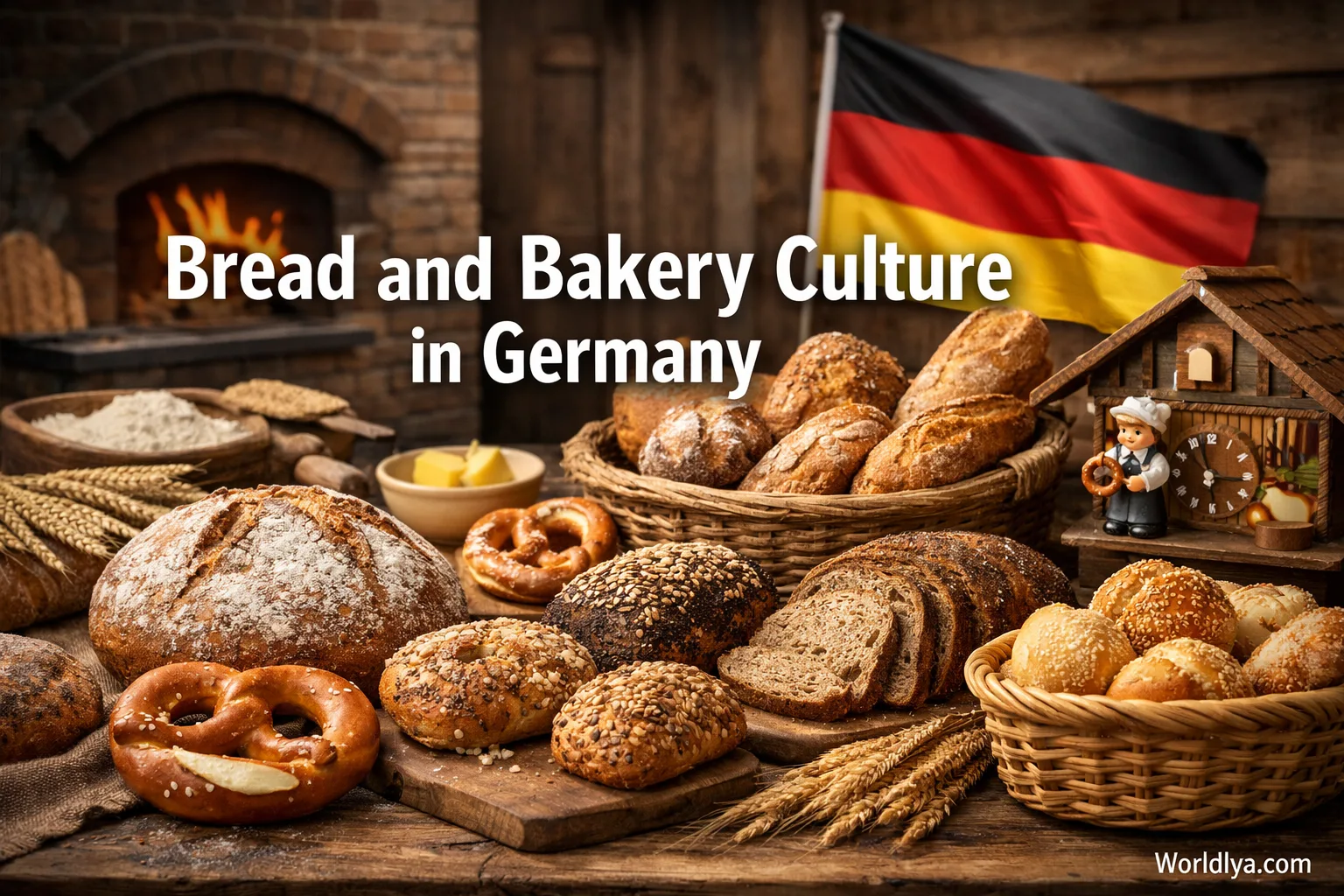
Bread in Germany isn’t just “something on the side.” It’s a daily companion—warm, fragrant, and proudly diverse. Germany is known for having 3,000+ different bread varieties, and its bread culture is officially recognized as intangible cultural heritage in the country. Walk past a bakery in the morning and you’ll get it instantly: crusts crackling, rolls still steamy, and a display that feels like a delicious library you can eat.
Quick Snapshot
- Core grains: wheat, rye, spelt
- Signature texture: bold crust + satisfying crumb
- Common fermentation: yeast and sourdough
- Daily rhythm: rolls for breakfast, bread-based light meals
- Where it happens: local Bäckerei (bakery) counters
- Must-try format: Brötchen (bread rolls)
- Beloved classic: pretzels and other baked “Lye” items
- Sweet side: cakes, fruit pastries, seasonal specialties
What Makes German Bread So Distinct
If you grew up thinking bread is always fluffy and mild, German loaves can be a fun surprise. Many are built around rye and spelt, which bring deeper flavor and a sturdier bite. You’ll also see a lot of mixed-grain breads—wheat + rye combos that balance lift and richness.
Fermentation matters here. Long, slow fermentation (often with sourdough) develops aroma and texture in a way that feels… alive. Ever torn into a slice and noticed that gentle tang and that “chef’s kiss” chew? That’s the magic.
Helpful label tip: In German guidelines for bread and small bakery products, items sold as Vollkornbrot (wholegrain bread) are expected to be at least 90% wholegrain content. If you’re shopping for a truly wholegrain option, this label is worth knowing.
Bakery Types You’ll See in Germany
German bakery culture isn’t one-size-fits-all. Places can look similar from the outside, yet focus on different goodies inside.
- Bäckerei: the everyday bakery—bread, rolls, pretzels, savory snacks.
- Konditorei: pastry-focused—cakes, tarts, cream-filled classics, and often a more “sit down and enjoy” vibe.
- Backstube: literally “baking room,” sometimes used for bakeries that highlight craft production.
- Café-Bakery: a hybrid—grab a roll, then linger with coffee and cake.
The Daily Bread Rituals People Actually Live
Breakfast: Brötchen Time
Morning often starts with Brötchen—crisp rolls that you slice open and top however you like. Simple spreads, cheese, jam, honey… it’s choose-your-own-adventure, edible edition.
- Classic pick: Sesambrötchen (sesame) or Mohnbrötchen (poppy)
- Hearty pick: seeded rolls for a nutty crunch
- Soft pick: milk rolls that feel like a gentle hug
Light Meals: Abendbrot and Brotzeit
You’ll hear words like Abendbrot (evening bread meal) and Brotzeit (bread time). The idea is refreshingly practical: good bread + tasty toppings + relaxed pace. Why complicate it?
- Build-a-board: bread slices, spreads, veggies, cheeses
- Quick sandwich: a roll stuffed with something fresh
- On-the-go: a pretzel and a smile
German bakery culture is less about “a perfect loaf” and more about having the right bread for the right moment.
Iconic Breads and Bakes to Know
Standing at a bakery counter can feel like staring at a wall of amazing choices. Here’s a friendly map so you don’t get lost (or you do get lost… in a good way).
| Name | What It’s Like | Best With | How to Spot It |
|---|---|---|---|
| Roggenbrot | Rye-forward, aromatic, often more dense | Cheese, hearty spreads, soups | Darker crumb, deeper scent |
| Mischbrot | Wheat + rye blend, balanced and versatile | Anything, honestly | Medium color, classic “everyday” loaf |
| Vollkornbrot | Wholegrain, nutty, satisfying | Fresh toppings, simple spreads | Visible grains/seeds, hearty texture |
| Pumpernickel | Very dark rye bread, gently sweet notes | Creamy toppings, smoked flavors | Dark slices, moist and compact |
| Brezel | Soft pretzel with a shiny crust | Butter, cheese, or plain | Classic knot shape, sometimes coarse salt |
| Stollen | Rich seasonal fruit bread (often wintertime) | Coffee or tea | Powdered sugar coat, loaf-shaped |
| Franzbrötchen | Buttery, cinnamon pastry (a northern favorite) | Morning coffee | Flattened swirl look, sugar-speckled |
How to Order in a German Bakery Without Stress
Here’s the good news: bakery counters are quick, friendly, and very routine. Once you know the rhythm, you’ll feel right at home—somtimes even on your first try.
A Simple Counter Script
- Say hello: “Hallo” or “Guten Morgen”
- Point and name it: “Zwei Brötchen, bitte.” (Two rolls, please.)
- For bread: ask “Geschnitten?” (sliced?) if you want it pre-sliced
- Bag: “Eine Tüte, bitte.” (A bag, please.)
- Pay: card is common in many places, cash is still handy
Regional Personality in Every Bite
Germany’s bakery culture changes subtly from region to region—like a playlist that keeps the same vibe but swaps a few standout tracks.
- South: more pretzels and lye-baked favorites, often enjoyed fresh in the morning.
- North: pastries like Franzbrötchen show up as a cozy everyday treat.
- Westphalia: Pumpernickel is the deep, dark classic many people recognize.
- Eastern regions: seasonal breads and festive loaves can take center stage around holidays.
Smart Choices for Everyday Eating
If you’re choosing bread for daily meals, the simplest approach is usually the best: pick what tastes good and leaves you feeling satisfied. Many German nutrition sources consistently highlight wholegrain options as a solid everyday choice. If you want something lighter, a mixed wheat-rye bread can be a happy middle ground.
Bring the Bakery Feeling Home
Fresh bread is at its best on day one, no drama. Still, a few habits help you keep that “just bought it” joy longer.
- Skip the fridge: it can make bread stale faster.
- Use breathable storage: a bread box or paper bag works well for crusty loaves.
- Freeze slices: slice first, freeze, then toast what you need.
- Revive crust: a quick warm-up in the oven can bring back crunch.
Mini Glossary
- Bäckerei: bakery
- Backwaren: baked goods
- Brot: bread
- Brötchen: bread rolls
- Vollkorn: wholegrain
- Sauerteig: sourdough
- Geschnitten: sliced
Quick Questions People Ask
Do bakeries in Germany mostly sell bread, or also meals?
Many bakeries sell more than bread: rolls with fillings, pretzels, small savory bakes, plus coffee and sweet pastries. Some also have seating.
What’s a safe “first order” if I’m overwhelmed?
Try two items: one Brötchen (any kind) and one slice of Mischbrot. You’ll taste the everyday favorites without guessing too much.
Is sourdough common in Germany?
Yes—especially in rye-based breads. It’s a big part of how many traditional loaves develop their flavor and structure.
Sources
- Deutsche UNESCO-Kommission – Deutsche Brotkultur
- deutschland.de – German Bread and Bread Culture
- Bundeszentrum für Ernährung (BZfE) – Backen mit vollem Korn
- Bundesanstalt für Landwirtschaft und Ernährung (BLE) – Leitsätze für Brot und Kleingebäck (PDF)
- University of Hohenheim Repository – Bread Research (PDF)
- German Nutrition Society (DGE) – Cereals, Cereal Products, and Potatoes