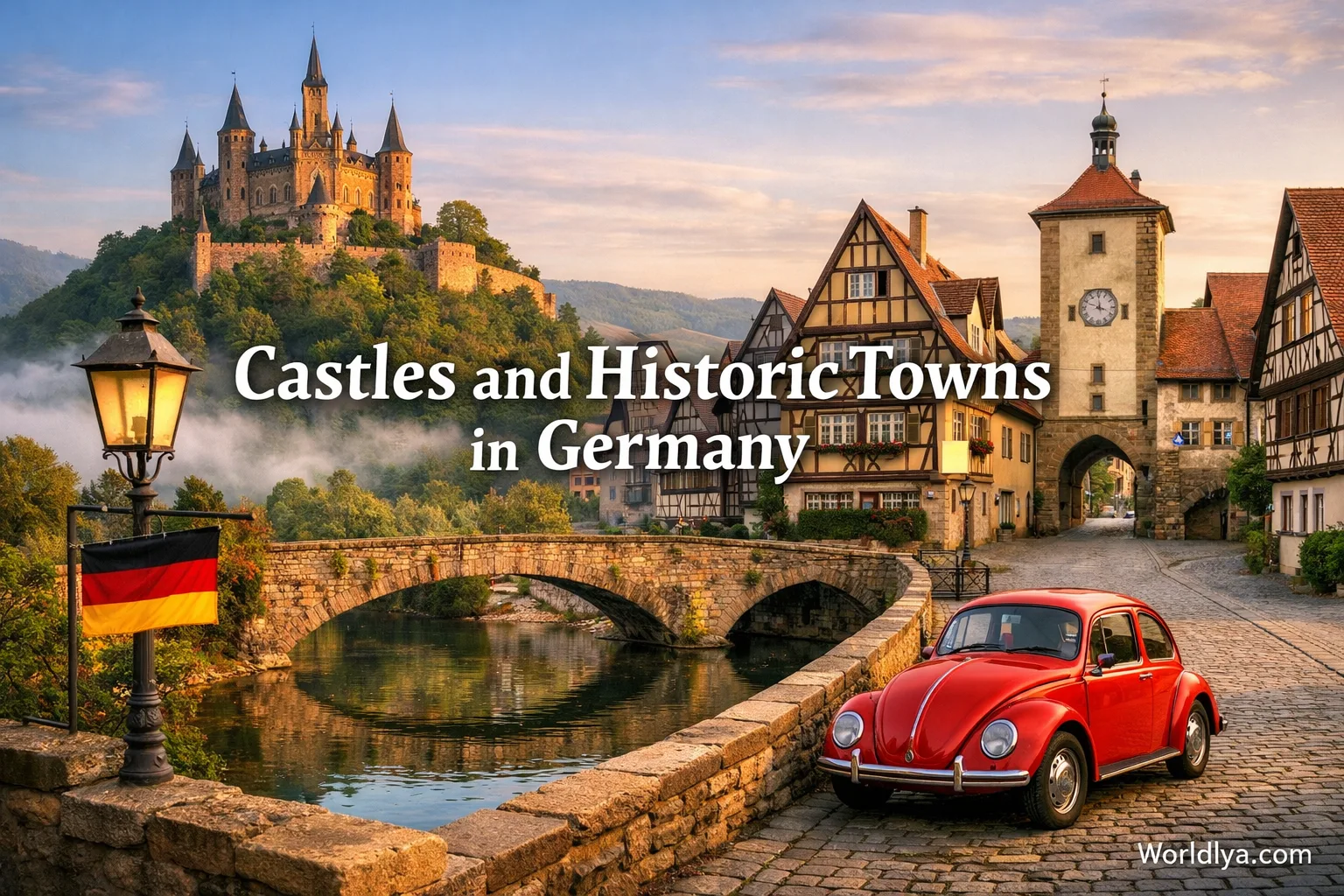
Ever turned a corner and suddenly found yourself staring at a castle on a hill, like someone pressed “pause” on a fairy tale? That’s Germany at its best. Castles, palace courtyards, cobblestone lanes, timber-framed houses, riverfront old towns… it all stacks up fast, in the nicest way. This guide helps you match iconic castles with historic towns so your days feel smooth, photogenic, and actually doable.
Quick Game Plan
- Pair one castle with one old town per day (your feet will thank you).
- Start with a region first: Rhine Valley, Bavaria, Franconia, or Northern ports.
- For famous sites, lock in timed tickets early.
- Sleep in the town, not “somewhere nearby.” Nights in old centers feel like the credits scene.
Best For River Views
Upper Middle Rhine Valley with cliffside castles and towns right on the waterline.
Best For “Wow” Castles
Bavaria delivers fairytale palaces, alpine backdrops, and cozy old towns.
Best For Old-Town Wandering
Franconia and Central Germany shine with UNESCO streets and market squares.
Want quick inspiration before you plan? This video is an easy way to spot places you’d love to see in real life.
Why Castles and Old Towns Feel Like A Perfect Pair
Germany makes this kind of trip surprisingly simple because castles and towns often grew up together. A fortress watched over a river crossing, then a market town formed below. A palace became the “showpiece,” then the old center became the living room around it. So instead of sprinting between far-apart highlights, you can build days that feel connected.
Here’s the sweet spot: choose places where the castle is close enough to the town that you can do both without stress. That’s the difference between a day that feels magical and a day that feels like a checklist.
Quick Glossary: Burg, Schloss, and Festung
You’ll see these words everywhere. They’re not just labels—they hint at what kind of visit you’re getting.
| Word You’ll See | What It Usually Means | What It Feels Like Inside |
|---|---|---|
| Burg | Castle / stronghold (often medieval) | Thick walls, courtyards, towers, views |
| Schloss | Palace / residence (often more “show”) | Rooms, décor, art, gardens, grand staircases |
| Festung | Fortress (built for defense) | Bastions, ramparts, panoramic walkways |
Quick tip: If you see “guided tour only”, plan your day around a fixed entry time. It’s not a problem—it just means lunch happens when the castle says so.
Castle-and-Town Pairings Worth Your Time
Below are pairings that tend to “click” for travelers: easy logistics, strong atmosphere, and plenty to do at a relaxed pace. Mix and match based on your route.
Upper Middle Rhine Valley: Castles Above The River, Towns On The Waterline
This UNESCO-listed stretch of the Rhine runs between Bingen and Koblenz, packed with vineyards, lookout points, and castles that seem glued to the cliffs. It’s one of those places where a simple boat ride can feel like flipping through a picture book.
- Marksburg (Braubach) + Braubach Old Town
Marksburg is a classic “castle shape” on a hill. Braubach below is compact, walkable, and perfect for a slow dinner. - Rheinstein Castle + Bingen/Rüdesheim Area
Great for that castle-on-a-rock vibe, then back down to riverside promenades and cafés. - Pfalzgrafenstein Castle (Kaub) + Kaub
A castle on an island in the Rhine feels delightfully unusual—like a little stone ship anchored midstream.
Make it feel effortless: Ride the river (boat or train) for part of the day, then pick one castle to enter. Seeing ten castles from the water is fun; touring ten castles is… ambitious.
Bavaria: Fairytale Palaces and Alpine Old Towns
If your mental image of “Germany castles” includes tall spires and mountain air, you’re probably thinking of Bavaria. A big headline here: Neuschwanstein can only be visited on a guided tour, with tickets typically booked for a specific time slot.
- Neuschwanstein + Füssen Old Town
Füssen is charming and easygoing, with colorful buildings and a great “basecamp” feel. In July 2025, UNESCO added King Ludwig II’s Bavarian royal palaces (including Neuschwanstein, Herrenchiemsee, and Linderhof) to the World Heritage list, giving this region an extra sparkle. - Hohenschwangau + Lakeside Walks
Right near Neuschwanstein, and the area is great for gentle nature breaks between sightseeing. - Herrenchiemsee Palace + Prien/Chiemsee Shore
Palace visit, then fresh air and water views—an easy “pretty day” recipe.
My favorite way to do Füssen is simple: castle tour first, then a calm afternoon in town. Grab a pastry, stroll the lanes, and let the day breathe a little.
Heidelberg: Romantic Ruins With A Storybook Old Town
Heidelberg Castle sits above the river like a stage set, and the old town below feels lively without being overwhelming. It’s a great pick if you want a castle experience that blends views, architecture, and easy city walking.
- Take the castle visit at a relaxed pace, then head down for the old-town lanes and riverfront viewpoints.
- If you like museums, add one small stop and keep the rest of the day open—Heidelberg rewards unplanned wandering.
Bamberg and Regensburg: UNESCO Streets You Can Wander All Day
Sometimes the “main attraction” isn’t a single building—it’s the feeling of being inside a living old town. Bamberg is known for its remarkably preserved historic ensemble and has 1,300+ listed buildings. Regensburg’s Old Town with Stadtamhof earned UNESCO status in 2006, and it’s the kind of place where you can keep saying, “Okay, just one more street,” for hours.
Bamberg Highlights
- Riverside views and bridges
- Quiet courtyards and little squares
- Easy day trips from the center
Regensburg Highlights
- Medieval street layout that’s fun to explore
- River atmosphere with long walks
- Cafés that make “one more break” very tempting
Quedlinburg: Timber-Framed Magic In Small-Bite Size
Quedlinburg is famous for its high-quality timber-framed buildings, and walking through the old town can feel like you’ve stepped into a carefully kept museum—except people live here, cafés are open, and the vibe is warm. It’s ideal if you want a historic-town day that’s rich but not exhausting.
- Give yourself time to look up: the details on façades are half the fun.
- Pick a small viewpoint, take photos, then let the rest be “follow-your-curiosity.”
Lübeck: Brick Gothic Beauty By The Water
Lübeck’s old town is UNESCO-listed (since 1987) and known for its brick architecture and waterside setting. It’s a great choice if you want a historic town with a slightly different flavor—more “port city charm,” less “mountain fairytale,” still very beautiful.
- Focus on the old-town core and enjoy a slow café break or two.
- If you like sweets, Lübeck is famous for marzipan—try a small piece and see what you think.
A 5-Day Route That Feels Like A Greatest-Hits Album
This route mixes castles and towns without turning your trip into a marathon. Adjust the order based on where you fly in.
- Day 1: Upper Middle Rhine Valley (choose one castle + riverside town)
- Day 2: Heidelberg (castle + old town)
- Day 3: Bamberg (UNESCO wandering day)
- Day 4: Rothenburg ob der Tauber (classic medieval-town atmosphere)
- Day 5: Füssen + Neuschwanstein (timed tour, then relax in town)
Little mindset shift: Your trip gets better when you leave breathing room. A “shorter” list often creates bigger memories.
Pick Your Style: Fast Comparison Table
| Place | Best For | Time Sweet Spot | Feels Like |
|---|---|---|---|
| Rhine Valley | Scenic castles + river rides | 1–2 days | Postcard views all day |
| Füssen/Schwangau | Neuschwanstein + alpine vibe | 1–2 days | Fairytale energy with fresh air |
| Bamberg | Old-town wandering | 1 day | “Just one more lane” syndrome |
| Regensburg | UNESCO streets + river walks | 1 day | Historic, lively, easy to love |
| Quedlinburg | Timber-framed architecture | Half to 1 day | Like walking through a craftbook |
| Lübeck | Brick Gothic charm | 1 day | Waterside old town with style |
Practical Tips That Make The Day Smoother
- Book famous castle entries early. Neuschwanstein visits are guided and tied to a time slot, so plan your morning around it. If you only have one castle day, definitley aim for an earlier entry time.
- Think in “clusters,” not a straight line. Two nearby towns beat four far-apart highlights.
- Wear shoes made for stone streets. Old towns look cute; they also come with steps, slopes, and uneven cobbles.
- Keep a tiny buffer for viewpoints. A 15-minute detour for a panorama often becomes your favorite photo of the trip.
- Check accessibility notes. Many castles have stairs and historic surfaces; official pages often list mobility info clearly.
A good castle day isn’t “more castles.” It’s one great castle, one great town, and enough time to enjoy both.
Family-Friendly Ideas
- Castle courtyards and viewpoints are often the most fun part for kids (big spaces, big views).
- In river regions, try a short boat ride—it turns “travel time” into “wow time.”
- Make it a mini challenge: “Who spots the most towers today?” Simple, silly, effective.
- Choose towns with pedestrian-friendly centers so everyone can relax between sights.
Mini FAQ
Do I Need A Car For Castles and Historic Towns?
Not always. Many popular towns are easy by train, and some castle areas connect well with buses or shuttles. A car helps most when you want smaller villages or you’re moving quickly between rural stops.
How Many Castles Should I Tour In One Day?
One is usually perfect. If the second castle is mostly a viewpoint stop (not a full interior visit), two can still feel relaxed.
What’s A Simple Way To Avoid Feeling Rushed?
Pick one “anchor” (a castle tour or a UNESCO old town) and build the rest of the day around it. Add a viewpoint, a café, a walk. Keep it human.
Sources
- UNESCO World Heritage Centre: Upper Middle Rhine Valley
- UNESCO World Heritage Centre: Town of Bamberg
- UNESCO World Heritage Centre: Old Town of Regensburg With Stadtamhof
- UNESCO World Heritage Centre: Collegiate Church, Castle, and Old Town of Quedlinburg
- UNESCO World Heritage Centre: Hanseatic City of Lübeck
- Bavarian Palace Administration: Neuschwanstein Tourist Information
- Heidelberg Palace: Official Visitor Information
- Romantic Road: Official Route Overview (Würzburg To Füssen)
- University of Bamberg: Studying In A World Heritage Site