
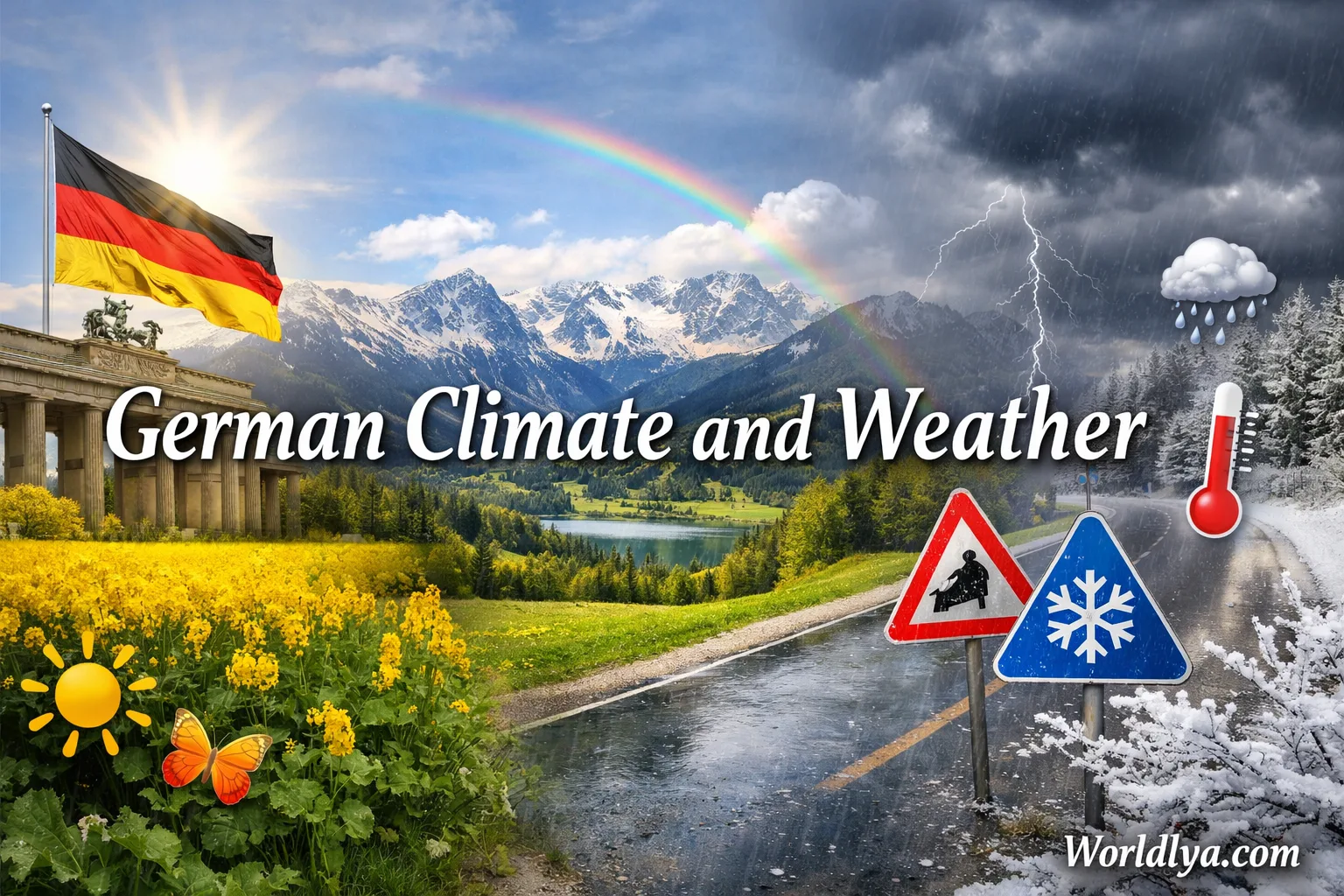
Germany’s weather has a bit of a “choose-your-own-adventure” vibe. One day feels crisp and bright, the next is softly gray, and then—surprise—blue skies again. If you’re planning a trip, moving, studying, or you’re just curious, this guide helps you read Germany’s climate like a local: clear seasons, regional differences, and what to actually do with that info.
Germany’s Climate In One Minute
Germany sits in a temperate, mid-latitude zone, right where ocean-shaped weather fades into more continental patterns. That’s why the country can feel fairly mild overall, yet still change quickly—especially when air masses shift.
Quick idea to keep in mind: west and north often feel more “Atlantic,” the east often feels a touch more “inland,” and the far south gets an Alpine twist.
Weather Snapshot You Can Use Right Away
Temperature: Four clear seasons, with cool-to-mild transitions in spring and fall. Summers are usually comfortable rather than scorching.
Rain: Expect rain in any season. A compact rain jacket is often more useful than a bulky umbrella.
Variability: The “same month” can feel different year to year. It can flip from sunny to drizzly somtimes within an hour.
Climate Zones Across Germany
Germany isn’t huge on the map, yet it still has noticeable regional personality. Think of it like a playlist: same band, different songs. The biggest “mixers” are distance from the coast, altitude, and the shape of the land (river valleys, uplands, and mountains).
North and Baltic Coasts
Here you’ll feel more of the maritime influence: breezier days, softer temperature swings, and a “layers help” kind of rhythm.
- Wind is a frequent guest—bring a windproof outer layer.
- Winters often feel damp-cool rather than deeply freezing.
- Overcast skies can be common, then suddenly the sun shows up like it owns the place.
Central Uplands and River Valleys
This is the “classic Germany” many people picture: mixed weather, green landscapes, and plenty of comfortable travel days.
- River valleys can feel a touch warmer in summer.
- Upland areas can be cooler and a bit wetter.
- Spring and fall are often lovely—bring layers and you’ll be fine.
Alpine South
Southern Germany adds altitude to the recipe. That means cooler temperatures with elevation and more dramatic local differences.
- Mountain weather changes fast—pack like you’re preparing for plot twists.
- Snow is more reliable at higher elevations.
- Summer can be pleasantly mild in many spots, even when lowlands feel warm.
Pro move: pack for temperature swings, not just averages. A light layer you can add or remove is worth its weight in gold.
Germany Weather by Season
If you want a simple mental model, Germany’s seasons are like four different outfits for the same person: recognizable, but never exactly the same twice. Here’s a practical overview, with ranges that fit many major areas (coasts and mountains can sit outside these).
| Season | Typical Feel | Common Temperature Range | What To Pack |
|---|---|---|---|
| Winter (Dec–Feb) | Cool, often cloudy, occasional snow (more likely in higher areas) | About -2°C to 6°C in many cities | Insulated coat, scarf, gloves, waterproof shoes |
| Spring (Mar–May) | Fresh starts, blossoms, quick shifts between mild and chilly | About 5°C to 18°C | Layers, light rain jacket, comfy walking shoes |
| Summer (Jun–Aug) | Comfortable warmth, longer days, pop-up showers | About 18°C to 27°C | Breathable tops, a light sweater for evenings, sun protection |
| Autumn (Sep–Nov) | Crisp air, colorful trees, cozy vibes, more frequent rain later | About 6°C to 18°C | Midweight jacket, umbrella or rain shell, layered outfits |
Rain Reality Check
Germany gets rainfall spread through the year. On average, the country receives roughly around 800 mm annually, with drier pockets in some lowland areas and much wetter totals in mountain regions. A small rain jacket you can stash in a bag often beats a big umbrella.
Month-To-Month Packing Game Plan
Not sure what to throw in your suitcase? Use this quick plan. It’s built for real life: city walks, day trips, and changing skies.
- December to February: Go for warmth plus water resistance. A cozy coat and waterproof shoes make winter feel easy.
- March to May: Dress like you’re stacking pancakes—layer on, layer off. Mornings can be cool, afternoons can feel mild.
- June to August: Pack light, but keep one warmer layer for evenings. Toss in a thin rain shell for quick showers.
- September to November: Think comfort and flexibility. A midweight jacket and layers handle most days.
Sunshine, Wind, and Daylight: Small Details That Matter
Daylight shifts a lot across the year, and it changes how a day feels. Summer evenings can stretch pleasantly long, while winter days can feel shorter and cozier.
Coastal Wind
If you’re heading north, a windproof outer layer can feel like a superpower.
Summer Sun
Germany can be pleasantly sunny in summer—bring sunglasses and a little SPF for long days outside.
Rain Strategy
A compact rain jacket + quick-dry layers = less stress, more exploring.
Best Times To Visit Based on Weather
So, when does Germany feel “just right”? It depends on your vibe. Want outdoor cafés and parks? Prefer crisp air and scenic walks? Here are crowd-pleasing picks.
- Late Spring: Often a sweet spot for mild temperatures and fresh greenery.
- Early Autumn: Comfortable days with a cozy edge, plus great colors in many regions.
- Summer: Longer days and warm weather—perfect if you love being outside.
- Winter: Best for cozy city energy, warm drinks, and that classic “bundle up” feeling.
Official Forecast Tools To Check Before You Step Outside
Want quick clarity for a specific city or region? Official forecast pages and warnings are your cleanest shortcut—especially when you’re planning a day trip.
Little tip: if you’re packing in the morning, check the forecast again before you leave. Germany’s weather can be a quick-change artist.
Quick FAQ
Does Germany Get Snow?
Yes—snow happens, especially in higher elevations and southern mountain areas. In many big cities, winters are often more cold and damp than deeply snowy, but a few snowy days can still show up.
Is Germany’s Weather “Unpredictable”?
It can feel that way because conditions change fast. With a layered outfit and a light rain layer, most days are easy to handle.
What’s the One Item People Forget?
A packable rain jacket. It keeps you comfortable in drizzle, blocks wind, and makes sudden weather shifts feel like no big deal.
Sources
- Deutscher Wetterdienst (DWD) – Climate Monitoring: Germany
- DWD – Climate Maps for Germany
- DWD – Climate Data Center: Direct Downloads
- DWD – German Climate Atlas (Background and Access)
- University of Hamburg (CEN/ICDC) – Climate Data for Germany from DWD Stations
- Berlin Environmental Atlas – Precipitation Distribution (1991–2020): Statistical Base