Germany is the kind of place where you can breathe salty sea air in the morning, wander under deep beech canopies by lunch, and end the day with alpine views that look like they were cut out of a postcard. If you’re chasing real nature time (not just “nice scenery”), Germany’s national parks are a smart starting point—clear trails, strong visitor info, and landscapes that don’t all feel the same.
Germany’s Nature In One Breath
- 16 national parks spread across coasts, forests, wetlands, and mountains.
- 104 nature parks for wide, scenic countryside that mixes culture and landscapes.
- Biosphere reserves where people and nature share the space thoughtfully (many are UNESCO-recognized).
Best mindset: pick a landscape first (sea, forest, lakes, rocks, peaks). Then pick the park that delivers it.
Jump To What You Need
Tip: If you only have a day, pick one “hero experience” (a tide-flat walk, a ridge viewpoint, a canopy path) and build around that.
Germany’s 16 National Parks Overview
Use this table like a menu: match your mood to the landscape, then zoom in on the park that fits.
| National Park | Where | Signature Nature | Great For |
|---|---|---|---|
| Bavarian Forest | Bavaria | Wild spruce-beech-fir forests, bogs, peaks | Forest immersion, visitor centers |
| Berchtesgaden | Bavaria | Alpine meadows, rocky faces, clear valleys | Mountain walks, big views |
| Black Forest | Baden-Württemberg | High moors, lakes, dense forest slopes | Easy hikes, scenic drives nearby |
| Eifel | North Rhine-Westphalia | Beech forests, streams, quiet ridgelines | Gentle hiking, family trails |
| Hainich | Thuringia | Ancient beech forest “core wilderness” | Canopy-level viewpoints |
| Harz | Lower Saxony / Saxony-Anhalt | Mountain forests, granite outcrops, moors | Ridge walks, misty forest vibes |
| Hunsrück-Hochwald | Rhineland-Palatinate / Saarland | Upland forests, boggy valleys | Quiet trails, low crowds |
| Jasmund | Mecklenburg–Western Pomerania (Rügen) | Chalk cliffs and beech forest by the sea | Coastal viewpoints, short hikes |
| Kellerwald-Edersee | Hesse | Beech forests, rocky slopes | UNESCO beech-forest atmosphere |
| Lower Oder Valley | Brandenburg | River floodplains and wetlands | Birdwatching, calm nature walks |
| Müritz | Mecklenburg Lake District | Lakes, reeds, pinewoods, wetlands | Paddling nearby, cycling routes |
| Saxon Switzerland | Saxony | Sandstone towers, gorges, viewpoints | View-hunting, iconic rock scenery |
| Vorpommersche Boddenlandschaft | Baltic coast (Mecklenburg–Western Pomerania) | Lagoon coast, dunes, wind-shaped shores | Coastal nature, big skies |
| Hamburg Wadden Sea | North Sea (near Hamburg) | Tide flats and salt marsh edge | Short coastal nature trips |
| Lower Saxon Wadden Sea | North Sea (Lower Saxony) | Intertidal flats, islands, salt marsh | Guided mudflat walks |
| Schleswig-Holstein Wadden Sea | North Sea (Schleswig-Holstein) | Islands, Halligen, dunes, tidal flats | Birdlife, shoreline exploration |
Think of a national park as a place where nature gets the main role—and visitors are the respectful audience.
What Makes A German National Park A National Park
Germany’s national parks are built around a simple idea: let natural processes lead. That shows up in little details you’ll actually notice—deadwood left in place because it’s habitat, quiet “core zones” where you stick to marked paths, and visitor routes designed to protect sensitive spots.
And yes, it’s visitor-friendly. Trails are usually well signposted, many parks offer guided walks, and there’s often a visitor center that explains what you’re seeing (without turning it into a lecture).
Pick Your Landscape: Coast, Forest, Lakes, or Peaks
Not sure where to start? Ask yourself this: do you want moving water, moving air, or stillness? The answer usually points to the right region.
Fast Match Guide
- Endless horizon + tides: Wadden Sea national parks (North Sea)
- Cliffs + sea views: Jasmund or Vorpommersche Boddenlandschaft (Baltic coast)
- Deep forests: Bavarian Forest, Hainich, Kellerwald-Edersee
- Rock drama: Saxon Switzerland (sandstone towers and gorges)
- Mountain feel: Berchtesgaden, Harz
- Lakes and wetlands: Müritz, Lower Oder Valley
Wadden Sea: A Living Tidal Stage
Ever watched the sea quietly walk away and leave the ocean floor behind? That’s the Wadden Sea. Twice a day, the tide turns wide areas into an open-air world of mudflats, channels, and salt marsh—one of those places that feels almost unreal because it’s always changing.
Do it right: join a guided mudflat walk (and follow local tide advice). It’s safer, you learn more, and you’ll spot details you’d miss on your own—tiny tracks, shell patterns, and birds working the shoreline like it’s a buffet line.
Ancient Beech Forests: Green Cathedrals
Beech forests can feel almost architectural—smooth trunks, high ceilings, and a soft hush underfoot. Parks like Hainich and Kellerwald-Edersee are famous for old beech stands, and Jasmund adds a bonus: those bright chalk cliffs dropping into the Baltic.
If you’re into simple pleasures, this is it: a steady trail, filtered light, and teh kind of calm that makes you slow down without trying.
Lakes and Pinewoods: Müritz and Friends
Müritz National Park sits in the Mecklenburg Lake District, where water and reeds shape the whole mood. It’s the sort of place that suits early mornings—mist on the water, birds calling, and long flat stretches that are friendly for relaxed walkers and cyclists.
- Best vibe: sunrise walks near lakeside viewpoints
- Best combo: nature trail + nearby lake cruise or canoe route (outside protected zones where allowed)
- Best for families: short loop routes and easy boardwalk sections
Sandstone Towers: Saxon Switzerland
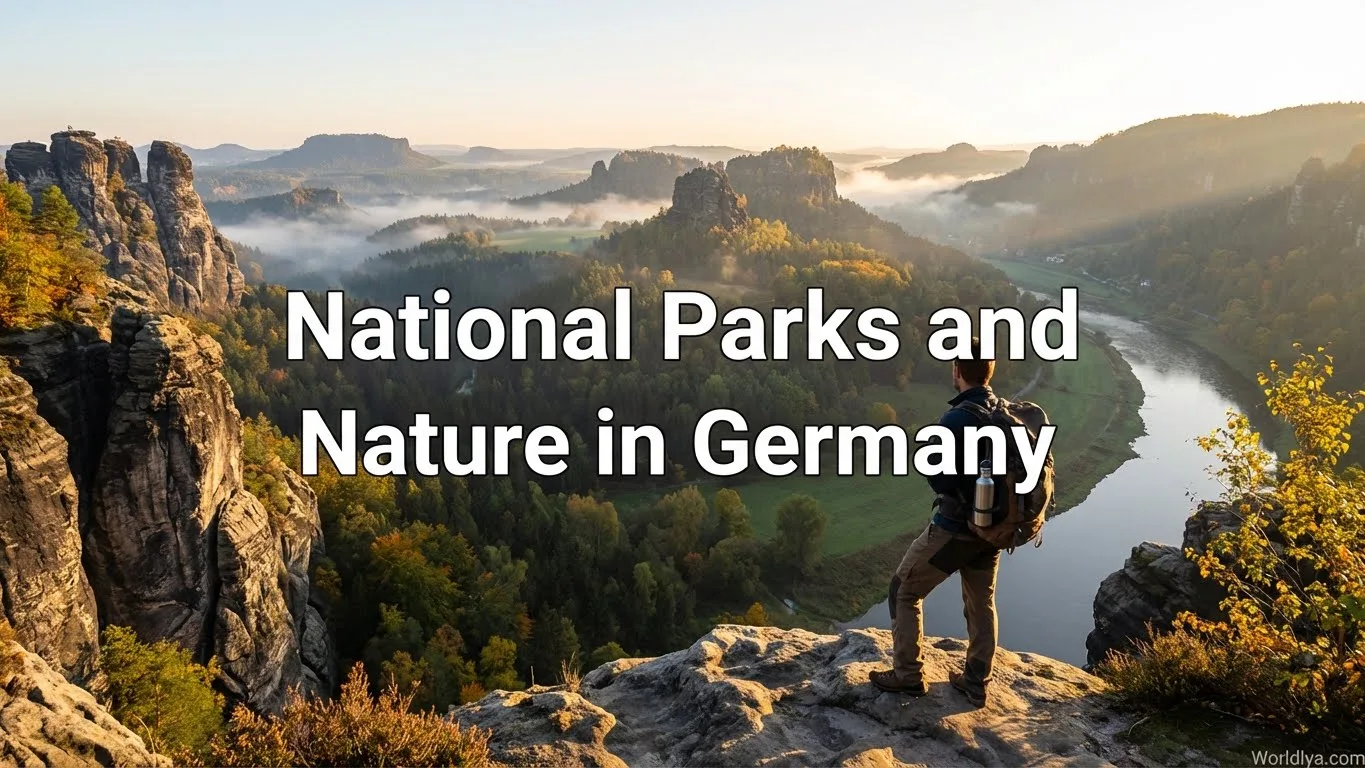
This is Germany’s “wow, is that real?” landscape. Saxon Switzerland is packed with sandstone formations, narrow gorges, and viewpoint routes that feel adventurous even when the hike itself is moderate. Bring a camera—or don’t. The views stick anyway.
Quick planning note: in popular viewpoint areas, go early or later in the day. The light is nicer, and the trail feels more peaceful.
Mountains and Meadows: Berchtesgaden
Berchtesgaden National Park is where Germany leans into the Alps—steep slopes, mountain meadows, and trails that reward you with wide-open scenes. If you like crisp air and clear lines on the horizon, this is your place.
- Great for: scenic hikes, mountain viewpoints, nature photography
- Go with: sturdy shoes and a light layer (weather shifts happen fast in higher terrain)
- Good habit: pick routes that match your comfort level, not your ambition
Forests That Feel Endless: Bavarian Forest and Hainich
Bavarian Forest National Park is Germany’s oldest national park and a classic for people who want “real forest” energy—mossy corners, boggy stretches, and the sense that the trees have been minding their own business for a long time. Hainich brings a different flavor: beech forest richness and canopy-level perspectives that make you see the woods from a fresh angle.
Nature Beyond National Parks
National parks are the headline act, but Germany’s protected nature network is bigger. If you want scenery plus charming towns, look at nature parks—they’re designed for protection and recreation together, often with cycling routes, viewpoints, and regional food stops nearby.
Nature Parks
Big landscapes, lots of routes, and a strong “weekend escape” vibe. Great when you want flexibility and gentle exploration.
Biosphere Reserves
Model regions where nature protection and everyday life fit together—often with themed trails, visitor centers, and local products.
Simple Rules That Keep Nature Calm
Want the parks to stay beautiful? The basics are easy, and they make a big difference.
- Stay on marked paths in sensitive areas (especially forests and dunes).
- Keep noise low—wild places don’t need a soundtrack.
- Take litter with you, even tiny stuff.
- Respect seasonal notices (some routes change to protect habitats).
- Dogs: follow local rules and keep them close where required.
Leave the place like you were never there—except for your photos and your good mood.
When To Go
Germany’s nature has four strong seasons. Your best time depends on the experience you want, not a single “perfect month.”
| Season | What It Feels Like | Best Picks |
|---|---|---|
| Spring | Fresh green, active wildlife, comfortable hiking temps | Beech forests (Hainich, Kellerwald-Edersee), lake regions (Müritz) |
| Summer | Long daylight, warm water regions, busy hotspots | Coasts (Wadden Sea), shaded forests (Bavarian Forest) |
| Autumn | Colorful forests, crisp air, great visibility | Jasmund cliffs, Harz uplands, Black Forest |
| Winter | Quiet trails, frosty landscapes, short days | Harz and Bavarian Forest for snowy atmosphere (choose safe, open routes) |
A Small Packing List That Saves The Day
- Layers (even in summer, forests and coasts can feel cool)
- Comfortable walking shoes with decent grip
- Water and a snack (some trails are beautifully remote)
- Binoculars for coasts and wetlands
- Rain protection (a light jacket beats a soaked hoodie)
A Sample 3-Day Nature Break
Here’s a simple plan that works for many first-time visitors. Swap parks based on your location.
Day 1: Coast Energy
- Pick a Wadden Sea area (Lower Saxony or Schleswig-Holstein).
- Book a guided mudflat walk (time it with the tide).
- Finish with a calm dike-top sunset stroll.
Day 2: Forest Reset
- Choose a beech-forest park (Hainich or Kellerwald-Edersee).
- Walk a loop trail and add a visitor center stop for context.
- End with a short “golden hour” walk—light through leaves is something else.
Day 3: A Big View Finale
- Pick a “view park” (Saxon Switzerland for rocks, Jasmund for cliffs, Berchtesgaden for mountains).
- Choose one signature viewpoint route and take it slow.
- Celebrate with a relaxed café stop in a nearby town.
Quick Answers
Do I need tickets to enter German national parks?
Usually, no. Many parks are free to enter, though specific attractions (like certain exhibitions, guided tours, or special facilities) can have fees.
Are national parks good for beginners?
Yes. Look for short loop trails, boardwalk routes in wetlands, and visitor-center trail suggestions. Start small, then level up once you know your pace.
What’s the easiest “wow” park for a first trip?
If you love dramatic scenery, try Saxon Switzerland or Jasmund. If you want deep forest atmosphere, Bavarian Forest is a classic.
Can I visit with kids?
Absolutely. Choose short themed trails, easy viewpoints, and visitor centers with exhibits. Many regions also run junior ranger-style activities in season.
What’s one thing people forget at the coast?
Timing. In the Wadden Sea, tides shape everything—plan around official tide info and guided activities for the best experience.
Sources
- Federal Agency for Nature Conservation (BfN): National Parks In Germany
- Federal Agency for Nature Conservation (BfN): Nature Parks In Germany
- German Commission for UNESCO: Biosphere Reserves (Germany)
- Georg-August-Universität Göttingen: Hainich Measurement Station (Beech Forest Site)
- Bavarian Forest National Park: Visitor Information (English)
- Lower Saxon Wadden Sea National Park: Visitor Folder (PDF, English)
- Wadden Sea World Heritage: Schleswig-Holstein Itinerary (PDF, English)
- Jasmund National Park: Rules for Visitors (English)