
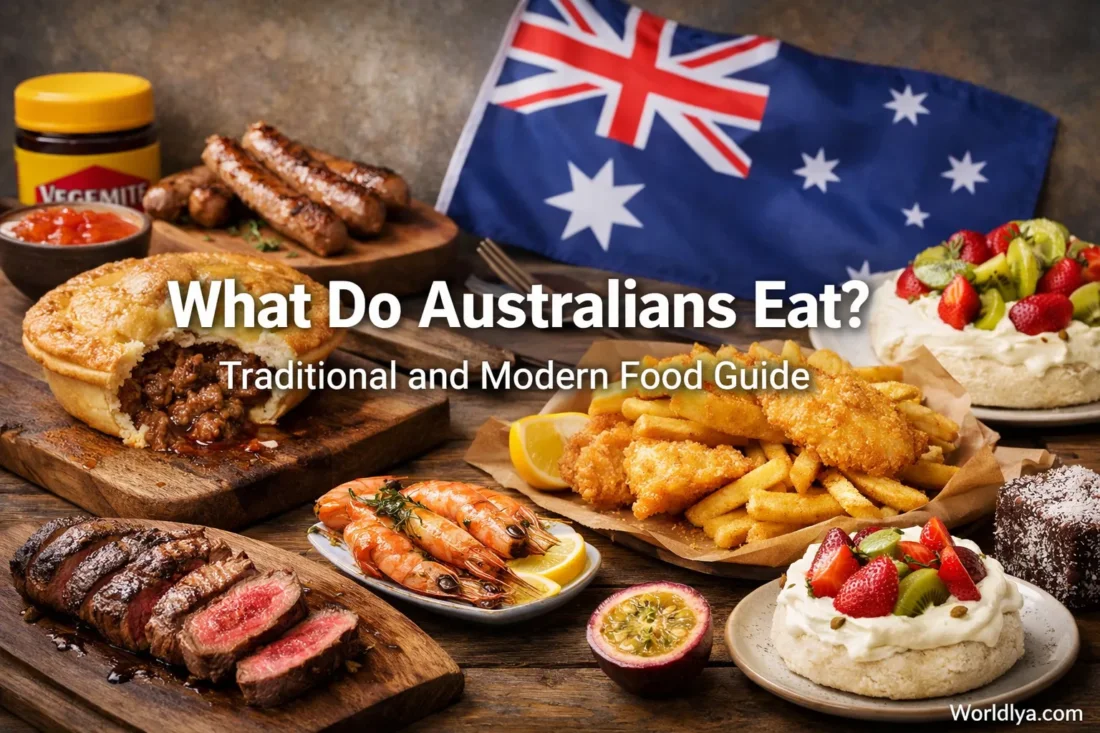
Australians do not all eat the same way, and that is exactly why their food feels so interesting. One table might hold a flaky meat pie, another might open with fresh seafood, and somewhere nearby a café will send out smashed avo and flat whites like clockwork. There is no single plate that explains Australia. What comes closer is this: people eat casually, they care about freshness, they love cafés, they cook and eat outdoors, and their everyday menu has been shaped by many communities over time.
What You Will Notice Fast
- Breakfast and brunch matter. Toast, eggs, bacon and egg rolls, café plates, and coffee show up again and again.
- Bakery food still has a firm place. Meat pies, sausage rolls, sweet slices, and lamingtons are easy to find.
- Seafood feels natural, not fancy. Fish, prawns, oysters, and barramundi fit daily eating as much as special meals.
- Native ingredients add a local note. Lemon myrtle, wattleseed, finger lime, Kakadu plum, and macadamia appear in both simple and polished cooking.
- Modern menus mix freely. A pub, café, or casual restaurant may place pasta, laksa, grilled fish, burgers, and salads side by side without making a fuss about it.
Traditional Foods That Still Show Up Everywhere
If you want the older, familiar layer of Australian food, start with the things people still grab without thinking too hard. A meat pie from a bakery. A square lamington beside tea or coffee. Vegemite on toast at breakfast. Barramundi for lunch or dinner. Damper when people want something rustic, outdoorsy, or tied to older cooking traditions. None of these foods explains the whole country on its own, but together they tell you a lot about the everyday mood: practical, relaxed, and full of repeat favourites.
| Food | What It Usually Means on the Plate | Where You Often See It |
|---|---|---|
| Meat Pie | Flaky pastry filled with meat and gravy. Warm, filling, easy to carry. | Bakeries, cafés, lunch counters, casual events |
| Lamington | Sponge cake coated in chocolate and coconut, sometimes split with jam or cream. | Bakery shelves, afternoon tea, café cabinets |
| Damper | Simple bread with a rustic feel, often linked with outdoor cooking and older food traditions. | Heritage-style meals, tours, campfire or oven baking |
| Barramundi | Firm white fish that works well grilled, pan-fried, or served simply with lemon. | Seafood restaurants, pubs, home dinners |
| Vegemite on Toast | Buttered toast with a thin layer of savoury yeast spread. Small amount, big flavour. | Breakfast tables, quick snacks, lunchboxes |
One useful thing to know: Australians often treat these foods with very little ceremony. A meat pie is not dressed up as something rare. Lamington is not pushed into fine-dining language. Vegemite is usually part of an ordinary morning, not a staged national ritual. That plainness is part of the charm. The food does not need a speech. It just needs to taste right.
Native Ingredients That Add Local Character
This is where Australian food becomes hard to mistake for anywhere else. Native ingredients are not there just to make a menu look different. They carry long food knowledge, strong flavour, and a sense of place. You will see them in restaurants, but also in chocolates, teas, jams, dressings, desserts, bakery items, and pantry products. Some taste bright and citrusy. Some feel earthy, roasted, or peppery. A little can change the whole direction of a dish.
A Small Native Ingredients Snapshot
- Over 6,500 recorded native bush food plants
- 13 native bush food species currently certified for the broader market
- $21.2 million farm-gate value for the native bush food industry in 2019–20
- Lemon Myrtle brings a clean citrus lift and works beautifully in tea, butter, desserts, and seasoning blends.
- Wattleseed tastes roasted, nutty, and gently cocoa-like, which is why it suits breads, biscuits, cakes, and ice cream.
- Finger Lime adds a sharp pop of citrus and looks striking on seafood, dressings, and fresh plates.
- Kakadu Plum has a tart edge and often turns up in jam, sauces, drinks, and sweet-savoury pairings.
- Warrigal Greens give cooks a local leafy option for savoury dishes, fillings, and sides.
- Macadamia brings buttery richness to snacks, sweets, crusts, and café baking.
Modern Eating Habits and Café Culture
Modern Australian food is less about strict categories and more about how people actually like to eat. That usually means good coffee, flexible meal times, produce that tastes fresh, and menus that do not act formal even when the cooking is excellent. Brunch is not a side note. It is part of daily life. Outdoor tables stay busy. Backyard barbecues still matter. Seafood feels ordinary in the best possible way. Even traditional pubs now make room for plant-based dishes, lighter plates, and food that reflects the tastes of a very mixed population.
Coffee Matters Here
A flat white is one of the drinks most closely linked with Australian café culture: espresso, steamed milk, and only a thin layer of foam. More than 90 per cent of Australia’s coffee shops and cafés are independently owned, which helps explain why neighbourhood cafés often feel personal rather than standardised.
Morning
Toast, eggs, a thin swipe of Vegemite, a flat white, or a bacon and egg roll if the day starts fast.
Midday
A bakery stop for a meat pie, a café plate, or a simple seafood lunch built around freshness rather than heavy sauces.
Evening
A backyard barbecue, grilled fish, or a casual restaurant meal where pasta, laksa, and local produce can share the same menu.
Why the Menu Feels So Mixed
The modern food picture makes more sense when you look at the people around the table. Australia’s population includes a large overseas-born share, and many households also carry food habits from parents or grandparents who arrived from somewhere else. That is why the national menu rarely stays in one lane. You can find a café doing a Vietnamese-style breakfast roll, a pub offering laksa next to pasta, and a fine-dining room using local seafood with native ingredients — all without anyone treating it as unusual.
A Few Numbers That Help Explain It
- 27.6% of Australia’s population was born overseas in the 2021 Census.
- Nearly half of Australians were either born overseas or had at least one parent born overseas.
- One in five Australians speaks a language other than English at home.
So when people ask what Australians eat, the real answer is wide but not vague. They eat older bakery favourites, café breakfasts, seafood, barbecue, native-flavoured dishes, and a long list of foods that entered daily life through migration and then settled in as normal. The plate feels mixed because the country does too.
Food Words You May Hear at the Table
- Brekkie = breakfast
- Avo = avocado
- Barbie = barbecue
- Tucker = food
- Bring a Plate = bring food to share, not an empty plate
- Take-away = food or coffee to go
What to Try First
- Start with a bakery meat pie. It is one of the easiest ways to understand the old-school comfort side of Australian food.
- Order a flat white. Coffee culture is part of daily rhythm, not just a café trend.
- Try smashed avo or a bacon and egg roll. These say a lot about how mornings and brunch actually feel.
- Choose barramundi if you see it. It gives you the seafood side of the country in a very straightforward way.
- Taste Vegemite properly. Use butter first, then a light spread. Too much turns a first bite into a dare.
- Pick up a lamington. It is simple, familiar, and easy to like when the cake is fresh.
- Make room for native flavours. Even one item with lemon myrtle, wattleseed, finger lime, or Kakadu plum can shift your sense of what Australian food really is.
What the Food Says About Daily Life
Australian food feels local when it is fresh, casual, and unpretentious. It feels modern when old favourites sit comfortably beside dishes shaped by many communities. It feels most itself when the table is relaxed, the coffee is taken seriously, and the menu leaves space for both a classic pie and something bright with native ingredients. That is the real answer: Australians eat a mix of familiar comfort food, strong café staples, seafood, outdoor meals, and a growing range of dishes that reflect who lives there now.
Sources
- Australian Bureau of Statistics — Cultural Diversity: Census, 2021
- Australian Bureau of Statistics — Census Stories
- Tourism Australia — A Guide to Australian Cuisine
- Tourism Australia — Typical Aussie Foods to Try
- Tourism Australia — Native Australian Ingredients
- Tourism Australia — Australian Coffee Cheat Sheet
- Australian Government — Australia’s State of the Forests Report 2025, Native Bush Food Section
- SBS Food — About Modern Australian Food
- SBS English — Aussie Food Slang Explained
- VEGEMITE — The VEGEMITE Story