
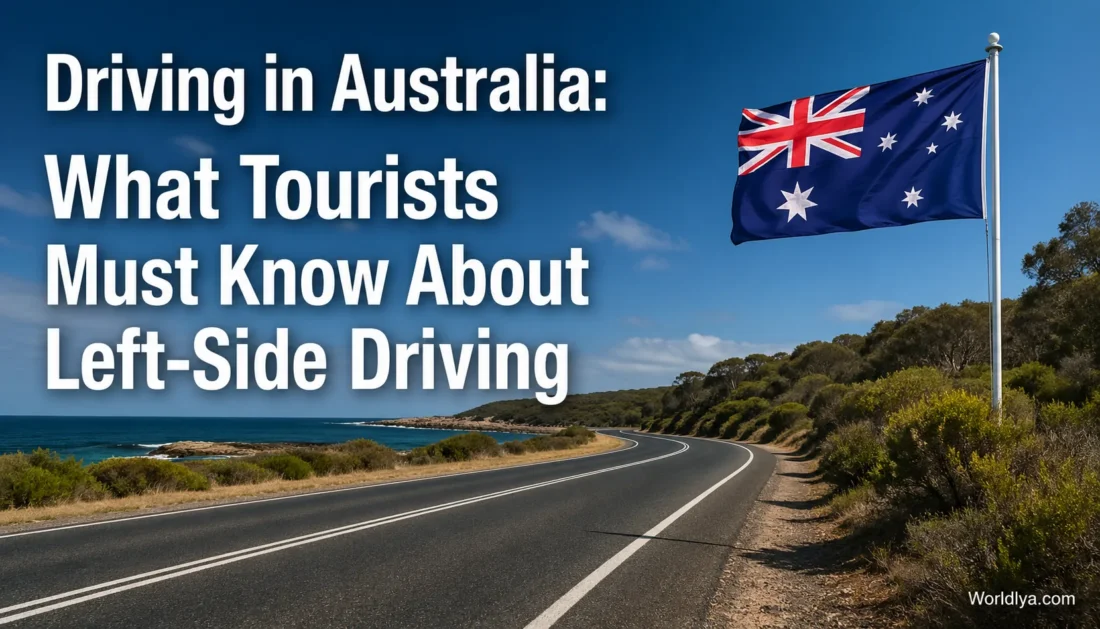
Driving in Australia can feel strange for the first few minutes if you normally drive on the right. The road is not upside down, of course, but your habits are. The driver sits on the right side of the car, traffic keeps left, roundabouts move clockwise, and the safest move is often the calmest one: slow down, read the signs, and give your brain a moment to reset.
For tourists, the left-side rule is only the beginning. Australia is large, road rules can vary by state or territory, and a simple coastal drive may feel very different from a long inland route. The good news? With a valid licence, a few local habits, and a steady pace, driving here can be a smooth part of the trip rather than something to worry about.
Tourist Driver Snapshot
- Drive on the left on two-way roads and keep that habit in mind every time you turn.
- Carry your overseas licence whenever you drive. If it is not in English, carry an International Driving Permit or an approved English translation.
- Seatbelts are required for the driver and passengers.
- Speed signs use kilometres per hour, not miles per hour.
- Handheld phone use is not allowed while driving. Set navigation before moving.
- Long distances need planning, especially fuel, rest stops, daylight, weather, and mobile coverage.
Why Left-Side Driving Feels Odd at First
The first thing visitors notice is not just the left side of the road. It is the whole driving picture. The steering wheel is usually on the right side of the car. The indicator and wiper stalks may feel different depending on the vehicle. Traffic beside you feels closer on the right. Your first few turns may feel like writing with the other hand.
That awkward feeling fades faster when you use one simple mental cue: keep the driver close to the centre line. On most roads, if the driver is near the middle of the road and the passenger is near the kerb, you are usually in the correct position.
Another useful habit is to say the turn out loud for the first day: “left side after the turn.” It sounds almost too simple, but it works. Most wrong-side mistakes happen after leaving a petrol station, car park, quiet side street, or scenic lookout, not while cruising on a busy main road.
Best First Drive
Choose a quiet area, daylight, and a short route. A ten-minute practice loop is better than learning the car while leaving a busy airport.
Best Mental Cue
After every turn, land on the left side of the new road. If there are lane arrows, follow them rather than guessing.
What Your Licence Must Cover
Tourists can often drive in Australia with a valid overseas driver licence, but the details depend on where you are staying and how long you stay. Australia has states and territories, and each road authority can set local conditions.
The safe rule for visitors is simple: carry your licence every time you drive. If your licence is not written in English, carry an International Driving Permit or an official English translation with it. The permit or translation does not replace the original licence. It supports it.
For longer visits, check the rules for the state or territory where you will drive most. New South Wales and Victoria use six-month rules for many temporary overseas visitors, while the Northern Territory has a shorter three-month period. Other jurisdictions may allow temporary visitors to drive on a current overseas licence for longer, but only while the licence remains valid and the driver follows local road rules.
| Question | What to Check | Why It Matters |
|---|---|---|
| Is your licence current? | Expiry date, vehicle class, and any conditions. | You can only drive vehicles your licence allows you to drive. |
| Is it in English? | If not, bring an IDP or approved English translation. | Police, rental desks, and road authorities may need to read it clearly. |
| How long will you stay? | Check state or territory visitor rules. | Long stays may require a local visitor or converted licence. |
| Are you renting? | Rental age rules, licence age, deposit, insurance excess, and toll policy. | Rental company conditions can be stricter than general road rules. |
The First Ten Minutes Behind the Wheel
The first drive should be boring on purpose. Boring is good. Choose a short route with a simple turn, a roundabout if possible, and a safe place to park. Before moving, adjust the mirrors, test the indicators, and set your navigation while the car is still parked.
- Start from the left lane when it is safe and legal to do so.
- Look farther ahead than usual so road signs and lane arrows do not surprise you.
- Take turns slowly, especially when leaving car parks and service stations.
- Let faster drivers pass where passing is legal. There is no prize for matching local confidence on day one.
- Pull over safely if the car layout or road position feels confusing.
Small habit, big help: before pulling out, say “left side” once. It sounds basic, but it anchors your attention at exactly the moment tourists most often need it.
Roundabouts, Turns, and Lane Position
Roundabouts can be one of the easiest places to lose your usual rhythm. In Australia, traffic moves clockwise around a roundabout. You enter to the left and move with the traffic already circulating. Slow down before the line, read the lane arrows, and give way to vehicles already in the roundabout.
Lane choice matters. If you need to go left, use the left lane unless signs say otherwise. If you need to turn right, use the right lane unless the marked arrows tell you another lane is allowed. If you miss your exit, stay calm and go around again where it is safe. A roundabout is not a quiz; you get another lap.
Left Turns
A left turn is usually the simpler turn because you stay close to the left kerb. Watch for pedestrians, cyclists, bus lanes, and signs. After the turn, settle into the left side of the new road.
Right Turns
A right turn crosses opposing traffic, so wait for the signal or a safe gap. The part tourists must remember is the finish: after turning, do not drift to the right side of the new road. Finish on the left side.
In central Melbourne, some intersections use hook turn signs. If you see one, follow the sign and lane markings carefully. If you are not comfortable with that style of turn, choose a route that avoids the city centre until you feel settled.
Speed Limits, Signs, and Cameras
Australia uses kilometres, so every speed sign is in km/h. In many built-up areas, the default speed limit is commonly 50 km/h unless signs show something else. On many open roads, 100 km/h is common, and some highway sections allow 110 km/h. School zones, roadworks, towns, bridges, tunnels, and winding roads may have lower posted limits.
Do not treat a speed limit as a target in poor weather, at night, near wildlife, or on unfamiliar roads. It is a maximum, not a dare. Speed cameras and red-light cameras are used in many places, and rental companies may pass fines and admin charges to the driver named on the rental agreement.
| What You See | How to Read It | Tourist Tip |
|---|---|---|
| STOP | Come to a full stop before the line. | Do not roll through just because the road looks quiet. |
| GIVE WAY | Slow and give way to traffic with priority. | Look right, left, and ahead before moving. |
| Lane Arrows | Drive only in the direction marked for your lane. | Choose your lane early; last-second lane changes feel worse on the left. |
| School Zone | Lower limits apply during posted times. | Read the times on the sign; they can vary by state. |
| No Standing or No Stopping | Parking or stopping is limited or not allowed. | City parking signs can be detailed. Read every line before leaving the car. |
Seatbelts, Children, Phones, and Alcohol
The everyday safety rules are clear. Everyone in the vehicle must wear a seatbelt. Children need a suitable child restraint, and children under seven must use an appropriate restraint for their size and age. Rental companies often offer child seats, but booking early is smarter than asking at the counter after a long flight.
Handheld phone use while driving is not allowed. That includes calls, messages, browsing, and holding the phone at traffic lights. If you use your phone for navigation, place it in a legal hands-free cradle and set the route before you leave.
For full licence holders, Australia commonly uses a 0.05 blood alcohol limit. Learner or provisional drivers may have a zero limit. For visitors, the cleanest rule is even simpler: if you plan to drive, skip alcohol. It removes guesswork and keeps the day easy.
Simple Safety Rule for the Car
Before the engine starts, check three things: seatbelts on, phone set and secured, and licence with you. It takes less than a minute and prevents a lot of avoidable stress.
City Driving: Parking, Tolls, and Transit Lanes
Australian cities are usually manageable by car, but they reward patient drivers. Sydney, Melbourne, Brisbane, Perth, Adelaide, Canberra, Hobart, and Darwin each have their own rhythm. The road side stays the same, yet parking signs, toll systems, tram areas, bus lanes, and peak-hour traffic can change the experience quickly.
Parking Signs Need a Slow Read
Australian parking signs may combine time limits, paid hours, permit areas, loading zones, and clearway rules on one pole. “2P” usually means two-hour parking, while “1P” means one hour. A clearway is different: during clearway times, stopping may not be allowed because the lane is needed for moving traffic.
Park facing the same direction as traffic on the left side of the road unless signs and road layout clearly allow something else. If the sign feels confusing, choose a paid car park. It may be cheaper than a parking fine and much kinder to your travel mood.
Toll Roads Are Often Electronic
Many motorways around major cities use electronic tolling. There may be no cash booth. Ask the rental company how tolls are billed, whether the car has a tag, and whether admin fees apply. In some places, visitors can buy a pass or pay by vehicle plate after using the road, but time limits can apply.
Transit Lanes Are Not Regular Lanes
You may see T2 or T3 signs. These are transit lanes for vehicles carrying a required number of people, including the driver. If your car does not meet the number on the sign, stay out of that lane during the posted times.
Long-Distance Routes, Rest Stops, and Remote Roads
Australia looks simple on a map until you start measuring the distances. A line between two towns can hide hours of driving, fewer fuel stops than expected, and long stretches where mobile coverage is limited. This is part of the country’s travel character, and it can be enjoyable when planned well.
On main highways, rest areas are commonly found at intervals, but they are not all the same. Some have toilets and shade. Others are just a safe place to stop. If your route enters rural or remote areas, plan fuel before you need it, carry water, and avoid building a schedule that requires driving tired.
- After a long flight: consider resting before starting a long drive. Jet lag and left-side driving do not make a friendly pair.
- For remote roads: check fuel, water, spare tyre, road conditions, and whether your rental contract allows unsealed-road driving.
- For night driving: be extra cautious in rural areas because animals may be active near roads.
- For weather changes: obey road closure signs and avoid flooded roads.
Wildlife, Road Trains, and Unsealed Roads
Outside cities, the road can feel open and relaxed, but it asks for attention. Wildlife such as kangaroos, emus, wombats, and livestock may appear near rural roads, especially around sunrise and sunset. If an animal appears ahead, slow safely and keep control of the vehicle. Swerving sharply can create a bigger problem than braking in a straight line.
In parts of Australia, especially on inland routes, you may share the road with road trains. These long trucks need far more space than ordinary vehicles. If you overtake, you need a long, clear, legal stretch of road. If a road train overtakes you, hold a steady line and let it pass safely.
Unsealed roads can change from firm to loose very quickly. Gravel, corrugations, dust, soft edges, and narrow bridges can all affect control. If your route includes unsealed roads, check whether a two-wheel-drive rental is allowed there. Many rental agreements restrict where the vehicle can go.
A Tourist Driver Checklist Before You Leave the Car Park
Car Setup
- Mirrors adjusted
- Seat position comfortable
- Indicators and wipers located
- Fuel type confirmed
- Navigation set before moving
Documents and Rental
- Overseas licence with you
- IDP or translation if needed
- Rental agreement understood
- Toll policy checked
- Roadside assistance number saved
Road Habit
- Repeat “drive left” before pulling out
- Use lane arrows
- Enter roundabouts clockwise
- Leave extra following distance
- Stop for a break before feeling tired
Common Mistakes Visitors Can Avoid
Most tourist driving problems are not caused by a lack of skill. They are caused by familiar habits appearing in an unfamiliar road system. A driver who is excellent at home may still reach for the wrong stalk, look the wrong way first, or drift toward the wrong lane after a quiet turn.
- Leaving a quiet car park on the wrong side: pause at the exit and look for lane markings before turning.
- Cutting a right turn too tightly: finish on the left side of the road you are entering.
- Overreading the GPS and underreading signs: navigation helps, but signs and lane arrows decide what you can do now.
- Planning too many kilometres in one day: leave room for food, fuel, rest, scenery, and slower roads.
- Assuming every road is rental-car friendly: check unsealed roads, ferry routes, island roads, and remote areas in the rental terms.
A Calm Way to Think About Driving in Australia
The left side may feel like the headline, but good tourist driving in Australia is really about rhythm. Start slower than you normally would. Let the lane arrows do some of the thinking. Keep the driver near the centre line. Take breaks before you need them. Read parking signs twice. Give long roads the respect they deserve.
Once those habits click, the car becomes a useful travel tool. A beach town, a wine region, a rainforest road, a quiet lookout, a national park drive: they all become easier to reach. The trick is not to drive like a local on the first day. Drive like a careful visitor who plans well. That is usually enough.
FAQ
Do Tourists Drive on the Left in All of Australia?
Yes. Tourists should drive on the left side of two-way roads throughout Australia. The same habit matters most after turns, when leaving car parks, and when starting from quiet roadside stops.
Can I Drive in Australia With My Foreign Licence?
Many visitors can drive with a valid overseas licence, but local rules depend on the state or territory and the length of stay. Carry your licence whenever you drive. If it is not in English, carry an International Driving Permit or an approved English translation as well.
Is an International Driving Permit Always Required?
It is especially needed when your licence is not in English. Some travel and rental situations may also ask for it, so it is wise to check before leaving home. An IDP supports your original licence; it does not replace it.
Are Australian Speed Limits in Miles or Kilometres?
Australian speed limits are in kilometres per hour. Urban roads are often 50 km/h unless signed otherwise, while many open roads are commonly 100 km/h and some highways allow 110 km/h. Always follow posted signs.
Can I Use My Phone for Maps While Driving?
You should not hold or use a handheld phone while driving. If using a phone for navigation, set the route before driving and keep the phone secured in a legal hands-free cradle.
What Should I Know About Rural Driving in Australia?
Plan fuel, water, rest stops, weather, road conditions, and daylight. Watch for wildlife near dawn and dusk, take extra care on unsealed roads, and check whether your rental vehicle is allowed on the route you plan to drive.
Sources
- Tourism Australia: Driving in Australia, Road Safety and Regulations
- Tourism Australia: Driving in Australia for First-Time Visitors
- Austroads: Drivers Visiting Australia
- Australian Government Department of Infrastructure: Travel Safely in Australia
- NSW Government: Driving With an Overseas or Interstate Licence in NSW
- VicRoads: Overseas Licence Rules for Victoria