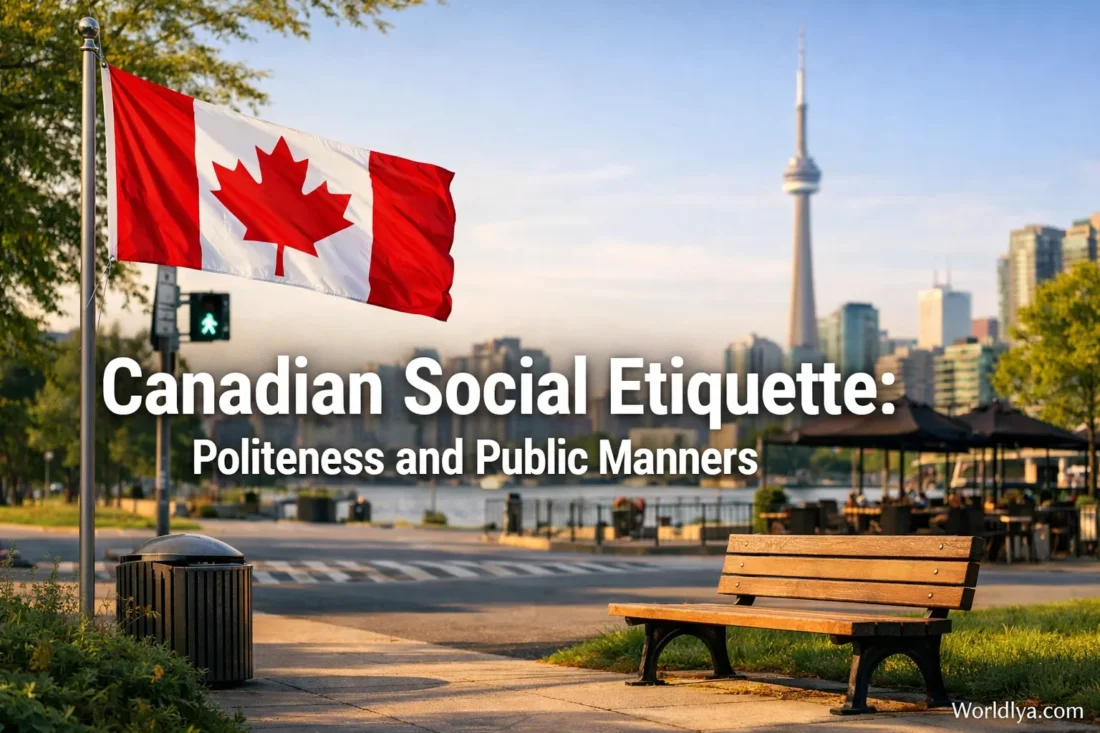
Canadian social etiquette is less about “rules” and more about making everyday life smoother for everyone sharing the same space. Think of it like well-oiled gears: a small “sorry,” a held door, a calm line—tiny habits that keep the whole machine running quietly. If you’re visiting, moving, or just curious, this guide will help you read the room, blend in naturally, and feel confident in public.
If You Remember Nothing Else (this alone saves you in 90% of situations):
- Queue calmly and give a bit of space.
- Use “please,” “thank you,” and “excuse me” like daily tools, not special occasions.
- Keep your voice and your phone volume low in shared spaces.
- Respect personal space—no “close-talking.”
Politeness As a Daily Habit
In Canada, politeness often shows up as small, frequent gestures rather than big speeches. It’s the quick smile when you pass someone in a hallway. The subtle “after you.” The tiny pause that says, “I see you.”
Here’s the vibe: be easy to be around. Not perfect. Not stiff. Just considerate.
Quick Self-Check: Before you act, ask one question—“Would this make the shared space feel calmer or more chaotic?”
Greetings and First Impressions
Most casual greetings are simple: a smile, a “Hi,” maybe a quick “How’s it going?” (Often it’s friendly, not a deep question. A short answer is fine.) In more formal settings, a brief handshake is common. Either way, keep it relaxed.
- Eye contact: comfortable and natural—no intense staring contest.
- Personal space: give an arm’s-length bubble unless the space is crowded.
- Names: first names are common once introductions happen. When unsure, start a bit more formal and follow the other person’s lead.
Small Talk That Feels Natural
If small talk makes you sweat, here’s the secret: it’s usually social warm-up, like stretching before a run. Easy topics work well—weather, food, local places, weekend plans, hobbies, sports (if you like), or a simple compliment like “That café is great.”
Try These Ready-to-Go Openers
- “Any good coffee spots around here?”
- “This place is busy today—have you been here before?”
- “I’m exploring the area a bit. Any favourite neighbourhood to walk around?”
- “That looks good—what did you order?”
The Famous “Sorry” Without the Drama
You’ll hear “sorry” a lot in Canada. It can mean an apology, sure—but it can also mean “Oops,” “I didn’t mean to get in your way,” or even “That’s unfortunate.” It’s often a softener, not a confession.
Easy rule: If you bump someone, step into their path, or accidentally “cut” in a tight space, a quick “Sorry!” and a small step back is usually perfect.
Personal Space, Volume, and Public Calm
Canadian public manners often lean toward quiet confidence. Not “be silent,” just “don’t take over the whole room.” In cafés, transit, waiting areas, and elevators, people usually keep their voice at a moderate level.
- Phone calls: keep them short or speak softly in shared spaces.
- Music: headphones are your best friend.
- Body spacing: in lines and on sidewalks, a little breathing room is appreciated.
Mini Quiz: What Would You Do?
Scenario 1: Someone is about to exit the subway and you’re near the door. Best move? Step slightly aside and let them exit first.
Scenario 2: You reach a door at the same time as someone else. Best move? A small gesture—“After you”—or hold the door if it’s easy.
Scenario 3: You’re unsure if it’s your turn in a line. Best move? A quick, polite check: “Are you in line?”
Lines, Doors, and Little Acts of Flow
If there’s one public-manners moment that really matters, it’s respecting the line. Whether it’s a coffee shop, a bus stop, or a service counter, people generally wait their turn and keep it chill. No big performance—just steady fairness.
- In a queue: keep a little space, and avoid hovering right behind someone.
- At doors: if you’re close behind someone, it’s normal to hold it briefly.
- In elevators: let people exit first; a simple “excuse me” works if it’s tight.
A Handy Phrase Table
| Phrase | When It Fits | Tiny Example |
|---|---|---|
| Excuse me | Passing by or getting attention politely | “Excuse me—just behind you.” |
| Sorry | Minor bump, stepping into someone’s space | “Sorry!” (with a quick step back) |
| Please | Requests, even small ones | “Could I get a coffee, please?” |
| Thank you | After help, service, or kindness | “Thanks—appreciate it!” |
Public Transit and Sidewalk Manners
Shared spaces work best when everyone moves like a school of fish—small adjustments, no crashing into each other. On sidewalks, people often keep to the right when possible. In crowded areas, it’s normal to avoid sudden stops in the middle of traffic.
- Boarding: let people exit first, then step in.
- Seats: offer your seat when it feels appropriate and helpful.
- Backpacks: in tight spaces, taking it off can be a quiet act of kindness.
- Escalators: when the space is busy, stand to one side so others can pass.
A Small but Powerful Habit: If you stop to check maps or messages, step slightly aside first. That one move prevents a whole chain of awkward dodging.
Visiting Someone’s Home Without Guessing Games
Home etiquette can vary by household, so the safest approach is simple: ask once, politely. It’s not awkward—it’s considerate.
- Shoes: many homes prefer shoes off. If you see shoes by the door, that’s a strong hint.
- Arrival time: being on time is appreciated; if you’re running late, a quick message helps.
- Small host gift: something modest (snacks, dessert, flowers) often lands well—no need to go big.
- Help offered: “Can I help with anything?” is a classic, low-effort win.
A Polite Exit
If you need to leave, keep it warm and clear: “I’m going to head out—thank you for having me.” A friendly goodbye beats a slow, confusing disappearance.
Dining Out, Service Manners, and Tipping Basics
Restaurants are one of the easiest places to “feel Canadian” fast: say please, thank your server, and be patient when it’s busy. One practical detail that surprises many visitors: menu prices are typically shown before sales tax, so your final total is usually higher than the listed price.
Tipping is common in many service settings. Exact expectations vary by place and situation, so treat the ranges below as everyday norms, not strict law.
| Service | Common Tip Range | Quick Note |
|---|---|---|
| Sit-Down Restaurants | 15–20% | Often based on the pre-tax total; check the receipt prompt. |
| Bars (Table Service) | 15–20% | Similar to restaurants when there’s table service. |
| Haircuts and Personal Services | 10–20% | Often depends on service complexity and experience. |
| Delivery | Small flat tip or % | Many people tip a few dollars, more for large or tricky orders. |
Tiny but Helpful: If the payment screen suggests high tip options, you can usually pick a custom amount. No need to feel pressured—choose what matches the service and your comfort.
Work and School Courtesy That Keeps Things Smooth
In professional and academic settings, Canadian manners often look like clear communication plus respect for time. You don’t need fancy language. You do need clarity.
- Be on time: punctuality signals respect, even for short meetings.
- Keep messages structured: a greeting, the point, the ask, and a thank you.
- Use a calm tone: direct is fine; rude is not.
- Personal boundaries: people often separate work and private life more than you might expect at first.
Outdoor Etiquette and Shared Nature
Canada’s outdoor culture is huge, and public manners carry onto trails and parks. The core idea is simple: leave spaces pleasant for the next person. Like borrowing a friend’s kitchen—use it, enjoy it, leave it clean.
- Pack out litter: even small scraps matter.
- Stay on marked paths: it protects plants and keeps trails clear.
- Share the trail: step aside when needed and keep moving areas open.
- Pets: follow posted rules and keep things comfortable for others nearby.
Friendly Boundaries Without Being Cold
Canadians are often friendly, and they may still keep some topics private until they know you better. If you’re unsure, start light. Let the conversation deepen naturally.
Usually Easy Topics
- Food and cafés
- Local places to visit
- Hobbies and weekend plans
- Weather (it’s a classic for a reason)
Usually Better Later
- Personal income and finances
- Very personal family details
- Heavy debates and “gotcha” questions
- Anything that feels like an interview
A 7-Day Practice Plan That Feels Effortless
Want to make this automatic? Try one tiny focus per day. No overthinking. Just repetition.
- Day 1: Use “please” and “thank you” in every small interaction.
- Day 2: Give a bit more space in lines than you normally would.
- Day 3: Keep your phone volume low in public.
- Day 4: Hold doors when it’s easy and natural.
- Day 5: Let people exit first (transit, elevators, doorways).
- Day 6: Try one friendly small-talk opener, then listen.
- Day 7: Notice how often calm manners come down to one thing: making room for others.
After a week, it starts to feel less like etiquette and more like your default setting.
References
- University of Lethbridge – Social Customs and Etiquette
- University of British Columbia – Business Etiquette in Canada
- Ontario Parks – Trail Etiquette
- Parks Canada – Trail Etiquette (Jasper National Park)