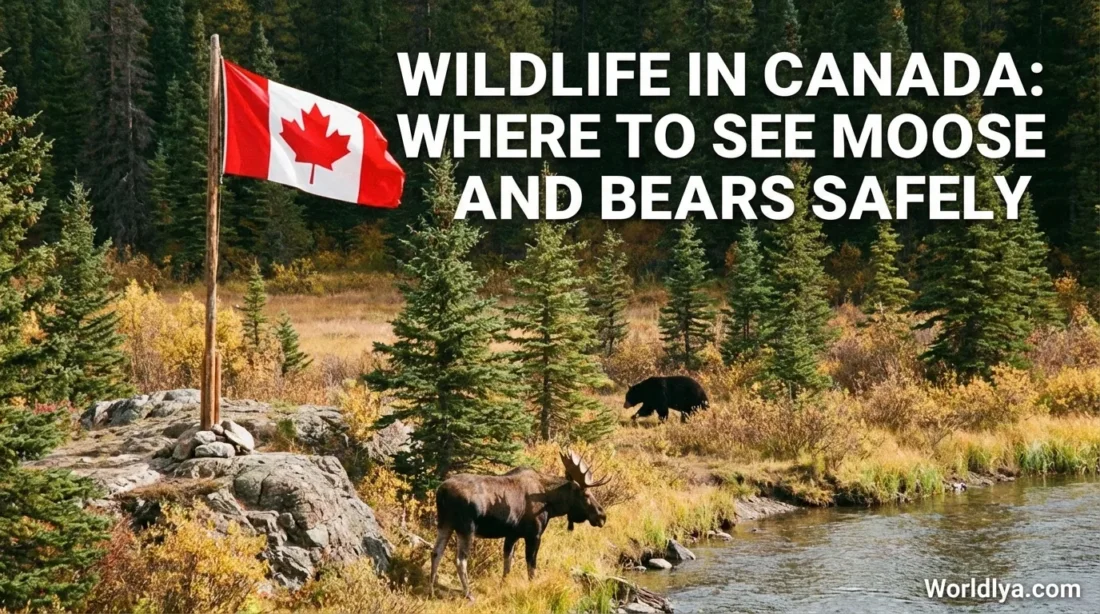
Canada does wildlife in a big way. One minute you’re cruising past a quiet lake, the next you spot a moose standing in the reeds like a living statue. Or you catch a bear moving through the forest edge—unhurried, totally in its element. Want the magic without the stress? This guide keeps it simple: where to look, when to go, and how to watch responsibly so your trip feels calm, memorable, and safe.
The One Rule That Makes Everything Easier
Think of wildlife viewing like visiting someone’s home: you’re welcome to look around, but you don’t walk into the kitchen uninvited.
- Give space. Use binoculars or a zoom lens instead of your feet.
- Stay predictable. Move slowly, speak calmly, and keep a steady path.
- Let the animal “win” the moment. If it changes behavior because of you, you’re too close.
Quick Distance Cue: many Canadian parks use a simple baseline—30 m from large animals like moose, and 100 m from bears. If posted signs say otherwise, follow the signs.
Best Places To See Moose and Bears Comfortably
Canada is huge, so “best” really means most practical: places with good habitat, solid visitor infrastructure, and clear rules that help you keep your distance. You’ll still need patience—wildlife sightings are never guaranteed—but these regions give you strong odds without needing extreme plans.
Moose-Friendly Areas
Moose love wetlands, lakeshores, and quiet forest edges. Your best “tell” is habitat: if you see reeds, marshy bays, and fresh willow growth, you’re in the right kind of neighborhood.
- Algonquin Provincial Park (Ontario): classic moose country with lakes, marshes, and dawn/dusk potential.
- Gros Morne National Park (Newfoundland and Labrador): varied landscapes and strong chances along calm roads and trails.
- Cape Breton Highlands National Park (Nova Scotia): open views and moose habitat across highlands and valleys.
- Riding Mountain National Park (Manitoba): forest-meets-meadow edges where browsing wildlife can appear.
- Jasper National Park (Alberta): river valleys and wetlands where moose sometimes show up quietly.
Pro move: pick one area and learn it. Wildlife rewards repetition more than rushing.
Bear-Friendly Areas
Bears tend to be most visible where food is easy and travel is simple: berry patches, river corridors, and forest edges. The viewing sweet spot is often “near,” but not too near—think open sightlines and clear escape routes for the animal.
- Banff and Jasper (Alberta): famous mountain parks with well-marked trails and strong safety messaging.
- Yoho and Kootenay (British Columbia): scenic corridors where careful, respectful viewing sometimes happens.
- Pacific Rim National Park Reserve (British Columbia): coastal forest habitat where black bears may be spotted.
- Bruce Peninsula National Park (Ontario): black bear habitat with seasonal activity.
- Churchill Area (Manitoba): known for polar bear viewing via licensed, guided experiences designed around safety.
Comfort tip: if you’re new to bear country, choose parks with visitor centres, trail updates, and posted advisories. It lowers the mental load.
When To Go for Better Sightings
If you want that “wow” moment, timing matters more than fancy gear. Two patterns show up again and again: shoulder seasons can be excellent, and low-light hours (early morning and late evening) often deliver.
| Animal | Best General Window | Best Time of Day | Where To Look |
|---|---|---|---|
| Moose | Late spring through fall (often strongest in early fall) | Dawn and dusk | Wetlands, lake edges, willow stands, quiet backroads (from a safe pull-off) |
| Black Bears | Spring through late fall (active season varies by region) | Morning and evening | Forest edges, berry areas, river valleys, calm slopes with good visibility |
| Grizzlies | Warmer months in the West and North | Varies; often cooler parts of the day | Open valleys and meadows with long sightlines (always follow local advisories) |
| Polar Bears | Seasonal, location-specific (guided viewing windows) | Depends on tour schedule | Designated viewing experiences with licensed operators and strict protocols |
How To Spot Wildlife Without Stress
Here’s the truth: the best wildlife watchers aren’t the ones who walk the fastest. They’re the ones who slow down and notice small clues.
Look for Signs, Not Just Animals
- Tracks near muddy shorelines and trail edges.
- Fresh browsing on willow and shrubs (ragged leaf edges can be a hint).
- Droppings on paths (not glamorous, but useful).
- Bird “alarm” behavior—sudden chatter can mean something big is moving.
Use the “Quiet Edges” Trick
Wildlife often prefers the line where two worlds meet: forest-to-meadow, water-to-woods, trail-to-brush. Stand still for a minute. Then another. You’d be surprised how often the landscape “turns back on.”
Small habit, big payoff: stop talking for 30 seconds, scan slowly, then listen. That’s when movement shows itself.
Photography That Keeps Wildlife Relaxed
Want a great photo and a peaceful encounter? Aim for “calm distance” photography.
- Use reach, not approach: binoculars, a telephoto lens, or a phone zoom from far away.
- Skip the selfie idea: if the animal is visible in the background, you’re probably too close.
- Hold steady: lean on a railing, a tree, or your car frame (if you’re legally parked).
- Take the shot, then let it be: a quick moment is better than hovering.
Helpful mindset: treat wildlife like a slow-moving sunset—beautiful from a distance, not something you “walk up to.”
Practical Safety Habits in Moose and Bear Country
You don’t need to memorize a hundred rules. You need a few habits you’ll actually keep using, even when you’re tired or excited.
On Trails
- Stay on marked trails and respect closures or advisories.
- Keep a steady voice on narrow or brushy sections so you don’t surprise wildlife.
- Hike in a small group when you can. It’s simply easier to be noticed.
- Leash dogs in wildlife areas (and keep kids close).
- Never feed wildlife—not even “just this once.”
At Campsites and Picnic Areas
- Keep food smells under control: seal snacks, pack out garbage, wipe tables.
- Store food properly using lockers or approved methods where provided.
- Don’t leave pet food outside and avoid scented items on picnic tables.
- Cook and eat in designated areas when the site is designed that way.
What To Do if You See a Moose or Bear Nearby
Exciting moment, right? Now keep it easy:
- Stop. Give yourself a second to read the situation.
- Increase distance. Step back the way you came, slowly and calmly.
- Give a clear route. Make sure the animal has space to move away.
- Choose the safe option. If you’re unsure, turn around. A “missed” sighting is still a win if everyone stays comfortable.
- Follow local guidance. If park staff or signage offers specific instructions, do that.
Remember: the goal isn’t to get closer. The goal is to leave with a great story and zero drama.
Wildlife-Friendly Driving Tips
Some of the most memorable wildlife sightings happen from the road. That can be convenient, but it’s also where good habits matter most.
- Plan for low-light hours: dawn and dusk can be active times for wildlife movement.
- Drive the speed limit and scan shoulders, ditches, and treelines.
- Use safe pull-offs only: stop where it’s legal and visible, never in a travel lane.
- Keep it quick: enjoy the view, take a photo, move along—reduces crowding.
- Stay in your vehicle if wildlife is close to the road.
Mini Planner: Choose Your “Style” of Wildlife Trip
Different travelers enjoy wildlife in different ways. Which one sounds like you?
The Easy Win
Short trails, scenic drives, viewpoints, visitor centres. Perfect if you want a great chance of sightings with low effort.
The Quiet Explorer
Early-morning walks near wetlands, slow scanning, fewer photos, more watching. Great for moose moments.
The Guided Classic
Guided wildlife tours and structured viewing areas. Ideal if you want expert guidance and clear safety rules in place.
Quick Q&A for First-Timers
Should I bring bear spray?
In many bear-country areas, people choose to carry bear spray as a last-resort safety tool. If you do, keep it accessible and follow local rules, posted advisories, and manufacturer instructions.
What should I do with kids and dogs?
Keep kids close, and keep dogs leashed in wildlife areas. Predictable groups tend to feel calmer for everyone involved—humans and animals.
Is it better to hike quietly or make noise?
On open viewpoints, quiet is fine. On brushy or narrow trails, a calm voice can help avoid surprising wildlife. Think “polite presence,” not “loud performance.”
Safety Checklist You Can Actually Remember
- Distance first: aim for 30 m from moose and other large animals, and 100 m from bears (or whatever local signage requires).
- No feeding, ever: it changes animal behavior and ruins future sightings for everyone.
- Stay on trails: closures and advisories exist for good reasons.
- Keep it tidy: food, garbage, and scented items stored properly where required.
- Be predictable: slow movements, calm voice, no crowding.
- Respect the moment: one clean sighting beats ten minutes of hovering.
If you only remember one thing: space is kindness in the wild.
References
- Parks Canada: Top Tips To Respect Wildlife and Stay Safe
- Parks Canada: Safe Travel in Bear Country (Mountain National Parks)
- Parks Canada: Bear Spray (When and How It’s Used)
- Government of Ontario: Bear Wise (Prevent Bear Encounters)
- BC Parks: Wildlife Safety
- Government of Canada (Parks Canada Publication): Never Feed Wildlife
- University of Saskatchewan: Moose Facts and Safety Notes
More from Canada Guide
- Famous Canadian Food: Poutine, BeaverTails and Maple Syrup
- History of Canada: From Confederation to Modern Day
- Public Holidays in Canada: National and Provincial Days
- Tourist Attractions in Canada: Niagara Falls and Beyond
- Canada Government Structure: A Simple Overview
- Travel Safety in Canada: Tips for International Visitors