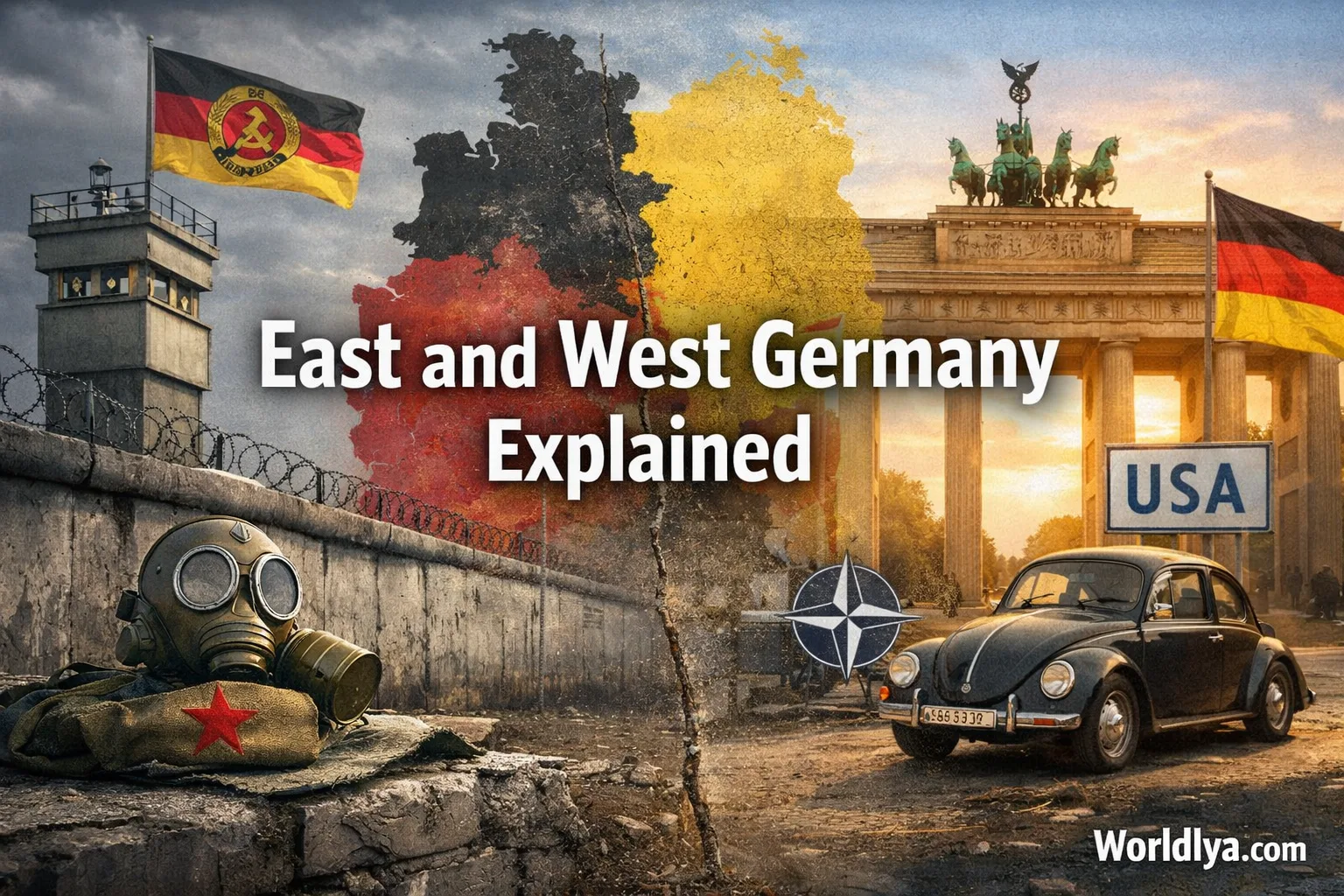
If you’ve ever heard someone say “That part feels a bit East” or “This is classic West,” you’re not alone. For a few decades in the 20th century, Germany existed as two separate states with different everyday rhythms, rules, and shopping lists. The good news? You don’t need a history degree to understand it. Let’s make it clear, practical, and kind of fun.
Quick Snapshot You Can Remember
West Germany (often shortened to FRG) and East Germany (often shortened to GDR) were two German states that existed side-by-side from 1949 to 1990.
- Same language family, many shared traditions
- Different economic models that shaped daily life
- Different capitals: Bonn (West) and East Berlin (East)
- Reunified on October 3, 1990
Think of it like two siblings raised in different households: same roots, but the “house rules” weren’t identical. That difference shows up in things you can actually see today—buildings, brands, street design, even the vibe of a neigborhood.
What Actually Changed Between East and West
When people compare East and West Germany, they’re usually talking about everyday systems: how jobs worked, what stores carried, how housing looked, and what “normal life” felt like. No drama needed—just the practical stuff.
Economy and Shopping
- West: more product variety and brand competition in shops
- East: more standardized product lines and planned supply
- In both places, people got creative: swapping tips, favorite stores, and “this works better than it looks” solutions
Work and Everyday Services
- Workplaces were organized differently, which affected career paths and consumer habits
- Many services were strongly community-based—sports clubs, local culture houses, and neighborhood routines
- Common thread: people built friendships and daily rituals around what was available
Housing and City Look
One of the easiest “spot the difference” clues is architecture.
- East: many areas have large apartment complexes built for efficiency
- West: more variation in suburban development and postwar rebuilding styles
- Today, both sides are full of beautifully renovated streets and modern neighborhoods—Germany does “new + old” really well
School, Youth, and Free Time
- Education structures weren’t identical, and that shaped training and career planning
- Sports clubs, music groups, and community activities were a big deal everywhere
- If you want the human side of the story, look at childhood memories, local festivals, and everyday hobbies
East and West Germany Overview
| Category | West Germany (FRG) | East Germany (GDR) |
|---|---|---|
| Years | 1949–1990 | 1949–1990 |
| Capital | Bonn | East Berlin |
| Economy | More market-driven | More state-planned |
| Shopping Feel | More brand variety | More standardized selection |
| City Clues Today | Mixed rebuilding + suburban patterns | Large housing estates in many areas |
Little detail that helps: People still use the words “East” and “West” casually today, but modern Germany is one country with shared national institutions. The terms are mostly about history, regional identity, and personal memory.
A Friendly Timeline of the Split and Reunification
- 1949: Two German states are formed—one in the west, one in the east.
- 1961: A heavily controlled border system becomes more visible in Berlin.
- 1989: Border restrictions loosen, and people celebrate new freedom to move.
- 1990: Reunification happens on October 3, now celebrated as the Day of German Unity.
Best way to think about it: the “East vs West” story is less about slogans and more about how different systems shape everyday choices—what’s on the shelf, how cities grow, how people plan a future.
Everyday Objects That Became Symbols
Want the quickest “aha” moment? Look at design. Ordinary stuff turned into cultural shorthand—like souvenirs from two different eras living in the same drawer.
Often Associated With the East
- Trabant (the iconic small car)
- Ampelmännchen (the cheerful pedestrian traffic-light figure)
- Simple, sturdy household design that feels practical-first
Often Associated With the West
- A wider spread of international consumer brands
- More varied advertising styles and packaging trends
- Design shifts that followed fast-moving market taste
It’s not about “better.” It’s about different constraints creating different habits. And honestly, that contrast is part of what makes modern Germany so interesting to explore.
How to See the East/West Story in Today’s Germany
Traveling (or studying) with this background is like switching on a hidden layer in a map. You start noticing small details you’d otherwise walk past.
- Berlin: look for open-air history routes, preserved wall segments, and neighborhood architecture shifts
- Potsdam: parks, palaces, and a strong “layers of time” feeling in the cityscape
- Leipzig and Dresden: cultural life, music, and city centers that tell a “before/after” story through buildings
- Bonn: museums and civic spaces connected to West Germany’s capital era
- Germany’s Green Belt: nature trails along the former inner border—now a peaceful ecological corridor
Small etiquette tip: If you ask locals about East/West memories, keep it respectful and curious. For many families, it’s personal history, not a trivia game.
A Tiny Vocabulary Cheat Sheet
- FRG: Federal Republic of Germany (West Germany)
- GDR: German Democratic Republic (East Germany)
- Reunification: the process that brought the two German states together in 1990
- Ostalgie: nostalgia for certain everyday aspects of former East Germany (often design, brands, childhood memories)
Quick FAQs People Actually Ask
Was Berlin in East or West Germany?
Both, in a way. West Berlin was connected to the West, while East Berlin served as the capital of East Germany. That’s why Berlin is packed with visible reminders of the split.
Do differences still exist today?
Germany is one country, but regional history can still influence architecture, local identity, and some economic patterns. In many places, you’ll notice more similarities than differences—and that’s the point of decades of shared growth.
What’s the simplest way to learn more without getting overwhelmed?
Pick one city (Berlin is easiest), visit one well-curated museum or open-air exhibit, and pair it with a neighborhood walk. Seeing the “texture” of daily life makes the history stick.
Sources
- Haus der Geschichte (LeMO): “Geteiltes Deutschland” overview
- Deutschland.de: “The GDR – what life was like for people in East Germany”
- German Federal Government (Archive): Background on the 1990 settlement enabling reunification
- German Bundestag: “The German Democratic Republic (1949–1990)”
- Brigham Young University (EuroDocs): “Germany Divided and Reunified” document hub
- Encyclopaedia Britannica: “German reunification” explainer