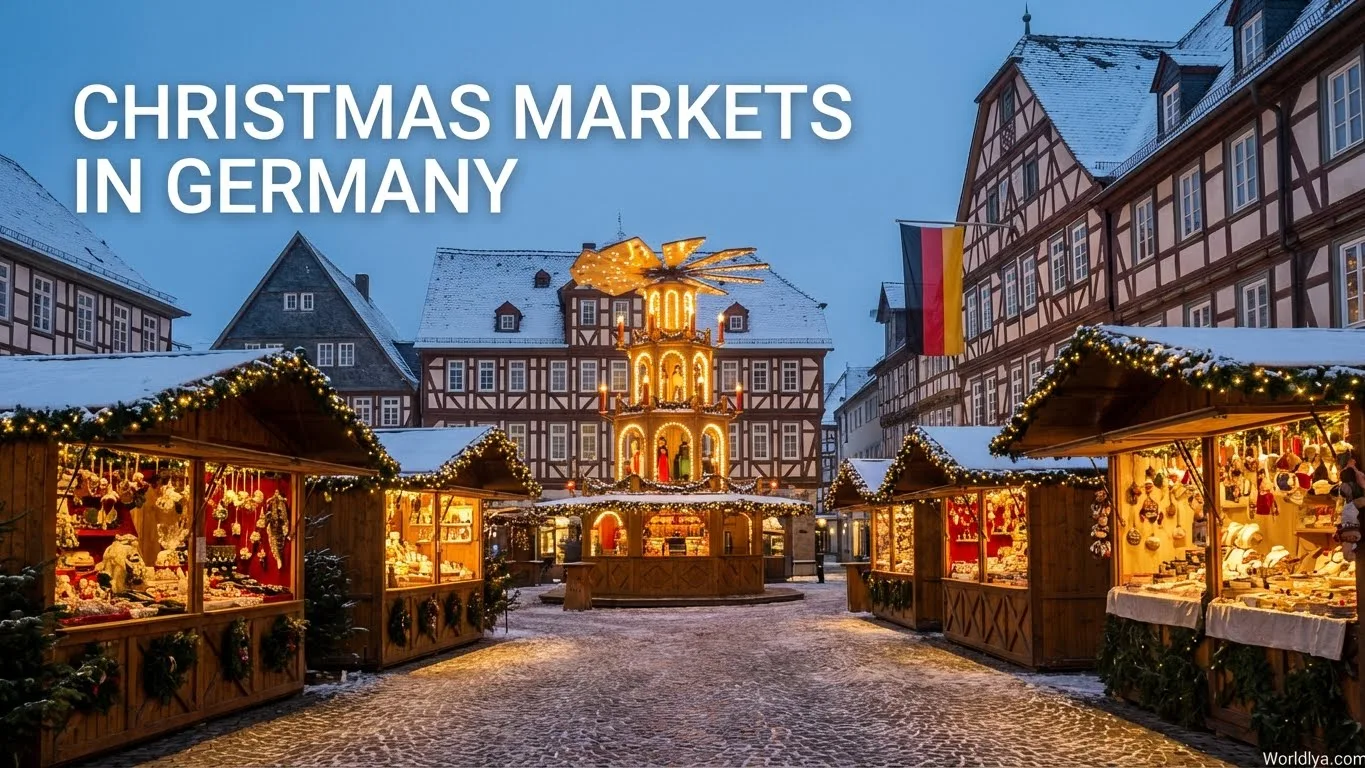
Germany’s Christmas markets aren’t just places to shop. They’re little winter worlds—wooden stalls glowing like lanterns, the air smelling like cinnamon, roasted almonds, and warm spices, and that cozy hum of people chatting with steaming cups in hand. If you want a festive experience that feels real (not staged), this is it.
Quick Picks and Smart Tips
- Best vibe: Go after sunset for the lights, then grab a warm drink and wander slowly.
- Best strategy: Pick 2–3 markets per trip, not ten. You’ll enjoy them more.
- Don’t miss: Local crafts (woodwork, ornaments, candle arches) and regional sweets.
- Keep it comfy: Warm layers, comfy shoes, and a tote for gifts = a stress-free stroll.
Why These Markets Feel So Magical
German Christmas markets (often called Weihnachtsmärkte) usually sit right in the heart of a city—main squares, old-town streets, and cathedral plazas. That setting does half the work. Add handcrafted gifts, seasonal music, and traditional treats, and you get something that feels like stepping into a gently shaken snow globe.
What You’ll See
- Rows of wooden stalls with ornaments, candles, and handmade gifts
- Seasonal sweets like Lebkuchen (gingerbread) and regional pastries
- Decorations that range from classic to delightfully quirky
What You’ll Taste
- Warm drinks like Glühwein and fruity punch
- Comfort foods like sausages, roasted nuts, and seasonal bites
- Local specialties that change from city to city (that’s the fun)
A Handy Video To Get in the Mood
If you want a quick feel for the atmosphere—lights, crowds, treats, and classic spots—this one helps you picture it fast.
Select Christmas Markets To Add To Your List
Nuremberg: Christkindlesmarkt
This one is famous worldwide—and it still feels wonderfully traditional. Think a “little city of wood and cloth,” filled with handmade decorations and classic sweets like Lebkuchen. Go slow, look closely, and you’ll spot details everywhere.
- Best For: Classic atmosphere and gift shopping
- Try: Gingerbread treats and regional cookies
- Shop For: Traditional ornaments that don’t feel mass-produced
Dresden: Striezelmarkt
Germany’s oldest Christmas market blends tradition, crafts, and that storybook Old Town setting. You’ll see regional handiwork—especially from Saxony and the Ore Mountains—and seasonal icons like the Pflaumentoffel (a little prune figure that people love as a lucky charm).
- Best For: Deep tradition and standout crafts
- Try: Dresden-style stollen and festive sweets
- Look For: Erzgebirge folk art and candle-arch motifs
Cologne: Cathedral Market
Right by Cologne Cathedral, this market feels grand without losing its warmth. A huge Christmas tree often anchors the square, and a sparkling canopy of lights makes the whole place glow. If you love big-city energy with festive charm, this is your spot.
- Best For: Iconic views and lively atmosphere
- Try: Local specialties and seasonal mugs
- Tip: Visit on a weekday evening for an easier stroll
Munich: Marienplatz Christkindlmarkt
Classic and central, set against the dramatic backdrop of Munich’s Town Hall. It’s the kind of place where you can buy a thoughtful gift, then warm up with something sweet and spiced while the lights do their thing. You’ll want to beleive me: go hungry.
- Best For: A “main square” Christmas market experience
- Try: Warm punch and classic festive snacks
- Shop For: Gifts that feel timeless (not trendy)
Stuttgart: Christmas Market
Stuttgart’s market spreads through central squares and streets, creating that “wander for hours” feeling. It’s known for a wide variety of stalls—crafts, decorations, and plenty of comforting winter bites.
- Best For: A big market that still feels easy to explore
- Try: Regional treats and warm drinks
- Tip: Take breaks—this one invites long, relaxed browsing
Berlin: WeihnachtsZauber at Gendarmenmarkt
If you like a slightly more “event” feel—food, crafts, and a touch of show—this one fits. It often has a small entry fee, and the setting around the square makes it feel bright and special.
- Best For: A polished market with lots to see in one place
- Try: A mix of classic flavors and creative treats
- Tip: Bring a reusable tote—craft finds add up fast
Rothenburg ob der Tauber: Reiterlesmarkt
Want a market that feels like a postcard? Rothenburg’s old town turns on the charm. The Reiterlesmarkt sits among historic streets and squares, and the whole place feels gently lit and romantic—perfect for a slower, dreamy evening.
- Best For: Old-town atmosphere and cozy photos
- Look For: Traditional stalls and warm seasonal treats
- Tip: Stay overnight if you can—Rothenburg shines after dark
Market Matchmaker Table
| City | Signature Feel | Perfect If You Want |
|---|---|---|
| Nuremberg | Classic, traditional | Iconic stalls and timeless gifts |
| Dresden | Historic, craft-forward | Regional handiwork and deep tradition |
| Cologne | Cathedral backdrop, lively | Big-market energy with a festive glow |
| Munich | Central, storybook square | A classic city-center Christmas stroll |
| Stuttgart | Sprawling and browseable | A longer, relaxed market day |
| Berlin | Polished and event-like | Crafts plus entertainment in one spot |
| Rothenburg | Old-town romance | A postcard-perfect winter evening |
How To Plan a Smooth Market Visit
Most markets run from late November into late December, often with special hours near Christmas. Dates and times can change yearly, so it’s smart to check the official pages before you go.
Go-To Checklist
- Layer up: Warm jacket, scarf, gloves
- Shoes matter: You’ll walk more than you think
- Bring a tote: For ornaments, snacks, and gifts
- Timing trick: Arrive before peak hours, stay for the lights
Make It Extra Cozy
- Choose one “main” market and one smaller one nearby
- Eat first, shop second: Less rushed, more fun
- Pick a theme: Crafts, sweets, or photo spots
- Take breaks: A warm indoor café reset is gold
What To Try and What To Bring Home
Here’s a simple way to shop and snack like you know what you’re doing—without overthinking it.
Worth Tasting
- Glühwein (mulled wine) or a non-alcoholic punch
- Roasted almonds and caramelized nuts
- Regional sweets (gingerbread, stollen-style pastries)
Worth Buying
- Handmade ornaments (wood, glass, straw stars)
- Candles and cozy home décor
- Local crafts you can’t easily find elsewhere
Want a simple rule? If it looks like something you’d keep for years—not something you’ll forget in a drawer—it’s the right souvenir.
A Simple Multi-City Route That Actually Feels Relaxing
You don’t need a marathon itinerary. Pick one region, then add a second city that’s easy to reach. Here’s a gentle idea:
- Berlin (big-city variety, stylish markets)
- Dresden (classic tradition and craft culture)
- Nuremberg (iconic Christmas market experience)
- Munich (a festive main square and Bavarian charm)
- Rothenburg as a bonus day (if you want that fairytale feel)
Little tip that saves your day: Book accommodation early in popular cities, then keep your market plan flexible. Some nights you’ll feel like exploring; other nights you’ll want a calm dinner and an early sleep.
FAQ
When Do Christmas Markets Usually Open?
Most start in late November and run until just before Christmas. A few continue through the end of December. Always check official pages for exact dates.
Are These Markets Family-Friendly?
Yes. Many markets have festive decorations, sweet treats, and a welcoming vibe that works for all ages.
What Time of Day Is Best?
Late afternoon into evening is the sweet spot—daylight for browsing, then lights for that “wow” feeling. If you prefer quieter moments, go earlier on weekdays.
Sources
- German National Tourist Board: Christmas Markets in Germany
- City of Dresden: Striezelmarkt (Official Information)
- Nuremberg Christkindlesmarkt (Official Site)
- Cologne: Christmas Market at the Cathedral (Info Page)
- Munich: Christkindlmarkt at Marienplatz (City Information)
- Stuttgart Christmas Market (Official Site)
- Berlin: WeihnachtsZauber at Gendarmenmarkt (Official Site)
- Rothenburg ob der Tauber: Reiterlesmarkt (Official City Tourism Page)
- University of Münster (WiRe): The Christmas Markets of Münster