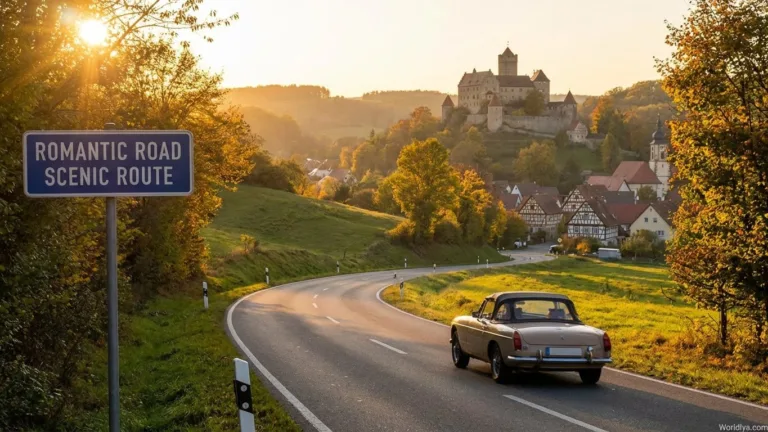
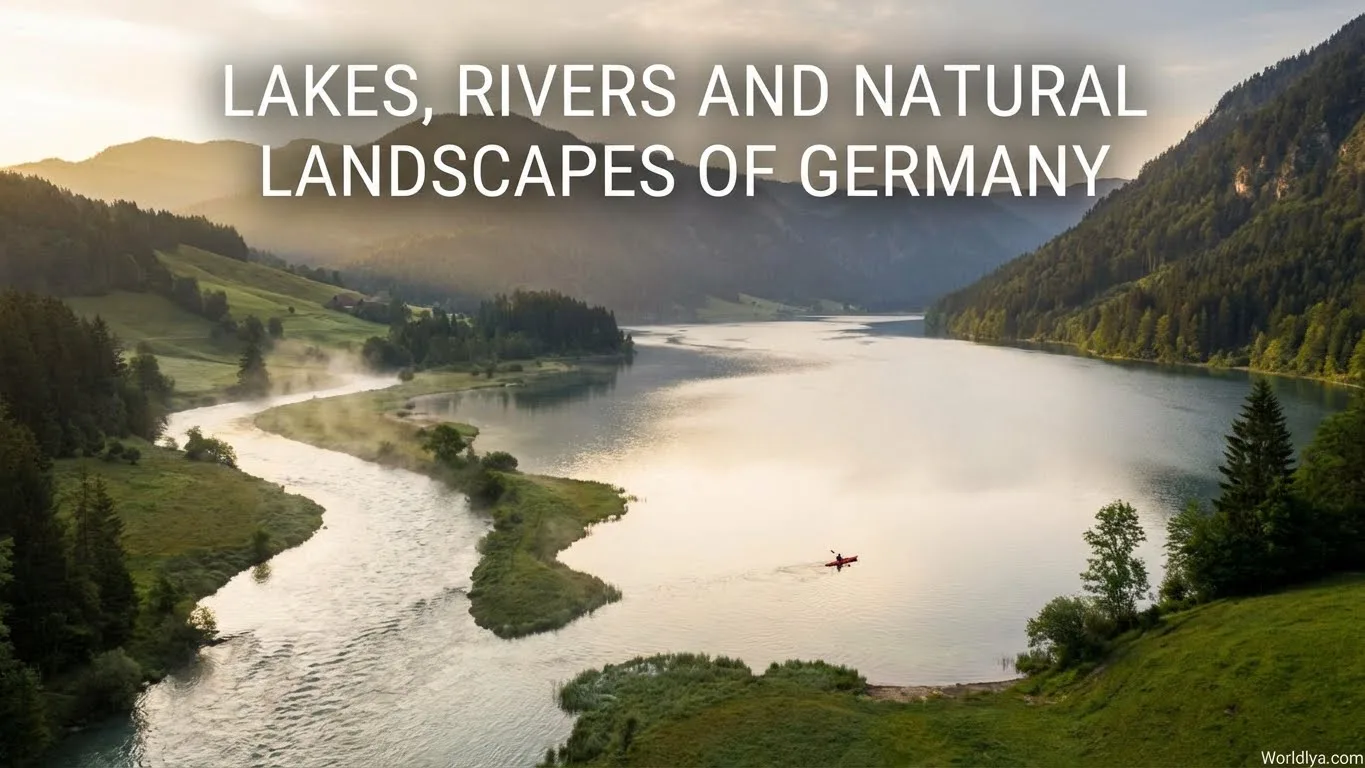
Germany is one of those places where water and land feel like old friends. Lakes sit quietly like polished mirrors, rivers keep things moving like a gentle conveyor belt, and forests and mountains frame it all so neatly that you’ll catch yourself stopping mid-walk just to stare. If you’re craving fresh air, easy-to-follow trails, and views that don’t need a filter, you’re in the right country.
- Germany’s Water Map in a Nutshell
- Signature Lakes Worth Your Time
- Rivers That Shape the View
- Landscape Spotlight Table
- Natural Landscapes Beyond Water
- Plan Your Days Without Stress
- Nature-Friendly Etiquette
- Mini Itineraries You Can Copy
- Quick FAQ
- Sources
Germany’s Water Map in a Nutshell
Think of Germany as a big, friendly crossroads for waterways. Some rivers drift north toward the North Sea, others head for the Baltic, and one famous route flows southeast into the Danube system. What does that mean for you? Variety. One week can be lakeside picnics and reeds, the next can be cliff walks above a winding valley.
If You Like It Calm
- Lake promenades and easy cycling paths
- Reed-lined wetlands and birdwatching spots
- Canoe routes through quiet channels
If You Want More Energy
- Mountain lakes with steep viewpoints
- River gorges, rock formations, and lookout trails
- Long, scenic train rides that follow valleys
Quick Mood Check: Ever watched sunlight bounce off a lake and thought, “Wait… is this real?” Germany does that kind of magic a lot—especially in the early morning and right before sunset.
Signature Lakes Worth Your Time
Lakes in Germany come in different personalities. Some are wide and international, some are tucked into alpine bowls, and some spread out into entire lake districts. If you’re the kind of traveler who likes to follow water, Germany is a joy to expore.
Lake Constance (Bodensee)
Why people love it: Big horizons, breezy shore walks, and a “three-country” feeling without any effort. It’s Germany’s largest lake by area, and it’s shared with Austria and Switzerland, which makes the whole region feel extra open.
- Do this: Pick one lakeside town as a base, then take short day trips along the shore.
- Best vibe: Slow mornings, long lunches, and sunset strolls.
Müritz
Why it’s special: Müritz sits in the heart of a lake district, so you’re never “done” after one viewpoint. It’s widely known as the largest lake located entirely within Germany—a perfect anchor point for lake-hopping days.
Small, useful detail: The lake’s surface area is often noted at about 117 km², which helps you picture the scale when planning boat rides or bike loops.
Königssee
Why it stands out: A deep alpine lake with dramatic slopes—like a postcard that decided to become real life. It’s a great choice if you want mountains + water in one place.
- Do this: Go early for calmer water and quieter viewpoints.
- Pack this: A light layer—mountain air can change fast.
Chiemsee
Why it’s easy: Big-lake views, gentle shores, and plenty of ways to enjoy a simple “water day.” It’s friendly for families, relaxed travelers, and anyone who just wants to switch off.
Rivers That Shape the View
Germany’s major rivers don’t just cut through the land—they compose it. Valleys open up, viewpoints appear at just the right moment, and towns seem to “lean in” toward the water. You don’t need to be a geography nerd to enjoy this. Just follow the river for a day and see what happens.
- Rhine: The classic “river scenery” experience—wide stretches, promenades, and plenty of places to pause for photos.
- Danube: A famous reminder that rivers can connect very different landscapes in one long journey.
- Elbe: Known for pairing beautifully with sandstone scenery in parts of eastern Germany.
- Moselle: A smaller river with a cozy, curvy feel—great for slow drives and riverside walks.
- Main and Neckar: Solid choices when you want a river day that blends nature with easy city access.
- Spree: Especially charming when it fans into channels in the Spreewald region.
A nice way to think about it: Lakes are Germany’s pause button. Rivers are the playlist that keeps playing.
Landscape Spotlight Table
| Region | Water Highlight | What It Feels Like | Perfect For |
|---|---|---|---|
| Mecklenburg Lake District (Müritz Area) | Interconnected lakes and wetlands | Open skies and quiet shorelines | Cycling, birdwatching, slow boat rides |
| Black Forest | Forest lakes and streams | Deep-green trails and fresh, cool air | Hiking, scenic drives, nature centers |
| Bavarian Alps (Berchtesgaden Area) | Mountain lakes | Dramatic views with crisp water | Viewpoints, easy-to-hard hikes, photography |
| Saxon Switzerland | Elbe River scenery | Sandstone cliffs and lookout paths | Day hikes, panoramic viewpoints |
| Wadden Sea Coast | Tidal flats and dunes | Big-sky coastline and changing patterns | Guided nature walks, coastal breezes |
| Spreewald | River channels and quiet waterways | A watery maze in a green landscape | Canoeing, relaxed exploring, family days |
Natural Landscapes Beyond Water
Water is the headline, sure. Still, the supporting cast matters just as much: forests, dunes, rock formations, and mountains that make each region feel totally different from the next.
Black Forest
The Black Forest is a classic for a reason. Trails slip under tall trees, the light changes every few minutes, and small lakes show up like hidden secrets. If you enjoy easy hikes with a “reward view” at the end, this region delivers.
Saxon Switzerland
This landscape is all about rock drama—sandstone formations, forest paths, and lookouts above the Elbe. It’s a great pick for travelers who want a strong visual payoff without needing alpine experience.
Wadden Sea Coast
Along the North Sea, nature feels like it’s constantly rearranging itself. Tides shift the scenery, dunes roll like soft hills, and the open horizon makes everything feel spacious. If you like coastal air and long walks, you’ll feel right at home.
Spreewald
Spreewald is the “water-labyrinth” experience: a network of channels, lush greenery, and calm routes that are perfect for canoeing or quiet boat trips. It’s gentle, approachable, and surprisingly calming.
Plan Your Days Without Stress
You don’t need an over-planned schedule to enjoy Germany’s lakes and landscapes. A few smart choices make everything smoother.
- Choose one “base town” per region. It keeps your days simple and your travel time short.
- Mix one big outing with one easy outing. A long hike + a lakeside café day is a great balance.
- Use water as your compass. Pick a lake, a river stretch, or a coastline area—then build your days around it.
- Leave room for weather. If clouds roll in, swap viewpoints for forest trails or a nature center visit.
Nature-Friendly Etiquette
Keeping places beautiful is easier than people think. A few small habits go a long way, and they keep your day pleasant too.
- Stay on marked paths in sensitive areas (wetlands and dunes especially).
- Bring a small bag for your own trash—even “tiny” bits add up fast.
- Keep a respectful distance from wildlife and nesting areas.
- Use quiet voices near lakes and reed zones; it makes the experience better for everyone.
- Choose refillable water when possible—lighter backpack, less waste.
Simple rule: if you can leave a place looking like you were never there, you did it right.
Mini Itineraries You Can Copy
One-Day “Water Reset”
- Morning: lakeside walk + coffee
- Midday: short boat ride or easy cycling path
- Afternoon: viewpoint or forest loop trail
- Evening: sunset by the shore
Weekend “Lakes + Trails”
- Day 1: explore one major lake + waterfront promenade
- Day 2: choose one longer hike or a river valley day trip
- Bonus: add a nature center or guided walk if available
Quick FAQ
What’s the best season for lakes and rivers?
Late spring to early autumn is the easiest window for long days outside. Early mornings are often the calmest for mirror-like water views.
Do I need a car?
Not always. Many regions are well-connected, and river valleys often pair nicely with train routes and local buses. A car can help if you want to hop between small lake spots quickly.
Is it family-friendly?
Yes. Germany has lots of gentle lakeside paths, clear signage, and nature areas designed for relaxed visits.
Sources
- Umweltbundesamt (UBA) – Water: Status And Protection of Water Bodies
- Federal Institute of Hydrology (BfG) – Undine Information Platform
- German Federal Agency for Nature Conservation (BfN) – Protected Areas And Habitats
- Müritz National Park – Official Site (English)
- Saxon Switzerland National Park – Official Site (English)
- Lower Saxon Wadden Sea National Park – Official Visitor Brochure (PDF, English)
- Encyclopaedia Britannica – Lake Constance