
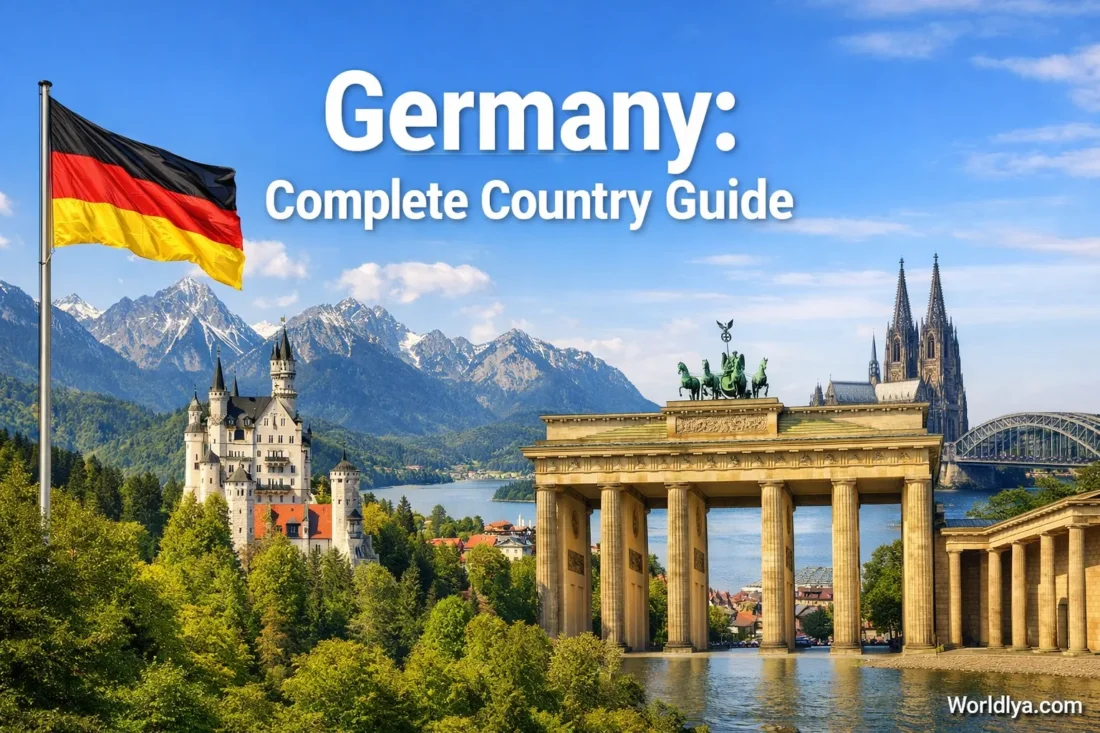
Germany is one of those countries that looks easy to summarize until you actually try. You hear Berlin, the Autobahn, castles, maybe football, maybe bread, maybe engineering. Then you land there, study there, work there, or plan a move, and you notice something else: Germany runs on patterns. Geography shapes food. History still shapes regional habits. Public systems shape daily routines. Quiet Sundays shape your shopping list. This page puts those patterns in one place, so the country feels less like a pile of facts and more like a place you can actually read, understand, and picture in real life.
Germany Guide (39)
Germany Snapshot
| Topic | What to Know | Why It Matters |
|---|---|---|
| Capital | Berlin | The political and cultural center, but not the whole story of the country. |
| Population | A little over 83.5 million | Germany is big enough to feel diverse, regional, and layered. |
| Federal States | 16 Länder | Rules, school calendars, and some holidays vary by state. |
| Currency | Euro (€) | Useful for work, study, rent, and everyday planning. |
| Time Zone | CET in winter, CEST in summer | Helpful for travel, work calls, and deadlines. |
| GDP | About €4.47 trillion in 2025 | Shows the size of the economy behind jobs, exports, and public services. |
| Minimum Wage | €13.90 per hour from 1 January 2026 | Useful for salary expectations and cost planning. |
| National Public Holiday | Day of German Unity on 3 October | Most other public holidays depend on the state. |
One small but helpful reminder: national averages only tell half the story. Munich does not feel like Bremen. Rural Saxony does not feel like Cologne. Hamburg in November does not feel like the Alps in February. That difference shows up again and again across the sections below.
What Germany Is Like on the Ground
Land, Scale, and Regional Variety
Germany geography starts making sense when you stop seeing the country as one neat rectangle in the middle of Europe. The north opens onto the North Sea and Baltic coast. The center is full of river valleys, farmland, wooded hills, and dense urban belts. The south rises toward the Alps, where winter feels sharper and the horizon looks different. Major rivers like the Rhine, Elbe, and Danube are not just lines on a map; they have shaped trade, settlement, food habits, and city growth for a very long time. Geography is not background here. It quietly runs the show.
Population and Where People Live
If you zoom in on Germany population, the country feels even more local. Yes, Berlin, Hamburg, Munich, and Cologne pull attention. Even so, Germany is not only a “big city country.” It is also a country of mid-sized cities, university towns, commuter belts, industrial regions, and very lived-in smaller places. That matters because quality of life often depends on where you choose to land. Rent, public transport, job options, student life, pace, and even how easy it is to practice German can change a lot from one region to the next.
Weather Patterns and the Feel of Each Season
German climate is usually temperate, but “temperate” does not mean boring. The north tends to feel more maritime, windier, and milder. Inland and eastern areas often see warmer summers and colder winters. Southern uplands and alpine areas bring snow, ski culture, and a very different winter mood. Spring can arrive slowly. Summer can be lovely, green, and surprisingly warm. Autumn is one of Germany’s best seasons for walking and short trips. Winter can feel dark, yes, but it also brings order, routine, layered clothing, and a calendar full of seasonal rituals that people genuinely look forward to.
Nature That Shows Up in Everyday Life
You understand Germany nature best when you notice how close it sits to ordinary routines. Parks are not just for weekends. Forest paths, riverbanks, lakes, and cycling routes are part of many people’s normal week. In some areas, you can finish work and be on a hiking trail in less than an hour. In others, a train ride gets you to vineyards, coastlines, or low mountain landscapes before lunch. Nature in Germany often feels organized, signed, accessible, and woven into local life. It is less about dramatic isolation and more about regular use. That changes how people rest.
- Northern Germany often feels flatter, windier, and more maritime.
- Central Germany mixes river valleys, forests, farms, and older industrial zones.
- Southern Germany leans alpine, scenic, and very outdoor-friendly.
How Germany Became the Country You See Today
A Short Historical Line That Still Shows in Daily Life
Germany history matters because it helps explain why the country often feels layered rather than uniform. The map changed many times before modern Germany took shape. Old kingdoms, city-states, trading centers, church lands, industrial regions, and later national unification all left traces behind. You still see that in local identities, architecture, dialects, and regional pride. A person from Bavaria may speak about home differently from someone in Hamburg or Saxony, and not in a small way. Germany became a modern state, but it never stopped being deeply regional. That is one of its most useful truths.
Postwar Rebuilding and the Habit of Starting Again
The story of postwar rebuilding still sits underneath modern Germany, even when nobody says it out loud. Much of the country had to rebuild housing, industry, transport links, and civic trust after 1945. That long period of reconstruction helped create a strong respect for planning, municipal systems, vocational skills, and steady public administration. You can feel echoes of that in housing rules, infrastructure habits, training culture, and the way public life often values reliability over improvisation. It is not glamorous. It is not flashy. It is simply part of why daily life can feel structured, sometimes a little strict, and often dependable.
Division, Reunification, and Regional Memory
You cannot fully read modern Germany without understanding East and West Germany. Reunification brought the country back together, but regional memory did not vanish overnight. Economic patterns, city development, wages in some sectors, demographics, and even political culture in a broad civic sense have shown long after-effects. None of that means Germany is split in daily life. It means history leaves marks, and some marks take time. Travel across the country and you will notice both the shared national rhythm and the regional differences in architecture, town centers, work culture, and population trends. Both are real at the same time.
How Public Institutions Work
If you want the practical version of how Germany is governed, start with one idea: the country is federal. Germany has 16 states, and they are not decorative. They matter for schools, some holidays, broadcasting, policing structures, and parts of public administration. The national parliament, the Bundesrat, the federal ministries, the states, and the municipalities all play roles. That may sound abstract until you move there and discover that opening times, school systems, and local procedures can differ from one state to another. The system can feel layered. It can also explain why Germany works through rules, forms, and jurisdiction rather than broad one-size-fits-all shortcuts.
One Useful Way to Read Germany
Geography shapes region. History shapes identity. Public systems shape daily life. Once you keep those three in mind, many small German habits stop feeling random.
Work, Money, and Why Germany Draws So Many New Arrivals
Why the Economy Feels Broad Rather Than Narrow
Germany economy is easier to understand when you stop thinking only about giant brands. Yes, big names matter. Even so, a large part of Germany’s economic strength comes from a wide base of manufacturing, services, research, logistics, export activity, and highly specialized small and medium-sized firms. That spread matters because it supports local labor markets in many different regions rather than pulling every opportunity into one capital city. It also helps explain why vocational training is so respected, why industrial regions remain important, and why the country still attracts people looking for stable work paths, not only glamorous ones.
GDP, Output, and What That Means in Real Life
Looking at Germany GDP tells you something simple but useful: this is one of the world’s largest economies, and the scale shows up in real life through transport, education options, public insurance systems, research institutions, and a very dense business landscape. Still, GDP does not pay your rent by itself. That is where many country pages go thin. Output matters, but regional wages, housing costs, tax deductions, social insurance, and commuting costs matter just as much. Germany can offer strong earning potential, yet your day-to-day outcome depends heavily on location, profession, and whether you arrive with a clear legal and work plan.
Working Life and What Employers Usually Expect
Working in Germany often feels clear once you know the rhythm. Employers usually value punctuality, written clarity, role definition, and follow-through. Meetings may feel more direct than in some countries, though not rude. Job titles and qualifications matter, especially in regulated fields. Contracts, probation periods, notice periods, and social insurance are worth reading closely, not skimming at midnight with coffee. English-speaking roles do exist, especially in tech, research, business services, and some international firms. Even so, German still opens more doors, especially outside the very largest cities. You do not need perfect fluency on day one, but steady progress pays off fast.
Minimum Wage and the Everyday Money Question
The page on Germany minimum wage matters because many people ask the wrong question first. They ask, “What is the hourly rate?” A better question is, “How far does that rate go in my city, after deductions, with my rent, transport, and insurance?” Germany’s legal minimum wage is a real floor, but living well depends on the full package around it. In lower-cost towns, basic planning may go further. In high-demand cities, housing can swallow a large part of your budget. So yes, know the number. Then look beyond the number. That second step is where useful planning begins.
Immigration Paths That Match Real Goals
Immigration to Germany makes the most sense when you tie it to a real purpose: work, study, training, family life, or a structured job search. Germany is rarely a place where “I’ll just arrive and figure it out” works well for long. Public systems expect documents, legal grounds for stay, insurance, and proof that your plan is real. That sounds dry, but it can actually help you. Once your path is clear, the steps become easier to organize. The strongest moves are usually the calm ones: choose the legal route first, match it to your skills, then build housing, paperwork, and money planning around that route.
Visa Routes and the First Legal Steps
A solid Germany visa guide should not drown you in jargon. In practice, the sequence is usually simple: confirm the right route, gather the right documents, apply from the correct place, enter legally, then convert to the residence permit that matches your stay. Skilled work routes often depend on recognized qualifications and a job offer. Study routes depend on admission, funding, and insurance. Germany also offers a route for eligible jobseekers through the Opportunity Card. The country rewards preparation more than improvisation. That may sound strict, but it also means the system is more readable once your paperwork fits the purpose.
| Common Path | Usually Fits People Who Want to… | What Often Matters Most |
|---|---|---|
| Skilled Work | Take up qualified employment | Recognized qualification, job offer, clear role |
| Study | Earn a degree and build long-term options | Admission, funding, housing plan, insurance |
| Vocational Training | Train for a profession with real workplace experience | Training contract, language progress, practical fit |
| Job Search | Enter with a legal route to look for work | Eligibility, money planning, document readiness |
Settling In Without Feeling Lost
The First 30 Days Matter More Than Most People Think
Moving to Germany gets easier when you treat the first month like a sequence, not a blur. Housing comes first because many later steps depend on an address. Registration matters because it unlocks other parts of daily life. A bank account helps with salary and rent. Health insurance is not optional. Phone setup, transport passes, and understanding supermarket and Sunday habits come faster once those core steps are done. People often spend too much energy on tiny details before arrival and too little on the order of the first few legal and practical tasks. Get the order right. That alone removes a lot of stress.
- Secure a realistic place to stay.
- Sort your address registration as early as possible.
- Set up insurance, banking, and your phone basics.
- Learn your transport options and nearest essential shops.
- Build a weekly routine before chasing every side task.
Renting: Paperwork, Deposits, and House Rules
Renting in Germany can feel formal, and that is not your imagination. Landlords or agencies often want documents, proof of income or funding, and a careful reading of the tenancy agreement. Deposits are normal. So are house rules. You may also be expected to think about waste sorting, stairwell etiquette, laundry schedules in shared buildings, and handover notes when you move in. This can seem fussy at first. Then, after a while, it starts to feel like the country’s broader style: clear rules, predictable expectations, fewer assumptions. Read everything. Photograph the condition of the place. Keep your paperwork tidy. Future you will be glad you did.
Buying a Home or Flat
If renting is your short-term move, buying property in Germany is the slower, more document-heavy path. Buyers usually need to think beyond the purchase price and include notary fees, land register costs, possible agent fees, financing terms, and the local market reality. Germany tends to treat property transactions very formally, which reduces guesswork but also means patience matters. For many newcomers, renting first is the smarter move because it lets you learn the region before making a long-term decision. That said, if you know your city, your commute, and your budget well, buying can become a stable long-view option rather than a rushed emotional one.
Health Insurance and Medical Care
The page on the Germany healthcare system matters because many newcomers assume it works like a tax-funded model everywhere. It does not. Health insurance is compulsory, and most people are in statutory insurance, while others use private insurance depending on their situation. Once you are insured, you enter a system with general practitioners, specialists, hospitals, pharmacies, preventive care, and strong expectations around documentation. No, it is not “free” in the simple sense. It is insured. That distinction matters. Learn it early. Also learn how appointments work, what your insurance card does, and where to go for routine care versus urgent help.
Daily Life Is Built From Small Habits
If you read only one practical lifestyle page, make it daily life in Germany. Big country pages often miss what people actually need: supermarket timing, bottle return systems, recycling habits, public quiet hours, paperwork folders, and the simple truth that life gets easier once you build routines. Germany often rewards preparation in very ordinary ways. Bring your reusable bag. Check whether the store closes early. Carry the documents you might need. Keep appointment letters. Learn how your building works. None of this sounds exciting, yet this is the stuff that decides whether your week feels smooth or annoyingly fragmented.
Time, Sundays, and the National Rhythm
Time in Germany is not just a time zone note. Yes, the country uses CET in winter and CEST in summer. More important, time is treated socially as something you respect. Trains, appointments, office culture, class schedules, and everyday planning all reflect that. Sundays also change the rhythm. Many shops close, streets feel calmer, and people shift toward walks, family meals, coffee, and outdoor time. If you arrive from a place where everything is available all the time, that can feel odd for a week or two. Then it often starts to feel pretty sane.
Education, Training, and Language
How Schooling and Pathways Are Structured
The Germany education system is shaped by pathways rather than one single straight line. School structures can vary by state, and later choices often connect to academic study, vocational routes, or blended practical paths. For families, that means location matters. For students arriving later, it means recognition, equivalence, and access rules deserve careful attention. The system can look layered from the outside, yet it has a clear internal logic: help learners move toward a qualification that leads somewhere. That is one reason German education discussions often sound practical. People want to know not just what you study, but where that path takes you next.
Universities and What International Students Notice First
Universities in Germany are not all built on one model. There are research-focused universities, universities of applied sciences, and arts or music institutions. That difference matters. Some students want theory, research depth, and long academic arcs. Others want practical study with a stronger workplace connection. Germany also stands out because the number of degree options is huge, and many international students are drawn by academic reputation, lower tuition pressure in many public settings, and clear post-study routes. Still, success depends on more than admission. Housing, language, bureaucracy, and realistic budgeting shape the student experience just as much as the lecture hall does.
Ausbildung and Why It Matters So Much
Ausbildung in Germany is one of the most practical things to understand if you are looking beyond the usual university route. It combines structured training with real workplace experience and is deeply respected across many professions. That respect is not symbolic. It is tied to how German employers think about skill, standards, and readiness for the job. For many people, especially those who like hands-on learning more than purely academic study, Ausbildung can be a very sensible path into stable work and long-term life in Germany. It is not a backup option. In many fields, it is the main road.
Language Changes More Than Communication
The German language does more than help you order coffee or survive a train announcement. It changes your access to jobs, housing conversations, paperwork confidence, friendships, parent-teacher talks, and how at home you feel in small towns. You can live in some parts of Germany with a lot of English, especially in international work or study circles. Even so, German opens the wider country. It also helps you read tone better. A short written message that feels cold in translation may sound perfectly normal in German context. That matters more than many newcomers expect. Language is not only about vocabulary. It is about comfort.
Why This Part of Germany Is Often Underexplained
A common mistake is to treat education, training, and language as three separate topics. In Germany, they overlap all the time. Study shapes visa options. Training shapes work access. Language shapes whether either path feels smooth or exhausting.
Culture, Food, and Social Life
Culture Is Local Before It Is National
German culture is often described as if it were one clean set of traits. Real life is messier, and better. Germany has shared habits, yes: punctuality, organization, respect for privacy, direct communication in many settings, and a visible public routine. But local culture matters just as much. Carnival areas feel different from northern port cities. Alpine regions carry different food, festival, and dress traditions than Berlin or the Ruhr area. So when people say, “Germans are like this,” take it lightly. Often what they really mean is, “People in one place I visited were like this.” Germany is a national state with a stubborn local heart.
Belief, Community, and Public Space
The page on religion in Germany is useful because it reminds you that Germany is both historically shaped by Christian traditions and socially diverse in modern life. In everyday terms, that means you may notice church architecture everywhere, public holidays with religious roots, and local customs tied to older traditions. At the same time, daily life in most cities is broad, varied, and lived by people with different beliefs or no religious affiliation at all. For most readers, the practical point is simple: religion shows up more in the calendar and built environment than in constant public conversation. The atmosphere is usually calm rather than performative.
Food That Changes With the Region
German food makes more sense when you think region first. Northern menus lean more toward fish and coastal habits. The west brings hearty dishes, breads, and strong local specialties. The south leans toward alpine and Bavarian influences, dumplings, pretzels, and rich comfort food. Berlin adds its own fast-moving urban layer on top. If you only expect sausages and potatoes, you will miss a lot. German food culture is also tied to season, bakery routines, market towns, spargel time, festive baking, and local pride. It is not always fancy. It is often satisfying. And yes, people really do care about where a dish belongs.
Bread Is Not a Side Note Here
The page on Germany bread deserves its own stop because bread in Germany is not filler. It is a real food culture with hundreds upon hundreds of local forms, grain mixes, textures, crust styles, and bakery habits. Rye, spelt, wheat, seeds, dark loaves, pretzels, rolls, sweet pastries, breakfast buns, Sunday bakery lines—this is part of everyday life. Germany’s bread culture is even recognized on UNESCO’s list of intangible cultural heritage. That sounds formal, but the street-level version is simple: people notice bread quality. They talk about bakeries. They know what they like. And once you live there a bit, you probably will too.
Cars as Industry, Design, and Everyday Symbol
German cars matter in Germany well beyond the showroom. They sit at the meeting point of engineering, exports, industrial labor, brand identity, and national self-image. That does not mean everyone is obsessed with cars. Big cities often rely heavily on public transport, cycling, and walking. It does mean the car industry has a visible place in how Germany is seen abroad and how many regions built their economic base at home. Even people who are not “car people” know the names, the standards, and the role these companies have played in manufacturing culture. In Germany, cars are both transport and story.
Festivals That Keep Public Life Warm
Germany festivals show another side of the country—the side that is less office, more street. Across the year, cities and towns host wine festivals, folk events, music festivals, local fairs, seasonal markets, parades, and neighborhood celebrations. Some are huge and world-known. Many are small and deeply local. That balance matters. Visitors often focus on the biggest names, but everyday Germany often reveals itself better in a town square with regional food, simple rides, brass music, and families staying out later than usual. Festivals are where structure loosens a little. You see public life relax.
Christmas Markets and the Winter Mood
Germany Christmas markets stay popular for a reason. They are not only tourist scenes. They are a seasonal social rhythm. From late November onward, city squares and old-town streets fill with lights, warm drinks, sweets, wooden stalls, choir music, ornaments, regional baked goods, and a very particular winter atmosphere. Some markets feel medieval, some polished, some family-oriented, some more local than famous. What they share is mood. If German winter sounds dark on paper, the market season explains why many people do not experience it that way. They experience it with lights, ritual, and a cup warming their hands.
Public Holidays and What Actually Closes
The page on public holidays in Germany is more practical than it looks. Germany has one national public holiday, but many others depend on the state. For everyday life, that affects shopping, school calendars, travel plans, and office expectations. New arrivals sometimes assume a holiday list is fixed across the whole country. Often it is not. That is why checking your state matters. Holidays in Germany also tend to feel felt: shops close, transport timetables can change, and town centers shift in mood. If you plan your week without checking the calendar, Germany may surprise you. Not always kindly.
Getting Around Germany
Transport That Connects Daily Life
Transportation in Germany works best when you think in layers. Long-distance trains connect major cities. Regional trains tie smaller towns into the network. Urban systems—U-Bahn, S-Bahn, trams, buses, local rail—do a huge amount of daily work. Many places are also very cycle-friendly. That layered network is one reason you do not always need a car, especially in cities and university towns. Still, transport quality can feel different depending on region, commute, and whether you rely on one line or several. Germany is not magically frictionless. It is just built so that moving around is often possible through multiple routes, not one fragile option.
Airports and the Main Entry Points
The map of Germany airports shows how decentralized the country is. Frankfurt and Munich are major gateways. Berlin matters, of course. Düsseldorf, Hamburg, and other airports also carry strong regional roles. That spread makes it easier to enter the country closer to where you actually need to be, instead of routing everything through one single hub. For newcomers, the practical question is not “Which airport is most famous?” It is “Which airport saves me time on the ground?” Germany often rewards that kind of practical thinking. The shortest transfer is sometimes the smartest one. Very often, actually.
The Autobahn: Faster Than a Myth, More Ordered Than It Looks
Autobahn in Germany is famous, but the famous version is a little too simple. Yes, some stretches do not have a fixed general speed limit. No, that does not mean the whole network is a free-for-all. Traffic volume, weather, construction, local restrictions, and recommended speeds all matter. The Autobahn is better understood as part of a large, limited-access road system with very strong driving norms around lane use, attention, and vehicle condition. If you only know the myth, you miss the actual point: speed matters less than order. And Germans notice the difference.
Places That Make Germany Feel Distinct
Castles, Palaces, and Old-World Scale
Germany castles are not just postcard material. They tell you how region, trade, old power centers, and landscape worked together for centuries. Some sit above river bends. Some anchor old town skylines. Some feel almost theatrical against forests or hills. What makes Germany especially rewarding for castle lovers is not only the famous names. It is the density. You can move through whole routes and regions where fortified towns, palace gardens, abbeys, bridges, and half-timbered streets keep appearing. The result is not one big monument. It is a repeated sense that history was built into the terrain itself.
The Black Forest Beyond the Familiar Image
Black Forest in Germany is famous enough to be easy to underestimate. Many people expect only dense woods, cake, and tourist clichés. The real place offers hiking, scenic roads, spa towns, lakes, villages, mountain views, and a strong outdoor culture. Parts of the region are protected at national park level, with large areas left to develop more naturally. What makes the Black Forest work so well for travelers and locals alike is balance. It feels accessible without feeling over-explained. You can make it slow, active, scenic, food-focused, or just quietly restful. Not every famous place earns its reputation. This one generally does.
The Romantic Road as an Easy First Route
If you want one route that quickly explains the appeal of southern Germany, start with the Romantic Road in Germany. It connects towns, castle country, church architecture, old walls, and postcard-level scenery in a way that feels surprisingly coherent rather than random. That is why it works so well for first-time visitors. The road gives you a sequence, and sequences help people understand places better. You do not just “see sites.” You move through a pattern of medieval streets, regional food, and scenic transitions that make Germany feel readable. Sometimes travel is better when the route itself teaches you how to look.
National Parks and Protected Landscapes
Germany national parks remind people that the country is not only urban, industrial, and infrastructural. Germany has 16 national parks, and they cover everything from alpine scenery to forests, wetlands, coastline, and island landscapes. The point of these places is not polished landscaping. It is allowing natural processes more room to happen. For visitors, that means trails, viewpoints, wildlife, interpretation centers, and the chance to see a wilder side of a country often described mainly through cities and industry. It is a good correction, honestly. Germany feels fuller once you see how much protected land shapes the national imagination too.
Questions People Often Ask
Is Germany a Good Country to Live In?
For many people, yes. Germany offers a strong mix of public transport, healthcare access, education options, job routes, green space, and everyday safety in routine civic life. The catch is that it rewards planning. If you like spontaneity more than paperwork, the first months can feel heavy. If you like structure, it can feel surprisingly calming. Your experience also depends a lot on city choice, budget, and whether you arrive with a clear legal and work path. Germany is not the same for a student in Leipzig, a family in Stuttgart, and a remote worker in Berlin. The country works best when your setup matches your region.
How Expensive Is Germany Compared With Other European Countries?
Germany is not cheap, but it is also not one single price point. Housing changes everything. Munich, Frankfurt, Hamburg, and central Berlin can feel expensive fast, especially if you arrive late to the housing search. Many smaller cities and towns feel more manageable. Food shopping can be reasonable if you cook often. Public transport can save money if your daily routine is built around it. Health insurance is a major planning item, but it also gives you real coverage. The better question is not whether Germany is “expensive.” It is whether your city, salary, rent, and transport setup fit each other.
Can You Live in Germany With English Only?
You can in some settings, especially in international companies, research circles, tech teams, and certain large-city neighborhoods. Even so, English-only living tends to shrink your options over time. It can limit job mobility, slow housing conversations, complicate public appointments, and keep you in a narrower social bubble. German does not need to be perfect before you arrive. It does need to keep growing once you do. That is the real sweet spot. People who treat German as a long-term tool usually settle more smoothly than people who keep postponing it because they can “get by” without it. Getting by and feeling at home are not the same thing.
What Is the Best Way to Move to Germany for Work or Study?
The best route is the one that matches your real purpose and documents. For work, that often means a recognized qualification and a job offer, or eligibility for a structured job-search route. For study, it means admission, funding, and a realistic housing plan. For vocational training, it means a training place and language preparation. People run into trouble when they choose a route because it sounds easiest rather than because it fits their situation. Germany usually handles well-prepared cases better than vague ones. Pick the legal path first. Build the rest around it. That order saves time, money, and stress.
How Many States Does Germany Have and Why Does That Matter?
Germany has 16 federal states, and that detail is more than schoolbook trivia. It matters because parts of daily life are shaped at state level. School systems vary. Some public holidays vary. Administrative habits can vary. The local feel certainly varies. If you are only visiting, you may notice this as regional flavor. If you are moving, studying, or raising a family there, it becomes a practical reality. Germany works through layers. Once you understand that, the country feels far less confusing. You stop asking why one thing is different “for no reason” and start seeing which level of the system is actually in charge.
Germany Makes More Sense Once You See the Pattern
People often come to Germany looking for one answer. One image. One rule. One national personality. That is usually the wrong shape for the country. Germany works more like a set of linked systems: regional landscapes, local identities, formal public routines, strong work pathways, dense transport, seasonal traditions, and a daily life built from details that seem small until they suddenly matter. Learn the pattern and the place starts to feel logical. Miss the pattern and everything can feel oddly complicated. The country is not hard to understand because it is mysterious. It is hard to understand because it is layered. Once you accept that, a lot clicks.
Sources
- Destatis: Population by Nationality and Federal States
- Destatis: Gross Domestic Product (GDP)
- Federal Ministry of Labour and Social Affairs: The Minimum Wage
- Federal Ministry of Health: Statutory Health Insurance
- Make it in Germany: Entry and Visa Process
- Make it in Germany: Job Search Opportunity Card
- KMK: Education System in Germany
- PTB: Daylight Saving Time in Germany
- Federal Ministry of the Interior: National Holidays
- Germany Travel: National Parks