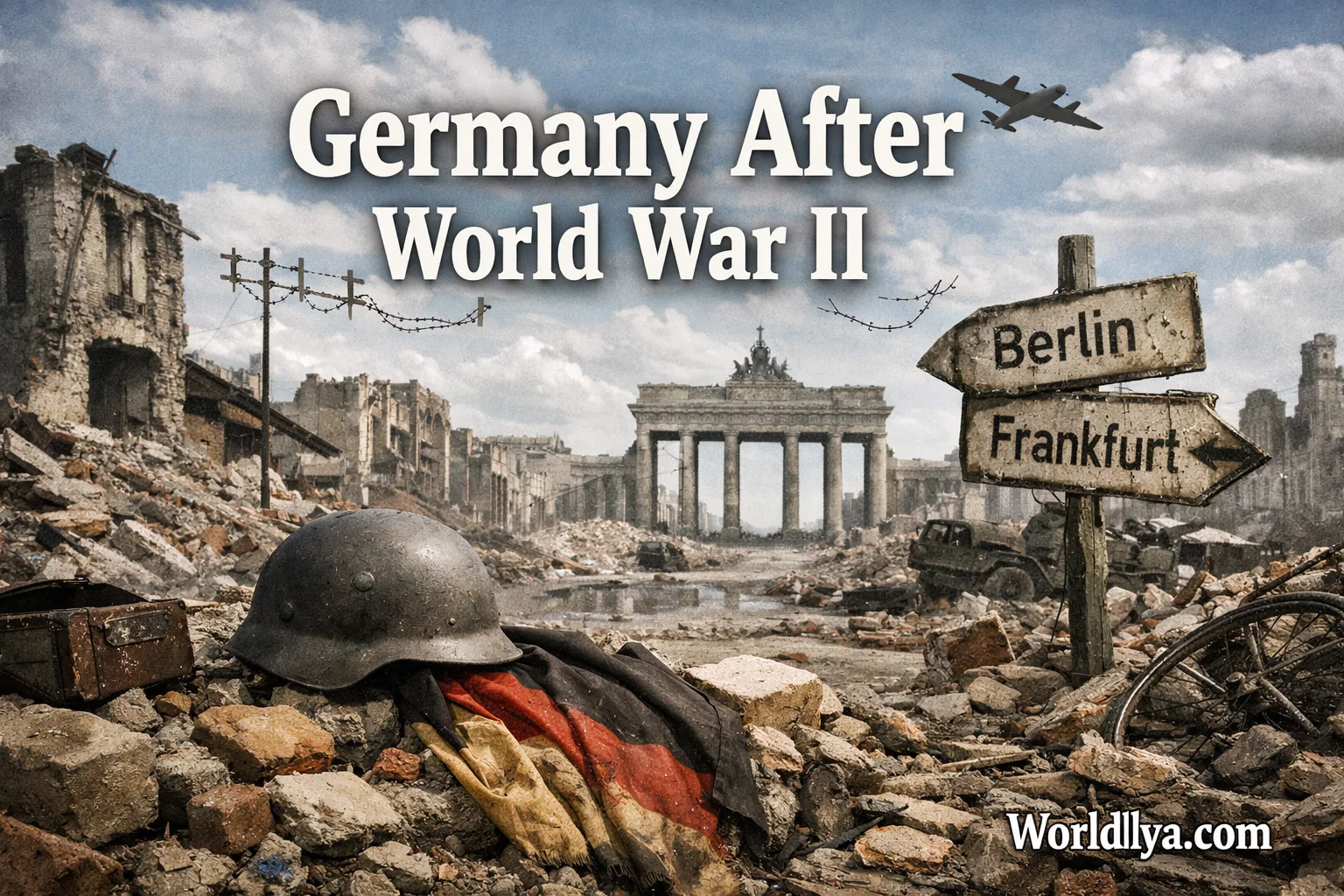
Germany after World War II is basically a story of hitting “reset” on daily life—then rebuilding it piece by piece. Streets, homes, schools, jobs, routines… everything had to be stitched back together. What’s fascinating is not just the speed of recovery, but the practical mindset behind it: solve today’s problem, learn fast, and keep moving.
What you’ll get from this guide: a clear, user-friendly look at how Germany rebuilt itself after 1945—focusing on recovery, everyday life, economy, cities, culture, and the roots of modern Germany. No drama, no heated takes—just helpful context.
From Ruins To Renewal
After 1945, many Germans faced the basics first: shelter, food, heating, and safe transport. In a lot of places, rebuilding wasn’t some grand plan—it was neighbors clearing bricks, families sharing crowded apartments, and communities figuring out how to reopen schools and shops. If you’ve ever tried to reorganize a messy room, imagine doing it with an entire city. Same logic, much bigger stakes.
Key idea: Recovery happened on two tracks at once:
- Short-term survival: housing, food supply, local services.
- Long-term rebuilding: industry, education, infrastructure, and stable institutions.
Quick mental picture: Post-1945 Germany was like a workshop after a huge project—tools everywhere, materials piled up, and a long to-do list. The goal was simple: make things work again, then make them better.
A Quick Timeline Of Big Milestones
Want the “map view” before we zoom in? Here’s a clean timeline. It keeps things factual and focuses on everyday impact.
| Period | What Changed | Why It Matters To People |
|---|---|---|
| Late 1940s | Emergency recovery, repairs, new rules for economic life | Basic stability returns: shops reopen, services restart |
| 1950s | Fast growth and rebuilding (often called the Wirtschaftswunder) | More jobs, better housing, rising living standards |
| 1960s–1970s | Modern consumer life expands; cities redesign streets and neighborhoods | Daily life becomes more comfortable and mobile |
| 1980s | New focus on environment, urban quality, and culture | Cleaner city planning, more public spaces, stronger cultural scenes |
| 1990s | Reunification reshapes society and infrastructure | Big investments in transport, housing, and services nationwide |
| 2000s–Today | Innovation, engineering, sustainability, and strong regional economies | Modern Germany’s “quality of life” model becomes clearer |
Rebuilding Cities And Homes
Reconstruction wasn’t one single style or one single plan. Different cities made different choices. Some rebuilt historic centers; others leaned into modern architecture. What stayed consistent was the push for functional housing and working infrastructure—water, power, transit, and schools.
- Housing came first: apartments, heating, and reliable utilities mattered more than fancy design.
- Urban planning evolved: wider roads and new neighborhoods appeared; later decades brought more pedestrian-friendly ideas back.
- Reused materials: rubble and salvage were common in early rebuilding—practical, fast, and affordable.
- Public buildings returned: town halls, libraries, theaters, and sports facilities helped bring community life back.
One detail many visitors miss: some hills and green spaces in cities were created from cleared debris, later turned into parks—nature literally growing over the past.
The Economic Miracle And The Social Market Economy
When people talk about postwar Germany, they often mention the “economic miracle.” It wasn’t magic. It was a mix of hard work, new economic frameworks, outside support, and a strong focus on production quality. Over time, Germany became famous for making things that last—cars, machinery, chemicals, precision tools, and later, high-end engineering of every kind.
What “Social Market Economy” feels like in daily life:
- Markets and competition drive innovation.
- Rules protect fairness and stability.
- Social support helps people handle life’s bumps without falling off a cliff.
It’s a bit like a well-run football match: players compete hard, but the referee and rules keep it playable for everyone.
Everyday Life: Food, Work, And Family
History gets real when you picture a normal day: going to work, shopping, cooking, commuting, raising kids. In the early years, choices were limited and routines were tough. As stability grew, daily life opened up—more products, better homes, and more options for education and careers.
Work Life Got Organized
- Skilled trades mattered: technicians, builders, machinists, electricians.
- Factories modernized: efficiency and quality control became a national habit.
- Unions and employers often worked within structured negotiation systems.
Home Life Became More Comfortable
- Appliances spread: washing machines, fridges, and better heating changed routines.
- New housing blocks became common—practical layouts, shared courtyards, nearby schools.
- Mobility improved: public transit and car ownership grew over time.
And yes—some of it was messy. City planning experiments didn’t always age perfectly, and people debated what felt “homey” versus what felt too new. That’s normal. Rebuliding a country isn’t a straight line.
Education, Training, And The Rise Of The Mittelstand
One reason modern Germany is so strong in engineering and manufacturing is its deep respect for training. The vocational system (often tied to apprenticeships) helped people move from school into real skills with real pay. This didn’t just help big companies—it powered the famous Mittelstand: small and mid-sized firms that specialize, export, and innovate.
- Apprenticeships connect classroom learning with hands-on work.
- Regional specialization means different areas develop different industrial strengths.
- Quality culture rewards careful craft, testing, and long-term reliability.
- Research partnerships between institutes and industry help ideas travel fast.
Practical takeaway for travelers and learners: If you see a small German company that makes one very specific component—like a sensor, a valve, a cutting tool—that’s the Mittelstand vibe. Narrow focus, world-class execution.
Culture, Design, And A New Public Mood
As living conditions improved, culture followed. You see it in literature, film, music, and design—often serious at first, then gradually more playful and experimental. In architecture and product design, Germany leaned into clean lines, useful objects, and the idea that beauty can be practical.
- Public broadcasting and publishing grew into major cultural engines.
- Modern design became a signature: simple, durable, functional.
- Festivals and museums expanded, especially in big cities.
- Sports and clubs stayed central to community life.
How Reunification Shaped Modern Germany
Germany reunified in 1990, and the years that followed brought a huge amount of work: connecting infrastructure, modernizing services, and building shared routines across regions. For everyday people, the visible signs were practical—updated rail lines, renewed city centers, new businesses, and expanding opportunities to move, study, and work across the country.
Think of reunification like merging two big households. You don’t just combine rooms—you line up habits, schedules, systems, and expectations. It takes time, patience, and a lot of practical problem-solving.
Where You Can See Post-1945 Germany Today
If you’re visiting Germany (or just exploring from home), the post-1945 era shows up in places you might not expect. Look beyond castles and medieval streets—modern Germany’s story is also told through neighborhoods, transit systems, and everyday architecture.
- Berlin: postwar modernism, rebuilt districts, and bold contemporary architecture.
- Hamburg: urban planning and modern waterfront development.
- Munich: a blend of careful restoration and modern growth.
- Ruhr Region: industrial heritage sites turned into parks, museums, and cultural venues.
- Frankfurt: finance-driven skyline plus rebuilt historic pockets.
Want an easy “spot it” game? When you see clean, functional apartment blocks or civic buildings with simple geometry, you’re often looking at the design language of reconstruction and modernization.
Fast FAQ For Curious Readers
Why did Germany’s economy grow so quickly in the 1950s?
Multiple factors aligned: rebuilding demand, industrial strength, structured training, expanding trade, and a strong focus on productivity and quality. It was a “many small wins” kind of success.
What does “Wirtschaftswunder” mean?
It’s commonly translated as “economic miracle.” People use it to describe the fast recovery and growth in West Germany, especially in the 1950s.
Is postwar architecture worth paying attention to?
Yes—especially if you like design, planning, and how cities actually function. Some buildings are plain, some are striking, and many reflect the practical goals of their time.
What’s one simple way to understand modern Germany through this period?
Follow the thread of reliability: in engineering, education, public systems, and city planning. The post-1945 decades rewarded solutions that worked consistently, not just once.
Sources
Below are strong, topic-specific references from reputable institutions. These are useful if you want deeper detail or primary materials.
- Encyclopaedia Britannica – The Postwar Situation In Germany
- German History In Documents And Images (GHDI) – Postwar Germany (Documents Collection)
- German Federal Archives (Bundesarchiv) – Historical Background And Collections Context
- Federal Agency For Civic Education (bpb) – Germany Archive (Background Articles)
- Wikipedia – History Of Germany (1945–1990)