
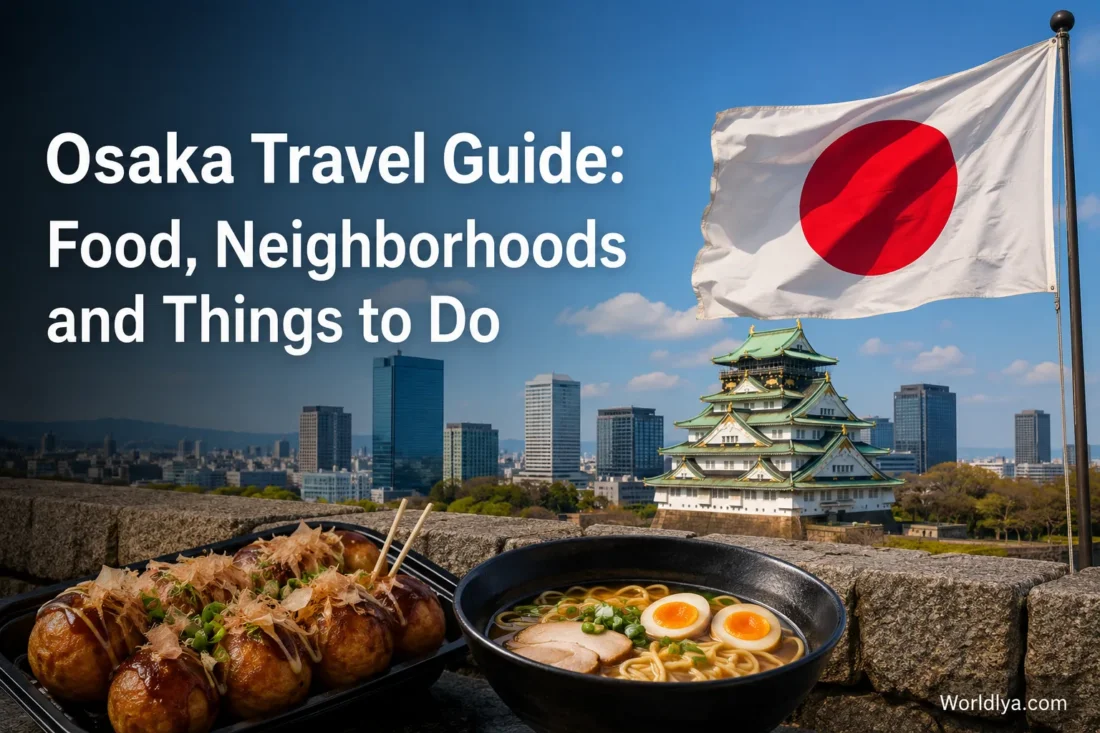
Osaka rewards travelers who arrive hungry and leave room in their schedule. Japan’s lively Kansai hub combines compact food streets, large indoor attractions, historic parkland, skyline viewpoints and neighborhoods that change character within a few subway stops. You can eat takoyaki beside the Dotonbori Canal, browse kitchenware in Namba, walk through Osaka Castle Park and finish the evening above the lights of Umeda—all without turning the day into a transport marathon.
The city works especially well for travelers who enjoy food-led sightseeing. Meals are not breaks between attractions here. They are part of the route. A market breakfast, a bowl of udon at lunch and an okonomiyaki dinner can reveal as much about Osaka as an observation deck or museum.
Plan Your Osaka Trip Around Four Decisions
Ideal first visit:
Three full days
Good central bases:
Namba, Umeda or Honmachi
Main airport:
Kansai International Airport
Most useful transport:
Metro, JR Loop Line and IC card
Choose your accommodation by neighborhood rather than by hotel name alone. Osaka is large, and the location of your room can shape every morning and evening.
Why Osaka Works So Well For City Trips
Osaka has several distinct centers instead of one dominant downtown. Namba and Dotonbori form the classic food and entertainment zone in the south. Umeda is the polished northern transport hub. Osaka Castle sits east of the center, while the aquarium and theme park occupy separate parts of the bay.
This layout sounds complicated on a map, yet the railway network ties it together neatly. The Midosuji subway line connects Shin-Osaka, Umeda, Shinsaibashi, Namba and Tennoji, making it the line many visitors use most. The JR Osaka Loop Line links several outer districts, including Osaka Castle, Tsuruhashi, Tennoji and the route toward Universal City.
Osaka also stays active across a long part of the day. Markets and cafés cover the morning, museums and major attractions fill the afternoon, and shopping streets or casual restaurants keep the city moving into the evening. You do not need to force every attraction into daylight hours.
Choose Your Base Before You Choose Your Hotel
The most attractive hotel deal may not be the most convenient one. Check the nearest station, the railway company serving it and the walking distance from the station exit. Large station complexes can add more walking than the map suggests.
| Area | Works Well For | Nearby Experiences | Trip Style |
|---|---|---|---|
| Namba | First visits, food trips and active evenings | Dotonbori, Kuromon Market, Shinsaibashi, Doguyasuji | Energetic and highly walkable |
| Umeda | Rail connections and day trips | Osaka Station, department stores, Umeda Sky Building | Modern and transport-friendly |
| Honmachi | Travelers wanting a quieter central base | Easy subway access to both Umeda and Namba | Balanced and practical |
| Tennoji | Families, longer stays and southern Osaka | Abeno, Shinsekai, parkland and museums | Local and convenient |
| Bay Area | Aquarium or theme-park-focused visits | Kaiyukan, Tempozan and Universal Studios Japan | Attraction-led |
Namba and Dotonbori
Stay here when you want Osaka’s most recognizable streets outside your door. Namba places you near the Dotonbori Canal, covered shopping arcades, restaurants, Kuromon Market and several railway lines. It is also convenient for the Nankai trains serving Kansai International Airport.
The area remains busy for much of the day, so a hotel one or two streets away from the main pedestrian routes can offer a gentler return at night while preserving the location advantage.
Umeda and Osaka Station
Umeda is a strong base for travelers planning to combine Osaka with Kyoto, Kobe, Himeji or other Kansai destinations. JR Osaka Station and the surrounding railway stations connect multiple operators, while shopping centers and restaurants make it easy to fill an unplanned evening.
The station district is spread across several buildings and underground passages. Remember the railway name as well as the station name. “Osaka Station,” “Umeda Station,” “Osaka-Umeda Station” and “Higashi-Umeda Station” serve related areas but are not identical platforms.
Honmachi
Honmachi sits between Umeda and Namba on the Midosuji Line. It lacks the constant visual activity of Dotonbori, which can be useful when you want central transport without living inside a major sightseeing district. Restaurants tend to follow office hours more closely, though the surrounding streets still offer plenty of dinner choices.
Tennoji and Abeno
Tennoji provides JR, subway and private railway connections alongside shopping complexes and family-friendly attractions. It also places Shinsekai within easy reach. Rooms here can offer more space than similarly priced options around Namba or Umeda, depending on the season.
Osaka Foods Worth Making Time For
Osaka’s food identity is strongly tied to dashi-based flavors, flour-based dishes and casual counters where you can watch part of the cooking process. The familiar names are only the starting point. Texture, sauce, toppings and cooking style vary from shop to shop, so trying the same dish twice rarely feels repetitive.
Takoyaki: Small, Hot and Easy To Misjudge
Takoyaki is made by cooking dashi-seasoned batter in a molded griddle with pieces of octopus inside. The finished balls are commonly topped with sauce, mayonnaise, dried seaweed and thin bonito flakes.
They can be much hotter inside than the surface suggests. Open one gently or give it a moment before the first bite. A serving shared between two people leaves room for the next Osaka specialty.
Okonomiyaki: A Full Meal From One Griddle
Osaka-style okonomiyaki usually combines batter, dashi, cabbage and selected fillings before cooking the mixture as one savory pancake. Pork, seafood, green onion and cheese are common choices. Sauce, mayonnaise, dried seaweed and bonito flakes often complete the dish.
Some restaurants cook it for you. Others provide instructions at the table. Watch what the staff does before touching the spatulas, and use the small metal utensil to divide the pancake into manageable pieces.
Kushikatsu: Crisp Skewers With A Simple Rhythm
Kushikatsu consists of meat, seafood, cheese or vegetables placed on skewers, coated and fried. Shinsekai is closely associated with the dish, though restaurants appear across central Osaka.
Ordering several skewers at a time lets you eat them while the coating is fresh. Sauce methods differ by restaurant, with individual containers, pourable bottles or other house arrangements now common. Follow the table instructions and place finished skewers in the container provided.
Kitsune Udon
This comforting bowl pairs udon noodles with sweet and savory fried tofu in a dashi-led broth. Osaka-style udon is often appreciated as much for its broth as for the noodles. It makes an easy lunch between heavier meals.
Osaka Sushi
Osaka sushi includes pressed forms in which vinegared rice and toppings are shaped together. Battera, traditionally associated with pressed mackerel sushi, is one well-known example. Department-store food halls can be convenient places to compare styles.
Other Dishes To Notice
- Negiyaki: A thinner griddle dish with plenty of green onion.
- Yakisoba: Stir-fried noodles often served at casual restaurants and festivals.
- Doteyaki: A slow-cooked dish commonly found around Shinsekai.
- Omurice: An omelet wrapped around seasoned rice, associated with Osaka restaurant history.
- Butaman: A warm steamed bun filled with seasoned pork.
- Mixed juice: A thick fruit drink found in cafés and station counters.
Where To Eat Without Turning Every Meal Into A Queue
Dotonbori is useful for seeing many Osaka specialties in one compact zone, but it is not the city’s only dining district. A simple rule works well: enjoy Dotonbori for the atmosphere, then use nearby neighborhoods for additional meals.
- Eat slightly earlier than the main meal period. Lunch before noon or dinner in the late afternoon can open more choices.
- Look above street level. Restaurants inside station buildings, department stores and upper floors can be missed by travelers who only scan ground-floor signs.
- Use food halls for variety. Department-store basements are useful for sushi, prepared dishes, sweets and take-away meals.
- Order one specialty at a time. Osaka’s central food districts are close enough for a moving meal: one snack here, one bowl there, dessert later.
- Check the final order time. A restaurant may stop accepting orders before the building or shopping complex closes.
A useful Osaka food day: market breakfast, udon lunch, an afternoon sweet, takoyaki as a shared snack and okonomiyaki or kushikatsu for dinner.
Osaka Neighborhoods That Deserve Time On Foot
Dotonbori and Namba
Dotonbori delivers the Osaka scene many first-time visitors expect: illuminated signs, restaurant façades, canal reflections and constant pedestrian movement. Walk both sides of the canal, cross the bridges and continue into the covered arcades around Namba.
The district works well in late afternoon and evening, when the signs become more visible and dinner options begin to fill. During the day, combine it with Kuromon Market, Hozenji Yokocho or Sennichimae Doguyasuji.
Kuromon and Nipponbashi
Kuromon Market extends for roughly 580 meters and contains around 150 shops selling seafood, produce, snacks and prepared foods. It is easiest to explore earlier in the day, when more counters are active and you still have room for tastings.
Nearby Nipponbashi adds electronics, hobby shops and pop-culture stores. Continue toward Doguyasuji if you enjoy knives, ceramics, cookware, lanterns or realistic food models. The 150-meter shopping street serves both restaurant businesses and curious visitors.
Shinsaibashi and Horie
Shinsaibashi connects major retail buildings with a long covered shopping arcade. West of the main route, Horie shifts toward cafés, design stores, clothing and calmer side streets. The pairing suits travelers who want shopping without spending the entire day inside one mall.
Umeda
Umeda is less about one famous street and more about a network of towers, department stores, underground passages and railway buildings. Give the district a purpose: a skyline view, a shopping list, a food hall or a rail connection. Otherwise, it is easy to wander through interconnected buildings without realizing how far you have moved.
The Umeda Sky Building stands northwest of Osaka Station. Its observatory reaches 173 meters above ground and offers wide views across the city. Sunset is popular, while daytime visits can make the surrounding geography easier to understand.
Nakazakicho
Nakazakicho sits within walking distance of Umeda but feels smaller in scale. Narrow lanes contain cafés, independent shops and renovated older buildings. It is a natural pause between the large station district and Tenjinbashisuji Shopping Street.
Tenma and Tenjinbashisuji
Tenjinbashisuji stretches for about 2.6 kilometers through several shopping sections. Walking the entire arcade can take around 40 minutes before stops. Local restaurants, everyday shops, cafés and specialty retailers make it feel less like a single attraction and more like a cross-section of city life.
The Osaka Museum of Housing and Living is located near the northern portion of the street. Its recreated townscape offers an indoor cultural stop that pairs neatly with the arcade, especially during hot or rainy weather.
Shinsekai and Tennoji
Shinsekai grew around Tsutenkaku and remains closely associated with kushikatsu, bold storefronts and compact shopping lanes. Janjan Yokocho adds a narrow line of small restaurants and shops south of the tower.
Walk onward toward Tennoji for parkland, museums and the Abeno district. The change from Shinsekai’s close-set streets to Tennoji’s broader public spaces gives this part of Osaka a satisfying sense of progression.
Tsuruhashi
Tsuruhashi Station opens into a dense collection of markets, restaurants and shopping passages. The wider market area contains hundreds of businesses and is known for yakiniku, Korean food, fresh ingredients and specialty stores. Arrive with a clear meeting point when traveling as a group because the passages branch quickly around the station.
Things To Do In Osaka Beyond Eating
Walk Through Osaka Castle Park
Osaka Castle Park provides broad paths, stone walls, water views and seasonal plantings around the central tower. The present tower was rebuilt in 1931 and operates as a museum. Visitors can learn about the castle and see the city from its upper level.
Allow time for the park itself rather than entering and leaving through the nearest gate. The grounds cover a large area, and the walk from the station to the museum is part of the visit. Buying a web ticket before arrival can reduce time at the entrance.
Follow The Ocean Route Inside Kaiyukan
Osaka Aquarium Kaiyukan uses a descending route around large habitats, including its central Pacific Ocean tank. The planned path makes the aquarium easy to follow without repeatedly checking a map.
Opening times change by date and season. Last admission is generally scheduled before closing, so check the official calendar rather than relying on a fixed daily time. A timed e-ticket can make entry smoother during popular periods.
Stay In Tempozan After The Aquarium
The aquarium sits within the Tempozan Harbor Village area. Shops, dining spaces and the large Ferris wheel make it easy to extend the visit. Late afternoon can work particularly well because the waterfront changes as daylight fades.
Give Universal Studios Japan A Full Day
Universal Studios Japan is not a short stop between central Osaka attractions. Treat it as a dedicated day and review the official operating calendar before choosing your date.
Some popular areas may use advance-booked or same-day timed entry. The official app allows visitors to register admission tickets and request available timed entry after entering the park. Availability and procedures can vary by day, so download the app and understand the current process before arrival.
Choose One Skyline View
- Umeda Sky Building: Wide city views and a memorable elevated approach to the observatory.
- Abeno Harukas: A high-rise view over Tennoji and the southern city.
- Tsutenkaku: A lower viewpoint rooted in the visual identity of Shinsekai.
- Tempozan Ferris Wheel: Bay views that pair naturally with Kaiyukan.
One viewpoint is usually enough on a short trip. Pick the one that fits your neighborhood route instead of crossing the city only to compare heights.
See Osaka From The Water
River cruises operate on several waterways, including routes near Dotonbori and Osaka Castle. They offer a seated change of pace after a walking-heavy day. Operating schedules can depend on the season and weather, so confirm the departure point and final sailing before heading to the pier.
Visit Sumiyoshi Taisha
Sumiyoshi Taisha lies south of the main sightseeing center and can be reached from Namba by Nankai Railway. Its grounds, distinctive bridge and traditional architecture create a quieter half-day addition to a longer Osaka stay.
How Many Days Do You Need In Osaka?
| Time Available | Realistic Focus | What To Leave For Another Visit |
|---|---|---|
| One Day | Namba, Dotonbori, one market or shopping street and one viewpoint | Bay Area, theme park and distant neighborhoods |
| Two Days | Central food districts, Osaka Castle and either Umeda or Shinsekai | Universal Studios Japan unless it replaces one city day |
| Three Days | Major city districts plus Kaiyukan, a museum or a slower neighborhood | Only highly specialized interests |
| Four or Five Days | Osaka at a relaxed pace with a theme-park day or nearby excursion | Very little; the trip can follow your interests |
A Three-Day Osaka Route That Flows Well
Day One: Namba, Markets and Dotonbori
- Begin at Kuromon Market while food counters are active.
- Continue to Sennichimae Doguyasuji for cookware and food models.
- Explore Namba’s arcades and Hozenji Yokocho.
- Walk into Shinsaibashi or Horie during the afternoon.
- Return to Dotonbori around sunset for illuminated signs and dinner.
Day Two: Castle, Tenma and Umeda
- Reach Osaka Castle Park in the morning and walk through the grounds.
- Visit the museum or spend more time around the park and waterways.
- Travel to Tenjinbashisuji for lunch and a walk through the arcade.
- Add the Osaka Museum of Housing and Living when it matches your interests.
- Finish in Umeda with shopping, dinner or a skyline view.
Day Three: Choose Your Osaka
For families and marine life: Kaiyukan, Tempozan and a bay-side dinner.
For neighborhood exploration: Tennoji, Shinsekai, Tsutenkaku and Tsuruhashi.
For a major attraction day: Universal Studios Japan from opening through the evening.
For a slower pace: Nakazakicho, Horie, cafés, shopping and one final food district.
Getting Around Osaka Without Overplanning
Osaka’s transport includes JR trains, Osaka Metro and several private railway companies. Route-planning apps usually show the operator, platform and transfer details, but station signs remain important because different companies may use separate ticket areas.
IC Cards and Contactless Travel
ICOCA and compatible transport IC cards can be used across JR, Osaka Metro, many private railways and buses. They remove the need to calculate a separate fare before every ride. Add credit as needed and tap at the entry and exit gates.
Osaka Metro also supports eligible contactless bank cards and linked smartphones at supported gates. When using contactless payment, use the same card or device at both ends of the trip.
When A Transport Pass Makes Sense
A one-day or hour-based ticket can offer value on a subway-heavy day. An attraction pass may suit a route containing several included entries. Neither option is automatically cheaper.
- List the paid journeys and attractions you will genuinely use.
- Check whether the pass includes transport, attractions or both.
- Confirm excluded stations, buses and special services.
- Compare the total with ordinary IC-card fares.
- Review activation rules before purchasing a digital ticket.
Station Navigation
Station exit numbers are extremely useful. Save the correct exit for your hotel or destination before the train arrives. Choosing the right exit can remove several road crossings and keep you on the correct side of a large complex.
At Umeda, Namba and Tennoji, also note the railway operator. The same district may contain JR, Osaka Metro, Nankai, Kintetsu, Hankyu or Hanshin facilities.
From Kansai International Airport To Central Osaka
Kansai International Airport is connected to central Osaka by Nankai Railway, JR services and airport buses. Choose the route that reaches your accommodation area directly rather than selecting a train only because it has the shortest advertised journey time.
| Your Destination | Useful Starting Option | Planning Note |
|---|---|---|
| Namba | Nankai Airport Express or Limited Express Rapi:t | Rapi:t can reach Nankai Namba in as little as about 34 minutes |
| Tennoji | JR airport services | Useful for hotels near Tennoji or the JR Loop Line |
| Osaka or Umeda | JR service or airport bus, depending on schedule and hotel | Check the precise arrival station or bus stop |
| Shin-Osaka | JR route or Nankai to Namba followed by Osaka Metro | Allow transfer time when connecting to a long-distance train |
Kansai Airport Station is connected to Terminal 1 and the Aeroplaza. Terminal 2 passengers use the airport’s inter-terminal shuttle to reach the main railway station area. Check the terminal before deciding how much transfer time to allow.
When To Visit Osaka
Osaka has four distinct seasons. Spring and autumn are popular for walking, while summer favors a slower rhythm with indoor attractions during the warmest hours. Winter can offer clear days, seasonal food and easier movement through outdoor districts.
| Season | What It Feels Like | Useful Planning Choice |
|---|---|---|
| Spring | Mild periods, seasonal blossoms and popular park visits | Reserve accommodation early around major blossom periods |
| Summer | Hot, humid and lively, with occasional rain | Use museums, shopping centers and Kaiyukan during midday |
| Autumn | Comfortable walking weather and seasonal color later in the season | Plan longer neighborhood walks and park visits |
| Winter | Cooler air, shorter daylight and many indoor options | Carry layers and place viewpoints earlier in the day |
Rain does not have to erase a day in Osaka. Covered arcades, underground shopping passages, department stores, museums, the aquarium and station complexes provide several indoor routes. Keep one flexible indoor cluster ready rather than rebuilding the whole itinerary.
Practical Osaka Tips That Save Time
- Group each day by district. Osaka is efficient when nearby sights are visited together.
- Save station exits. An exit number can be more useful than the station name alone.
- Carry a small amount of cash. Card acceptance is broad, though some small counters and ticket machines may use different payment methods.
- Keep a coin pouch. Coins remain useful for lockers, small purchases and transport top-ups.
- Use station lockers thoughtfully. Large lockers can fill during busy travel periods, so store luggage earlier in the day.
- Stand to the right on many Osaka escalators. Follow the people and local signs because arrangements can vary.
- Check attraction calendars. Museum closures, seasonal hours and timed entry can change the order of a day.
- Keep food plans flexible. A nearby shop serving the same local dish may suit your schedule better than a single famous counter.
Osaka With Children
Osaka works well for family trips because major attractions can anchor each day. Kaiyukan, Tempozan, Kids Plaza Osaka, parkland around Osaka Castle and the large shopping complexes around Tennoji or Umeda offer indoor facilities and nearby meal options.
Avoid stacking several distant attractions into one day. One main attraction, one neighborhood walk and an easy dinner area usually create a smoother family schedule. Convenience stores and department-store food halls can also help when everyone wants something different.
Planning A More Accessible Osaka Route
Many major stations and attractions provide elevators, accessible toilets and step-free routes. The most direct pedestrian route is not always the step-free route, so check station maps before transferring. Large complexes such as Osaka Station may require extra time between railway operators.
For a lower-walking day, choose one connected district such as Umeda, Tennoji, Tempozan or Namba. Each contains transport, restaurants and indoor attractions within a relatively concentrated area.
Easy Trips From Osaka
Osaka’s railway connections make it a practical base for nearby cities. Keep the Osaka portion of the trip intact rather than using the city only as a place to sleep.
- Kyoto: Temples, gardens and historic districts.
- Nara: Parkland, cultural sites and a compact central route.
- Kobe: Harbor scenery, shopping and dining.
- Himeji: A castle-centered day reached by rail.
Umeda is often convenient for JR and Hankyu routes, while Namba can work well for Kintetsu and Nankai destinations. Confirm the departure station before booking a hotel around a planned series of day trips.
Frequently Asked Questions
Is Osaka Worth Visiting If I Am Already Visiting Tokyo?
Yes. Osaka has a different city rhythm, a strong casual food culture and easier access to several Kansai destinations. Its central districts also feel more compact than many first-time visitors expect.
Is Namba or Umeda Better For A First Visit?
Namba is usually better for travelers prioritizing food streets, shopping and lively evenings. Umeda suits travelers prioritizing railway connections, department stores and day trips. Honmachi offers a central compromise between them.
Can I Explore Osaka Without A Rail Pass?
Yes. An IC card or eligible contactless payment method is convenient for ordinary journeys. A pass becomes useful only when its included rides or attractions match your actual schedule.
Should I Visit Dotonbori During The Day or At Night?
Late afternoon provides both daylight and illuminated evening views. Daytime is useful when combining Dotonbori with Kuromon Market, Doguyasuji and Shinsaibashi.
Do I Need A Full Day For Universal Studios Japan?
Yes. Travel time, entry procedures, attractions, shows and meals make it a full-day experience. Check the official calendar and timed-entry information before the visit.
What Is The Most Useful Subway Line For Visitors?
The Midosuji Line is especially useful because it connects Shin-Osaka, Umeda, Honmachi, Shinsaibashi, Namba and Tennoji. Other lines become useful for Osaka Castle, Kaiyukan and neighborhoods outside this north–south route.
Is Osaka Easy To Visit During Rainy Weather?
Yes. Covered shopping arcades, station complexes, museums, department stores and the aquarium make it possible to build a mostly indoor day without leaving the central city.
Sources
- Japan National Tourism Organization: Osaka Destination Information
- Osaka Convention and Tourism Bureau: Dotonbori
- Osaka Convention and Tourism Bureau: Travel Passes
- Ministry of Agriculture, Forestry and Fisheries: Osaka Regional Cuisine
- Osaka Metro: Contactless Payment
- Kansai International Airport: Train Access
- Nankai Electric Railway: Limited Express Rapi:t
- Osaka Castle Museum: Visitor and Ticket Information
- Osaka Aquarium Kaiyukan: Official Visitor Information
- Universal Studios Japan: Timed Entry Information