
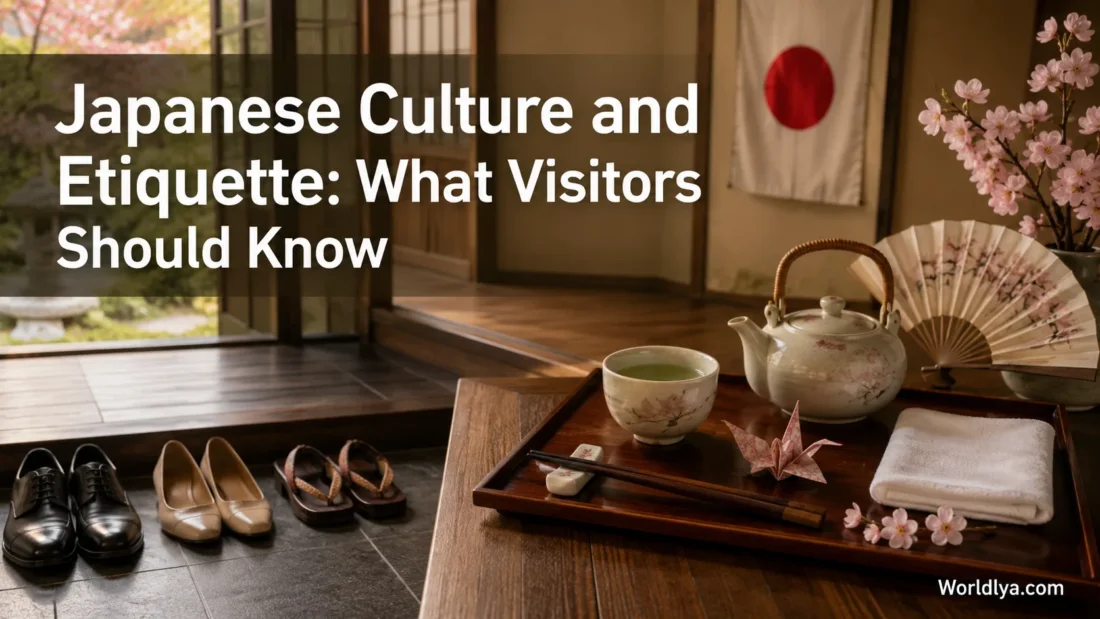
Japan rewards visitors who notice the small things: the quiet carriage on a train, the neat row of shoes at a doorway, the soft nod after a thank-you. Etiquette here is not about acting perfect. It is about reading the room, keeping shared spaces comfortable, and showing care without making a big scene. A visitor who learns a few customs before arriving usually moves through Japan with more ease, more confidence, and fewer awkward pauses.
Japanese culture and etiquette can feel detailed at first, yet most daily situations come down to one simple habit: pause, observe, then act gently. Watch where people stand, how loudly they speak, where they place shoes, and how they handle shared items. That quiet observation often teaches more than a long rule list.
The Culture Behind The Manners
Many visitors notice that Japan has a strong sense of order in public life. People line up carefully, trains run with a calm rhythm, and even busy streets can feel surprisingly controlled. This does not happen by accident. A large part of daily etiquette is built around not placing extra weight on other people.
That idea appears in small choices. You keep your phone quiet on the train. You avoid blocking a narrow walkway. You do not leave trash behind for someone else. You remove shoes where the floor is part of the living space. None of this requires advanced cultural knowledge. It simply asks you to be aware of the space you share.
Read The Space
In Japan, the setting often tells you what to do. A shoe shelf, a tray for money, or a queue line on a platform is a quiet instruction.
Keep It Soft
Soft voices, small gestures, and patient movement fit many public settings, especially trains, temples, shops, and hotels.
Ask When Unsure
A polite sumimasen and a simple question can solve most travel confusion before it becomes uncomfortable.
Greetings, Bowing and Personal Space
Bowing is one of the first customs visitors notice in Japan. You may see shop staff bow as customers leave, hotel staff bow during check-in, and train staff bow before entering or leaving a carriage. For visitors, a small bow or respectful nod is usually enough in daily situations.
You do not need to measure angles or worry about exact timing. The safe approach is simple: smile gently, lower your head slightly, and avoid overdoing it. In formal business settings, bowing can carry more nuance, but casual travel rarely requires perfection.
Personal space also matters. Hugs, cheek kisses, and strong handshakes are not typical everyday greetings unless the other person clearly starts that style of contact. A nod, bow, or calm verbal greeting usually feels more natural.
Useful Phrases
- Sumimasen — excuse me, sorry, or a polite way to get attention.
- Arigato gozaimasu — thank you, said with respect.
- Onegaishimasu — please, often used when requesting help or service.
- Konnichiwa — hello, usually used during the day.
- Ojamashimasu — a polite phrase when entering someone’s home, with the feeling of “sorry to disturb.”
Shoes, Slippers and Tatami Rooms
The shoe rule is one of the easiest customs to follow once you know what to watch for. In many homes, ryokan inns, temple buildings, traditional restaurants, and some changing rooms, outdoor shoes stay at the entrance. The entry area is often called a genkan. It works like a border between the outside and the clean indoor floor.
When you see a step up, shoe lockers, slippers, or other shoes placed neatly by the door, treat it as a clue. Remove your shoes, turn them neatly toward the exit if appropriate, and use indoor slippers if provided. On tatami mats, slippers usually come off too. Tatami is not just flooring; it is part of the room’s clean living surface.
Small Detail That Saves Awkwardness: Some places provide separate toilet slippers. Use them only inside the restroom. When leaving, switch back to the regular indoor slippers. It is a tiny habit, yet it shows that you understand the clean-space logic behind Japanese interiors.
Eating and Drinking Without Guesswork
Japanese dining etiquette is easier when you stop treating it like a test. Watch how the table works. Shared dishes, small bowls, chopstick rests, wet towels, and payment trays all give you clues.
Before eating, many people say itadakimasu. After the meal, gochisosama desu expresses thanks for the food. These phrases are not required from every visitor, but using them politely can feel warm and respectful.
Chopstick Habits Visitors Should Know
Chopsticks are common across Japan, but nobody expects every traveler to handle them like a local. If you need a fork, ask politely. Many restaurants can help, though very traditional places may have fewer alternatives.
| Situation | Comfortable Visitor Habit | What To Avoid |
|---|---|---|
| Pausing During A Meal | Rest chopsticks on the chopstick rest, wrapper, or plate edge if that is how the table is set. | Do not stick chopsticks upright in rice. |
| Sharing Food | Use serving chopsticks if provided, or ask before taking from a shared dish. | Do not pass food directly from chopsticks to chopsticks. |
| Pointing or Moving Plates | Set chopsticks down before gesturing or moving dishes. | Do not point with chopsticks or pull bowls toward you with them. |
| Sushi | Eating sushi with hands or chopsticks can both be acceptable, depending on the place. | Avoid soaking the rice heavily in soy sauce. |
| Noodles | Slurping noodles is normal in many casual noodle shops. | Do not make fun of local eating sounds or manners. |
Paying, Tipping and Money Trays
Tipping is not a normal part of everyday service in Japan. In many restaurants, taxis, and hotels, polite thanks are enough. Trying to leave extra cash can create confusion, especially in smaller places where staff may think you forgot your change.
At shops, cafés, convenience stores, and stations, you may see a small tray near the register. Place cash or a card on the tray rather than handing it directly to the cashier. The staff may return change on the same tray. It keeps the exchange tidy and comfortable.
Public Transport Manners
Japanese trains and buses are famous for their smooth flow, and passenger manners help keep them that way. Stations can be busy, yet the system feels easier when everyone follows the same quiet rhythm.
Platform markings often show where doors will open. Wait in line and leave space for passengers getting off first.
Set phones to silent mode and avoid phone calls on trains and buses. Texting is usually fine if it does not disturb anyone.
Seats marked for older passengers, pregnant passengers, disabled passengers, and people with small children should be offered when needed.
Backpacks, suitcases, and shopping bags should not block doors, aisles, stairs, or seats.
Eating on local trains is usually avoided. On long-distance trains, such as many intercity services, eating a boxed meal can be normal. The difference is the setting: a crowded commuter carriage is not the same as a reserved long-distance seat.
Visitor Awareness Scale
This simple scale is an editorial reading aid for visitors, not official data.
Street Manners, Trash and Everyday Cleanliness
Visitors are often surprised by how clean many Japanese streets look, even when public trash bins are not easy to find. The habit is simple: people often carry small trash items until they can dispose of them properly.
A small plastic bag in your daypack can be useful for wrappers, tissues, or small packaging. Convenience stores may have bins for items bought there, but they are not a general dumping place for travel trash. When in doubt, carry it with you until you find the right bin.
Eating while walking is not always treated the same everywhere. In some market streets and festival areas, food stalls may expect you to eat nearby. In ordinary streets, trains, shops, and crowded areas, it is more comfortable to step aside, eat calmly, and keep the area clean.
Shrines and Temples With Respectful Ease
Japan’s shrines and temples welcome many visitors, including people who come for culture, architecture, gardens, or quiet reflection. You do not need to follow every ritual, but you should move with care.
At a Shinto shrine, you may see a torii gate, a path, a purification basin, an offering box, and sometimes a bell rope. A common pattern is to bow lightly before entering, avoid walking straight down the center of the approach when possible, purify hands if the basin is open for use, offer a small coin, bow twice, clap twice, and bow once again. Customs may vary by place, so posted signs matter.
At Buddhist temples, the mood is similar but the ritual is different. Visitors usually bow, place hands together, and pray silently. Clapping is generally not used at temples. Photography rules also vary. Some halls allow pictures outside but not inside. Look for signs before taking photos, especially near worship areas, statues, gardens, or ceremonies.
Respectful Site Habit
Move slowly, speak softly, and let local visitors set the tone. A shrine or temple is not only a tourist stop. For many people, it is a living place of prayer, memory, and seasonal tradition.
Onsen and Public Bath Etiquette
Onsen hot springs and sento public baths can be one of the most memorable parts of a Japan trip. They also have clear bathing customs. The main idea is clean water for everyone.
| Bathing Step | What Visitors Should Do | Why It Matters |
|---|---|---|
| Before Entering The Bath | Wash and rinse thoroughly at the shower area. | The shared bath water stays clean for all guests. |
| Clothing | In most standard indoor baths, guests bathe without swimsuits unless the facility states otherwise. | Bathing spaces follow long-standing local customs. |
| Towels | Keep towels out of the bath water. Place the small towel outside the tub or on your head. | The water remains clean and pleasant. |
| Hair | Tie up long hair so it does not touch the water. | It keeps the bath comfortable for other guests. |
| Tattoos | Check the facility policy before going. Some places allow them, some ask for covers, and some may not permit entry. | Rules differ by bath, hotel, and region. |
| Phones and Photos | Leave phones and cameras outside bathing areas. | Privacy is part of the bathing experience. |
Staying In A Ryokan or Traditional Inn
A ryokan stay can feel different from a standard hotel. Shoes come off near the entrance. Rooms may have tatami floors, low tables, futons, and a yukata robe. Meals may be served in the room or in a dining area. Baths may have their own rules.
The easiest habit is to read the room before unpacking. Are slippers provided? Is there a raised tatami area? Is the yukata meant only for the building, or can it be worn outside to nearby bath areas? Staff usually explain these details, and asking politely is normal.
Look for the shoe area and change into indoor slippers if they are offered.
Keep bags and hard suitcase wheels off delicate tatami when possible.
Arrive on time. Ryokan meals are often prepared with careful timing.
Shopping, Service and Polite Exchanges
Japanese service can feel very polished. Staff may greet you warmly when you enter a store, wrap purchases neatly, or hand items with both hands. A visitor does not need to copy every gesture, but a calm manner is appreciated.
Use the money tray when it is available. Accept receipts, bags, cards, or change with a small nod or thanks. If you do not need a bag, saying fukuro wa irimasen can help, though a simple gesture may be enough in many places.
When asking for help, start softly. A polite sumimasen works in shops, stations, restaurants, and hotels. Pointing at a map or phone screen is fine when language becomes tricky. Keep the exchange patient. Nobody enjoys being rushed across a language gap.
Photo Manners and Shared Spaces
Japan is highly photogenic, from vending machines and food displays to temple gardens and neon streets. Still, not every scene is open for photos. Private homes, small shops, bath areas, school areas, religious interiors, and staff-only spaces need care.
Ask before photographing people closely. Do not block sidewalks for long shots. Avoid placing tripods in crowded public places unless it is clearly allowed. If a sign says no photography, follow it even if other visitors ignore it.
A Good Visitor Rule: If taking the photo would slow people down, enter someone’s private space, or make another person the subject without permission, it is better to stop and enjoy the moment without the camera.
Small Customs That Make Travel Smoother
Some etiquette points are tiny, yet they make daily travel feel smoother. They are like small hinges on a door: almost invisible, but they help everything move quietly.
- Stand to one side on escalators where local practice is clear, but follow signs because rules can differ by city and station.
- Do not block narrow shop aisles while checking your phone or map.
- Use indoor voices in trains, hotel corridors, museums, and small restaurants.
- Arrive on time for reservations, tours, trains, and ryokan meals.
- Respect posted rules at gardens, temples, shrines, museums, baths, and restaurants.
- Keep strong scents light in close dining settings, especially small sushi counters or tasting menus.
- Sort trash carefully when bins are marked by category.
Common Visitor Situations and What To Do
| Visitor Moment | Best Response | Useful Phrase |
|---|---|---|
| You Step Into A Place and See Shoes By The Door | Pause, remove your shoes, and check for slippers or a shoe shelf. | Sumimasen |
| You Need Help At A Station | Approach staff calmly, show your ticket or phone route, and ask politely. | Onegaishimasu |
| You Are Not Sure Where To Pay | Look for a cashier counter near the exit. Many restaurants expect payment there. | Okaikei onegaishimasu |
| You Are Given A Wet Towel | Use it to clean your hands before eating. Do not use it as a face towel in formal settings. | Arigato gozaimasu |
| You Cannot Find A Trash Bin | Carry small trash with you until you find the right bin. | Not needed |
| You Want To Photograph A Shop Interior | Ask first or check for signs. If staff seem unsure, skip the photo. | Shashin ii desu ka? |
Regional Differences Are Normal
Japan is not one single etiquette script. Tokyo, Kyoto, Osaka, Hokkaido, Okinawa, mountain towns, island communities, and small rural areas can all feel different. A rule that seems firm in one setting may feel relaxed in another.
Escalator standing sides can differ. Bath policies vary. Restaurant customs change from casual ramen counters to formal kaiseki dining. Temple and shrine practices may have local details. This is why the best visitor habit is not memorizing every possible rule. It is observing the place you are in right now.
A Calm Etiquette Checklist Before Going Out
- Carry a small trash bag for wrappers or tissues.
- Wear easy shoes if visiting temples, homes, ryokan inns, or traditional restaurants.
- Keep socks clean because shoes may come off more often than expected.
- Set your phone to silent before entering trains, buses, museums, and quiet spaces.
- Bring a small towel or handkerchief because some restrooms may not have hand dryers or paper towels.
- Check photo rules before raising your camera.
- Learn three phrases: sumimasen, arigato gozaimasu, and onegaishimasu.
Visitor Mistakes That Are Easy To Fix
Most etiquette mistakes by visitors are small and unintentional. Japan is used to guests, and many people are patient when they see that someone is trying. The issue is not knowing every custom. The issue is ignoring obvious signs, speaking too loudly in quiet places, or treating shared spaces like private space.
Walking into a tatami room with slippers.
Fix: Step back, remove the slippers, and continue calmly.
Taking a phone call on a train.
Fix: End the call softly or step off at the next stop if needed.
Leaving cash on a restaurant table as a tip.
Fix: Pay at the register and offer a sincere thank-you.
Why Visitors Usually Enjoy Learning The Customs
Etiquette in Japan is not a wall between visitors and local life. It can become a doorway. Once you learn why shoes come off, why trains stay quiet, why small bows matter, and why shared bath water must stay clean, the country becomes easier to read.
These customs also slow you down in a good way. You notice the entrance of a house. You listen before speaking. You handle food with more care. You become part of the calm pattern around you, even for a short trip. Isn’t that one of the best parts of travel — learning how another place moves, then moving with it for a while?
Frequently Asked Questions
Do Visitors Need To Bow In Japan?
A small bow or polite nod is enough in most travel situations. You do not need to copy formal bowing styles unless you are in a formal business or ceremonial setting.
Is Tipping Expected In Japan?
No. Tipping is not part of normal service culture in many everyday places. A polite thank-you is usually the right response.
Can I Eat While Walking In Japan?
It depends on the place. Near food stalls or festivals, eating nearby may be normal. In ordinary streets, stations, trains, and shops, it is better to stop, eat calmly, and keep the area clean.
Are Tattoos Allowed In Onsen?
Policies vary by facility. Some baths allow tattoos, some ask guests to cover them, and some may not allow entry. Check the bath or hotel policy before visiting.
Should I Remove Shoes In Every Japanese Restaurant?
No. Many restaurants allow shoes. Remove them when the layout clearly asks for it, such as raised seating, tatami rooms, shoe lockers, or slippers at the entrance.
Is It Rude To Ask For A Fork?
No, asking politely is fine. Some restaurants can provide one, while very small or traditional places may not have alternatives available.
Sources
- Japan National Tourism Organization: Understanding Japanese Manners and Etiquette
- Japan National Tourism Organization: Japanese Manners Do’s and Don’ts
- Japan National Tourism Organization: Japanese Food Etiquette
- Japan National Tourism Organization: How To Enjoy Onsen
- GO TOKYO: Customs and Manners
- Japan Tourism Agency: Travel Etiquette Booklet
- Jinja Honcho: Entering A Jinja