
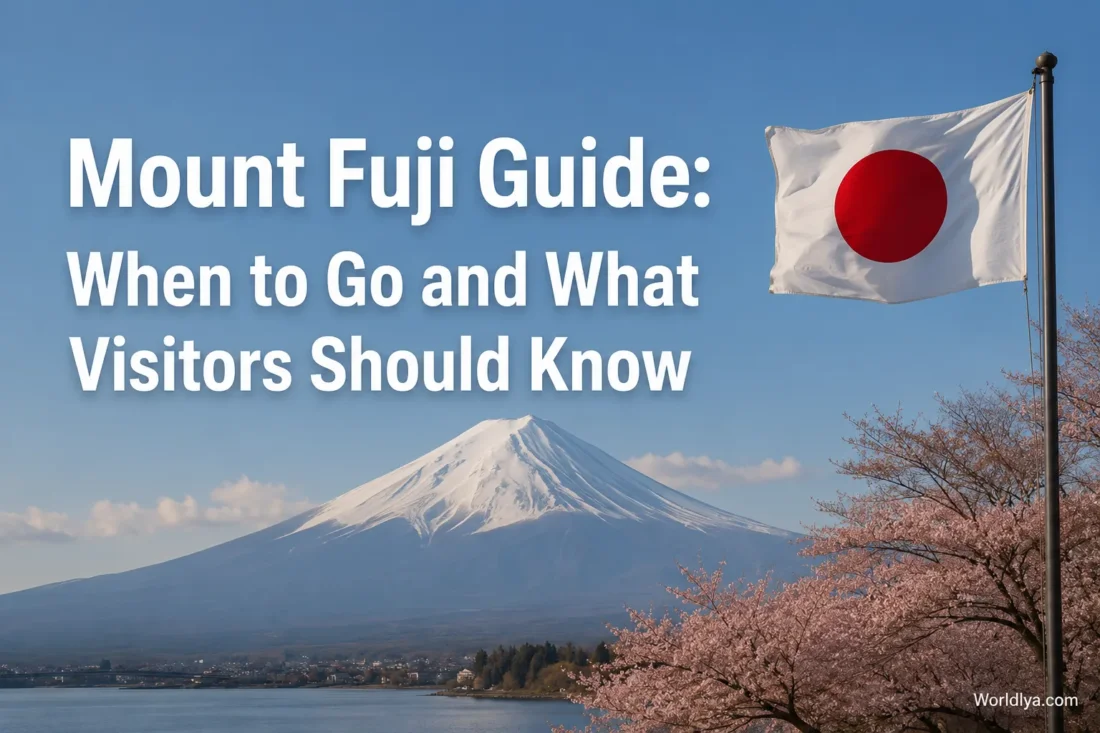
Mount Fuji is not a single attraction with one correct way to visit. You might watch its snow-capped cone appear above Lake Kawaguchi, ride to a Fifth Station without attempting the summit, stay overnight for an early-morning view, or plan a two-day climb during the official summer season. The right trip depends less on ticking off famous stops and more on choosing the experience, season, and pace that suit you.
Japan’s highest mountain rises to 3,776 metres between Yamanashi and Shizuoka prefectures. Clear skies can make it seem close enough to touch. An hour later, cloud may hide the entire peak. That unpredictability is part of visiting Fuji, so a flexible plan usually works better than a tightly packed checklist.
Choose The Mount Fuji Trip You Actually Want
- For the clearest long-distance views: visit during late autumn or winter and look for the mountain early in the morning.
- For flowers and spring scenery: visit the Fuji Five Lakes area from April into May, while allowing for changeable visibility.
- For green landscapes and summit climbing: visit during the official July-to-September climbing period.
- For autumn colour: plan an October or November stay around the lakes and northern foothills.
- For a simple first visit: use Lake Kawaguchi as your base rather than trying to circle the entire mountain in one day.
When To Visit Mount Fuji
There are two different questions hidden inside “When should I visit Mount Fuji?” One concerns seeing the mountain. The other concerns climbing it. The answers are not the same.
| Travel Goal | Useful Period | What To Expect | Planning Note |
|---|---|---|---|
| Clear Fuji Views | November to February | Cooler, drier air often brings sharper visibility and a snow-covered summit. | Go outside shortly after sunrise before daytime cloud builds. |
| Spring Scenery | April to May | Cherry blossom, fresh greenery, flower fields, and lingering summit snow. | Flower dates vary each year and clear views are never guaranteed. |
| Official Summit Climb | July to 10 September | Open summit trails, operating mountain huts, seasonal buses, and mild conditions at the base. | Exact opening dates differ by route and may change with snow or weather. |
| Autumn Colour | October to November | Colour around the lakes, cooler walking weather, and improving visibility. | Higher roads and facilities may begin seasonal closures later in autumn. |
Winter For The Sharpest Views
Winter is often the strongest season for travellers whose main goal is to see and photograph Mount Fuji. Colder air usually holds less haze, and the mountain’s snow cover creates the familiar white-topped silhouette seen in many photographs.
That does not make winter weather effortless. Lakeside mornings can be very cold, daylight is shorter, and some mountain roads or elevated facilities may close after snow. A winter Fuji trip works best when you stay near a viewing area, check local conditions, and avoid building the entire day around one distant photo stop.
Spring For Blossoms and Snow
Spring can place several seasons in one frame: blossom or fresh leaves near the lakes, dark forest on the lower slopes, and snow around the summit. Around the Fuji Five Lakes, cherry blossom usually arrives later than in central Tokyo because of the higher elevation and cooler climate.
The Fuji Shibazakura season, commonly running from mid-April into late May, adds broad fields of pink, white, and purple moss phlox to the southern lake area. Bloom timing, weather, and Fuji visibility vary, so visitors should check the official festival status shortly before travelling.
Summer For Climbing, Not Guaranteed Visibility
Summer is the normal summit-climbing season, yet it is not always the easiest time to see the whole mountain from a distance. Warm, humid air can create haze, while cloud often gathers around the slopes as the day develops.
An early start matters. A clear sunrise view from Lake Kawaguchi may become a cloud-covered scene by late morning. Build the rest of the day around lakeside walks, museums, shrines, cafés, or another local activity so the trip still feels worthwhile if Fuji disappears.
Autumn For Colour and Comfortable Walks
Autumn brings cooler air and changing leaves to the lakes and foothills. October often remains green at lower elevations while colour begins higher up. By November, the northern shore of Lake Kawaguchi and nearby parks may offer brighter autumn scenery with improving chances of a clear mountain view.
Visibility rule: Treat a clear view as a weather event, not a promise attached to a particular viewpoint. Check the sky at sunrise, keep your schedule flexible, and revisit the lakefront later if conditions improve.
Where To Stay Around Mount Fuji
Mount Fuji covers a broad travel area. The place marked “Mount Fuji” on a map is not a town centre where every attraction sits within walking distance. Choosing the right base can save hours of transfers.
Lake Kawaguchi and Fujiyoshida
Lake Kawaguchi is the easiest all-round base for many first-time visitors. It has rail and highway-bus connections, lakeside viewpoints, accommodation across several price levels, local buses, and access toward the Fuji Subaru Line Fifth Station.
The northern shore is popular because Fuji rises across the water to the south. The view changes as you move along the shore: some places offer open water, others frame the mountain with trees, flowers, or low buildings. Fujiyoshida, east of the lake, offers a closer urban view of the mountain and access to shrines connected with historic Fuji pilgrimages.
Lake Yamanaka
Lake Yamanaka sits east of Lake Kawaguchi and has broad shorelines, open views, cycling routes, and a quieter feel in many areas. Its larger water surface creates spacious Fuji compositions, particularly from the northern and eastern sides of the lake.
This base suits travellers who value lakeside space and a slower pace. Public transport exists, though it is less convenient for a dense sightseeing schedule than staying around Kawaguchiko Station.
Hakone
Hakone is not directly at the foot of Mount Fuji, but it can provide distant views across Lake Ashi and the surrounding hills. It works well for visitors who want to combine a possible Fuji sighting with hot-spring accommodation, boat travel, galleries, and mountain transport.
Choose Hakone for the wider destination, not because you expect Fuji to remain visible all day. The mountain can be hidden even when the weather around Lake Ashi appears pleasant.
Shizuoka and The Southern Side
The Shizuoka side offers a different relationship with Fuji. From places such as Nihondaira, Miho no Matsubara, Fujinomiya, and areas near Suruga Bay, the mountain may appear beyond tea fields, coastal landscapes, or city scenery rather than directly across a lake.
This side also provides access to the Fujinomiya, Gotemba, and Subashiri climbing routes. It can fit naturally into journeys using the Tokaido Shinkansen through Mishima or Shin-Fuji.
| Base | Works Well For | Transport Character | Fuji View Style |
|---|---|---|---|
| Lake Kawaguchi | First visits, short stays, mixed sightseeing | Direct buses and rail access through Otsuki | Classic lake-and-mountain views |
| Fujiyoshida | Shrines, street views, historic climbing culture | Local railway and bus connections | Large mountain rising behind the town |
| Lake Yamanaka | Cycling, open space, slower stays | Mainly bus-based local travel | Wide lake panoramas |
| Hakone | Hot springs and varied resort activities | Train, bus, ropeway, and boat network | Distant mountain beyond hills or Lake Ashi |
| Shizuoka Side | Southern trail access and coastal scenery | Useful links from Mishima, Shin-Fuji, and regional stations | Tea fields, bay views, and southern slopes |
Can Mount Fuji Be A Day Trip From Tokyo?
Yes. Lake Kawaguchi can be reached from Tokyo by highway bus or by train through Otsuki. A day trip is most satisfying when you leave early and focus on one compact area.
The common mistake is trying to combine Lake Kawaguchi, Oshino Hakkai, Lake Yamanaka, a Fifth Station, Hakone, and several photo stops before returning to Tokyo. Those places may look close on a regional map, but local roads, transfers, waiting times, and seasonal traffic quickly consume the day.
A Balanced Lake Kawaguchi Day
- Arrive in the morning and check Fuji visibility before committing to indoor activities.
- Move to one lakeside viewpoint with a clear southern view.
- Choose one additional experience, such as a ropeway, museum, shrine, garden, or short walk.
- Have lunch within the same area instead of crossing the region.
- Return to the shore later because afternoon light and cloud may differ from the morning.
- Allow extra time for the journey back to Tokyo, especially on weekends and holiday periods.
An overnight stay changes the rhythm. You gain access to dawn, when the air may be clearer and day visitors have not yet arrived. You also avoid spending four or more hours of the day travelling to and from Tokyo.
Visiting A Fifth Station Without Climbing
You do not need to climb the summit to experience the mountain at higher elevation. The Fuji Subaru Line Fifth Station on the Yamanashi side sits at roughly 2,300 metres and is the starting area for the Yoshida Trail.
It has viewing areas, shops, food, toilets, a shrine, and access to shorter walking routes when conditions permit. The landscape feels very different from the lakes below: thinner forest, cooler air, changing cloud, and a closer view of Fuji’s upper slopes.
Access changes by season. Private vehicles are restricted during the busy summer period, when visitors generally use buses or park-and-ride services. Roads can also close because of weather. Check the operating status and return timetable on the day of travel rather than relying on an old itinerary.
Altitude still matters at a Fifth Station. Walk slowly after arriving, drink water, and bring an extra layer. A warm day beside Lake Kawaguchi can feel cool or windy higher on the mountain.
Mount Fuji Climbing Rules For 2026
Summit climbing is a separate undertaking from ordinary Fuji sightseeing. It requires advance planning, mountain equipment, route registration, transport coordination, and enough time to ascend and descend without rushing.
Published 2026 Season Details
- Yoshida Trail: scheduled to open from 1 July to 10 September 2026.
- Subashiri Trail: scheduled to open from 1 July to 10 September 2026.
- Fujinomiya and Gotemba Trails: scheduled to open from 10 July to 10 September 2026.
- Hiking fee: ¥4,000 per person for each entry.
- Restricted entry hours: 2:00 p.m. to 3:00 a.m. for climbers without a mountain-hut reservation.
- Yoshida daily limit: up to 4,000 climbers, excluding eligible mountain-hut guests.
- Mountain registration: complete the official registration and payment process before travelling to the trailhead.
- Shizuoka-side entry: visitors using Fujinomiya, Gotemba, or Subashiri must complete the required safety and conservation learning process.
Opening dates remain subject to weather, snow, trail, and facility conditions. Check the official Mount Fuji climbing website again immediately before departure.
The Four Official Summit Routes
| Route | Trail Colour | General Character | Often Chosen By |
|---|---|---|---|
| Yoshida | Yellow | Many huts and facilities, separate descent path, busy near sunrise. | First-time Fuji climbers who want more services along the route. |
| Subashiri | Red | Forest at lower elevation, sandy descent, joins Yoshida near the upper mountain. | Climbers wanting forest scenery and a less urban trailhead. |
| Gotemba | Green | Longest route with a large elevation gain and fewer huts. | Fit, well-prepared climbers comfortable with a longer mountain day. |
| Fujinomiya | Blue | Shortest distance to the summit but steep, with ascent and descent sharing much of the path. | Climbers approaching from the Shizuoka side who prefer a shorter, steeper route. |
No route is easy. All four rise above 3,000 metres, cross exposed volcanic ground, and can experience rapid weather changes. Select a route according to fitness, transport, hut availability, and descent arrangements rather than distance alone.
Book The Mountain Hut Separately
Paying the mountain-entry fee does not reserve accommodation. Mountain huts use separate booking systems and may fill well before popular weekends. Facilities are simple and designed for rest rather than hotel-style comfort.
A hut stay allows the climb to be divided across two days. It also gives the body more time to adjust to altitude. Reaching a hut, resting, and continuing later is usually more manageable than travelling from low elevation and pushing through the night without sleep.
Avoid A Continuous Overnight Rush
Starting from a Fifth Station at night and climbing directly toward sunrise without proper rest is commonly called a bullet climb. The official Fuji authorities warn against it because fatigue, darkness, cold, and altitude arrive at the same time.
The sunrise does not have to be watched from the highest point. Depending on the route and cloud level, a mountain hut or an open section of trail may provide a memorable view without joining the final summit queue.
What To Pack For A Summit Climb
Fuji begins in summer and ends in mountain weather. Lower sections may feel warm, but summit temperatures in mid-summer are commonly around 5°C to 8°C, with wind making conditions feel colder. Rain can arrive quickly.
Essential Clothing
- Supportive hiking boots
- Separate waterproof jacket and trousers
- Warm mid-layer
- Insulated outer layer
- Warm hat or neck covering
- Gloves
- Dry spare socks
Essential Equipment
- Headlamp with spare battery
- Hands-free hiking backpack
- Water and high-energy food
- Offline route map
- Portable battery
- Sun protection
- Small rubbish bags
- Cash for huts and toilets
Pack rainwear and warm layers near the top of the bag, where they can be reached without unpacking everything. Water, food, and supplies become more expensive higher on the mountain because they must be transported upward.
Altitude, Weather, and Physical Pace
Most summit routes begin around the Fifth Station level, meaning visitors move from ordinary city elevation to roughly 2,000–2,400 metres before walking. Pause at the trailhead, eat, organise equipment, and allow the body time to adjust before climbing higher.
Headache, nausea, unusual dizziness, and worsening weakness can be signs of altitude illness. Stop, rest in a safe place, and do not continue upward when symptoms are getting worse. Descending to lower elevation is the correct response when rest does not bring improvement.
Fuji’s loose volcanic surface also makes the descent tiring. Save energy for the way down, tighten footwear securely, and keep water available after leaving the summit. Many visitors focus so much on climbing up that they underestimate the hours still required to return to the trailhead.
Turnaround decisions are part of mountain travel. Reaching a hut, a high station, or a clear sunrise viewpoint can still be a rewarding experience. The summit will remain there for another properly prepared visit.
Understanding Fuji’s Cultural Landscape
Mount Fuji was added to the UNESCO World Heritage List in 2013 under the name Fujisan, Sacred Place and Source of Artistic Inspiration. The listed cultural property includes the mountain and 25 related places, including shrines, historic pilgrim routes, lakes, springs, lava features, and sites connected with artistic traditions.
This is why a Fuji visit can include far more than a viewpoint. Kitaguchi Hongu Fuji Sengen-jinja in Fujiyoshida formed an important northern entrance for historic climbers. Fujisan Hongu Sengen Taisha in Fujinomiya is closely connected with worship of the mountain on the southern side. The lakes, springs, and forest approaches also form part of the wider cultural setting.
Respectful Visitor Habits
- Stay on marked paths and follow local signs.
- Carry all rubbish back down the mountain.
- Do not remove stones, plants, or natural material.
- Keep voices low around shrines and places of worship.
- Do not block roads, private entrances, or residential areas for photographs.
- Use marked crossings and designated viewing spaces.
- Follow staff instructions at trail gates, bus areas, and mountain huts.
Three Practical Mount Fuji Itineraries
One-Day View-Focused Visit
- Leave Tokyo early for Lake Kawaguchi.
- Check visibility immediately after arrival.
- Visit one northern-shore viewpoint.
- Add one nearby attraction or short walk.
- Return to the lakeside before departure for another chance at a clear view.
This plan is compact, easy to adjust, and leaves room for transport delays. It avoids spending most of the day moving between distant viewpoints.
Two-Day Lake and Foothill Stay
- Arrive around midday and explore one lake area.
- Stay overnight with convenient access to an eastern or northern view.
- Go outside near sunrise for the best visibility chance.
- Visit Fujiyoshida, a Sengen shrine, or another lakeside area after breakfast.
- Return to Tokyo or continue through Yamanashi or Shizuoka.
This option suits photographers, couples, families, and anyone who prefers not to gamble the whole visit on a few midday hours.
Two-Day Summit Plan
- Travel to the correct Fifth Station for the chosen route.
- Complete entry procedures and spend time adjusting to the elevation.
- Climb at a steady pace to a pre-booked mountain hut.
- Rest before continuing early the next morning.
- Watch sunrise from the hut, trail, or summit according to conditions.
- Descend with enough time to reach the planned bus or shuttle.
Route registration, hut booking, and transport booking are separate tasks. Confirm each one before leaving for the mountain.
Common Mount Fuji Planning Mistakes
- Expecting guaranteed visibility: even a clear regional forecast may leave cloud around the summit.
- Arriving late: mornings often offer better views and more time to react to transport changes.
- Planning too many areas: the Fuji region is wider than it appears on a simple map.
- Using an old bus timetable: seasonal services and road access can change.
- Confusing a Fifth Station visit with a summit climb: they require very different preparation.
- Booking a hut but not completing entry registration: both procedures must be handled correctly.
- Assuming summer means warm summit weather: cold, wind, and rain remain possible.
- Forgetting the descent: loose volcanic ground can make the return physically demanding.
Mount Fuji Visitor Questions
Do You Need To Climb Mount Fuji To Enjoy It?
No. Many visitors have a fuller experience around the lakes, shrines, foothills, and viewing areas than they would during a rushed summit attempt. A Fifth Station visit can also provide a higher-elevation mountain experience without a summit climb.
Which Month Offers The Best Chance Of Seeing Mount Fuji?
Late autumn and winter usually offer the clearest distant views. November through February is a useful period for a view-focused trip, especially during the morning. Visibility can still change from day to day.
Is Lake Kawaguchi Worth An Overnight Stay?
Yes, particularly when seeing Fuji is a priority. Staying overnight provides two viewing periods, reduces same-day travel pressure, and makes an early-morning lakeside visit much easier.
Can Beginners Climb Mount Fuji?
Many first-time mountain visitors use the Yoshida Trail, but Fuji should not be treated as an ordinary sightseeing walk. Fitness, proper footwear, waterproof and cold-weather clothing, altitude awareness, hut planning, and a realistic pace are all necessary.
Is Mount Fuji Visible During Summer?
It can be, particularly early in the morning, but summer haze and cloud often reduce visibility. Stay flexible and avoid judging the entire day by the first cloudy view.
Do Climbers Need A Reservation In 2026?
Climbers must complete the applicable official mountain-entry registration and pay the ¥4,000 hiking fee. Advance online completion is the sensible option. A mountain-hut reservation is separate and is needed for anyone planning to stay overnight or enter during restricted hours under the published rules.
How Cold Is The Summit In Summer?
Mid-summer summit temperatures are commonly around 5°C to 8°C, and strong wind can make it feel colder. Conditions may fall lower, so warm layers, gloves, rain protection, and a hat belong in every summit pack.
Sources
- Official Mount Fuji Climbing Website: Yamanashi and Yoshida Trail Notice
- Official Mount Fuji Climbing Website: Shizuoka Trail Notice
- Official Mount Fuji Climbing Website: Preparation, Equipment, and Entry Rules
- Yamanashi Prefecture: 2026 Mount Fuji Climbing Regulations
- Shizuoka Prefecture: Mount Fuji Entry Procedures and Regulations
- Japan National Tourism Organization: Mount Fuji Climbing Information
- Japan National Tourism Organization: Mount Fuji Viewing Locations
- Japan National Tourism Organization: Fuji Subaru Line Fifth Station
- UNESCO World Heritage Centre: Fujisan, Sacred Place and Source of Artistic Inspiration