
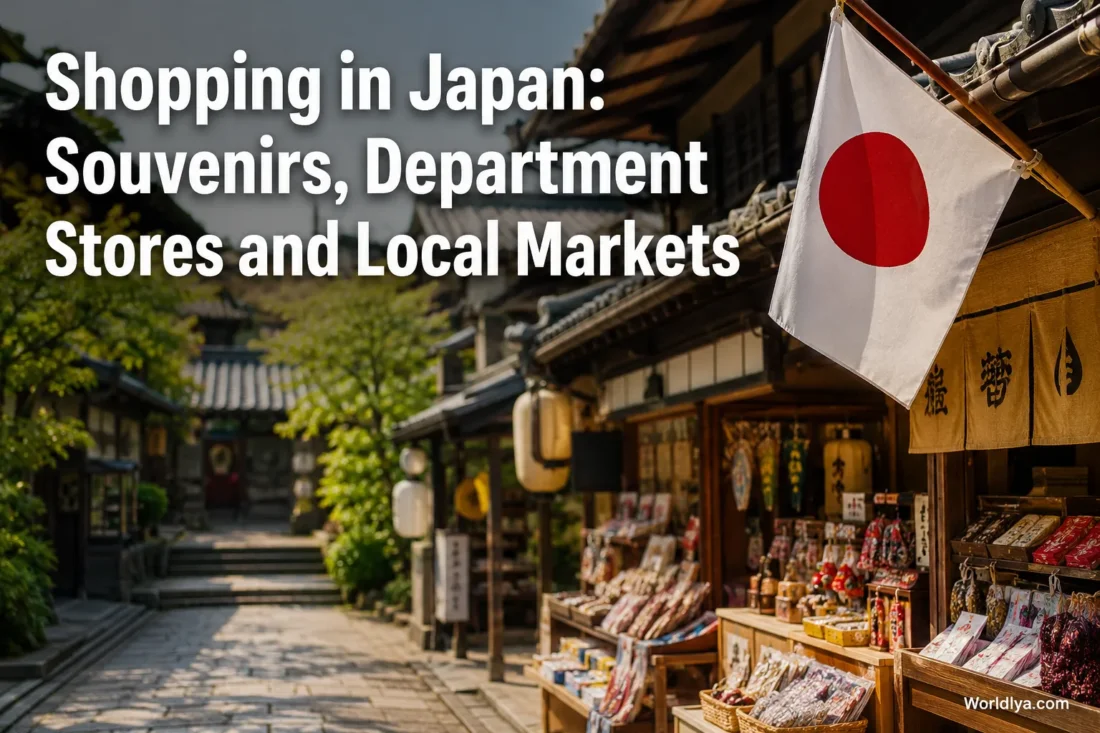
Shopping in Japan can be wonderfully straightforward once you know where each type of purchase belongs. A polished department store may wrap a box of regional sweets as neatly as a present, while a neighborhood market lets you compare local tea, ceramics and pantry goods from several small sellers. Railway stations add another layer, with compact shops designed for travelers who need a thoughtful gift before boarding a train. The aim is not to buy everything you see. It is to find items that carry a clear connection to the place you visited and still make sense when you unpack them at home.
For Regional Gifts
Look for local confectionery, tea, textiles, ceramics and small craft pieces carrying the name of the city or prefecture where they were made.
For Easy Comparison
Use a department store when you want several makers, clear prices, gift wrapping and visitor services under one roof.
For Local Atmosphere
Visit a morning market or covered shopping street early enough to browse calmly and see the widest choice of goods.
Shopping in Japan Works Best When Place and Purchase Match
Japan does not have one single shopping culture. A station building, local arcade, craft workshop and food market serve different needs. Choosing the right setting saves time and also improves your chance of finding something locally meaningful.
| Shopping Setting | What It Does Well | Typical Purchases | Useful Timing |
|---|---|---|---|
| Department store | Many established makers, staff assistance, careful packaging and tax-free counters at selected branches | Boxed sweets, clothing, cosmetics, tableware, accessories and gifts | Late morning or mid-afternoon, outside meal-time crowds |
| Local market | Regional food culture and direct access to small independent sellers | Tea, seasonings, preserved foods, snacks, produce and everyday kitchen goods | Morning, especially for markets centered on fresh food |
| Shopping street | A mix of daily-life shops, specialty stores and local food | Stationery, textiles, household goods, snacks and small souvenirs | Late morning through early evening |
| Railway station | Fast shopping, regional product collections and travel-friendly packaging | Confectionery, tea, lunch boxes and compact gifts | Before boarding, with extra time during busy travel periods |
| Craft district or workshop | More information about materials, makers and production methods | Ceramics, lacquerware, woven goods, paper products and woodcraft | Earlier in the day, as small studios may close before large stores |
Large urban stores commonly open around 10:00 a.m. and close around 8:00 p.m., though each branch sets its own schedule. Smaller rural shops may close earlier. Market stalls can follow individual hours, rest days or seasonal schedules, so checking the official listing shortly before visiting is sensible.
Souvenirs Worth Bringing Home
A good souvenir should survive the journey, fit the recipient and remind you of a particular region. Japan offers choices at nearly every price, from a small cloth wrap to a handmade bowl. The most satisfying purchases are often useful enough to remain part of daily life.
Regional Sweets and Packaged Food
Gift boxes of individually wrapped sweets are among the easiest Japanese souvenirs to share. Stores often produce flavors connected to a region or season, such as matcha, citrus, apple, chestnut, sweet potato or local milk. Individual wrapping also helps with freshness and makes a single box easier to divide among several people.
- Check the date: Some fresh cakes have a short shelf life, while cookies, rice crackers and filled wafers usually travel more easily.
- Read the storage label: Avoid products requiring refrigeration unless you can protect them throughout the journey.
- Look inside the box display: Many stores show the number of pieces, package layout and allergen information near the sample.
- Keep food rules in mind: Your destination may restrict certain fresh plant or animal products even when they are sold legally in Japan.
Useful detail: Department-store food halls and station shops often carry several regional brands in one place. This is helpful when your itinerary does not include time to visit each maker separately.
Tea and Pantry Goods
Japanese tea can be a compact gift, but the label matters. Sencha is a familiar everyday green tea, genmaicha blends tea with roasted rice, and hojicha has a roasted aroma with a gentler character. Matcha is powdered tea and requires different preparation from loose-leaf varieties.
Small bags allow you to try a local producer without committing to a large quantity. Tins protect delicate leaves from light and moisture, though they take more luggage space. Markets may also sell dried seasonings, soup ingredients, sesame products and regional condiments. Choose sealed, clearly labeled packages for an easier journey.
Textiles for Daily Use
Textiles combine low weight with a strong sense of place. A tenugui is a thin cotton cloth that can be used as a hand towel, wrapping cloth or decorative piece. A furoshiki is usually square and designed for wrapping or carrying objects. Both come in traditional patterns, seasonal designs and modern prints.
Before buying, check whether the cloth is machine washable and whether the edges are finished. Traditional tenugui may have unfinished short edges by design. This helps the fabric dry quickly and is not necessarily a flaw.
Stationery, Paper and Small Design Objects
Stationery shops reward slow browsing. You may find smooth-writing pens, notebooks, letter sets, stamps, stickers, folding cards and washi paper in sizes that fit easily into hand luggage. These items work well when you need affordable gifts without buying the same object for everyone.
Traditional paper varies in texture, thickness and intended use. Ask whether a sheet is suitable for writing, printing, wrapping or display. Beautiful paper can be surprisingly delicate, so place it between two firm pieces of card before packing.
Ceramics, Lacquerware and Woodcraft
Regional ceramics offer more personality than a generic souvenir shelf, but they need closer inspection. Look at the base, rim and glaze. Handmade pieces may show small variations in shape or color; those differences often reflect the production process rather than poor quality.
Ask whether a cup or plate is suitable for a dishwasher, microwave or direct heat. Lacquerware should be protected from sharp objects and prolonged soaking. Wooden items may require hand washing and thorough drying. A few questions at the counter can prevent disappointment later.
| Approximate Gift Budget | Ideas That Travel Well | What to Check |
|---|---|---|
| Under ¥1,000 | Small stationery, cloth accessories, postcards, chopstick rests or a compact snack | Piece count, packaging and local connection |
| ¥1,000–¥3,000 | Tea, boxed sweets, tenugui, small bowls or a quality notebook | Shelf life, care instructions and luggage weight |
| ¥3,000–¥10,000 | Furoshiki, artisan ceramics, lacquerware, woven goods or a larger gift set | Maker information, materials and protective wrapping |
| Over ¥10,000 | Larger craft pieces, designer goods, fine textiles or coordinated tableware | Authenticity details, returns policy, insurance and transport |
Department Stores: Polished Service Under One Roof
Japanese department stores are useful even when luxury shopping is not part of your plans. Their real strength is organization. Food, clothing, household goods, stationery and regional gifts are arranged by floor, while selected branches provide visitor information, tax-free processing and delivery services.
Well-known department-store groups include Mitsukoshi, Isetan, Takashimaya, Daimaru, Matsuzakaya, Matsuya, Sogo and Hankyu. Railway companies also developed department stores beside major stations, which explains why so many branches connect directly to train and subway networks.
Start in the Basement Food Hall
The basement food floor is commonly called a depachika, a word formed from “department store” and chika, meaning basement. It can contain bakeries, confectionery counters, tea shops, prepared meals, fruit displays and rotating regional promotions.
Depachika counters are especially useful for comparing gift boxes. You can see package size, piece count, shelf life and price without crossing the city. Many products are boxed for transport, though chilled and freshly prepared foods are better treated as same-day purchases.
- Walk through once before buying so you can compare package sizes and expiration dates.
- Choose gifts that do not require refrigeration unless they will be eaten soon.
- Ask for separate bags when buying gifts for several households.
- Keep your receipt until you confirm that every item and quantity is correct.
Gift Wrapping Is Part of the Service
Gift wrapping is widely available, particularly in department stores and specialty shops. Basic wrapping may be free, while decorative boxes, fabric wraps or premium paper can cost extra. Tell the staff how many separate gifts you need before they begin wrapping.
Once several boxes are wrapped, they can look identical. A small removable note on each outer shopping bag helps you remember the recipient without marking the gift itself.
Check the Floor Directory Before Browsing
Large stores can occupy several buildings or wings. Use the entrance directory to locate household goods, stationery, regional crafts and the visitor-service counter. Some branches place tax-free processing on a separate floor rather than at each sales register. Processing may also close earlier than the retail floors.
Plan a final station stop: Major stations often gather local sweets and regional products near ticket gates. This is convenient for one forgotten gift, but it is less relaxing than browsing earlier in the trip.
Local Markets and Shopping Streets by Destination
Markets are working retail spaces, not staged displays. Some sellers focus on residents, restaurants and repeat customers. Browse without blocking narrow passages, follow photography signs and eat purchased food where the vendor directs you.
Tokyo: Tsukiji Outer Market
Tsukiji’s wholesale market operations moved to Toyosu in 2018, but the Tsukiji Outer Market remains active. Its lanes contain food sellers, restaurants, tea shops and stores serving home cooks and professional kitchens. Morning is the natural time to visit because many businesses follow food-market hours rather than the schedule of a shopping mall.
For portable purchases, look for tea, dried seasonings, packaged snacks and small kitchen textiles. Fresh foods are better enjoyed locally unless you have suitable storage and know the import rules at your destination.
Kyoto: Nishiki Market
Nishiki Market runs through a narrow covered passage in central Kyoto. More than 100 vendors occupy a route of roughly 400 meters, creating a dense mix of preserved foods, sweets, tea, condiments, ceramics, paper goods and cookware.
Kyoto-linked gifts include Uji tea, rice crackers, vegetable pickles and small craft pieces. Because the market can become busy, a late-morning visit on a weekday may feel calmer than the middle of a weekend afternoon. Individual shops keep their own hours and closing days.
Osaka: Kuromon Ichiba Market
Kuromon Ichiba sits within walking distance of Nippombashi and Namba. Its covered arcade is known for fresh ingredients, prepared foods, produce, sweets and kitchen-related shops. Although eating draws many visitors, the market is also useful for packaged Osaka gifts and pantry items.
Walk the full arcade before choosing a large gift box. Prices, package sizes and specialties vary from stall to stall, and some items are intended for immediate eating rather than travel.
Kanazawa: Omicho Market
Omicho Market has served Kanazawa for centuries and contains more than 170 shops within a network of covered passages. Fresh food is central to the market, but visitors can also find sweets, tea, pickled products, flowers and household items.
Kanazawa is also associated with lacquerware, ceramics and decorative gold leaf. For delicate craft purchases, compare specialist shops around the city rather than expecting every market stall to provide the same level of documentation or protective packing.
Takayama: Miyagawa Morning Market
Miyagawa Morning Market follows the river through central Takayama. Stalls and permanent shops offer produce, preserved foods, local crafts, chopsticks and sarubobo dolls associated with the Hida region.
This is a morning stop in the literal sense. Visit before moving into the old town streets, where additional shops sell woodcraft, textiles, ceramics and packaged local foods. The combination works well because the market provides small, informal purchases while the nearby craft shops allow more time for careful comparison.
Naha: Kokusai-dori and Covered Arcades
Kokusai-dori passes through central Naha and connects with covered arcades containing small shops and market stalls. Popular Okinawan purchases include patterned textiles, pottery, glassware, shisa figures, salt products and locally flavored sweets.
Check fragile pottery and glass for small cracks before it is wrapped. When buying a pair of shisa figures, ask how the open-mouth and closed-mouth figures are traditionally positioned so you can display them correctly at home.
| Destination | Shopping Area | Good Purchases | Best Approach |
|---|---|---|---|
| Tokyo | Tsukiji Outer Market | Tea, seasonings, packaged snacks and kitchen textiles | Arrive in the morning and follow each shop’s schedule |
| Kyoto | Nishiki Market | Tea, sweets, paper goods, ceramics and preserved foods | Browse the full passage before buying |
| Osaka | Kuromon Ichiba | Packaged local food, sweets and pantry goods | Separate travel-friendly gifts from food meant to be eaten there |
| Kanazawa | Omicho Market and city craft shops | Sweets, tea, lacquerware, ceramics and decorative goods | Use the market for food and specialist shops for delicate crafts |
| Takayama | Miyagawa Morning Market and Sanmachi | Woodcraft, cloth goods, chopsticks and regional figures | Visit the market early, then continue into the old town |
| Naha | Kokusai-dori and nearby arcades | Pottery, textiles, glassware and island-themed sweets | Inspect fragile items before protective wrapping |
Tax-Free Shopping in Japan During 2026
Japan’s visitor tax-free shopping system changes on November 1, 2026. Travelers visiting before and after that date will encounter different procedures. The purchase date determines which process applies.
Purchases Made Through October 31, 2026
- Eligible visitors shop at a participating store displaying tax-free service.
- The original passport or another officially accepted document must be presented during processing.
- The minimum tax-free purchase is generally ¥5,000 before consumption tax at the same store on the same day within the relevant product category.
- Consumable goods generally qualify from ¥5,000 through ¥500,000 before tax and may be sealed under the current procedure.
- Tax-free consumables should remain unopened while in Japan when the required sealed packaging applies.
- The goods must leave Japan with the eligible purchaser.
Purchases Made From November 1, 2026
- Participating stores will charge the tax-inclusive price when the purchase is made.
- The traveler must carry the eligible goods out of Japan within 90 days of purchase.
- Customs confirms the goods at departure using the traveler’s passport information and purchase record.
- The store operator refunds the consumption-tax equivalent after customs confirms that the goods were carried out.
- General goods and consumables will no longer be divided into separate categories for the minimum purchase amount.
- The minimum qualifying purchase remains ¥5,000 before tax, calculated under the revised rules.
Refund timing and the method used to return the money may vary by retailer or service provider. Travelers leaving near the changeover date should read the store’s written terms before buying rather than assuming the earlier point-of-sale method still applies.
Since April 1, 2025, purchases sent personally through international parcel services do not qualify under the visitor tax-free shopping arrangement. Keep tax-free goods with your accompanied luggage unless an officially supported process clearly states otherwise.
Carry your original passport: A photograph or paper copy is not a dependable substitute for tax-free processing. Digital entry records may also require the store to scan or confirm information through an approved method.
Payments, Prices and Store Etiquette
Carry Both a Card and Some Yen
International credit cards are commonly accepted at department stores, large shopping centers, hotels and many urban retailers. Contactless payment is also available at numerous chain stores and convenience stores. Small markets, rural shops and independent stalls may still prefer cash.
Look for payment logos near the register rather than assuming every terminal accepts every card. A failed contactless transaction may still work when the same card is inserted. Keep a second payment method available for larger purchases.
Expect Marked Prices Rather Than Bargaining
Prices are normally treated as fixed in department stores, shopping centers and most independent retail shops. Bargaining is not part of ordinary shopping. A store may offer a seasonal sale, loyalty discount or visitor coupon, but these are published offers rather than private negotiations.
Use the Payment Tray When One Is Provided
Many counters place a small tray beside the register. Put cash, coins or your card on the tray and collect the payment method and receipt from the same place. Staff may count cash aloud or display the amount on a screen before completing the transaction.
Ask Before Trying On Clothing
Speak to a staff member before entering a fitting room. Some stores ask shoppers to remove shoes, and face covers may be supplied to protect clothing from makeup. Sizing can vary between brands, so use the measurements on the label rather than relying only on familiar size letters.
Follow Each Market’s Eating Rules
Some food stalls provide a marked space where customers can stand and eat. Others ask visitors to finish food beside the counter rather than walking through the market. Following the posted rule keeps narrow lanes clear and makes it easier for nearby shops to serve their customers.
How to Pack Purchases Without Regret
Fragile and edible purchases need different strategies. Packing everything together at the end of the trip often creates avoidable damage, so organize items as you buy them.
- Photograph fragile items before wrapping. This creates a record of the condition and helps you remember what is inside an opaque package.
- Put ceramics in the center of the suitcase. Surround each piece with clothing and prevent separate items from touching one another.
- Protect boxes from crushing. Flat confectionery boxes should lie between firm layers rather than beside shoes or heavy objects.
- Separate liquids. Place sealed bottles and cosmetic containers in individual leak-resistant bags.
- Keep tax-free goods accessible. Customs may need to confirm that the items are leaving Japan.
- Review destination rules. Fresh produce, meat products, seeds and some plant materials may be restricted by the country where you arrive.
Leave luggage space before the trip: A soft folding bag can help with clothing, but valuable or breakable purchases should remain in a properly structured case. Check your airline’s size, weight and cabin-baggage rules before planning a large purchase.
A Practical Shopping Plan for Different Trips
| Trip Style | Suggested Shopping Pattern | Reason It Works |
|---|---|---|
| First visit to Tokyo and Kyoto | One department store, one local market and a final station stop | Balances easy comparison with regional character |
| Food-focused journey | Visit markets in the morning and depachika floors later in the day | Separates fresh tasting from travel-friendly gift shopping |
| Craft-focused journey | Buy from specialist stores or workshops, then use department stores for smaller gifts | Provides more detail about materials and makers |
| Short city break | Use a station-connected department store and one nearby shopping street | Reduces travel time without limiting variety |
| Multi-city rail trip | Buy compact local items in each city and larger purchases near the end | Prevents fragile or bulky goods from being carried through every transfer |
| Gift shopping for many people | Choose individually wrapped sweets, stationery or cloth items in several price levels | Keeps packing simple while avoiding identical gifts for everyone |
Useful Japanese Shopping Phrases
| Japanese | Pronunciation | Meaning |
|---|---|---|
| これはいくらですか? | Kore wa ikura desu ka? | How much is this? |
| これをください。 | Kore o kudasai. | I would like this, please. |
| カードは使えますか? | Kādo wa tsukaemasu ka? | Can I use a card? |
| 免税できますか? | Menzei dekimasu ka? | Is tax-free shopping available? |
| プレゼント用です。 | Purezento-yō desu. | It is a gift. |
| 別々に包んでください。 | Betsubetsu ni tsutsunde kudasai. | Please wrap them separately. |
| 賞味期限はいつですか? | Shōmi kigen wa itsu desu ka? | What is the best-before date? |
Common Questions About Shopping in Japan
Are department stores only for expensive purchases?
No. Upper floors may carry premium brands, but basement food halls, stationery departments, household sections and seasonal displays often include affordable gifts. Browsing a department store is also a practical way to compare several makers without visiting separate neighborhoods.
Is cash still needed in Japan?
Yes. Cards are widely accepted in large stores and major cities, but cash remains useful at small markets, independent shops and rural businesses. Carrying both avoids having to abandon a purchase when a payment terminal does not accept your card.
Can food bought at a market be taken home?
Sealed tea, sweets and dried products are usually easier to transport than fresh food. The rules of your destination country still apply. Check import restrictions, shelf life and storage needs before buying.
Do all stores offer tax-free shopping?
No. The store must participate in the approved system, and the purchase must meet the eligibility and minimum-spend rules. Look for tax-free signs and ask where processing takes place before completing a large purchase.
Should souvenirs be bought at the airport?
Airports are useful for packaged sweets, tea and last-minute gifts, but city shops provide more time and a wider regional choice. Buy distinctive crafts and fragile items earlier, then reserve airport shopping for compact products that are already packed for travel.
When should fragile items be purchased?
Buy them near the end of a multi-city trip when possible. This reduces repeated handling on trains and during hotel changes. Ask for protective wrapping and keep the item in the center of a structured suitcase.
Sources
- Japan National Tourism Organization: Japan Shopping
- Japan National Tourism Organization: Department Store Food Floors
- Japan National Tourism Organization: Japan’s Tax Exemption
- National Tax Agency of Japan: Tax-Free Shopping Refund Method From November 2026
- Japan National Tourism Organization: Nishiki Market
- Japan National Tourism Organization: Kuromon Market
- Japan National Tourism Organization: Tsukiji Outer Market
- Japan National Tourism Organization: Omicho Market