
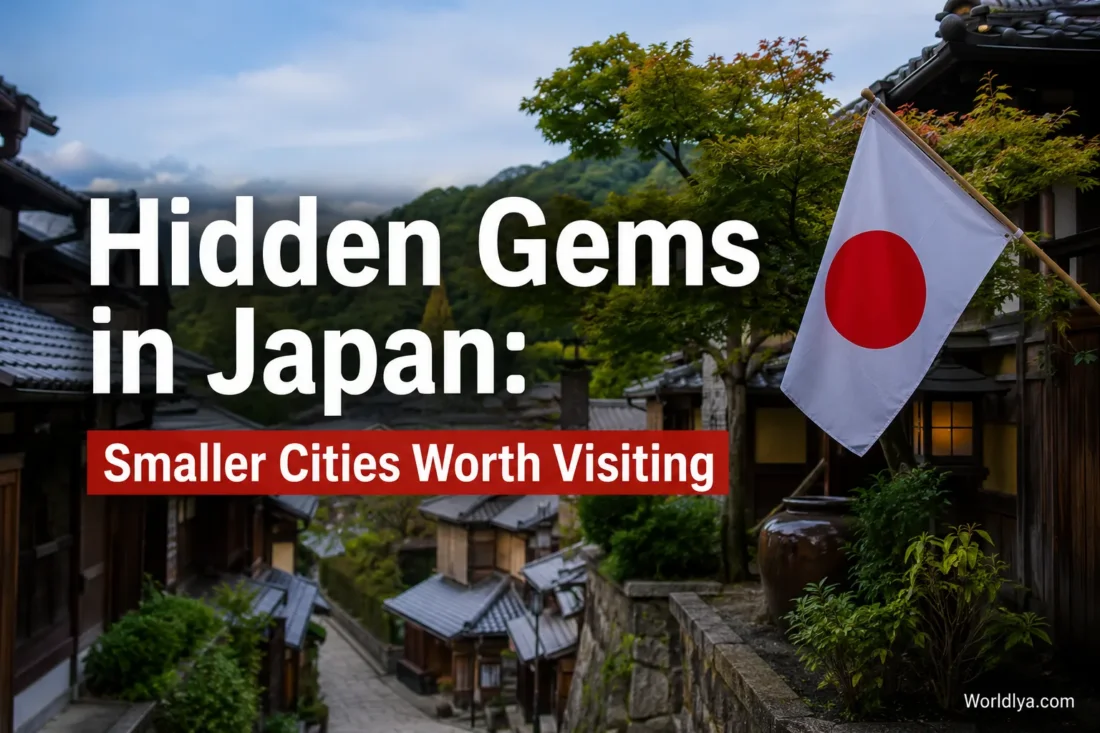
Japan’s largest cities can fill an entire holiday, yet the country often feels more personal once the skyline drops and daily life comes back into view. In smaller cities, a garden may sit a few blocks from a busy food market, an old canal may lead to a modern art museum, and the station may be close enough that you can begin exploring on foot. You spend less time crossing town and more time noticing it.
The places below are not presented as secret locations. Kanazawa, Takayama, and Uji are well known in Japan, while cities such as Hagi and Matsue have long welcomed domestic visitors. They are “hidden” mainly in the sense that many first-time itineraries still move straight between Tokyo, Kyoto, and Osaka. Add one of these stops and the pace changes. Add two, and the trip begins to feel less like a checklist.
Each city has a clear reason to stay overnight: early market hours, lakeside sunsets, evening streets, morning temple walks, or access to nearby landscapes. The right choice depends less on which city is “best” and more on what you want from Japan—craft and design, mountain scenery, tea culture, or slow waterfront walks.
Choose Your Kind of Japan
For Art, Gardens, and Craft
- Kanazawa for landscape gardens, gold leaf, contemporary art, and old districts
- Kurashiki for canal-side storehouses, museums, and Japanese denim
- Hagi for pottery studios, white-walled lanes, and a calm coastal setting
For Mountains, Food, and Walkable Streets
- Matsumoto for a preserved castle, local art, and Alpine day trips
- Takayama for morning markets, wooden townscapes, and Hida food
- Morioka for regional noodles, ironware, rivers, and easy rail access from Tokyo
For Water, Tea, and Unhurried Views
- Onomichi for hillside lanes, temples, ferries, and the Shimanami Kaido
- Matsue for an original castle, canals, tea, and Lake Shinji sunsets
- Uji for tea houses, riverside paths, and Byodoin
- Tottori for sand dunes, sculpture, and Sea of Japan scenery
City Finder: Match the Stop to Your Trip
A day trip works for Uji and can work for Kurashiki, but the remaining cities become more rewarding with at least one night. The table offers a practical starting point rather than a fixed rule.
| City | Best Match | Comfortable Stay | Easy Route Pairing |
|---|---|---|---|
| Kanazawa | Gardens, crafts, food markets, museums | 2 nights | Tokyo, Toyama, Fukui, Kyoto |
| Matsumoto | Castle, art, mountain access | 2 nights | Tokyo, Nagano, Kiso Valley, Takayama |
| Takayama | Old streets, markets, regional food | 2 nights | Nagoya, Matsumoto, Shirakawa-go, Kanazawa |
| Uji | Tea, temple architecture, river walks | 1 day or 1 night | Kyoto, Nara |
| Kurashiki | Canals, museums, textiles | 1–2 nights | Okayama, Osaka, Onomichi |
| Onomichi | Hillside walking, island views, cycling | 2 nights | Fukuyama, Hiroshima, Imabari |
| Matsue | Castle, tea culture, lake sunsets | 2 nights | Okayama, Izumo, Tottori |
| Hagi | Pottery, historic lanes, coastal walks | 2 nights | Yamaguchi, Shimonoseki |
| Tottori | Sand dunes, landscape, sand art | 1–2 nights | Himeji, Okayama, Matsue |
| Morioka | Food, craft, rivers, Tohoku base | 2 nights | Tokyo, Sendai, Hiraizumi |
Kanazawa: Gardens, Craft, and Everyday Elegance
Kanazawa is one of the easiest alternatives to a second long stay in Kyoto. Its attractions are varied but close enough to connect in a clear two-day plan. Start with Kenrokuen Garden near opening time, continue through Kanazawa Castle Park, then shift from landscape design to contemporary work at the 21st Century Museum of Contemporary Art. The change in mood is part of the city’s appeal.
The old districts add texture without requiring a long transfer. Higashi Chaya is the best known, while Nagamachi offers earthen walls, narrow lanes, former residences, and small gardens. Omicho Market brings the trip back to everyday appetite: seafood bowls, fruit, croquettes, tea, and regional sweets are easy to sample in small portions. Kanazawa is also a good place to book a craft session in gold leaf, lacquerware, dyeing, or ceramic decoration.
Plan it well: Stay for two nights. Use the first morning for Kenrokuen and the castle area, then save the second for the market, a craft workshop, and the district that interests you most. The Hokuriku Shinkansen links Kanazawa directly with Tokyo. Travel from the Kyoto and Osaka side now commonly involves a transfer at Tsuruga, so check the current rail timetable when arranging the route.
Matsumoto: A Castle City with Alpine Air
Matsumoto works because it can be two trips at once. The compact center is a cultural stop, while the wider region opens toward the Northern Japan Alps. In town, Matsumoto Castle provides the visual anchor. Its dark exterior, moat reflections, and mountain backdrop give the city a distinct identity before you have walked more than a few blocks.
From the castle, continue to Nawate Street and Nakamachi Street. The former is lined with small shops and casual snacks; the latter is known for traditional storehouse-style buildings with patterned white walls. The Matsumoto City Museum of Art brings a bright change of pace and has a close connection with artist Yayoi Kusama, who was born in the city.
One night lets you see the center. Two nights give you room for an outing toward Kamikochi, the Kiso Valley, or another mountain area when seasonal transport is operating. That extra night also protects the city from becoming nothing more than a transfer between Tokyo and Takayama.
Plan it well: The direct limited-express route from Shinjuku is a comfortable way to arrive from Tokyo, while rail links also connect Matsumoto with Nagano and Nagoya. The castle interior has steep wooden stairs. Travelers who prefer a gentler visit can still enjoy the grounds, moat, bridges, and surrounding streets at ground level.
Takayama: Morning Markets and the Rhythm of Hida
Takayama is compact enough that its main streets can be reached on foot from the station, but it deserves more than a hurried afternoon. The best time to meet the city is early, when the Miyagawa Morning Market and the market near Takayama Jinya are active. Produce, flowers, pickles, snacks, and craft items create a scene that feels local rather than staged around a single monument.
Later, walk through the Sanmachi historic district, where timber buildings, small shops, cafés, and sake breweries line three main streets. The center becomes busier during the middle of the day. Staying overnight lets you return in the late afternoon or early morning, when the architecture is easier to notice and the lanes feel more spacious.
Takayama also gives travelers a clear taste of the Hida region. Look for Hida beef, hoba miso served on a magnolia leaf, local pickles, and mitarashi dango. For a wider view of regional building traditions, add the Hida Folk Village, an open-air collection outside the center. A second night is useful if you plan to visit Shirakawa-go or continue by bus toward Kanazawa or Matsumoto.
Plan it well: Reserve long-distance buses when booking opens, especially on popular mountain routes and during festival periods. A hotel near the station is convenient for onward travel; a stay near the old town gives you quieter walks before day visitors arrive.
Uji: Tea, River Paths, and a Slower Side of Kyoto Prefecture
Uji sits close to Kyoto and Nara, which makes it easy to underestimate. Many visitors arrive for Byodoin, walk through Omotesando, buy matcha sweets, and leave. That is a pleasant half-day, but the city becomes more satisfying when you give the river and tea culture equal attention.
Begin at Byodoin before the busiest period, then walk across the Uji River and follow the waterside paths. Bridges, small islands, tea houses, and temple approaches create a gentle circuit that can be expanded or shortened. Tea is not merely a souvenir theme here. You can compare matcha, sencha, gyokuro, and roasted teas, join a preparation session, or choose a meal built around local tea.
Uji is especially useful for travelers who want a calm day without moving hotels. It is also a sensible first smaller-city stop for anyone unsure about adding a remote destination. Trains from Kyoto are frequent, and the main sights can be joined on foot. An overnight stay adds evening river views and a quieter morning, but it is not required.
Plan it well: JR rapid trains from Kyoto reach Uji in roughly 20 minutes, while local services take longer. JR Uji Station and Keihan Uji Station sit on different sides of the river, so confirm which station best fits the next stop on your route.
Kurashiki: Canal Mornings, Storehouses, and Modern Design
Kurashiki’s Bikan Historical Quarter is instantly readable: a willow-lined canal, white-walled storehouses, stone lanes, and low bridges. Yet the city is more than a photogenic loop. Many old buildings now hold museums, cafés, design shops, small inns, and craft stores, so the pleasure comes from entering the streets rather than viewing them from a single angle.
The Ohara Museum of Art gives Kurashiki an unusually strong museum for a city of this size. Nearby collections focus on local history, folk craft, archaeology, and Japanese art. Travelers interested in textiles can add Kojima, a separate part of Kurashiki known for denim production. It requires extra transport, so it fits better into a two-day stay than a short visit from Okayama.
Kurashiki is often treated as a day trip, and that works. Still, the canal district is loveliest before the tour groups arrive and after many daytime visitors have left. One night creates room for a museum without sacrificing the simple pleasure of walking slowly, stopping for coffee, and watching the light change on the water.
Plan it well: Kurashiki Station is a short local-train ride from Okayama Station, followed by a walk to the Bikan area. Keep museum closing days in mind, since a number of cultural sites may close on a weekday. For an overnight stay, choosing accommodation inside or beside the historic quarter gives the visit a very different pace.
Onomichi: Hillside Lanes Above the Seto Inland Sea
Onomichi rises almost directly from the waterfront. Trains run beside the sea, ferries cross the narrow channel, and lanes climb between houses, cafés, small galleries, and temples. The city’s geography is the experience. You are always moving between water level and a higher viewpoint.
The classic route links parts of the Temple Walk with Senkoji Park. You can use the ropeway for one direction and walk the other, which keeps the outing flexible. The slopes are real, so comfortable shoes matter more here than a long list of attractions. The reward is a sequence of changing views rather than one grand reveal.
Onomichi is also the Honshu starting point for the Shimanami Kaido, a roughly 70-kilometer route across bridges and islands toward Imabari. You do not need to ride the full distance. A short rental, a ferry trip to an island, or a one-way ride with an overnight stop can all work. Travelers who do not cycle can still enjoy the port, hillside neighborhoods, local ramen, and island ferries.
Plan it well: Traditional Onomichi Station sits near the waterfront and central walking area. Shin-Onomichi, served by the shinkansen, is farther inland and normally requires a bus or taxi connection. When arriving by high-speed rail, transferring at Fukuyama to the local Sanyo Line often gives a simpler arrival near the center.
Matsue: Castle Canals and Lake Shinji Sunsets
Matsue is built around water. The castle moat connects with canals, Lake Shinji fills the western horizon, and sightseeing boats circle parts of the old center. This arrangement makes the city easy to enjoy without rushing. A morning can revolve around Matsue Castle; the afternoon can move through tea rooms, former residences, small museums, and the moat-side streets.
The castle keep is one of Japan’s surviving original keeps. Even travelers who do not climb to the upper floor can appreciate the dark timber exterior, stone base, and park. Matsue also has a strong tea tradition. Look for matcha served with local sweets, especially wagashi shaped around the season.
Late afternoon belongs to Lake Shinji. The sunset changes with cloud, season, and weather, so there is no fixed performance, yet the lakeside remains a fine place to end the day. A second day can include the Adachi Museum of Art outside Matsue, Izumo, or Tamatsukuri Onsen, depending on the direction of your trip.
Plan it well: The limited-express Yakumo connects Okayama and Matsue in about two and a half hours. In the center, the Lakeline loop bus is useful for the castle area, museums, and lakeside stops. Check the day’s sunset time before setting out so dinner reservations do not overlap with the view.
Hagi: Pottery Studios and White-Walled Streets
Hagi rewards travelers who are comfortable moving beyond the fastest rail corridors. Its old center spreads across a low delta between rivers and the sea, making bicycles especially useful. White walls, stone lanes, citrus trees, former residences, small museums, and pottery shops appear across a broad area rather than in one compact attraction zone.
The city is closely associated with Hagi ware, a ceramic tradition admired for subtle glazes, soft surfaces, and the way a tea bowl can change with use. Visiting a working kiln or joining a pottery session gives the trip a clear local focus. Even without a workshop, you can compare pieces in galleries and notice how bowls, cups, and plates differ in texture and shape.
Link the castle-town streets with Hagi Castle Ruins and Shizuki Park, then continue toward Kikugahama Beach if the weather is comfortable. The Aiba Waterway offers another quiet cycling area with canals and traditional houses. Hagi is not a place to squeeze between two long train journeys. Two nights allow for one full day and remove pressure from the arrival schedule.
Plan it well: Hagi has rail stations, but buses from Shin-Yamaguchi are often the more practical long-distance approach. Rent a bicycle near Higashi-Hagi Station or use the local loop bus for the main areas. Confirm return times before dinner because evening transport is less frequent than in Japan’s large cities.
Tottori: Sand Dunes Beside the Sea
Tottori offers a landscape that surprises many first-time visitors: broad sand dunes meeting the Sea of Japan. Wind and weather redraw the surface, so the view changes across the day. The main dune area is reached by bus from Tottori Station, making it possible to base in the city without renting a car.
Walk out only as far as your time and comfort allow. The sand makes distances feel longer, and shade is limited on clear days. A viewpoint near the main access area may be enough for some visitors; others can climb the higher ridges for a wider sea view. Nearby, the Sand Museum presents large sculptures built around a changing international theme.
Back in the city, add Kyusho Park, local cafés, and regional food. Tottori is also a useful entry point for the San’in coast. One night is enough for the dunes and museum, while a second allows for a slower city day or onward travel toward Matsue.
Plan it well: Buses from Tottori Station reach the dune area in about 20 minutes. Check the Sand Museum exhibition calendar because displays change and the museum may close between themes. Bring water, sun protection, and shoes suited to warm or shifting sand.
Morioka: Rivers, Noodles, and Northern Craft
Morioka is an easy smaller-city addition for travelers already using the Tohoku Shinkansen. The ride from Tokyo takes just over two hours on faster services, yet the city center has a noticeably gentler scale. Rivers meet near the old castle grounds, mountains frame clear views, and several central areas can be linked on foot.
Begin at Morioka Castle Ruins Park, where granite walls and paths form a green center rather than a reconstructed keep. Continue toward older commercial buildings, local cafés, and craft shops. Morioka is associated with Nambu ironware, and well-made kettles, pans, and smaller objects can be found in specialist stores.
Food gives the city a playful three-part mission: wanko soba, Morioka reimen, and jajamen. You do not need to try all three in one day. Two nights allow one noodle meal at a time, a museum or park visit, and a day trip toward Hiraizumi or another part of Iwate. Morioka also works well as a northern stop before continuing toward Akita or Aomori.
Plan it well: The castle-ruins park is about a 15–20 minute walk from Morioka Station or a short loop-bus ride. Stay near the station for day trips; choose the central Saien or Uchimaru area when evening restaurants and walking access matter more.
Route Ideas That Feel Natural, Not Forced
Smaller cities work best when they sit along the direction you already need to travel. A detour can be worthwhile, but a chain of unrelated stops can turn a relaxed idea into a transport exercise. These combinations keep the route readable.
Central Japan Craft Route
Tokyo → Matsumoto → Takayama → Kanazawa → Kyoto
Allow 7–9 days. This route mixes rail and bus travel, with two-night stays in the three smaller cities. It suits travelers interested in castles, wooden townscapes, markets, mountain scenery, and craft workshops.
Tea, Canals, and Inland Sea Route
Kyoto → Uji → Kurashiki → Onomichi
Allow 5–7 days. Uji can remain a Kyoto day trip, while Kurashiki and Onomichi benefit from overnight stays. The route suits museum visitors, walkers, tea drinkers, and travelers who want a short island or cycling experience.
San’in Water and Landscape Route
Okayama → Matsue → Tottori → Himeji or Osaka
Allow 5–6 days. Spend two nights in Matsue and one or two in Tottori. This pairing combines a lake city, an original castle, tea culture, rail scenery, and the dunes.
Pottery and Coast Route
Yamaguchi or Shimonoseki → Hagi
Allow 2–3 nights in Hagi rather than forcing it into a rapid circuit. The city pairs well with a wider western Honshu trip and suits travelers who enjoy ceramics, cycling, historic architecture, and coastal walks.
When These Smaller Cities Feel Their Best
| Season | Cities to Consider | What the Season Changes |
|---|---|---|
| Spring | Kanazawa, Matsumoto, Uji, Kurashiki, Morioka | Garden color, blossom walks, comfortable city temperatures, and busy weekends around peak bloom |
| Early Summer | Uji, Kurashiki, Onomichi, Matsue, Hagi | Fresh greenery and strong waterfront scenery; light rain gear keeps plans flexible |
| Summer | Matsumoto, Takayama, Morioka, Onomichi | Mountain access expands, while early starts and shaded breaks make city walks easier |
| Autumn | Kanazawa, Matsumoto, Takayama, Matsue, Morioka | Clearer walking weather, seasonal food, and colored foliage around parks and gardens |
| Winter | Kanazawa, Takayama, Morioka, Matsue | Snow can reshape familiar streets; allow extra transport time and check footwear needs |
Festival dates, blossom timing, autumn color, museum exhibitions, and mountain transport change from year to year. Build the route around the city itself first. Treat seasonal events as a bonus unless the event is the main reason for traveling.
Small-City Travel Habits That Make the Day Easier
- Check the final bus or local train before setting out. Daytime connections may be frequent while evening service follows a lighter schedule.
- Choose accommodation around the next morning’s plan. Station hotels simplify departures; old-town stays give you quiet streets before day visitors arrive.
- Keep a modest amount of cash. Cards and mobile payments are common, but small cafés, lockers, local buses, workshops, and family-run stores may use different payment systems.
- Look up weekly closing days. Museums, gardens, craft studios, and restaurants do not all close on the same day. Monday is common for museums, but it is not universal.
- Use luggage forwarding or station lockers. This matters in Onomichi, Hagi, Takayama, and other places where slopes, narrow paths, or buses make large suitcases awkward.
- Photograph streets with care. Historic districts are also residential neighborhoods. Keep doorways clear, follow signs, and ask before photographing inside workshops or small shops.
- Reserve hands-on activities early. Tea sessions, pottery classes, cycling equipment, and private craft workshops often have fewer spaces than large-city attractions.
One Question to Ask Before Adding Another Stop
Will you have time to see the city before breakfast or after dinner? If the answer is no, the stop may be functioning only as a transfer. Smaller Japanese cities often show their character in those quieter hours. One extra night can improve the trip more than one extra destination.
Frequently Asked Questions
Which smaller Japanese city is easiest for a first-time visitor?
Kanazawa is a strong all-round choice because it combines gardens, markets, old districts, museums, craft, and direct shinkansen access from Tokyo. Uji is even easier when you want a low-effort day trip from Kyoto.
Which city is best without a car?
Kanazawa, Matsumoto, Takayama, Uji, Kurashiki, Onomichi, Matsue, and Morioka can all be enjoyed with rail, buses, and walking. Hagi and Tottori are also possible without a car, though checking local bus times in advance makes the visit smoother.
Can these cities fit into a first trip to Japan?
Yes. The easiest method is to choose one city that lies between larger bases. Matsumoto, Takayama, and Kanazawa form a natural central route. Uji, Kurashiki, and Onomichi work well while moving west from Kyoto or Osaka.
How many smaller cities should a two-week trip include?
For many travelers, two or three is comfortable. A trip with too many one-night stays loses the slower pace that makes these cities appealing. Two-night stops are especially useful when the city includes a market, sunset, workshop, or day trip.
Are regional rail passes always the cheapest choice?
No. Compare the current pass price with the exact long-distance journeys you plan to take. Local buses, private railways, subways, and some special services may not be included. Point-to-point tickets can be simpler for a route with only one or two long rides.
The Best Choice Is the City That Fits the Route
Choose Kanazawa when you want range, Matsumoto for mountains and art, Takayama for early markets and Hida streets, Uji for tea, Kurashiki for canals and museums, Onomichi for slopes and islands, Matsue for water and sunset, Hagi for pottery, Tottori for landscape, or Morioka for food and northern craft. Then stay long enough to experience one morning and one evening. That simple decision is often what turns a smaller stop into the part of Japan you remember most clearly.
Sources
- Japan National Tourism Organization: Kanazawa and Around
- Japan National Tourism Organization: Matsumoto and Around
- Japan National Tourism Organization: Hida Takayama
- Japan National Tourism Organization: Uji
- Japan National Tourism Organization: Kurashiki
- Japan National Tourism Organization: Onomichi Port City
- Japan National Tourism Organization: Matsue and Around
- Japan National Tourism Organization: Hagi Area
- Japan National Tourism Organization: Tottori City and Around
- Japan National Tourism Organization: Morioka and Around
- Japan National Tourism Organization: Shinkansen Travel Information