
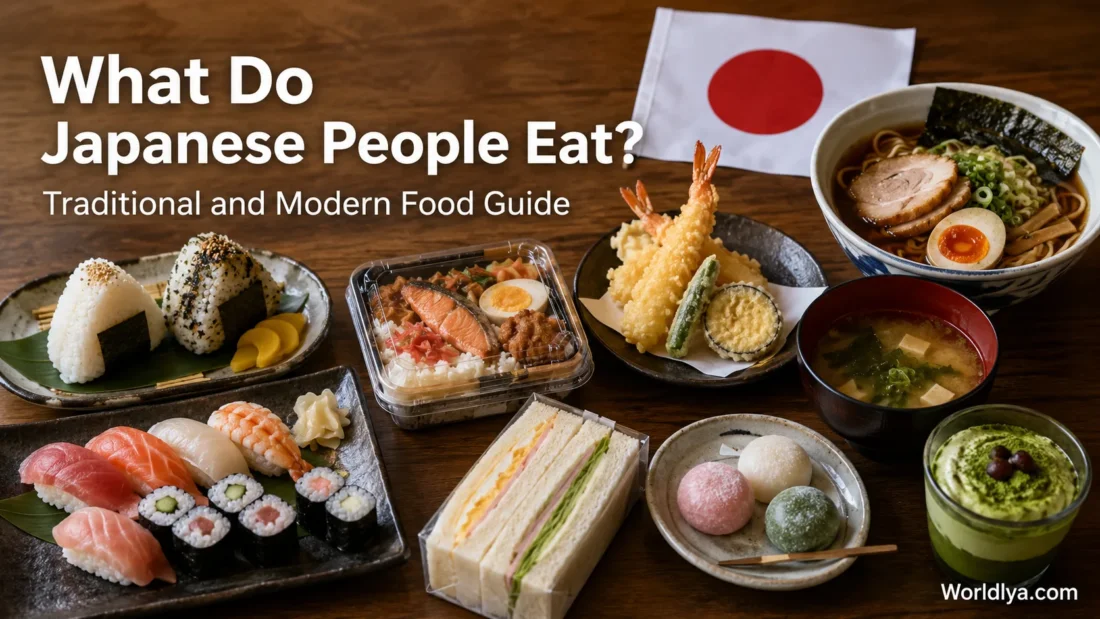
Ask what Japanese people eat and the honest answer is: far more than sushi, ramen, and tempura. A weekday table in Japan may hold rice, miso soup, grilled fish, tofu, and pickles. It may just as easily feature curry rice, pasta, a convenience-store rice ball, a bakery sandwich, or a boxed lunch eaten between appointments. Traditional food remains visible, yet everyday eating is practical, seasonal, regional, and open to outside influences.
The Everyday Answer
Japanese people usually eat a mix of Japanese, Western-style, Chinese-style, and blended dishes. Rice and noodles remain familiar staples, but bread, meat, eggs, dairy products, ready-made meals, coffee, and international foods are also part of ordinary life.
What A Typical Day Of Eating Can Look Like
There is no fixed national menu. Age, region, work schedule, family habits, cooking time, and personal taste all matter. Still, the examples below give a realistic picture of foods commonly seen during a normal day.
| Meal | Traditional Choices | Modern Everyday Choices |
|---|---|---|
| Breakfast | Rice, miso soup, grilled fish, egg, natto, pickles | Toast, yogurt, fruit, cereal, coffee, bakery bread |
| Lunch | Bento, onigiri, soba, udon, teishoku, donburi | Sandwiches, pasta, curry, café meals, convenience-store food |
| Dinner | Rice, soup, fish or meat, vegetables, tofu, pickles | Japanese curry, hamburg steak, pasta, dumplings, hot plate dishes |
| Snacks | Senbei, mochi sweets, fruit, roasted sweet potato | Chocolate, chips, ice cream, cakes, filled buns |
The Meal Pattern Behind Traditional Home Cooking
A classic Japanese meal is often described through ichiju sansai, meaning one soup and three dishes. In practice, the table usually centers on steamed rice, a bowl of soup, one main dish, and one or two smaller dishes. Pickles may sit alongside them.
Rice
Plain steamed short-grain rice provides a calm base for stronger flavors. It is usually served without butter or sauce.
Soup
Miso soup is common, though clear soups and broths also appear. Ingredients can include tofu, seaweed, mushrooms, clams, daikon, or green onion.
Main and Small Dishes
Fish, meat, tofu, or eggs may form the main dish. Vegetables, seaweed, beans, and pickles add contrast in texture and taste.
This pattern is a reference point, not a rule followed at every meal. A busy person may eat one bowl of noodles. A family may share a hot pot. Someone working late may pick up a prepared meal from a supermarket. Japanese food culture has structure, but daily life bends it.
Breakfast: Two Common Directions
Traditional-Style Breakfast
- Steamed rice
- Miso soup with tofu, seaweed, vegetables, or clams
- Grilled fish, often salmon or mackerel
- Tamagoyaki, a rolled omelet that may be sweet or savory
- Natto, fermented soybeans mixed with sauce and mustard
- Tsukemono, small portions of pickled vegetables
A breakfast like this can look like a small dinner to visitors. Each portion is modest, though, and the foods are arranged to give variety rather than a single heavy plate.
Modern-Style Breakfast
Many households choose a faster start: toast with butter or jam, yogurt, fruit, eggs, cereal, coffee, or packaged bread from a bakery or convenience store. Filled breads are especially varied. Common options include red bean paste, curry, custard, cream, sausage, or savory noodles.
A Japanese breakfast is not automatically traditional. Toast and coffee can be just as ordinary as rice and miso soup.
Lunch: Fast, Portable, and Varied
Lunch often needs to fit school, office, travel, or shopping schedules. That makes portable and single-dish foods especially useful.
- Bento: A boxed meal with rice plus small portions of meat, fish, egg, and vegetables.
- Onigiri: A shaped rice portion, often wrapped in nori and filled with salmon, tuna mayonnaise, pickled plum, or kombu.
- Donburi: A bowl of rice topped with ingredients such as chicken and egg, beef and onion, seafood, or tempura.
- Noodles: Ramen, soba, and udon offer quick meals with many regional styles.
- Teishoku: A set meal with rice, soup, a main dish, and small sides.
- Curry Rice: Mild, thick Japanese curry served beside or over rice, sometimes with a cutlet.
What Children May Eat At School
Japanese school lunches are planned as both meals and food education. A menu may include rice or bread, soup, vegetables, fish or meat, and milk. Local ingredients and regional dishes may appear, letting children encounter food traditions through an ordinary school day. Menus vary by school and area.
Useful distinction: a homemade bento, a station bento, and a convenience-store bento may share the same basic idea, yet their ingredients, presentation, price, and purpose can be very different.
Dinner At Home: Familiar Food, Not Restaurant Theater
Restaurant favorites can create a distorted picture of home cooking. Elaborate sushi counters and multi-course meals are only one slice of Japanese food. Home dinners are often simpler and built around ingredients that reheat well, suit rice, or can be shared.
Common Home Dishes
- Nikujaga, a meat-and-potato stew
- Ginger pork with shredded cabbage
- Grilled salmon or mackerel
- Simmered daikon, pumpkin, or root vegetables
- Mapo tofu adapted to Japanese taste
- Japanese curry with rice
Shared Table Favorites
- Nabe hot pot with vegetables, tofu, mushrooms, seafood, or meat
- Sukiyaki with thinly sliced beef, vegetables, tofu, and noodles
- Gyoza with rice and soup
- Okonomiyaki cooked on a hot plate
- Yakiniku with small portions grilled at the table
- Hand-rolled sushi prepared together at home
Foods That Appear Again and Again
Rice and Rice-Based Foods
Steamed rice remains central to many meals, yet it appears in several forms. Onigiri turns it into portable food. Donburi places toppings over it. Ochazuke adds tea or broth. Okayu cooks it into a soft porridge. Fried rice, sushi rice, mixed rice, and curry rice show how flexible the staple can be.
Noodles
Ramen uses wheat noodles in broths seasoned with soy sauce, salt, miso, or other bases. Udon noodles are thick and soft. Soba noodles contain buckwheat and may be served hot or chilled. Somen are thin noodles often eaten cold in warm weather. Pasta also has a firm place in modern Japanese eating, including locally adapted sauces and toppings.
Fish, Meat, Eggs, and Soy Foods
Fish may be grilled, simmered, dried, seared, or served raw. Chicken, pork, and beef are used in cutlets, skewers, stir-fries, curries, hot pots, and rice bowls. Eggs appear in omelets, noodles, sandwiches, rice bowls, and lunch boxes. Tofu, fried tofu, edamame, miso, and natto keep soybeans close to the center of the table.
Vegetables, Mushrooms, Seaweed, and Pickles
Daikon, cabbage, Japanese leek, eggplant, pumpkin, lotus root, burdock, spinach, cucumber, and potatoes are familiar ingredients. Shiitake, shimeji, enoki, and maitake mushrooms bring texture and savoriness. Nori, kombu, and wakame appear in rice dishes, soup, stock, salads, and snacks. Pickles are generally served in small portions as a bright, salty accent.
Fermented Flavors On The Japanese Table
Fermentation gives Japanese cooking much of its depth. Koji, a cultivated mold used on grains or soybeans, supports the making of several familiar seasonings and foods.
| Food or Seasoning | How It Is Commonly Used |
|---|---|
| Miso | Soup, marinades, sauces, dressings, and simmered dishes |
| Shoyu | Seasoning, dipping sauce, broth, glaze, and simmering liquid |
| Natto | Usually mixed and eaten over rice, often at breakfast |
| Tsukemono | Pickled vegetables served beside rice or set meals |
| Rice Vinegar | Sushi rice, dressings, pickles, and lightly seasoned dishes |
The taste often described as umami is not limited to one ingredient. Dashi made with kombu, dried bonito, dried fish, or mushrooms can create it; fermented seasonings add another layer.
Traditional, Western-Style, Chinese-Style, and Blended
Everyday Japanese eating is easier to understand when meals are viewed as several overlapping traditions rather than one sealed cuisine.
| Style | Meaning in Daily Life | Familiar Examples |
|---|---|---|
| Washoku | Japanese-style meals shaped by rice, soup, seasonal foods, dashi, and local traditions | Grilled fish set, simmered vegetables, soba, miso soup |
| Yoshoku | Western-influenced food adapted to Japanese ingredients and serving styles | Omurice, hamburg steak, korokke, napolitan pasta |
| Chuka | Chinese-style dishes interpreted through Japanese restaurant and home cooking | Ramen, gyoza, fried rice, mapo tofu |
| Blended Food | Flexible combinations that do not sit neatly in one category | Curry bread, teriyaki burgers, mentaiko pasta, sushi rolls with modern fillings |
A household might eat toast in the morning, ramen at lunch, and a rice-and-soup dinner. Nobody needs to choose between “traditional” and “modern” for the whole day.
Is Sushi Everyday Food?
No single answer fits everyone. Sushi can be a casual family meal, an affordable conveyor-belt lunch, a supermarket purchase, a celebration food, or a carefully prepared restaurant experience. Many people enjoy it, but it is not the default meal eaten three times a day.
It also helps to remember that sushi refers to seasoned vinegared rice, not simply raw fish. Nigiri, rolls, pressed sushi, scattered sushi, and hand rolls all use the idea differently. Fillings may be raw, cooked, pickled, or entirely plant-based.
Convenience Stores, Supermarkets, and Ready-Made Food
Prepared food is part of normal life in Japan, especially in cities and around transport hubs. Convenience stores, supermarkets, department-store food halls, bakeries, and station shops offer meals for many budgets and schedules.
Popular Grab-and-Go Choices
- Onigiri
- Bento boxes
- Sandwiches
- Salads and cut fruit
- Hot snacks and steamed buns
- Noodles and rice bowls
Why People Use Them
- Long commuting days
- Small households
- Limited cooking time
- Easy portion control
- Wide choice in one stop
- Seasonal and regional items
Supermarkets commonly sell sozai, prepared side dishes such as croquettes, grilled fish, simmered vegetables, salads, dumplings, and fried chicken. A shopper can combine one or two of these with rice and soup at home. That still creates a recognizable Japanese meal without cooking every component from scratch.
Regional Tastes Across Japan
Japan stretches across different climates, coastlines, mountains, and farming areas. Local ingredients and preservation methods have created distinct regional habits. Even the flavor of soup stock, the shape of mochi, and the seasoning of New Year soup can change from place to place.
Hokkaido
Cold-water seafood, dairy products, potatoes, corn, wheat, and warming dishes stand out. Soup curry, miso ramen, grilled seafood, and salmon hot pot are widely associated with the region.
Tohoku
Rice, mountain vegetables, mushrooms, pickles, soups, and preserved foods reflect snowy winters and rural food traditions. Local noodles and mochi dishes vary by prefecture.
Kanto
Tokyo and the surrounding region are linked with soba, tempura, sushi styles, rice bowls, and soy-seasoned broths. The area also absorbs foods from every part of Japan.
Chubu
Mountain produce, seafood from two coasts, noodles, fermented foods, and local miso create sharp contrasts within the region. Aichi is especially known for red miso dishes.
Kansai
Kyoto cooking often highlights seasonal vegetables and careful presentation. Osaka is known for casual foods such as takoyaki and okonomiyaki. Kombu-based dashi has a strong place in the broader regional taste.
Chugoku and Shikoku
Seafood, citrus fruit, noodles, and local versions of savory pancakes appear across the two regions. Kagawa is closely linked with sanuki udon, while Hiroshima has its own layered style of okonomiyaki.
Kyushu and Okinawa
Kyushu offers pork-bone ramen, chicken dishes, seafood, sweet potatoes, and regional hot pots. Okinawan cooking has its own character, with goya champuru, Okinawa soba, tofu, seaweed, pork, and tropical produce.
Eating With The Seasons
Seasonality is visible in home kitchens, restaurant menus, sweets, packaging, and convenience-store shelves. The exact timing varies by region, but certain foods become closely tied to the time of year.
| Season | Foods Often Associated With It |
|---|---|
| Spring | Bamboo shoots, spring greens, strawberries, clam dishes, cherry-themed sweets |
| Summer | Cold noodles, chilled tofu, cucumber, eggplant, watermelon, shaved ice |
| Autumn | Mushrooms, chestnuts, sweet potatoes, persimmons, Pacific saury |
| Winter | Nabe hot pot, daikon, napa cabbage, citrus, warm noodle soups, mochi dishes |
New Year meals are a clear expression of this seasonal thinking. Osechi dishes, ozoni soup with mochi, and other family foods differ by household and region. The point is not one universal recipe; it is the act of sharing foods connected with the occasion.
What Japanese People Drink With Meals
- Green tea: Sencha and other green teas may be served hot or cold.
- Mugicha: Roasted barley tea is especially common as a chilled drink in warm weather.
- Water: Often provided automatically in restaurants.
- Coffee: Common at breakfast, cafés, offices, vending machines, and convenience stores.
- Milk: A familiar part of many school lunch menus.
- Soup: Miso soup or clear soup functions as part of the meal rather than a separate drink.
Sweets and Snacks
Japanese snacks range from delicate tea sweets to playful convenience-store products. Wagashi often use sweet bean paste, rice flour, agar, chestnuts, or seasonal fruit. Mochi-based sweets, dorayaki pancakes, yokan jelly, and manju buns remain familiar choices.
Modern snacks include chocolate, potato chips, cookies, cakes, pudding, ice cream, and limited-edition flavors. Savory snacks such as rice crackers, dried seaweed, nuts, and small seafood products are also common. Portions are often packaged individually, making them easy to share or save.
Food Words That Help You Read A Menu
| Japanese Term | Practical Meaning |
|---|---|
| Gohan | Cooked rice; it can also mean a meal in everyday speech |
| Teishoku | A set meal with several components |
| Don or Donburi | A rice bowl topped with meat, fish, egg, or vegetables |
| Yaki | Grilled, fried, or cooked with direct heat, depending on the dish |
| Nimono | A simmered dish |
| Agemono | Fried food |
| Shiru or Jiru | Soup |
| Tsukemono | Pickled foods, usually vegetables |
A Realistic One-Day Japanese Menu
Morning
Toast, a boiled egg, yogurt, fruit, and coffee.
Lunch
A salmon onigiri, vegetable side dish, miso soup, and tea.
Afternoon Snack
A rice cracker or small sweet with tea.
Dinner
Rice, ginger pork, shredded cabbage, simmered pumpkin, pickles, and miso soup.
The same person might eat a traditional breakfast the next day, curry for lunch, and pasta for dinner. Variety over several days tells you more than a single carefully arranged meal.
Common Myths About Japanese Eating
“Everyone Eats Sushi Daily”
Sushi is popular, but ordinary meals also include curry, noodles, grilled fish, meat dishes, bread, eggs, vegetables, and prepared foods.
“Japanese Food Is Always Light”
Some meals are delicate, while others include fried cutlets, rich ramen, mayonnaise, curry, cheese, or sweet sauces.
“Every Meal Has Many Small Plates”
Set meals use several dishes, but a bowl of ramen, curry rice, or a sandwich can form a complete everyday meal.
“Japanese Food Means Raw Fish”
Grilling, simmering, steaming, frying, pickling, fermenting, and hot-pot cooking are all familiar methods.
Basic Table Manners
- Say itadakimasu before eating when the setting calls for it, and gochisosama deshita after the meal.
- Lift small rice and soup bowls closer to the mouth rather than leaning far over the table.
- Use serving chopsticks for shared dishes when they are provided.
- Avoid placing chopsticks upright in rice or passing food directly from one pair of chopsticks to another.
- Slurping noodles is accepted in many casual settings, though it is never required.
- Return lids and dishes neatly when possible, especially in traditional settings.
Frequently Asked Questions
What Is The Main Food Eaten In Japan?
Rice is the traditional staple, but noodles and bread are also common. Many meals pair rice with soup and side dishes, while lunch may be a noodle bowl, sandwich, curry, or bento.
Do Japanese People Eat Fish Every Day?
Some people eat fish often, while others choose meat, eggs, tofu, or mixed dishes. Frequency depends on household preference, region, age, budget, and schedule.
Is Japanese Breakfast Always Rice and Miso Soup?
No. Traditional breakfasts remain familiar, but toast, yogurt, fruit, cereal, eggs, coffee, and bakery items are ordinary choices too.
What Do Japanese People Eat For A Quick Lunch?
Onigiri, bento, noodles, curry rice, rice bowls, sandwiches, and set meals are common options. Convenience stores and supermarkets make ready-to-eat lunches easy to find.
Is Japanese Food Suitable For Vegetarians?
Rice, tofu, vegetables, noodles, seaweed, and pickles offer many possibilities. Care is still needed because dashi, sauces, and seasonings may contain fish or meat ingredients even when they are not visible.
Why Does Food Differ So Much Between Japanese Regions?
Climate, local crops, coastlines, mountain geography, preservation methods, and household traditions shape regional dishes. Japan’s long north-to-south span creates very different growing and fishing conditions.
Sources
- UNESCO — Washoku, Traditional Dietary Cultures of the Japanese
- Ministry of Agriculture, Forestry and Fisheries — Japanese Cuisine
- Ministry of Agriculture, Forestry and Fisheries — Diversity of Washoku
- Ministry of Agriculture, Forestry and Fisheries — Traditional Foods in Japan
- Ministry of Agriculture, Forestry and Fisheries — An Introduction to Japanese Fermented Foods
- Ministry of Education, Culture, Sports, Science and Technology — Japanese School Lunches and Shokuiku
- Japan National Tourism Organization — Japanese Food Etiquette