
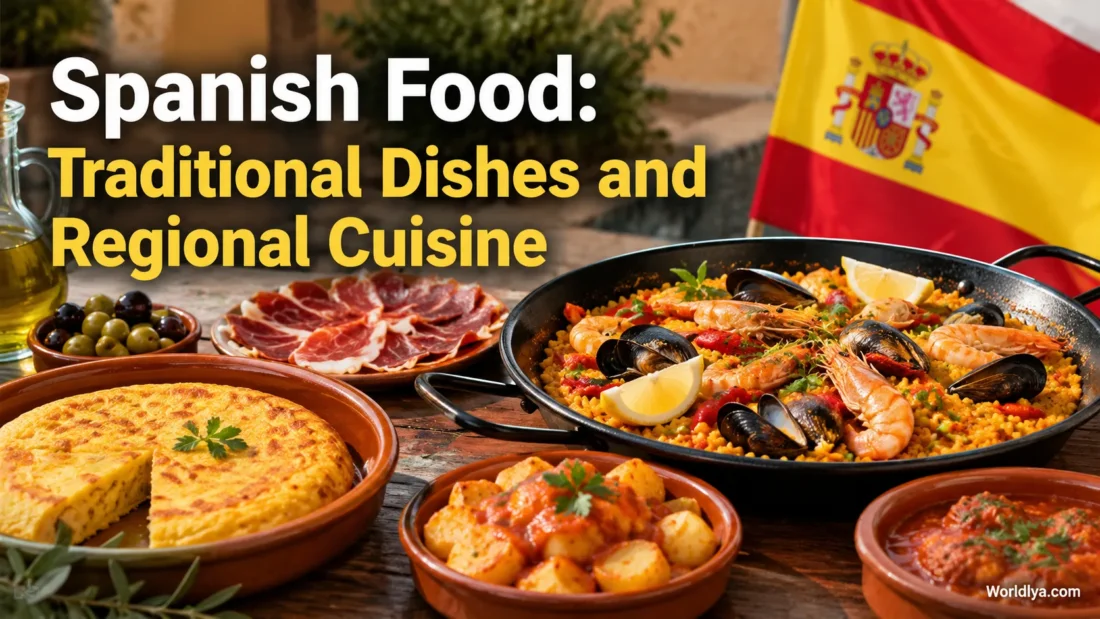
Spanish food changes noticeably as you travel from one part of Spain to another. Valencia is closely tied to rice, Galicia draws heavily on the Atlantic, Asturias is known for beans, cheeses and cider, Andalusia turns ripe vegetables and olive oil into refreshing dishes, and the Basque Country has its own pintxo culture. The result is a country where local ingredients, landscape and cooking habits shape what arrives on the table. Paella and tortilla may be famous internationally, but they are only the first few plates in a much larger menu.
One useful way to understand Spanish food: think region first, dish second. A menu in Valencia may put rice front and center, while a menu in Galicia may lead with octopus, shellfish or fish. Travel inland and stews, roast meats, pulses, cheeses and breads become more visible.
What Makes Spanish Food So Regional?
Spain stretches from Atlantic coasts to Mediterranean shores, high inland plateaus, green northern valleys and subtropical islands. Those landscapes supply different ingredients, and traditional cooking follows them closely. Seafood naturally plays a larger role along many coastal areas, while inland kitchens have long made good use of pulses, bread, vegetables, cheeses and slow-cooked dishes.
Olive oil appears throughout much of Spanish cooking, especially in Mediterranean and southern regions. Tomatoes, peppers, garlic, onions, beans, chickpeas, rice, potatoes, bread and seasonal vegetables also recur in countless recipes. Yet the same ingredient can take very different forms. A tomato might end up in Andalusian gazpacho, Valencian rice, Catalan pa amb tomàquet or a simple market salad.
Food also has a strong social side. UNESCO’s description of the Mediterranean diet goes beyond individual ingredients and includes the preparation, sharing and communal enjoyment of food. That idea makes sense at a Spanish table, where tapas, shared dishes and leisurely meals often turn eating into part of the day’s social rhythm.
A Regional Food Map Of Spain
| Region | Foods To Know | What Stands Out |
|---|---|---|
| Valencia | Paella Valenciana, arroz a banda, fideuà, horchata | Rice and Mediterranean produce |
| Andalusia | Gazpacho, salmorejo, pescaíto frito, ajoblanco | Olive oil, vegetables and coastal fish |
| Galicia | Pulpo a feira, empanada, caldo gallego, seafood | Atlantic seafood and simple preparations |
| Asturias | Fabada, Cabrales cheese, cider, casadielles | Beans, dairy and slow-cooked dishes |
| Basque Country | Pintxos, bacalao al pil-pil, grilled fish, Gilda | Small plates and carefully handled ingredients |
| Catalonia | Pa amb tomàquet, suquet, calçots, crema catalana | Seafood, vegetables and sea-and-mountain combinations |
| Madrid | Cocido madrileño, tortilla, churros | Stews, tapas and city eating traditions |
| Castilla y León | Lechazo, roast suckling pig, cheeses | Roasting and inland produce |
| Castilla-La Mancha | Pisto manchego, Manchego cheese, migas | Peppers, tomatoes, bread and sheep’s cheese |
| Aragón | Ternasco, pollo al chilindrón, borage | Lamb, vegetables and hearty home cooking |
| Extremadura | Torta del Casar, migas, paprika-based dishes | Cheese, cured products and countryside ingredients |
| Canary Islands | Papas arrugadas, mojo, gofio, sancocho | Island ingredients and distinctive sauces |
| Balearic Islands | Sobrasada, Mahón cheese, ensaimada | Mediterranean island produce |
Spanish Dishes You Will See Across The Country
Regional cooking matters, but several foods cross regional lines and appear on menus throughout Spain. They may be prepared a little differently from one kitchen to another, which is part of the fun.
- Tortilla de patatas: a thick omelette built around eggs, potatoes and olive oil. Onion is common in many versions, while others leave it out.
- Croquetas: crisp on the outside and creamy inside, with fillings that can include ham, chicken, cod, mushrooms or cheese.
- Patatas bravas: fried potato pieces served with a seasoned sauce. The sauce style changes from place to place.
- Jamón: thinly sliced cured ham is served on its own, with bread or as part of a larger selection of small plates.
- Churros: fried dough commonly eaten for breakfast or as a snack, often alongside thick hot chocolate.
Tapas Are A Way Of Eating, Not One Dish
The word tapa describes a small portion rather than a single recipe. A tapa might be olives, tortilla, cheese, croquetas, anchovies, potatoes or something prepared specifically by the bar. Larger portions are often called raciones.
Going for tapas can mean trying several foods over the course of one outing, sometimes moving between bars and sampling what each place does well. This makes tapas especially useful for anyone who wants to explore Spanish cooking without committing to one large dish.
Valencia: Rice, Paella and Mediterranean Produce
Few dishes are more closely linked with a Spanish region than paella is with Valencia. Rice sits at the center of Valencian cooking, and paella belongs to a much wider family of regional rice dishes rather than standing alone.
Traditional paella valenciana commonly brings together rice with ingredients such as chicken, rabbit, local beans, tomato, olive oil, saffron and other seasonings. Variations exist, and Valencia also offers seafood rice dishes, oven-baked rice, brothy rice and preparations in which the rice absorbs stock and ingredients in very different ways.
Worth knowing: seeing seafood in a paella does not mean every traditional Valencian paella contains seafood. Paella Valenciana refers to a more specific regional preparation, while Spain’s rice cooking includes many other combinations.
Valencia also has horchata de chufa, a chilled drink made from tiger nuts, and fideuà, a dish associated with the Valencian coast that replaces rice with short noodles. Together they show why reducing Valencian food to a single plate misses much of what the region offers.
Andalusia: Gazpacho, Salmorejo and Fried Fish
Warm weather, olive groves, vegetable gardens and long coastlines shape much of Andalusian cooking. Two dishes often confused with each other are gazpacho and salmorejo.
Gazpacho is usually lighter and more fluid, with tomato joined by ingredients such as pepper, cucumber, garlic, olive oil and vinegar. Salmorejo, especially associated with Córdoba, is thicker and more spoonable, relying heavily on tomato, bread and olive oil. It is commonly finished with toppings such as chopped egg and cured ham.
Andalusia has other chilled preparations too. Ajoblanco, traditionally made with almonds, garlic, bread, olive oil and vinegar, offers a very different flavor despite belonging to the same broad family of cool soups.
Along the coast, pescaíto frito brings small pieces of fish to the table lightly coated and fried. The exact fish depends on location and availability. This direct treatment of fresh seafood is common in southern coastal cooking: keep the preparation simple and let the ingredient carry the dish.
Galicia: Octopus, Shellfish and Simple Seafood Cooking
Galicia faces the Atlantic in Spain’s northwest, and its food reflects both sea and countryside. Seafood has a particularly visible place. Mussels, clams, scallops and other shellfish appear alongside fish dishes, while inland cooking adds vegetables, potatoes, beans and beef.
Pulpo A Feira
Pulpo a feira, also widely known as Galician-style octopus, is one of the region’s best-known dishes. Cooked octopus is cut into pieces and traditionally dressed with olive oil, coarse salt and paprika. It is often served on a wooden plate.
The recipe is short, which puts attention on texture, cooking and ingredient quality. That same preference for straightforward preparation appears across much of Galician seafood cooking.
Another useful dish to know is empanada gallega, a baked filled pie that can hold fish, seafood, meat or vegetables. Caldo gallego moves in a different direction: it is a comforting broth-based dish made with ingredients such as potatoes, beans and leafy greens, with recipes varying by household.
For dessert, Tarta de Santiago is an almond-based cake strongly associated with Galicia and Santiago de Compostela.
Asturias: Fabada, Cider and Cheese
Asturias sits between mountains and the Bay of Biscay, and its traditional food comfortably moves between dairy, meat, beans and seafood. Its best-known plate is fabada asturiana.
Fabada starts with large white beans called fabes. Traditional versions cook them slowly with cured pork products such as chorizo, morcilla and pork shoulder. The beans absorb the cooking liquid until the dish becomes rich and deeply flavored.
Cheese is another major part of Asturian food culture. Cabrales is the internationally familiar name, but Asturias produces many cheeses with different milk types, textures and aging styles.
Then there is cider. Asturian cider is traditionally poured from height in a technique called escanciar. The pour aerates a small amount before it is drunk. Cider houses, known as sidrerías, combine the drink with food and social dining, so cider belongs as much to the table as to the glass.
Basque Country: Pintxos, Grilled Fish and Pil-Pil
In the Basque Country, the small bites found across bar counters are usually called pintxos. Some are simple combinations placed on bread; others are individually prepared small dishes. Moving between bars to try different pintxos is a social eating tradition in cities and towns across the region.
One of the simplest examples is the Gilda: an olive, salted anchovy and pickled Ibarra pepper assembled on a skewer. Three main ingredients create a bite that is salty, tangy and lightly hot.
Fish is equally important. Bacalao al pil-pil uses cod and a sauce formed through the interaction of olive oil, garlic and the natural gelatin released by the fish. Grilled fish is another recurring part of coastal Basque cooking, particularly in seaside communities.
Pintxo or tapa? Both describe small portions, but pintxo is the local term strongly associated with Basque bar culture. You will also see the spelling pincho elsewhere in Spain.
Catalonia: Pa Amb Tomàquet, Suquet and Calçots
Catalan food draws from both Mediterranean coastline and inland farmland. That creates a broad range of dishes, from fish stews to grilled vegetables and hearty preparations that combine ingredients from sea and land.
Pa amb tomàquet is among the simplest foods to understand and one of the most useful to know. Bread is rubbed or topped with ripe tomato, then finished with olive oil and salt. Garlic may also appear. It can accompany cured meats, cheeses or other dishes.
On the coast, suquet refers to a fish stew traditionally associated with fishing communities. Recipes vary, but fish, potatoes and a seasoned cooking liquid form the base of many versions.
When calçots are in season, these long green onions become the center of a social meal known as a calçotada. They are grilled until the outside chars, peeled and eaten with sauce. It is a wonderfully hands-on way to see how closely seasonal produce and social eating can meet in one Catalan tradition.
Madrid: Cocido, Tapas and Churros
Madrid’s position in the center of Spain has made its dining scene a meeting point for foods from many regions. The city still has dishes that are strongly identified with Madrid, and cocido madrileño sits near the top of that list.
Cocido is a chickpea-based stew prepared with vegetables and several meat components. A traditional Madrid serving can divide it into separate stages: broth with noodles first, chickpeas and vegetables next, followed by the meats. Restaurants may vary the presentation, but the multi-part serving is part of the dish’s identity.
Madrid is also an easy place to experience Spain’s bar-food culture. Tortilla, croquetas, cured ham and other small plates are widely available, while churros con chocolate remain a familiar breakfast or snack combination.
Castilla y León, Castilla-La Mancha, Aragón and Extremadura
Travel through Spain’s interior and the food often becomes more closely associated with roasting, pulses, bread, cheeses, vegetables and long-cooked dishes. Each region has its own identity, so grouping them together only works as a starting point.
Castilla y León
Lechazo, milk-fed lamb roasted in an earthenware dish, is closely associated with Castilla y León. Roast suckling pig also has strong ties to parts of the region. These dishes place the emphasis on controlled roasting rather than complicated seasoning.
Castilla-La Mancha
Pisto manchego turns vegetables such as tomato, peppers and courgette into a soft cooked mixture somewhat similar to other Mediterranean vegetable stews. It may be served on its own or accompanied by egg.
The region is equally associated with Manchego cheese, made from sheep’s milk, while bread-based dishes such as migas show how traditional kitchens found flavorful uses for everyday staples.
Aragón
Lamb has an important place in Aragón, especially ternasco. Another recognizable dish is pollo al chilindrón, where chicken is cooked with ingredients including tomato, onion and red pepper. Aragón also has a strong vegetable tradition, with produce such as borage appearing in regional cooking.
Extremadura
Extremadura is known for countryside produce, cheeses and cured foods. Torta del Casar is one of its most recognizable cheeses. Made from sheep’s milk and traditionally set with thistle rennet, its interior can become soft enough to scoop or spread.
Canary Islands: Papas Arrugadas, Mojo and Gofio
The Canary Islands have a culinary identity that differs clearly from mainland regions. Local potatoes, fish, cheeses, tropical fruits and gofio all play visible roles.
Papas arrugadas are small potatoes cooked in heavily salted water until their skins wrinkle and a light salt coating forms. They are usually served with mojo.
- Mojo rojo or mojo picón: commonly includes ingredients such as pepper or paprika, garlic, cumin, olive oil and vinegar.
- Mojo verde: usually gets its green color and fresh flavor from herbs such as coriander or parsley.
Gofio is flour made from toasted grains, commonly maize or wheat. It can appear in savory dishes, be mixed into broths or be used in sweets. Its toasted flavor makes it one of the easiest Canary Island ingredients to recognize once you have tried it.
Balearic Islands: Sobrasada, Mahón Cheese and Ensaimada
Mallorca, Menorca, Ibiza and Formentera share a Mediterranean setting, yet each island contributes its own foods and local habits.
Sobrasada is especially associated with Mallorca. This soft cured sausage is made from pork with paprika, salt and spices. It is often spread on bread and can also become an ingredient in cooked dishes.
Menorca is closely associated with Mahón-Menorca cheese, while Mallorca is famous for the spiral-shaped ensaimada. Traditional ensaimada dough uses flour, water, sugar, eggs, starter and pork lard, known locally as saïm, which gives the pastry its name.
How Spanish Rice Dishes Differ
Paella gets so much attention that it can hide how varied Spanish rice cooking really is. In Valencia and other Mediterranean areas, you may encounter several textures and cooking styles.
- Paella: cooked in a wide, shallow pan so the rice forms a relatively thin layer.
- Arroz seco: rice cooked until the liquid is absorbed, leaving a drier finished dish.
- Arroz meloso: creamier and looser than dry rice without becoming a full soup.
- Arroz caldoso: served with noticeably more broth.
- Arroz al horno: finished in the oven rather than cooked entirely on the stovetop.
Once you recognize these words, a rice menu becomes much easier to understand. The texture can matter almost as much as the ingredients.
Spanish Soups and Stews Change With The Season
One of the clearest seasonal shifts in Spanish cooking is the move between cool vegetable dishes and warming bean or chickpea preparations.
During warm weather, gazpacho and salmorejo turn ripe tomatoes and olive oil into chilled meals or starters. When cooler weather arrives, dishes such as fabada, cocido and regional bean stews become more appealing.
Pulses are especially useful for understanding traditional Spanish home cooking. Chickpeas appear in several cocidos, white beans define fabada, and lentils have countless household preparations. These foods may receive less international attention than paella, yet they represent everyday cooking across large parts of Spain.
Cheese In Spain Is Deeply Regional
Spain’s cheese selection changes dramatically from place to place. Sheep, cow and goat milk are all used, sometimes individually and sometimes in blends.
| Cheese | Region | Milk |
|---|---|---|
| Manchego | Castilla-La Mancha | Sheep |
| Cabrales | Asturias | Traditionally cow, sheep and/or goat milk depending on the cheese |
| Idiazabal | Basque Country and Navarre | Sheep |
| Torta del Casar | Extremadura | Sheep |
| Mahón-Menorca | Menorca | Cow |
If you enjoy cheese, ordering a regional cheese rather than a generic cheese board is an easy way to connect the meal with the place you are visiting.
Desserts and Sweet Foods Worth Knowing
Spanish sweets are just as regional as savory dishes. Almonds, eggs, dairy, pastry dough, honey and sugar appear often, but each region uses them differently.
- Tarta de Santiago: almond cake from Galicia.
- Crema catalana: Catalan custard with a caramelized sugar surface.
- Ensaimada: spiral pastry strongly associated with Mallorca.
- Casadielles: Asturian pastries traditionally filled with a sweet nut mixture.
- Churros con chocolate: churros paired with thick hot chocolate and found in many parts of Spain.
- Marzipan from Toledo: an almond-and-sugar sweet closely identified with the city and Castilla-La Mancha.
Useful Spanish Food Words To Recognize
| Word | Meaning On A Menu |
|---|---|
| Tapa | A small portion or snack |
| Ración | A larger portion, often suited to sharing |
| Pincho / Pintxo | A small individual portion; pintxo is strongly associated with Basque food culture |
| A la plancha | Cooked on a hot flat grill or griddle |
| Asado | Roasted |
| Frito | Fried |
| Guiso | Stew or stewed preparation |
| Arroz | Rice |
| Marisco | Shellfish |
| Pescado | Fish |
Choosing What To Eat In Different Parts Of Spain
A simple rule works surprisingly well: look for the dish whose name points to the place you are in. In Valencia, explore the rice section. In Galicia, see what seafood is offered. In Asturias, look for fabes and local cheeses. In the Basque Country, try several pintxos instead of choosing only one. In Andalusia during warm weather, chilled tomato dishes fit naturally with the climate.
It also helps to notice seasonal produce. Tomatoes taste different when they are naturally in season. Calçots appear only during their season. Fish availability can change. Local cheeses come in different stages of maturity. A regional menu starts making more sense when you read it as a reflection of what grows, grazes or is caught nearby.
A good first tasting route: start with tortilla and croquetas, try a Valencian rice dish, compare gazpacho with salmorejo, order Galician octopus, sample Asturian cheese, explore Basque pintxos, then finish with a regional dessert. You will encounter several very different sides of Spanish cooking without treating the country as if every region eats the same food.
Sources
- Spain.info — Dishes From Traditional Spanish Cuisine
- Spain.info — Famous Spanish Recipes
- Official Tourism Website Of The Region Of Valencia — Paella and Rice Dishes
- Spain.info — The Cuisine Of Andalusia
- Spain.info — The Cuisine Of Galicia
- Spain.info — The Cuisine Of Asturias
- Official Tourism Website Of The Basque Country — Pintxos and Txikiteo
- Spain.info — The Cuisine Of Catalonia
- Spain.info — The Cuisine Of The Canary Islands
- Spain.info — The Cuisine Of The Balearic Islands
- UNESCO Intangible Cultural Heritage — Mediterranean Diet