
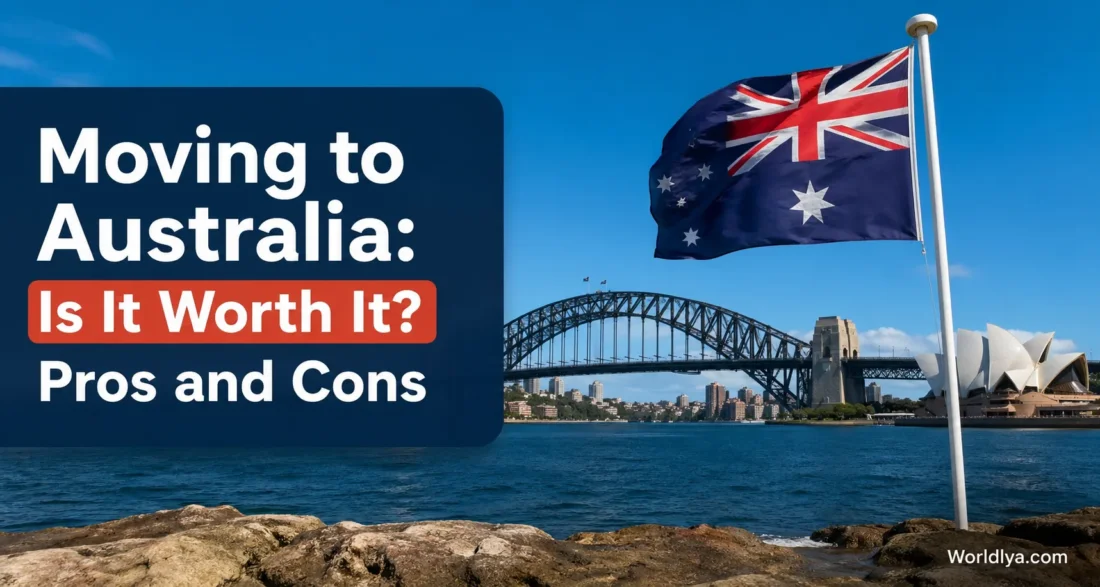
Moving to Australia can be worth it if your work, income, visa route, and day-to-day expectations line up with the country’s real costs. The draw is easy to understand: good wages in many skilled fields, public health access for eligible residents, English-speaking daily life, beach-and-city living, and a calm outdoor rhythm that many newcomers love. The catch? housing, distance, visa rules, and settling-in costs can feel heavier than expected. Australia is not a magic reset button. It is more like a large, sunny house: beautiful rooms, plenty of space, but you still need to check the rent before you move in.
A Practical Answer: It Depends on Your Plan
Yes, moving to Australia can be worth it for people who arrive with a realistic budget, a clear visa path, strong English, and work skills that match local demand. It can be a very good fit for skilled workers, families who value space and outdoor time, international students with a long plan, and people who prefer a balanced lifestyle over constant rush.
It may not feel worth it if you expect cheap housing in major cities, instant permanent residency, or the same social circle you had back home. The move rewards preparation. It punishes guesswork.
The Real Question: What Kind of Life Do You Want?
“Worth it” is not only a money question. A higher salary can still feel tight if rent takes a large bite. A beautiful city can still feel lonely if your family is far away. A visa pathway can look simple online, then become slow once documents, assessments, and timing enter the room.
A better question is this: does Australia match the life you are trying to build for the next three to five years? Not the holiday version. The normal Tuesday version. Work, rent, groceries, school runs, doctor appointments, public transport, weather, and evenings after a long day.
If those daily pieces fit, Australia can feel generous. If they do not, even a sunny weekend will not fix the stress.
Why People Move to Australia
Australia attracts newcomers for practical reasons, not just postcard reasons. The beaches help, yes. So does the light. But most people move because they see a stronger path for work, study, family, safety in daily routines, or long-term settlement.
Work and Income Potential
Australia has clear wage rules and many skilled industries where experience matters. Full-time adult average weekly ordinary time earnings were reported at $2,051.10 in November 2025, while the National Minimum Wage from 1 July 2025 is $24.95 per hour or $948 per week before tax for employees not covered by an award or agreement.
Health Care for Eligible Residents
Medicare can reduce health care costs for people who meet the enrolment rules, including Australian citizens, New Zealand citizens, permanent residents, people applying for permanent residency, and some temporary residents covered by an order.
Outdoor Living
Many people enjoy the daily feel of Australia: parks, beaches, walking tracks, local sport, weekend markets, and bright evenings. It is not all beach weather everywhere, but the outdoor culture is real.
Study and Family Pathways
Australia is a major study destination, and the school system follows the Australian Curriculum across Foundation to Year 10. For students on a Student visa, work hours are generally capped at 48 hours every two weeks during study periods, with different rules during breaks.
The Pros of Moving to Australia
1. Strong Workplace Protections
Australia has a formal workplace system with minimum pay rules, awards, penalty rates in many jobs, and protections that apply to workers regardless of where they were born. That does not mean every job is perfect. It does mean workers have a rulebook to point to.
For a newcomer, this matters. Starting fresh is hard enough without guessing what fair pay should look like. Before accepting a job, check the award, salary, overtime expectations, and whether superannuation is included or paid on top.
2. Skilled Workers Can Build a Long-Term Route
Skilled migration is one of the main reasons people consider Australia. Temporary and provisional skilled visas can allow people to work in skilled roles for longer periods, and some visas may lead toward permanent residence if the person meets the rules.
The best candidates usually do not start with “I want Australia.” They start with “Does my occupation, experience, English level, age, and document history fit a real visa route?” That small shift saves time and money.
3. Everyday Life Can Feel Spacious
Even in busy cities, Australia often gives people more breathing room than they expect: wider suburbs, large parks, coastal walks, and a weekend culture that does not always revolve around shopping malls. For families, this can be a real upgrade in daily mood.
The country also offers different lifestyles in different places. Sydney feels fast and expensive. Melbourne has a strong food, arts, and education pull. Brisbane feels warmer and more relaxed. Perth has distance, beaches, and space. Adelaide can suit people who want a smaller-city rhythm. Regional areas may offer lower housing pressure, but job choice can be narrower.
4. The Climate Choice Is Wider Than Many Expect
Australia is not one climate. The Bureau of Meteorology classifies the country through temperature, humidity, vegetation, and seasonal rainfall patterns. In plain English: Darwin, Hobart, Perth, Sydney, Melbourne, and Brisbane do not feel like the same place.
This is useful for movers. If you dislike humid heat, do not choose a city only because the job sounds good. If you want mild winters, do not assume every region offers them. Climate is not a side detail; it shapes energy bills, clothing, commuting, sleep, and weekend life.
5. English Makes the First Months Easier for Many
For English speakers, Australia removes one large barrier: daily language. You can open a bank account, speak to a school, read rental notices, compare mobile plans, and talk to a doctor without translating every sentence.
That said, workplace English and casual English are not the same thing. Accents, local slang, and fast office conversations can still take time. Nobody should feel embarrassed by that. Settling in is a skill, not a test.
6. Families Often Like the Mix of School, Sport, and Space
Parents often look at Australia because it combines education, local sport, public parks, and relatively calm suburban routines. Children can adjust well when the family chooses the right suburb, school access, commute, and budget.
The mistake is choosing a city first and asking school questions later. A better order is: job location, commute, rent, school zone or enrolment rules, then lifestyle extras. It is less glamorous. It works.
The Cons of Moving to Australia
1. Housing Can Be the Biggest Pressure Point
Housing is often the part that surprises newcomers. Official inflation data for February 2026 showed the Housing group up 7.2% over 12 months, with rents up 3.8%. These are national figures, not a promise about any one suburb. In popular city areas, the lived experience can be tougher than the average suggests.
Rent applications may ask for ID, references, proof of income, and rental history. A new arrival may not have all of that ready. That is why temporary accommodation for the first few weeks can be useful, even if it costs more per night. It gives you time to inspect homes instead of grabbing the first place out of panic.
2. The First Six Months Can Be Expensive
The plane ticket is only the visible part. The first months can include bond, rent in advance, furniture, utility connections, transport, insurance, medical costs, school items, childcare deposits, visa fees, skills assessments, document translations, and professional licences.
MoneySmart’s moving-out advice gives a useful way to think about this: separate ongoing costs from one-off costs. Australia may offer good wages, but you need cash before the first full pay cycle lands.
3. Visa Rules Are Not “Set and Forget”
Visa conditions shape work rights, study rules, Medicare access, family options, and long-term planning. Processing times also vary. In March 2026, the Department of Home Affairs listed median processing times of 10 months for Skilled Permanent visas, 63 days for Skilled Temporary visas, and 33 days for Student visas in the main category table. Some cases finish faster. Some take longer.
This is why “I know someone who got it quickly” is not a plan. Your occupation, sponsor, documents, health checks, application quality, and program settings can all change the timeline.
4. Distance Is Real
Australia is far from many countries. That sounds obvious until the first family birthday, wedding, or holiday season arrives. Long flights cost money and energy. Time zones can make video calls awkward. You may love your new life and still miss ordinary Sunday lunch back home.
This is not a reason to avoid Australia. It is a reason to plan emotionally, not just financially. People who settle better often build routines quickly: local clubs, gym classes, parent groups, volunteering, language groups, or weekly meetups.
5. Career Moves May Not Be Straight Across
Some occupations require local registration, licensing, checks, or Australian experience. A strong CV overseas may still need adjustment. Employers may ask for local references. Certain sectors may use different tools, standards, or job titles.
Before moving, search actual job ads in your field. Look at salary ranges, required licences, remote-work options, and whether employers sponsor visas. A dream becomes clearer when it has job titles attached to it.
6. City Choice Can Make or Break the Move
Australia is large, and the best city for one person can be the wrong city for another. A nurse, software engineer, chef, student, family with toddlers, and remote worker may all need different locations.
Think of the city as a shoe. The expensive one is not always the best one. The right one is the one you can walk in every day.
Pros and Cons Table
| Area | Main Upside | Main Trade-Off | Smart Move Before You Go |
|---|---|---|---|
| Work | Clear wage rules and skilled job routes | Local registration or Australian experience may be needed | Compare real job ads, not only salary averages |
| Money | Good earning potential in many roles | Rent, utilities, and setup costs can bite early | Bring a settlement fund for the first months |
| Health | Medicare can help eligible residents lower costs | Eligibility depends on visa and residency status | Check Medicare rules before relying on it |
| Family | Schools, parks, sport, and outdoor routines | School zones, childcare, and commute can shape costs | Choose suburb after checking school and transport links |
| Lifestyle | Outdoor culture, beaches, nature, space | Distance from family and friends can feel heavy | Build social routines in the first 90 days |
| Climate | Many climate choices across the country | Heat, humidity, cold snaps, or seasonal rain vary by region | Check the city’s actual climate, not just Australia’s image |
City Fit: Which Part of Australia May Suit You?
There is no single “best” city in Australia. There is only a better match for your job, budget, weather taste, and family needs. Use this section as a first filter, then check current rent and job listings.
| Place | Often Suits | Watch First |
|---|---|---|
| Sydney | Finance, tech, corporate careers, people who want a large global city | High housing pressure and longer commutes |
| Melbourne | Education, health, design, food culture, city life with variety | Weather changes, inner-city rent, commute patterns |
| Brisbane | Warm climate, growing job market, families wanting a relaxed pace | Summer humidity and suburb-by-suburb transport access |
| Perth | Mining, energy, health, beach lifestyle, people who value space | Distance from east-coast cities and overseas flights |
| Adelaide | Smaller-city living, students, families, people wanting calmer streets | Job market size in some fields |
| Canberra | Public service, research, education, planned-city living | Cold winters and a more specialised job base |
| Regional Areas | People seeking space, certain sponsored jobs, slower pace | Fewer employers, transport limits, distance from specialist services |
Money Check: Can You Afford the Move?
A move to Australia should be priced like a project, not a holiday. The first budget should include three layers: arrival costs, monthly living costs, and backup money.
- Arrival costs: flights, temporary accommodation, rental bond, rent in advance, furniture, transport from the airport, phone plan, internet setup, and utility connections.
- Monthly costs: rent, groceries, electricity, gas, water if applicable, phone, internet, public transport or car costs, insurance, childcare, school needs, and medical expenses.
- Backup money: enough to handle job delays, rental delays, document issues, or a move to a different suburb.
Simple Budget Test
If one month of rent, bond, basic furniture, and living costs would empty your savings, the move is too tight. A good plan leaves room for delays. Australia is easier to enjoy when every unexpected bill does not feel like a cliff edge.
Visa Reality: Start With Eligibility, Not Emotion
The visa should be the first serious check. A beautiful plan without a valid visa route is just a mood board. Australia has several broad pathways, including skilled visas, employer-sponsored routes, student visas, partner and family-related visas, and working holiday options for eligible passport holders.
For skilled workers, the early questions are practical:
- Is your occupation relevant to an Australian skilled list or employer need?
- Do you need a skills assessment?
- Is your English test score strong enough for the route you want?
- Do you need state nomination, employer sponsorship, or regional options?
- Can your partner or children be included, and what rights would they have?
- How long can you support yourself if processing takes longer than expected?
Do not treat visa advice from social media as final. Use official pages first, then consider a registered migration professional if your case has moving parts.
Work Life in Australia: What Newcomers Should Expect
Australian workplaces can feel direct but usually informal. First names are common. Meetings may be relaxed, yet deadlines still matter. People often value being on time, speaking clearly, and doing what you said you would do.
Work-life balance depends on the field. Some jobs are intense. Others protect personal time better than newcomers expect. The safest approach is to ask clear questions before accepting a role:
- What are the normal weekly hours?
- Is overtime paid, unpaid, or built into the salary?
- Is the role covered by an award or agreement?
- How much annual leave is offered?
- Is hybrid work allowed?
- Is superannuation paid on top of the base salary?
Health Care: Good Support, But Check Your Status
Medicare is one of the reasons Australia is attractive for eligible residents. It can help with the cost of seeing doctors and accessing health services. But eligibility is not automatic for every newcomer.
Before moving, check whether your visa status allows Medicare enrolment. If not, budget for private health insurance and out-of-pocket costs. International students and some temporary visa holders may have separate insurance requirements.
Also think beyond emergencies. Do you need regular prescriptions? Dental care? Glasses? A specialist? Bring medical records, vaccination records, and prescription details in English where possible. This small folder can save weeks of confusion.
Students: Australia Can Work, But the Budget Must Be Honest
Australia can be a strong study choice for students who understand the full cost. Tuition is only one part. Rent, food, transport, health cover, books, and visa conditions matter just as much.
Student visa holders can usually work up to 48 hours every two weeks while studying and unlimited hours during study breaks, but work income should not be the only pillar of the budget. Part-time hours can help. They should not be the rescue plan.
A student move is more likely to feel worth it when the course connects to a real career path, the city fits the budget, and the student has enough savings to handle the first term without panic.
Families: Think in Suburbs, Not Just Cities
Families should plan Australia at suburb level. Two families can live in the same city and have completely different experiences because one has a short commute, nearby school, and park access, while the other spends too much time in traffic.
Before choosing an area, compare:
- school enrolment rules and catchment areas;
- childcare availability and fees;
- public transport to work;
- distance to supermarkets, clinics, and parks;
- rental supply for the home size you need;
- weekend activities that do not require spending every time.
The family version of “worth it” is often quiet. Less rushing. More outdoor time. A school routine that feels stable. A home that does not swallow the whole income.
Who Is Australia Worth It For?
Australia Is More Likely to Suit You If…
- You have a visa route that matches your profile.
- Your job skills fit real demand in a city or region.
- You can afford the first months without relying on luck.
- You like outdoor life, casual social settings, and practical routines.
- You are ready to rebuild your social circle from scratch.
- You can be flexible about city, suburb, and first job.
Australia May Feel Harder If…
- You expect major-city rent to be easy on a modest income.
- You have no savings buffer after travel and visa costs.
- Your occupation needs local licensing and you have not checked the process.
- You depend heavily on family support nearby.
- You dislike long travel distances.
- You are moving only because the idea feels exciting, not because the plan works.
A Practical 90-Day Arrival Plan
The first three months shape how the move feels. A simple plan can make Australia feel less like a maze.
| Time | Focus | What to Do |
|---|---|---|
| Before Arrival | Documents and money | Prepare visa documents, job records, medical records, school papers, savings plan, and temporary accommodation. |
| Week 1 | Basic setup | Sort phone, bank, tax file number if eligible, transport card, grocery options, and local appointments. |
| Weeks 2–4 | Housing and work | Inspect rentals, adjust your CV, apply for jobs, and learn commute patterns before signing a lease. |
| Month 2 | Routine | Choose a GP if eligible, compare utilities, join local groups, and track actual spending. |
| Month 3 | Review | Check whether the city, job market, rent, and lifestyle match the plan. Adjust early if needed. |
Common Mistakes to Avoid
- Choosing Sydney or Melbourne by default. They may be right for you, but they are not the only serious options.
- Using gross salary as the full story. Compare take-home pay, rent, transport, childcare, insurance, and utilities.
- Ignoring visa conditions. Work rights, study rules, and health access can change the whole plan.
- Underestimating the rental process. Prepare documents before inspections.
- Moving without a social plan. A good job does not automatically create friends.
- Forgetting climate differences. Australia is not one weather pattern.
Final Verdict: Is Moving to Australia Worth It?
Moving to Australia is worth it for many people, but only when the move is planned around real numbers and real rules. The country can offer a strong mix of work opportunity, outdoor living, family-friendly routines, and long-term settlement options. It can also test your budget, patience, and ability to start again.
The best version of the move is not rushed. It starts with visa eligibility, then job demand, then city choice, then suburb and budget. When those pieces fit together, Australia can feel less like a gamble and more like a well-packed suitcase: still heavy, but ready for the trip.
Best One-Sentence Rule
If your visa path is realistic, your job plan is grounded, and your first-year budget survives rent and setup costs, Australia can absolutely be worth it.
FAQ
Is Australia Expensive for New Migrants?
Yes, the first months can be expensive because of rent, bond, temporary accommodation, furniture, utilities, transport, and visa-related costs. The move feels safer when you arrive with a savings buffer, not only a job hope.
Is It Easy to Get a Job in Australia?
It depends on your occupation, English level, location, visa work rights, and whether your field needs local registration. Skilled workers in areas with real demand may find better options, but most newcomers should expect a search period.
Which Australian City Is Best for Newcomers?
There is no single best city. Sydney and Melbourne suit many career paths but can be expensive. Brisbane, Perth, Adelaide, Canberra, and regional areas may suit different budgets, climates, and job needs. The best city is the one where work, rent, commute, and daily life fit together.
Can New Migrants Use Medicare?
Some can, some cannot. Medicare eligibility depends on residency and visa status. Permanent residents, people applying for permanent residency, Australian citizens, New Zealand citizens, and some eligible temporary residents may be able to enrol.
Is Australia Good for Families?
Australia can be a good fit for families that choose the right suburb, school access, commute, and budget. The country offers outdoor routines and many community activities, but childcare, rent, and transport should be checked before choosing where to live.
Should I Move to Australia Without a Job?
It is possible in some visa situations, but it adds risk. A safer plan includes savings, strong job research, a realistic timeline, and a clear understanding of your work rights. For families, moving without income lined up needs extra caution and a larger buffer.
Sources
- Australian Bureau of Statistics — Average Weekly Earnings, Australia
- Australian Bureau of Statistics — Consumer Price Index, Australia
- Fair Work Ombudsman — Minimum Wages
- Department of Home Affairs — Skilled Migration Program
- Department of Home Affairs — Visa Processing Times
- Services Australia — Enrolling in Medicare
- Bureau of Meteorology — Australian Climate Classification Maps
- Study Australia — Work in Australia
- Moneysmart — Cost of Living Help