
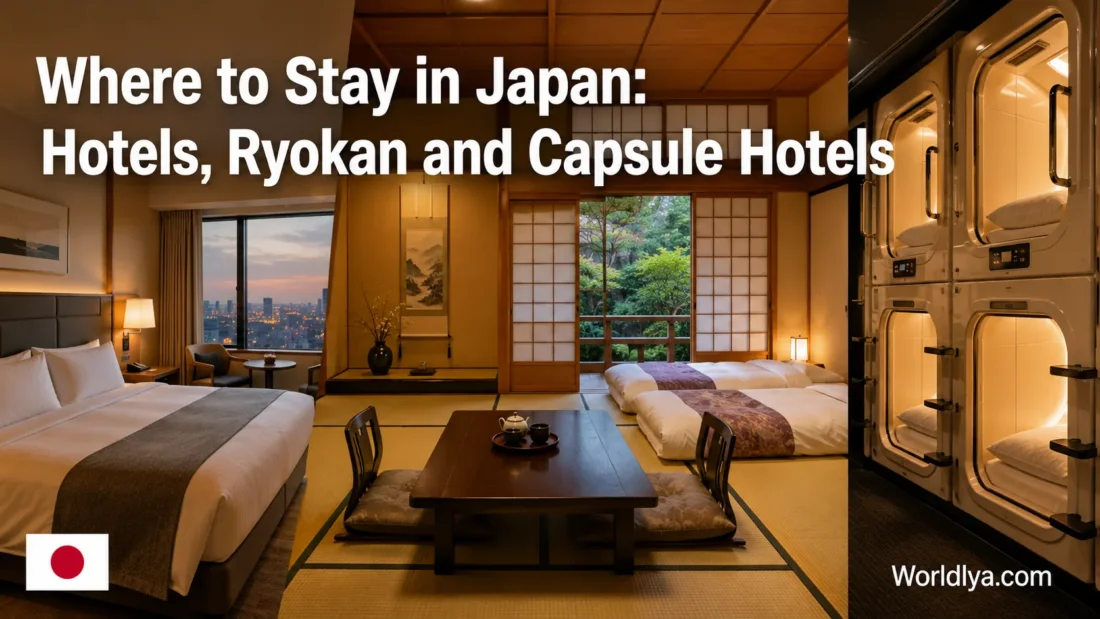
Japan is easier to enjoy when your room fits how you move through the day. A hotel near a station can make Tokyo feel calmer. A ryokan can turn one night into tea, tatami, bathing, dinner and quiet conversation. A capsule hotel can give you a clean bed after a late train without making you pay for space you will barely use. None of these choices is automatically right for every traveler. The right stay depends on your route, luggage, sleep style, budget and the kind of Japan you want to feel when you close the door.
Start With the Stay, Not the City
Many first-time visitors choose a city first and only then ask where to sleep. Flip that order for a moment. Ask, what should this night do for me?
- Need easy transport? Pick a hotel close to a major train or subway station.
- Want a slower cultural stay? Choose a ryokan for one or two nights, especially in an onsen town or old city district.
- Traveling solo with a light bag? A capsule hotel can work well for a short, practical stop.
- Carrying large luggage? Check storage rules before booking, or use luggage forwarding between hotels.
This small shift helps you avoid the classic mismatch: a lovely room in the wrong neighborhood, a ryokan booked on a rushed arrival night, or a capsule hotel chosen when you really needed quiet and space.
Hotel, Ryokan or Capsule Hotel: Which One Fits?
Japan gives travelers several types of accommodation, but three choices appear again and again: hotels, ryokan and capsule hotels. They are not just different price points. They create different days.
| Stay Type | What It Feels Like | Works Well For | Read Carefully Before Booking |
|---|---|---|---|
| Hotel | Private room, familiar check-in, easy city access | First visits, families, business trips, multi-city routes | Room size, bed size, station distance, breakfast, laundry |
| Ryokan | Traditional inn with tatami, futon, meals and local hospitality | Couples, slow travel, onsen towns, one-night cultural stays | Meal plan, per-person pricing, bathing rules, check-in time |
| Capsule Hotel | Compact sleeping pod with shared facilities | Solo travelers, short stays, late arrivals, light luggage | Gender floor setup, luggage lockers, noise rules, shared bathroom layout |
Choose a Hotel When
- You will arrive late or leave early.
- You want a private bathroom and a simple morning.
- You need an elevator, desk, laundry or luggage storage.
Choose a Ryokan When
- You want the stay to be part of the memory.
- You can arrive before dinner time.
- You are open to futon bedding, slippers and house customs.
Choose a Capsule Hotel When
- You only need a bed, shower and locker.
- Your bag is small or stored elsewhere.
- You do not mind shared spaces and quiet rules.
Hotels in Japan: Easy, Predictable and Location Friendly
For many travelers, a hotel is the smoothest base in Japan. You get a private room, predictable check-in, staff who can often help with luggage, and a clear place to return after a long day. In big cities, a well-located hotel can save more energy than a larger room far from transport.
Hotel rooms in Japan often use space carefully. A room may be spotless and well planned, yet still smaller than a traveler from North America or Europe expects. Read the square meters. Look at the bed type. Check whether the bathroom is a compact unit bath or a separate bath and toilet. These details matter more than a pretty lobby photo.
Hotel Booking Checks That Save Energy
- Station walk: a “10-minute walk” can feel longer with stairs, rain or suitcases.
- Train line: being near the line you will use daily is better than being near a famous station you rarely need.
- Room size: check square meters, not only photos.
- Luggage service: many larger hotels can help arrange baggage delivery to the next hotel.
- Laundry: coin laundry or laundry service is useful on trips longer than one week.
Business hotels are a common city choice. They usually keep things compact and practical: bed, desk, bathroom, vending machines, laundry and quick access to transport. They are not always romantic, but they are easy to understand. For travelers who plan to be outside all day, that can be enough.
Luxury and full-service hotels fit travelers who want larger rooms, concierge help, restaurants, room service, views or a slower start in the morning. They make sense at the beginning or end of a trip, especially after a long flight.
Ryokan: When the Stay Becomes Part of the Trip
A ryokan is not just a place to sleep. It is closer to a pause button. Shoes come off. Tatami changes how the room feels. A yukata may be provided. Dinner and breakfast may be part of the stay. The room is often simpler than a hotel room, yet the experience can feel fuller.
Ryokan work best when you give them time. Arrive before dinner. Do not book one on a night when your train gets in late or when you plan to rush out early the next morning. A ryokan is like a slow meal: you miss the point if you treat it like fast food.
A good ryokan night is not packed between two rushed travel days. It needs breathing room: arrival, bath, dinner, sleep, breakfast, then a gentle departure.
What to Expect in a Ryokan
- Per-person pricing: many ryokan price stays per person, often with meals included.
- Futon bedding: some rooms use futons placed on tatami floors, often prepared while guests dine.
- Meals: dinner may be a multi-course seasonal meal, with breakfast served the next morning.
- Bathing: some ryokan have onsen baths; others may have private baths, shared baths or standard bathrooms.
- House customs: shoe removal, slippers, yukata and meal times are part of the rhythm.
For travelers who feel nervous about etiquette, the answer is simple: watch, read the signs and ask. Staff at ryokan are used to helping guests understand the flow. A respectful question is better than silent guessing.
A Calm Ryokan Plan
- Send large luggage ahead, or carry a smaller overnight bag.
- Arrive in the afternoon, before the evening meal window.
- Change into the provided robe only where the inn says it is appropriate.
- Keep phones quiet in shared spaces.
- Check out after breakfast without stacking too many plans immediately after.
Capsule Hotels: Small Space, Smart Use
Capsule hotels are one of Japan’s most talked-about stay types because they turn a tiny sleeping space into a practical system. You usually get a pod or cabin for sleep, a locker for belongings and shared toilets, showers or bathing areas. Some places feel very simple. Others look almost futuristic.
A capsule hotel can be a good fit for one night in Tokyo, Osaka, Kyoto, Fukuoka or near an airport. It is not meant to replace a spacious hotel room for everyone. Think of it as a clean sleeping compartment rather than a private apartment.
| Good Fit | Think Twice If | What to Check |
|---|---|---|
| Solo traveler with one small bag | You need silence, desk space or a private bathroom | Locker size and luggage policy |
| Late arrival before moving on the next morning | You sleep poorly around shared noise | Pod door or curtain, quiet hours, alarm rules |
| Airport or station stopover | You are traveling with children or many suitcases | Age rules, floor separation, shower access |
Capsules usually give visual privacy, not full sound isolation. That means headphones, soft alarms and quiet packing are part of the social contract. If enclosed spaces make you uncomfortable, choose a hotel instead. No shame there. Good travel is not about proving you can sleep anywhere.
Where to Stay in Tokyo
Tokyo is not one center. It is a web of stations, neighborhoods and rail lines. The easiest stay is usually near the line you will use most, not always near the biggest name on a map.
Tokyo Station and Ginza
Good for polished hotels, shopping, train access and a smooth arrival. It fits travelers who want an orderly base and easy rail connections.
Ueno and Asakusa
Good for museums, older streets, temple areas and value-minded hotels. It works well for travelers who like walking and a more local morning feel.
Shinjuku
Good for transport, food, nightlife areas and day trips. Choose the exact station exit area carefully, because Shinjuku is large.
Shibuya
Good for fashion, cafés, youth culture and a busy city feel. It suits travelers who want energy outside the hotel door.
Tokyo tip: do not judge distance only by kilometers. A short route with easy train transfers can feel better than a closer hotel that forces awkward changes every day.
Where to Stay in Kyoto
Kyoto rewards location differently than Tokyo. Trains help, but buses, walking routes and temple districts also shape the day. The right base depends on whether you want easy transport, quiet mornings or a classic old-town feeling.
| Kyoto Area | Why Stay There | Good Stay Type |
|---|---|---|
| Kyoto Station | Easy rail access, good for day trips, simple arrivals | Hotel |
| Gion and Higashiyama | Traditional streets, evening walks, temples nearby | Hotel or ryokan |
| Kawaramachi and Shijo | Food, shopping, central movement | Hotel |
| Arashiyama | River scenery, bamboo paths, slower mornings | Ryokan or quiet hotel |
A ryokan in Kyoto can be lovely, but not every traditional-looking property is the same. Some are classic inns with meals. Some are modern hotels with tatami rooms. Some are rental townhouses. Read the meal plan, bedding style and bathroom setup before choosing.
Where to Stay in Osaka
Osaka is often easier to sleep in than travelers expect. The city has strong transport, plenty of food areas and many practical hotels. It can also be a good base for day trips to Kyoto, Nara, Kobe or Himeji when the route makes sense.
- Umeda and Osaka Station: useful for rail access, shopping and day trips.
- Namba: good for food streets, evening walks and access toward Kansai International Airport routes.
- Shin-Osaka: practical for Shinkansen use, especially if you arrive late or leave early.
- Tennoji: useful for parks, local dining and south-side movement.
Capsule hotels are common in Osaka’s busy transport zones. They are useful for a single night, yet a standard hotel is usually easier for couples, families or anyone with larger bags.
Good Places for a Ryokan Night
A ryokan night does not need to happen in every city. In fact, one well-timed ryokan stay can feel better than several rushed ones. Look for places where the setting supports the slower pace.
Hakone
Popular for hot springs, mountain scenery and a natural break between Tokyo and the Kansai area.
Kinosaki Onsen
Known for a town-style onsen stay, where walking in a yukata between baths is part of the rhythm.
Nikko
A good choice for nature, temples, forested surroundings and a slower overnight outside Tokyo.
Kyoto and Nara also have ryokan, but city ryokan can vary widely. Some are intimate and traditional. Others are more like modern inns with Japanese-style rooms. Read the photos carefully and do not assume every ryokan includes the same level of meal service or bathing facilities.
How to Match Your Stay to Your Travel Style
A good Japan route often mixes stay types. You do not have to choose one style for the whole trip. The blend can make the trip smoother.
| Traveler Type | Stay Mix That Usually Works | Reason |
|---|---|---|
| First-Time Visitor | City hotels plus one ryokan night | Easy logistics with one slower cultural stay |
| Solo Traveler | Hotels, capsules and one guesthouse if desired | Flexibility, lower cost and easy short stops |
| Couple | Hotel in cities, ryokan in an onsen town | Comfort in busy places, atmosphere on a slower night |
| Family | Hotels or apartment-style rooms with laundry | More space, easier luggage and simpler routines |
| Food-Focused Traveler | City hotel near dining areas, ryokan with dinner included | Street food evenings plus one seasonal meal experience |
| Long-Stay Traveler | Hotel with laundry, apartment-style lodging, occasional ryokan | Practical rhythm without losing variety |
Booking Details Worth Reading Twice
Japan accommodation pages can be detailed, but the most useful details are not always the biggest text. Before paying, pause on these points.
Small Print That Changes the Stay
- Check-in time: ryokan dinners may require afternoon arrival.
- Meal plan: “room only,” “breakfast included” and “dinner included” can change the value of a ryokan stay.
- Bathroom type: private bath, shared bath and onsen access are not the same.
- Bedding: western beds and futons feel different. Choose what helps you sleep.
- Licensed lodging: for private rentals or apartment stays, use listings that show proper registration or licensing.
- Cancellation policy: read the dates in local time and check whether meals affect refund rules.
Also check whether the accommodation accepts luggage before check-in or after check-out. In busy travel seasons, this can save a day from becoming a suitcase shuffle.
Luggage Can Decide the Better Stay
Japan’s transport system is efficient, but large suitcases can still make station stairs and transfers tiring. Many travelers use hotel-to-hotel luggage delivery, airport luggage counters or station lockers to keep travel days lighter.
This matters when choosing between hotel, ryokan and capsule hotel. A capsule hotel may be easy with a backpack but awkward with two large suitcases. A ryokan night feels smoother when you carry only what you need for the evening. A city hotel with front-desk support can make luggage forwarding easier.
A Simple Luggage Rhythm
- Use a hotel near a station for arrival night.
- Forward the large suitcase to the next city hotel.
- Carry a small overnight bag to the ryokan.
- Use lockers for short daytime gaps only when you know the station has space.
A Simple Japan Stay Plan for First Timers
For a first Japan trip of about 10 to 14 days, a balanced stay pattern might look like this:
- Tokyo: 3 to 5 nights in a hotel near the rail line you will use most.
- Hakone, Nikko or Kinosaki Onsen: 1 night in a ryokan, with luggage sent ahead if possible.
- Kyoto: 3 nights in a hotel or ryokan-style stay, depending on budget and comfort needs.
- Osaka: 2 nights in a hotel near Namba, Umeda or Shin-Osaka, based on your route.
- Capsule hotel: optional for one solo night, airport stop or late arrival.
This is not a rule. It is a useful starting pattern. Families may prefer fewer hotel changes. Solo travelers may enjoy more variety. Travelers who dislike repacking may choose two strong bases and make day trips.
Visual Comfort Meter
Use this simple reading as a planning aid, not a rating. The “right” choice is the one that fits your night.
Hotel Space: ███████░░░ Hotel Ease: █████████░
Ryokan Atmosphere: ██████████ Ryokan Flexibility: █████░░░░░
Capsule Cost Control: █████████░ Capsule Privacy: ████░░░░░░
FAQ
Is a Ryokan Worth It for Only One Night?
Yes, if you arrive early enough to enjoy dinner, bathing and the morning. One calm ryokan night is often better than two rushed nights.
Are Capsule Hotels Good for Couples?
Usually they are better for solo travelers. Some modern capsule hotels accept couples in the same property, but sleeping pods are often separate. Check the exact room and floor setup before booking.
Should I Stay Near a Famous Station in Tokyo?
Not always. Stay near the line that matches your daily route. A smaller station with easy transfers can feel much easier than a famous hub with long walks inside the station.
Do Hotels in Japan Keep Luggage Before Check-In?
Many hotels do, but it is not something to assume. Check the policy or ask the property, especially for small inns, capsules and private rentals.
Is an Apartment-Style Stay Better for Families?
It can be, especially when laundry, kitchen space and separate beds matter. For private rentals, choose properly registered or licensed listings and read access instructions carefully.
Can I Mix Hotels, Ryokan and Capsule Hotels on the Same Trip?
Yes. Many travelers use hotels as the main base, add one ryokan night for a slower stay and try a capsule hotel only when it fits the route.
Sources
- Japan National Tourism Organization: Accommodation in Japan
- Japan National Tourism Organization: Japanese Ryokan Guide
- Japan National Tourism Organization: Capsule Hotels
- Japan National Tourism Organization: Notice About Private Lodging in Japan
- Japan National Tourism Organization: Luggage and Storage
- Japan National Tourism Organization: Japanese Manners and Etiquette