
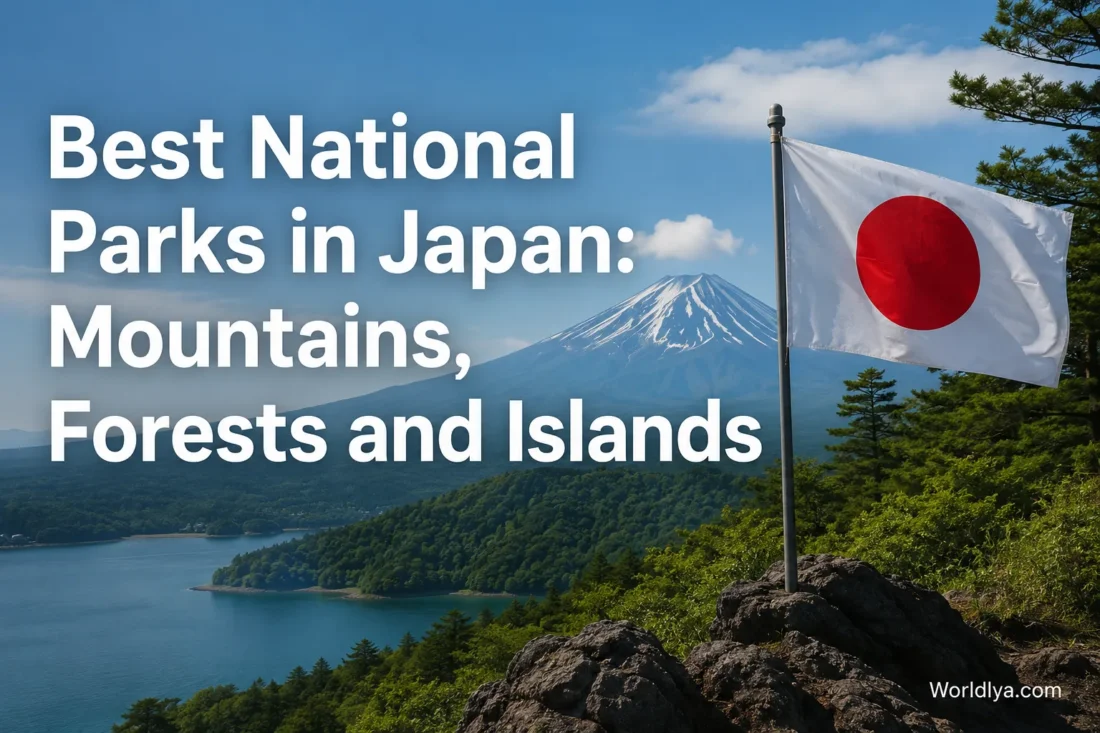
Japan’s national parks stretch far beyond the familiar outline of Mount Fuji. They protect snowbound mountains in Hokkaido, cedar forests on rain-soaked southern islands, volcanic lakes near Tokyo, mangrove rivers in Okinawa and coral reefs scattered across warm blue seas. There are 35 national parks in the country, yet a traveler rarely needs a long list. The real question is simpler: what kind of landscape do you want to wake up beside?
A mountain-focused trip may lead you to the Japanese Alps or the broad volcanic plateaus of Daisetsuzan. Forest lovers can walk beneath old yakusugi cedars on Yakushima or follow lakeside trails through Nikko. Travelers drawn to island life can snorkel in Keramashoto, paddle through Iriomote’s mangroves or take the long sea journey to Ogasawara.
How To Choose The Right Park
For High Mountains
Choose Chubusangaku for sharp alpine peaks, Kamikochi and long hiking routes. Choose Daisetsuzan for broad wilderness, volcanic terrain and early autumn color.
For Deep Forests
Choose Yakushima for moss, old cedars and demanding woodland hikes. Choose Nikko for easier forest walks, lakes, waterfalls and straightforward access from Tokyo.
For Islands and Reefs
Choose Keramashoto for beach time and snorkeling. Choose Iriomote-Ishigaki when you want mangroves, jungle rivers and coral in the same trip.
For A First Visit
Fuji-Hakone-Izu offers the widest mix near Tokyo. Nikko is another practical choice when you have only one or two free days.
Japan’s Best National Parks By Travel Style
| National Park | Region | Best For | Suggested Stay | Useful Base |
|---|---|---|---|---|
| Chubusangaku | Central Honshu | Japanese Alps and serious hiking | 2–4 nights | Matsumoto, Kamikochi or Toyama |
| Daisetsuzan | Hokkaido | Wide mountain wilderness | 2–4 nights | Asahidake Onsen or Sounkyo |
| Fuji-Hakone-Izu | Kanto and Tokai | Mount Fuji, lakes and volcanic scenery | 1–3 nights | Hakone, Kawaguchiko or an Izu town |
| Yakushima | Kagoshima | Old-growth cedar forest | 3–4 nights | Miyanoura or Anbo |
| Shiretoko | Hokkaido | Wildlife, coasts and forest | 2–3 nights | Utoro or Rausu |
| Nikko | Tochigi | Accessible lakes and woodland trails | 1–2 nights | Nikko or Lake Chuzenji |
| Keramashoto | Okinawa | Snorkeling, beaches and island walks | 2–3 nights | Zamami or Tokashiki |
| Iriomote-Ishigaki | Okinawa | Mangroves, subtropical forest and reefs | 3–5 nights | Ishigaki and Iriomote |
| Ogasawara | Tokyo Islands | Remote island ecology | 5 nights or more | Chichijima |
The Best Mountain National Parks
1. Chubusangaku National Park: The Japanese Alps
Chubusangaku protects much of the Northern Japanese Alps, where numerous summits rise to around 3,000 meters. It is the strongest choice for travelers who picture Japan as a country of granite ridges, alpine flowers, snowfields and narrow mountain valleys.
The park is not one single destination. It contains several areas with very different travel styles. Kamikochi is the most approachable, with riverside paths, footbridges, wooded trails and mountain views that do not require a summit climb. The Tateyama Kurobe Alpine Route uses buses, cable cars, ropeways and other transport to cross high terrain. Hakuba, Norikura and Kurobe Gorge offer still more options.
- Best easy experience: Walk beside the Azusa River in Kamikochi.
- Best scenic transport: Cross the Tateyama Kurobe Alpine Route.
- Best for experienced hikers: Plan a hut-to-hut route through the Northern Alps.
- Best season: Late spring through autumn, depending on elevation and snow conditions.
Kamikochi works well for a first mountain trip because private cars are restricted in the valley and buses provide access from gateway towns. Higher routes demand more preparation. Snow can remain well into the warmer months, and some transport links close during winter.
Who Will Enjoy It Most?
Hikers, landscape photographers and travelers willing to build several days of a Japan trip around mountain conditions.
2. Daisetsuzan National Park: Hokkaido’s Vast Interior
Daisetsuzan covers about 2,268 square kilometers, making it Japan’s largest national park. Its scale feels different from the compact mountain valleys of central Honshu. Here you find volcanic peaks, alpine plateaus, wetlands, deep gorges, hot-spring settlements and long stretches of forest.
Mount Asahidake reaches 2,291 meters and is Hokkaido’s highest mountain. The Asahidake Ropeway carries visitors to around 1,600 meters, where a loop near Sugatami Pond offers views of fumaroles, ponds and alpine vegetation. Sounkyo, on the opposite side of the park, provides ropeway access toward Mount Kurodake and makes a useful base for the surrounding gorges.
The warm hiking window is short. Summer conditions are most dependable around July and August, while autumn color can begin surprisingly early. Higher ground may turn red and gold around late August or September, followed by the return of snow.
- Choose Asahidake for ropeway-assisted alpine walks.
- Choose Sounkyo for gorge scenery and access toward Mount Kurodake.
- Allow extra time because the park’s different areas are widely separated.
- Check trail reports even when lowland Hokkaido feels warm.
This is not the park to squeeze between two city appointments. Daisetsuzan rewards slower planning. Two nights may cover one section; three or four nights give weather changes less power over the trip.
3. Fuji-Hakone-Izu National Park: The Most Varied Choice Near Tokyo
Fuji-Hakone-Izu links four broad landscapes: Mount Fuji, Hakone, the Izu Peninsula and the Izu Islands. That unusual geography allows one national park to offer mountain views, crater lakes, lava formations, hot-spring areas, rugged coastlines and marine activities.
Mount Fuji rises to 3,776 meters, yet climbing it is only one way to experience the park. The Fuji Five Lakes area offers views from lower elevations, while Lake Tanuki and surrounding paths create a quieter forest setting. Hakone combines Lake Ashinoko, Owakudani’s volcanic landscape, ropeway travel and sections of the old Tokaido route.
The Izu side changes the mood entirely. Coastal viewpoints, sea cliffs, island ferries and water activities make this park suitable for travelers who do not want every day to revolve around hiking boots.
Choose Fuji Five Lakes For
Mountain views, lakeside cycling, photography and forest walks.
Choose Hakone For
Easy transport, volcanic scenery, short trails and a one- or two-night stay from Tokyo.
Choose Izu For
Coastal drives, island scenery, snorkeling, kayaking and a slower seaside stay.
The official Mount Fuji summit season generally runs from July into September. Exact dates, access rules, reservations and trail systems can change, so climbers should check the official Mount Fuji information before travel. Outside the climbing season, enjoy the mountain from surrounding lakes and viewpoints rather than attempting the summit.
The Best Forest National Parks
4. Yakushima National Park: Cedars, Moss and Mountain Rain
Yakushima rises from the sea south of Kyushu, with mountains reaching nearly 2,000 meters at the island’s center. Moist air, steep elevation changes and the warm Kuroshio Current support dense vegetation ranging from coastal subtropical growth to cool mountain forest.
The island is known for yakusugi, the name given to Japanese cedar trees on Yakushima that are more than 1,000 years old. The forest floor can be thick with moss, roots and ferns. Water runs beside trails, across stones and down mountain slopes. Rain is not a rare interruption here; it shapes the place.
Shiratani Unsuikyo offers several walking routes through mossy woodland, while the Jomon Sugi hike is a long full-day undertaking. The island also has waterfalls, coastal roads, beaches and warmer lowland areas, so a visit does not need to consist only of demanding hikes.
A Sensible Yakushima Plan
- Reserve at least three nights to leave room for changing weather.
- Use one day for a major forest hike.
- Keep another day for a shorter trail, waterfall or coastal circuit.
- Carry proper rain protection rather than relying on a small umbrella.
Yakushima suits travelers who enjoy walking for the atmosphere rather than only for a summit view. The pleasure lies in small details: water caught on cedar bark, roots crossing a trail and layers of green that seem to continue beyond the path.
5. Shiretoko National Park: Where Forest Meets The Sea
Shiretoko occupies the northeastern edge of Hokkaido, where volcanic mountains, rivers, forest, cliffs and the Sea of Okhotsk form one connected landscape. UNESCO recognizes the peninsula for the close relationship between its marine and land ecosystems.
The western gateway of Utoro provides access to the Shiretoko Five Lakes, waterfalls and sightseeing cruises. Rausu, on the eastern side, is useful for marine trips and views toward the peninsula’s mountains. The road between the two sides crosses Shiretoko Pass when seasonal conditions allow.
- Spring and summer: Forest walks, lake routes and boat trips.
- Autumn: Woodland color and cooler hiking conditions.
- Winter: Drift-ice experiences and guided wildlife observation.
- Throughout the year: Follow current ranger and visitor-center instructions.
Wildlife is part of Shiretoko’s appeal, but sightings should be treated as a privilege rather than a promise. Brown bears, eagles, deer, marine mammals and many bird species live in the region. Visitors should keep their distance, never offer food and use guided activities where local rules require them.
Access to the ground-level trails at the Shiretoko Five Lakes is managed according to season and wildlife activity. Guided visits may be required during part of the warmer season. An elevated boardwalk provides another way to see the landscape.
6. Nikko National Park: Lakes, Waterfalls and Easy Forest Access
Nikko is one of the easiest national parks to connect with a Tokyo itinerary. Trains reach the city in roughly two hours, and buses continue toward Lake Chuzenji, Kegon Falls, Senjogahara Marsh and the hot-spring area of Yumoto.
The lower area is known for the Shrines and Temples of Nikko, while the higher Okunikko area feels much more like a mountain retreat. Lake Chuzenji lies beneath Mount Nantai. Nearby trails pass waterfalls, woodland and open wetland scenery.
Senjogahara is especially suitable for visitors who want a satisfying nature walk without a steep summit climb. Boardwalk sections cross the marsh, and connecting paths run toward waterfalls and Yumoto Onsen.
One-Day Visit
Focus on either the heritage area or Lake Chuzenji and Kegon Falls. Trying to cover every zone in a few hours creates too much bus time.
One-Night Visit
Stay near Lake Chuzenji or Yumoto, then walk early before returning to Tokyo the following afternoon.
Nikko is busy during celebrated foliage periods, yet its broad geography gives you choices. An overnight stay creates a calmer rhythm and makes the upper park easier to appreciate.
The Best Island and Marine National Parks
7. Keramashoto National Park: Clear Water Near Okinawa
Keramashoto National Park covers more than 30 islands and islets west of Okinawa’s main island. Ferries from Naha reach the inhabited islands in roughly 35 minutes to two hours, depending on the vessel and destination.
Zamami, Tokashiki and Aka are the names most travelers encounter. Each offers a slightly different balance of beaches, viewpoints, village facilities and marine activities. The surrounding sea is known for the deep, bright color often called Kerama Blue.
- Zamami: A practical base for beaches, snorkeling and boat activities.
- Tokashiki: The largest inhabited island in the group, with scenic bays and established visitor facilities.
- Aka: A quieter choice linked by bridge to Geruma, with beaches and coastal viewpoints.
The park’s reefs support hundreds of reef-building coral species, along with fish and sea turtles. Humpback whales visit the surrounding waters seasonally, and winter tours operate from several islands.
A day trip is possible, but staying two nights changes the experience. You can avoid planning the entire day around the return ferry, visit beaches before day visitors arrive and leave room for weather adjustments.
8. Iriomote-Ishigaki National Park: Mangroves and Coral Reefs
Iriomote-Ishigaki is Japan’s southernmost national park. Its protected areas include evergreen subtropical forest, mangrove-lined rivers, coral reefs and several islands in the Yaeyama group.
Ishigaki Island serves as the regional transport hub. Ferries connect Ishigaki Port with Iriomote, Taketomi, Kuroshima and other islands, though not every island has a direct connection to every other island. Returning through Ishigaki is often the simplest route.
Iriomote is the forest-focused part of the park. Most of the island is covered by dense vegetation, and roads run mainly around the northern and eastern coast. Guided canoeing, kayaking and hiking trips use rivers as natural routes into the interior.
A Good Three-Part Combination
- Use Ishigaki for transport, food options and coastal drives.
- Add Iriomote for a guided mangrove river or waterfall trip.
- Add Taketomi or Kuroshima for a slower island day.
The park is home to endemic wildlife, including the Iriomote cat. Travelers are unlikely to see this secretive animal, and searching for it should never involve approaching wildlife habitat off approved routes. Slower driving and respect for local guidance help protect the island’s animals.
9. Ogasawara National Park: Japan’s Remote Pacific Islands
Ogasawara National Park protects a subtropical island chain about 1,000 kilometers south of mainland Japan. Although the islands are administered as part of Tokyo, the journey feels more like an ocean expedition than a city extension.
The main passenger ship takes around 24 hours to reach Chichijima from Tokyo. That long crossing shapes every itinerary. Visitors generally stay several nights and travel according to the ship schedule rather than creating a short independent stopover.
The isolation of the islands allowed many plants and animals to develop in distinctive ways. UNESCO lists the Ogasawara Islands for their ecological and evolutionary value. On land, visitors can join nature walks and visit coastal viewpoints. At sea, activities include snorkeling, diving, kayaking and seasonal wildlife tours.
- Choose Ogasawara when remoteness is part of the attraction.
- Book accommodation early because arrivals often follow the passenger-ship timetable.
- Use local guides for protected areas and ecology-focused excursions.
- Allow five nights or more rather than treating the islands as a quick beach visit.
Keramashoto is easier. Iriomote offers more convenient flight connections through Ishigaki. Ogasawara asks for more time, but it also delivers the clearest feeling of being far from Japan’s main urban corridor.
Which National Park Matches Your Trip?
- You have one free day from Tokyo: Visit Nikko or the Hakone area of Fuji-Hakone-Izu.
- You want Japan’s strongest alpine scenery: Choose Chubusangaku.
- You want Hokkaido wilderness: Choose Daisetsuzan for mountains or Shiretoko for coast, forest and wildlife.
- You want the most memorable forest walk: Spend several nights on Yakushima.
- You mainly want snorkeling and beaches: Choose Keramashoto.
- You want forest and coral in one region: Combine Ishigaki and Iriomote.
- You enjoy difficult-to-reach places: Build the trip around the Ogasawara ferry.
Best Time To Visit Japan’s National Parks
| Period | Parks To Consider | What The Season Offers |
|---|---|---|
| March–May | Nikko, Fuji-Hakone-Izu, Yakushima, Keramashoto | Mild lowland walks, spring vegetation and comfortable island days. High mountain routes may still hold snow. |
| June–August | Chubusangaku, Daisetsuzan, Shiretoko, Fuji-Hakone-Izu, Okinawa parks | The main alpine hiking period, Mount Fuji’s summit season and warm-water activities. Rain and tropical weather can affect southern islands. |
| September–November | Daisetsuzan, Chubusangaku, Nikko, Fuji-Hakone-Izu, Yakushima | Autumn color moves from high Hokkaido terrain toward lower and more southerly areas. Mountain snow may return early. |
| December–February | Shiretoko, Daisetsuzan, Keramashoto, Iriomote-Ishigaki, Ogasawara | Guided snow and drift-ice activities in Hokkaido, seasonal whale trips around Okinawa and mild subtropical island conditions. |
Japan’s long north-to-south span makes broad seasonal labels imperfect. Daisetsuzan may already feel wintry while Okinawa remains warm enough for coastal activities. Always check the specific park and elevation rather than relying only on a city forecast.
How Many Days Do You Need?
One Day
Choose Nikko, Hakone or a carefully planned visit to the Fuji Five Lakes. Keep the day focused on one area.
Two To Four Days
Suitable for Chubusangaku, Daisetsuzan, Shiretoko, Yakushima or Keramashoto.
Five Days or More
Useful for an Ishigaki–Iriomote combination, a longer Japanese Alps route or the scheduled sea journey to Ogasawara.
Two Practical Park Routes
A Six-Day Mountains and Lakes Route
- Days 1–2: Travel from Tokyo to Nikko and stay near Lake Chuzenji.
- Day 3: Return toward Tokyo and continue to Matsumoto.
- Days 4–5: Enter Kamikochi in Chubusangaku National Park for valley walks or a longer hike.
- Day 6: Return through Matsumoto or continue toward the Toyama side of the Alps.
A Seven-Day Southern Islands Route
- Days 1–2: Travel from Naha to Zamami or Tokashiki in Keramashoto National Park.
- Day 3: Return to Okinawa’s main island and fly to Ishigaki.
- Days 4–5: Stay on Iriomote for a guided mangrove and forest excursion.
- Days 6–7: Return to Ishigaki and add a reef trip, coastal drive or nearby island visit.
Planning Details That Affect The Experience
Check More Than The City Forecast
Mountain weather can differ sharply from nearby towns. Check elevation-specific forecasts, trail conditions, ferry notices and ropeway operations. A warm morning at a railway station does not tell you what conditions will be like above 2,000 meters.
Use Visitor Centers
National-park visitor centers provide maps and current information on trails, weather, wildlife activity and temporary access changes. This is especially useful in Shiretoko, Daisetsuzan, Yakushima and the Japanese Alps.
Do Not Assume Every Park Needs A Car
Nikko, Hakone and Kamikochi work well with public transport. Keramashoto can be explored through ferries, walking, bicycles and local shuttles. A rental car becomes more useful in wide or thinly served regions such as Daisetsuzan and Shiretoko.
Leave Space Around Ferry Days
Island travel depends on sea and weather conditions. Avoid placing an irreplaceable international connection immediately after a remote ferry journey. This matters most for Ogasawara, but it is also sensible around the Kerama and Yaeyama islands.
Expect Separate Activity Costs
Many landscapes do not have one park-wide admission charge. Ropeways, boats, guided walks, parking, mountain huts, equipment rental and protected-area programs may have separate fees. Check each service rather than looking for a single national-park ticket.
Protect The Landscape You Came To See
- Remain on marked trails and boardwalks.
- Carry waste out when disposal points are unavailable.
- Do not feed or approach wildlife.
- Follow local rules for coral reefs, mangroves and protected forests.
- Use a local guide when access rules, terrain or wildlife conditions make one appropriate.
Frequently Asked Questions
Which National Park Is Best For A First Visit To Japan?
Fuji-Hakone-Izu National Park is the most flexible choice because it combines familiar scenery with convenient access from Tokyo. Nikko is equally practical for travelers who prefer forests, lakes and waterfalls.
Which Japanese National Park Has The Best Hiking?
Chubusangaku offers the broadest selection of classic alpine routes. Daisetsuzan is better for travelers seeking wide Hokkaido terrain and fewer urban connections. Yakushima is the stronger choice for demanding forest hikes.
Which Park Is Best For Ancient Forests?
Yakushima National Park is the clearest choice. Its old yakusugi cedars, moss-covered trails and steep mountain environment create one of Japan’s most distinctive forest experiences.
Which Park Is Best For Beaches and Snorkeling?
Keramashoto National Park offers clear water and easy ferry access from Naha. Iriomote-Ishigaki adds a wider mix of reefs, mangroves and inhabited islands.
Can Japan’s National Parks Be Visited Without A Car?
Yes. Nikko, Hakone, Kamikochi and the main Kerama islands are realistic without a car. Public transport becomes less frequent in remote sections of Hokkaido and on larger subtropical islands.
How Many National Parks Are There In Japan?
Japan currently has 35 national parks, ranging from Hokkaido’s mountains and wetlands to the subtropical islands of Okinawa and Ogasawara.
Do Japan’s National Parks Charge An Entrance Fee?
Many parks do not use a single entrance gate or park-wide ticket. Visitors may still pay for ropeways, ferries, buses, parking, guided tours, mountain huts or access programs in protected areas.
For a first nature-focused journey, begin with Nikko or Fuji-Hakone-Izu. Add Chubusangaku when hiking is the main purpose of the trip, Yakushima when forest atmosphere matters most, or an Okinawa park when you want the day to move between land and sea.
Sources
- Ministry of the Environment, Government of Japan — Overview of National Parks
- National Parks of Japan — Japan’s 35 National Parks
- National Parks of Japan — Chubusangaku National Park
- National Parks of Japan — Daisetsuzan National Park
- National Parks of Japan — Shiretoko National Park
- National Parks of Japan — Yakushima National Park
- National Parks of Japan — Iriomote-Ishigaki National Park
- UNESCO World Heritage Centre — Yakushima
- UNESCO World Heritage Centre — Shiretoko
- UNESCO World Heritage Centre — Ogasawara Islands