
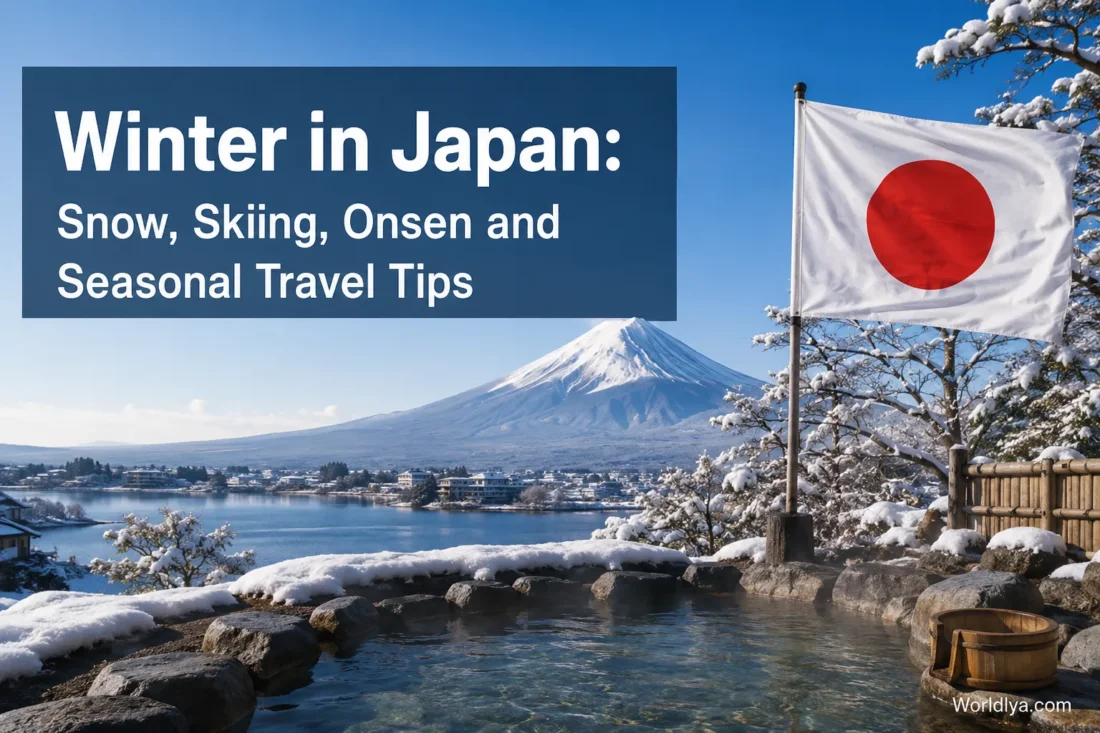
Winter in Japan can mean dry blue skies in Tokyo, deep powder in Hokkaido, snow-heavy mountain villages in Nagano, or mild coastal days in southern islands. That range is what makes the season so rewarding—and why planning by region matters more than simply choosing “Japan in winter.” A good trip balances snow time, warm indoor breaks, and enough flexibility for weather-led changes.
Start With Three Decisions
How Much Snow?
Choose a northern or mountain base for dependable snow. Choose Tokyo, Kyoto, Osaka, or Fukuoka when snow is a bonus rather than the main event.
How Active?
A ski-centered holiday works best with several nights in one resort. A mixed trip needs fewer gear changes and easier rail connections.
What Kind of Onsen?
Decide between a public bath, a private reservable bath, or a ryokan room with its own bath before booking accommodation.
How Winter Changes Across Japan
Japan’s mountains and surrounding seas create sharp winter contrasts. The Sea of Japan side and many mountain districts receive heavy snow, while large cities on the Pacific side often have colder, drier days with little lasting snow. Northern Japan is colder for longer; southern Japan is milder. You can move between these winter moods in a single trip, sometimes within a few hours by train.
| Region | Typical Winter Character | Good Bases | Well Suited For |
|---|---|---|---|
| Hokkaido | Long, cold season with regular snow in many areas | Sapporo, Niseko, Furano, Rusutsu | Powder skiing, snow scenery, city-and-resort trips |
| Tohoku | Deep snow in mountain and inland districts | Zao, Appi, Aomori, Sendai | Onsen towns, quieter slopes, snow-covered landscapes |
| Nagano and Niigata | Snowy mountain belts with strong rail access from Tokyo | Hakuba, Nozawa Onsen, Shiga Kogen, Yuzawa, Myoko | First ski trips, mixed itineraries, onsen after skiing |
| Tokyo and The Pacific Corridor | Cool, often dry city weather; occasional snow | Tokyo, Yokohama, Nagoya, Kyoto, Osaka | Urban travel with a short snow side trip |
| Kyushu and Okinawa | Milder conditions, though high ground can still be cold | Fukuoka, Beppu, Kagoshima, Naha | Onsen, food, city travel, gentler winter weather |
Choosing December, January, February, or March
December: Early Snow and Holiday Atmosphere
December works well for travelers who want winter lights, city dining, and the opening weeks of the ski season. Larger resorts often begin operating during the month, yet early-season coverage depends on snowfall and elevation. Treat skiing as more dependable from the middle or latter part of December, then check the resort’s live operating report before leaving.
The final days of the year need extra planning. Transport and accommodation demand rises, and some restaurants, museums, and attractions change their hours around the New Year period. Reserve the parts of the trip that matter most, then keep one flexible meal plan for each day.
January: Cold Air and Consistent Ski Conditions
January is a natural choice for a snow-first holiday. Northern and mountain resorts are usually fully active, fresh snow is common in established snow belts, and winter scenery feels settled rather than tentative. It is also cold. Build your day around warm-up stops, especially when traveling with children or first-time skiers.
February: Snow Events and Peak Winter Scenery
February combines strong ski conditions with snow festivals, ice displays, and illuminated winter scenes. It can also bring busy weekends in places such as Sapporo and well-known resort towns. Check event calendars before booking because dates change each year, and stay within easy reach of public transport when an event is the main reason for your visit.
March: Longer Days and Spring Skiing
March brings longer daylight and milder afternoons. Higher resorts may still offer very good coverage, while lower areas can shift toward softer snow. The trade-off is pleasant sightseeing weather and an easier blend of mountains with cities. Travelers focused on late-season skiing should favor elevation and confirm current lift operations.
A practical rule: book the resort for its current snow record and terrain, not for a single photograph. Winter varies from year to year, and even neighboring valleys can receive different amounts of snow.
Where To Find Japan’s Main Winter Experiences
Hokkaido: Powder, Open Terrain and Sapporo Access
Hokkaido is the first choice for many travelers who place skiing above everything else. Niseko offers several connected ski areas, a broad range of accommodation, rentals, lessons, and dining. Rusutsu suits travelers who prefer a resort-centered stay, while Furano pairs skiing with a smaller city base and rail access through central Hokkaido.
Sapporo adds another layer. You can spend a few days eating, shopping, and visiting nearby winter sights before transferring to a resort. Otaru also fits neatly into a Hokkaido itinerary, especially when its canals and streets are dressed in snow. The distances are larger than they appear on a map, so avoid changing hotels every night.
Nagano: Alpine Choice and Onsen Villages
Nagano offers several distinct ski styles. Hakuba Valley has multiple resorts, varied terrain, international services, and views of the Northern Alps. Shiga Kogen spreads skiing across a large highland area. Nozawa Onsen places a traditional hot-spring village beside the slopes, making the evening part of the experience rather than an afterthought.
Nagano is especially useful for a first winter trip because it connects naturally with Tokyo. The city of Nagano can act as a transfer point, while Matsumoto provides an attractive cultural stop on a wider mountain route. Shuttle schedules matter: a hotel that looks close on a map may sit far from your preferred lift.
Niigata: Easy Snow Trips From Tokyo
Niigata is a strong match for travelers who want snow without committing the whole holiday to a distant resort. Echigo-Yuzawa is reached by shinkansen from Tokyo and serves several ski areas. It works for a day trip, though one or two nights provide a calmer pace and time for an onsen.
Farther west, Myoko is known for deep snowfall, multiple ski zones, and hot-spring accommodation. It feels more like a mountain stay than a quick excursion. Choose it when skiing is central and you are happy to remain in one area for several days.
Tohoku: Snow-Covered Trees and Quieter Mountain Time
Tohoku rewards travelers who want snowy landscapes alongside skiing. Zao Onsen is known for juhyo—trees coated in wind-driven snow and ice until they take on unusual forms. Appi Kogen offers a resort stay in Iwate, while the Hakkoda area appeals to experienced winter travelers and guided outdoor groups.
Travel times can be longer after leaving the shinkansen, yet that extra leg often leads to a slower, more local stay. Confirm the final bus connection before booking a train, particularly for evening arrivals.
How To Choose a Ski Resort That Fits You
| Your Priority | Look For | Places To Compare |
|---|---|---|
| First Ski Holiday | English-language lessons, gentle runs, easy rentals, short hotel transfer | Hakuba, Niseko, Furano, Yuzawa |
| Village Atmosphere | Walkable streets, local dining, public baths, accommodation near lifts | Nozawa Onsen, Zao Onsen, Myoko |
| Resort Convenience | Ski-in access, equipment rental, several restaurants, indoor facilities | Rusutsu, Kiroro, Appi Kogen |
| City Plus Snow | Direct rail or bus access and no need to move all luggage | Yuzawa from Tokyo, Sapporo-area resorts, Lake Biwa-area slopes from Kansai |
| Longer Ski Stay | Several connected areas, varied terrain, enough dining for multiple nights | Niseko, Hakuba Valley, Shiga Kogen |
Renting Gear or Bringing Your Own
Renting is usually easier for a mixed Japan trip. Major resorts commonly stock skis, snowboards, boots, poles, helmets, and outerwear, though the exact range varies. Reserve ahead during busy periods if you need uncommon boot sizes, children’s equipment, or premium models.
Bringing personal boots can still make sense because fit affects comfort more than almost any other item. Travelers carrying full ski bags can use luggage forwarding where available, keeping train transfers far less awkward. Allow enough delivery time for mountain areas and confirm that the hotel accepts sports equipment.
Lessons, Lift Access and Mountain Boundaries
Book a lesson early if it is your first time on snow or your first time at a Japanese resort. Large international resorts often provide instruction in several languages; smaller hills may have fewer options. A morning lesson can save hours of uncertainty and make the afternoon more enjoyable.
Lift passes may cover one resort, a connected group, or a wider valley. Read the coverage before paying. Mountain boundary rules also differ. Stay within marked areas unless you are joining a properly equipped tour led by a qualified local guide, and follow rope lines and patrol instructions.
Onsen After Snow: What To Expect
An onsen is not simply a hot pool attached to a hotel. It is a shared bathing space with a clear rhythm: change, wash, rinse, soak, cool down, and dress. Once you know the sequence, the experience feels calm and straightforward.
- Check the bath entrance. Men’s and women’s signs or curtain colors can change by facility or time of day.
- Remove clothing in the changing area. Most shared onsen baths do not use swimwear.
- Wash before soaking. Use the shower stations and rinse away soap fully.
- Keep towels and long hair out of the bath. Place the small towel beside the bath or fold it on your head.
- Enter slowly. Onsen water can be hotter than expected, especially after time outdoors.
- Keep the mood quiet. Soft conversation is usually fine, but the bath is not a swimming pool.
Tattoos and Private Baths
Tattoo policies vary by facility. Some baths allow tattoos, some accept approved cover seals, and others do not permit entry. Check the property’s current policy before booking. A kashikiri-buro or family bath is reserved for private use and can be a comfortable alternative for couples, families, modest travelers, or guests who prefer not to use a shared bath.
Public Bath, Day-Use Onsen, or Ryokan Stay?
- Public bath: simple, local, and often inexpensive; bring or rent towels as required.
- Day-use onsen: useful after skiing when you are not staying at the property; entry hours may end before the hotel closes.
- Ryokan: combines bathing with tatami rooms, futon bedding, and often dinner and breakfast.
- Room with a private bath: offers privacy and flexible bathing time, usually at a higher room rate.
For a ryokan dinner, arrive at the requested check-in time. Meals may begin at a set hour, and late arrival can affect service. Ski resorts and onsen towns also differ in how late restaurants stay open, so do not assume a mountain village follows Tokyo dining hours.
Winter Travel Without Skiing
You do not need skis to enjoy Japan’s snow country. Ropeways, snowshoe walks, sled areas, illuminated streets, outdoor baths, and winter food can fill several days. Non-skiers should still examine resort transport closely: a hotel beside a slope may be isolated from the village center.
Snow Scenery
See Zao’s juhyo, walk through an onsen village after snowfall, ride a sightseeing ropeway, or visit a garden and castle district in winter light.
Gentle Snow Activities
Try snowshoeing, a guided nature walk, sledding, or a beginner snow-play area. Confirm clothing rental before arriving.
Warm Indoor Time
Plan an onsen, café, museum, market, or long lunch during the coldest part of the day. Winter travel feels better when warmth is part of the schedule.
Three Winter Routes That Avoid Constant Packing
Tokyo, Yuzawa and An Onsen Stop — 7 Nights
Spend three nights in Tokyo, two nights in Echigo-Yuzawa, and two nights in Hakone or another rail-friendly onsen area. This route offers city time, accessible snow, and a private or shared bath stay without a domestic flight. Send large luggage from Tokyo to the final hotel and carry a small mountain bag.
- Days 1–3: Tokyo neighborhoods, food, museums, and winter illuminations
- Days 4–5: Yuzawa skiing, snow play, or day-use onsen
- Days 6–7: Slower onsen stay with scenic transport
Sapporo, Otaru and Niseko — 7 Nights
Use Sapporo for three nights, visit Otaru as a day trip or one-night stop, then settle in Niseko for three or four nights. This route gives non-skiers plenty to do and lets skiers spend enough time in one resort to justify lessons and equipment rental.
- Days 1–3: Sapporo dining, markets, city sights, and a flexible weather day
- Day 4: Otaru canal district and cafés
- Days 5–7: Niseko skiing, onsen, and one slow evening
Tokyo, Nagano and Nozawa Onsen — 8 Nights
Combine three nights in Tokyo, one night in Nagano City, and four nights in Nozawa Onsen. The city stop breaks up the transfer and leaves time for a local meal or nearby cultural visit. In Nozawa, skiing and bathing share the same village rhythm.
- Days 1–3: Tokyo
- Day 4: Nagano City
- Days 5–8: Nozawa Onsen with skiing, village walks, and baths
Trains, Buses, Luggage and Winter Roads
Use Rail for The Long Leg
Shinkansen services make Nagano, Niigata, and Tohoku practical additions to a Tokyo itinerary. The final leg is often a local train or bus, and that is where timing becomes important. Build the route from the resort backward: check the last bus first, then choose the train that connects with it.
Reserved seats are useful on busy travel dates and when carrying winter luggage. Oversized baggage rules apply on some shinkansen routes, so confirm the policy for your train rather than assuming every line works the same way.
Send Large Bags Ahead
Japan’s luggage delivery services can move suitcases and sports equipment between airports, hotels, and many service counters. This is especially useful when a journey includes narrow station stairs, local buses, or a one-night stop. Delivery is not always same-day, and remote snow destinations may need more time. Keep medicine, documents, valuables, and one change of clothes with you.
Drive Only When It Improves The Trip
A car can help in rural Hokkaido or scattered mountain districts, yet it is not automatically easier. Snow-covered roads, early darkness, changing visibility, and limited parking can add pressure. When renting in a winter area, confirm winter tires and any required snow equipment. Travelers without winter driving experience are often better served by trains, resort buses, hotel transfers, or a guided outing.
Weather buffer: avoid placing an international flight immediately after a remote mountain stay. One final night near the departure city gives the itinerary room to breathe if snow affects a bus, road, or domestic connection.
What To Pack for Cities, Snow Towns and Onsen
For City Days
- Warm coat with room for layers
- Comfortable shoes with a grippy sole
- Light gloves and a scarf
- Compact umbrella
- Moisturizer and lip balm for dry indoor heat
For Snow Regions
- Water-resistant insulated footwear
- Thermal base layers
- Waterproof gloves
- Warm hat that covers the ears
- Sunglasses or goggles
- High-protection sunscreen
For Smooth Transfers
- Small overnight bag
- Portable battery
- Reusable water bottle
- Some cash for small facilities
- Offline copies of hotel names and routes
- Medication kept in hand luggage
Indoor spaces and trains can feel much warmer than the street. Several removable layers work better than one very heavy outfit. On snowy days, traction matters more than fashion; polished soles become tiring on packed snow and icy station approaches.
Winter Food That Fits The Weather
Cold days naturally lead toward hot, shared dishes. Nabe places vegetables, tofu, meat, or seafood in a simmering pot at the table. Oden offers ingredients such as daikon, eggs, and fish cakes in broth. Ramen varies by region and makes an easy warming stop between outdoor plans.
Regional choices add character without turning every meal into a reservation project. Hokkaido is well known for seafood and dairy products. Nagano offers soba and oyaki dumplings. Snow-country inns may serve preserved vegetables, mushrooms, river fish, or locally grown rice. At a ryokan, dinner can be one of the main reasons to stay, so disclose dietary needs before arrival rather than at the table.
A Better Daily Rhythm for Cold Weather
| Time | Plan | Why It Works |
|---|---|---|
| Early Morning | Ski, visit a popular snow viewpoint, or take the first transfer | Fresh conditions and fewer delays in the day |
| Late Morning | Outdoor activity with a planned café or lodge stop | Prevents cold fatigue from shaping the whole day |
| Afternoon | Shorter activity, museum, market, or scenic rail segment | Uses daylight without overfilling the schedule |
| Evening | Onsen, early dinner, and next-day transport check | Mountain towns often settle earlier than large cities |
Leave one unscheduled half-day in a week-long winter trip. Use it for fresh snowfall, a delayed transfer, a second onsen visit, or simply a slower morning. That small gap often becomes the most enjoyable part of the itinerary.
Common Questions About Winter in Japan
Does It Snow Everywhere in Japan?
No. Hokkaido, the Sea of Japan side, and many mountain districts receive regular winter snow. Tokyo, Kyoto, and Osaka can have cold days and occasional snowfall, but lasting city snow is not guaranteed. Okinawa remains much milder.
Is January or February Better for Skiing?
Both are strong choices at established snow resorts. January appeals to travelers seeking settled midwinter conditions. February adds more winter events and slightly longer daylight, though famous festival periods can be busy.
Can Non-Skiers Enjoy a Ski Town?
Yes, provided the town has more than slopes. Look for onsen, walkable streets, cafés, sightseeing lifts, snowshoe tours, and reliable local transport. Nozawa Onsen and larger Hokkaido resorts are useful starting points for comparison.
Do You Wear Swimwear in An Onsen?
Most traditional shared baths are used without swimwear. Wash before entering and keep towels out of the water. Private reservable baths are available at many properties for guests who prefer privacy.
Is a Rental Car Necessary?
Not for many popular routes. Tokyo, Nagano, Yuzawa, Sapporo, and several resort areas connect well by train and bus. A car becomes more useful for scattered rural stops, but winter road conditions should shape the decision.
How Early Should Winter Accommodation Be Booked?
Book early for New Year travel, festival periods, weekends at famous resorts, and rooms with private baths. Outside those periods, availability may be wider, but lesson times, family rooms, and convenient transfers can still fill before ordinary rooms do.
Sources
- Japan Meteorological Agency — General Information on The Climate of Japan
- Japan National Tourism Organization — Winter in Japan
- Japan National Tourism Organization — Skiing in Japan
- Japan National Tourism Organization — How To Enjoy Onsen
- Japan National Tourism Organization — Luggage Storage and Delivery
- Japan National Tourism Organization — Driving in Japan During Winter