
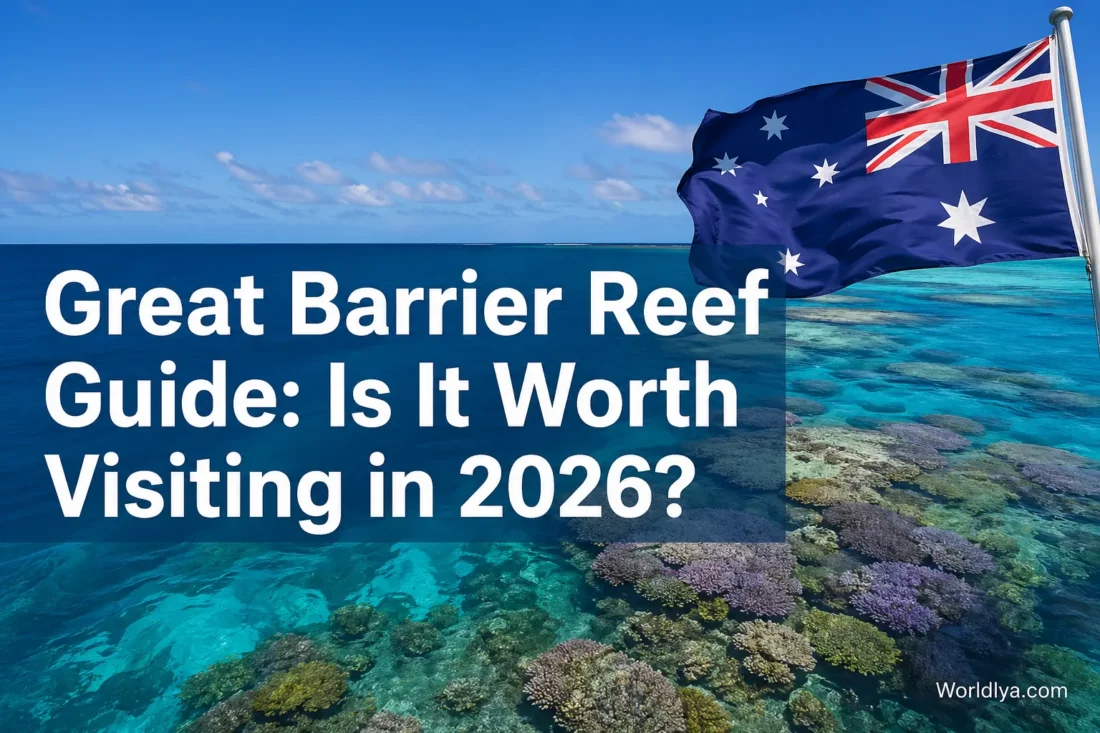
Yes — the Great Barrier Reef is worth visiting in 2026, as long as you visit with clear expectations. This is not a theme-park version of nature where every reef wall looks the same every day. It is a living marine place, huge enough to stretch along Queensland for more than 2,300 kilometres, with weather, tides, water clarity, coral condition, tour style, and season all shaping what you actually see. Pick the right base, give yourself at least one full reef day, and choose a good operator. Do that, and the trip can feel less like “checking off Australia” and more like stepping into a blue, floating city.
Is the Great Barrier Reef Worth Visiting in 2026?
For most travellers, yes. The Great Barrier Reef still offers the kind of day people remember years later: warm water, reef fish moving like confetti, coral gardens, sea turtles, island sand, glass-bottom boats, and wide-open Coral Sea views.
The better question is: what kind of reef visit is worth it for you? A confident swimmer may want an outer reef snorkel or dive trip. A first-time visitor may prefer a pontoon with lifeguards, shade, lunch, semi-submersible boats, and easy water access. A couple may love the Whitsundays. A family may choose Cairns because the logistics are simple. A quiet-nature traveller may look south toward Lady Elliot Island or Heron Island.
The reef is not one single stop. It is a long chain of reefs, islands, cays, beaches, channels, lagoons, and reef platforms. Two visitors can both “visit the Great Barrier Reef” and have completely different trips.
What Makes the Reef Special?
The Great Barrier Reef is the largest coral reef ecosystem on Earth. The Marine Park covers about 344,400 square kilometres and includes roughly 3,000 coral reefs, hundreds of islands and cays, and many different marine habitats.
That size matters for visitors. It means there is no single “best” reef spot for everyone. Some trips focus on coral walls. Some focus on sandy islands. Some are built for divers. Some are relaxed, family-friendly days with calm platforms, buffet lunch, showers, and guides in the water.
Marine life is one of the main reasons people come. Depending on where and when you go, you may see reef fish, giant clams, rays, turtles, soft corals, hard corals, reef sharks from a safe distance, and seasonal marine visitors. No tour can promise every animal. Nature does not work like a hotel menu. That is part of the charm.
Best Time To Visit the Great Barrier Reef in 2026
The most comfortable months for many visitors are May to October. This period is generally drier in Tropical North Queensland, with calmer travel conditions, better underwater visibility, and warm enough water for swimming.
That does not mean the reef closes outside those months. It does not. People visit year-round. The experience simply changes.
| Season | Months | What It Feels Like | Best For |
|---|---|---|---|
| Dry Season | May to October | Sunny days, lower humidity, popular reef conditions | First-time visitors, snorkelling, diving, reef and rainforest trips |
| Peak Winter Travel | June to August | Very pleasant weather, more visitors, tours can book out | Travellers who want the safest weather choice |
| Shoulder Months | March to May and September to November | Often warmer, sometimes quieter, good value if dates line up | Flexible travellers who want fewer crowds |
| Wet Season | December to February | Hotter, more humid, greener landscapes, tropical showers possible | Visitors who accept weather flexibility and want a lush north Queensland feel |
For a first reef trip in 2026, June to October is the easiest recommendation. For better value and fewer people, look at May, September, October, or early November. These months can give you a sweet middle ground: good conditions without the thickest holiday crowds.
What About Marine Stinger Season?
In tropical Queensland waters, marine stingers can be present year-round, with higher risk often noted from November to May. This does not mean you should avoid the region. It means you should listen to local advice, use patrolled swimming areas where relevant, and wear a stinger suit when operators recommend one.
Most reef tour operators are used to this. They provide instructions, gear, and safe entry points. Follow the crew’s advice. It is simple, and it keeps the day relaxed.
Where Should You Stay for a Reef Trip?
Your base can shape the entire trip. Some visitors book Australia flights, land in Sydney or Melbourne, then realise the Great Barrier Reef is far away. It sits off Queensland’s north-eastern coast. You normally need to fly or travel to a proper reef gateway.
| Base | Best Match | Why Visitors Choose It |
|---|---|---|
| Cairns | First-time reef visitors | Lots of reef tours, easy airport access, rainforest day trips, broad hotel range |
| Port Douglas | Couples, calmer resort stays | Closer feel to the northern reef, relaxed town, access to reef and Daintree experiences |
| Airlie Beach and the Whitsundays | Island scenery and sailing | Whitehaven Beach, island resorts, scenic flights, reef and beach combo trips |
| Townsville and Magnetic Island | Travellers who want a quieter base | Island day trips, local reef access, fewer big-tour crowds than Cairns |
| Southern Great Barrier Reef | Nature-focused visitors | Lady Elliot Island, Heron Island, Bundaberg area, turtles and island stays |
Cairns is the easiest answer for most first-timers. It has the most straightforward setup: airport, hotels, marina, tour desks, reef platforms, dive boats, family options, and easy add-ons like Kuranda or the Daintree Rainforest.
Airlie Beach is better if your dream looks like islands, sailing, and bright sand. The reef is still part of the story, but the Whitsundays experience often feels more like a mix of beach, boat, lookout, and sea.
The Southern Great Barrier Reef is a lovely choice for slower travel. It works well if you care more about nature, islands, turtles, and staying near the reef rather than rushing through a single day tour.
How Many Days Do You Need?
If you fly a long way to Australia, do not give the reef half a day squeezed between flights. The weather may be fine, but boats can be full, the sea can be choppy, or your body may simply be tired.
Simple 2026 Trip Length Advice
- Minimum: 2 nights in Cairns, Port Douglas, Airlie Beach, or another reef base.
- Better: 3 to 4 nights, with one reef day and one backup day.
- Best for a relaxed trip: 5 to 7 nights, mixing reef, rainforest, islands, food, viewpoints, and rest.
A reef trip is like planning a beach wedding: you can choose the season, the location, and the operator, but you cannot command the sky. A spare day protects the whole plan.
Which Great Barrier Reef Experience Should You Choose?
Many visitors search for “Great Barrier Reef tour” and get overwhelmed. That is normal. The trick is to match the trip style to your comfort level, not just the prettiest photo.
Outer Reef Day Trip
Best for: classic snorkelling, diving, and vivid reef views.
You travel by boat to reef sites farther from shore. These trips often include snorkel gear, lunch, guided options, and sometimes introductory dives.
Reef Pontoon
Best for: families, cautious swimmers, mixed groups, and first-timers.
A pontoon gives you a stable base with shade, steps into the water, rest areas, and often glass-bottom or semi-submersible viewing.
Island Stay
Best for: slower travel, beaches, sunrise walks, and reef access without rushing.
Island stays can cost more, but they turn the reef from a day trip into a place you wake up beside.
Scenic Flight
Best for: travellers who want the scale of the reef, not just what is below the boat.
Flights over the Whitsundays and reef lagoons can be beautiful. They also suit visitors who do not want to spend a full day in the water.
Snorkelling or Diving: Which Is Better?
Snorkelling is enough for many visitors. You float on the surface, look down, and let the reef come to you. On the right site, even shallow water can feel full of movement.
Diving is better if you want depth, quiet, and closer reef structure. Certified divers can book dedicated dive trips or add dives to some reef tours. Beginners may be able to try an introductory dive with medical and safety checks, depending on operator rules.
If you are unsure, choose a tour that offers both. One person can snorkel while another dives. That keeps the group happy, which is half the battle on any holiday.
What Is the Reef Like in 2026?
The honest answer: conditions vary by reef, region, season, and even by the day. The Great Barrier Reef is living nature, not a painted backdrop. Some areas may look full of colour and fish. Others may look more muted. Water visibility can change after wind or rain. Coral cover can differ from one site to another.
Recent scientific monitoring has shown that coral condition is not identical across the whole reef. That is one reason local operators matter. Good operators choose sites based on conditions, permits, safety, and visitor experience. They know where to go when wind direction, tides, or water clarity changes.
A Fair 2026 Expectation
Do not book expecting every coral patch to glow like a heavily edited postcard. Book for the full experience: the boat ride, the sea air, the reef fish, the scale, the learning, the islands, the swimming, and the feeling of being somewhere unlike anywhere else in Australia.
That is where the reef still delivers.
How Much Does a Great Barrier Reef Visit Cost in 2026?
Prices vary widely because reef trips are not all the same. A large pontoon day tour, a small-group dive boat, a scenic flight, a private charter, and an island stay have very different costs.
One fee visitors should know is the Environmental Management Charge. For most tourism operations in 2026, the standard charge is 8.50 AUD for a full-day passenger and 4.25 AUD for a part-day passenger. Operators normally collect this as part of the tour price or list it clearly with the booking.
Before you book, check what the price includes. A cheaper ticket can become less attractive if it leaves out transfers, food, wetsuit or stinger suit hire, guided snorkelling, reef levy details, or equipment.
- Ask if the listed price includes the Environmental Management Charge.
- Check whether hotel transfers are included or optional.
- See if lunch, tea, water, snorkel gear, and flotation devices are included.
- If diving, confirm whether dive gear, guide fees, and medical forms are included.
- For families, check child ages, supervision rules, and platform facilities.
What To Pack for a Reef Day
You do not need to pack like you are crossing an ocean. Keep it light. Boats have limited space, and wet towels have a special talent for making every bag feel heavier.
Bring
- Swimwear already worn under clothes
- Towel and dry change of clothes
- Hat, sunglasses, and light long-sleeve cover-up
- Reef-safe sun protection where suitable
- Reusable water bottle
- Motion sickness tablets if you need them
- Phone dry bag or waterproof camera
Check With the Operator
- Whether they provide snorkel gear
- Whether stinger suits or wetsuits are included
- Whether prescription masks are available
- Whether non-swimmers can join guided activities
- Whether drones are allowed on island stops
- Cancellation terms for weather changes
How To Choose a Good Reef Tour
A good reef tour is not just the one with the brightest photos. Look for practical details. They tell you more than fancy wording.
- Check the destination type. Outer reef, island, pontoon, sand cay, dive boat, sailing trip, and scenic flight are different experiences.
- Read the swimming setup. Steps, platforms, flotation aids, guides, rest areas, and viewing boats matter for comfort.
- Look at time on the reef. A long boat day with little reef time may not suit everyone.
- Ask about group size. Smaller can feel calmer. Larger pontoons can offer more facilities.
- Check accessibility. Not every boat is easy for travellers with mobility needs. Ask before booking.
- Read the weather policy. Know whether the operator reschedules, refunds, or runs in changing conditions.
For nervous swimmers, a pontoon or guided snorkel tour can be a smart choice. For certified divers, choose a dive-focused operator rather than a general sightseeing boat. For families, facilities are not boring details; they can make or break the day.
Best Great Barrier Reef Itinerary Ideas for 2026
Three Nights in Cairns
- Day 1: Arrive, walk the Esplanade, book or confirm reef trip.
- Day 2: Outer reef snorkel, dive, or pontoon tour.
- Day 3: Rainforest, Kuranda, waterfalls, or a second reef day if conditions were poor.
- Day 4: Leave without feeling rushed.
Four Nights in Airlie Beach
- Day 1: Arrive and settle near the marina.
- Day 2: Whitsundays sailing or Whitehaven Beach trip.
- Day 3: Reef tour or scenic flight.
- Day 4: Slow day, lagoon, lookout, or sunset cruise.
Five To Seven Nights for a Deeper Australia Trip
Split your time between reef and rainforest, or between Cairns and Port Douglas. This gives the trip more texture. One day you are floating over coral; the next you are walking under rainforest canopy. The contrast is the point.
Who Will Love the Great Barrier Reef?
- First-time Australia visitors who want one of the country’s most recognisable natural experiences.
- Snorkellers and divers who enjoy warm-water marine life.
- Families who choose a stable pontoon or well-run day boat.
- Couples planning islands, sailing, or scenic flights.
- Nature travellers who enjoy learning as much as looking.
Who Might Not Find It Worth It?
The reef is worth visiting for many people, but not for every travel style. It may not be the right use of your time if you dislike boats, have no interest in water activities, or only have a short city stay in southern Australia.
It may also feel underwhelming if you expect guaranteed perfect visibility, empty boats in peak season, or coral that looks exactly like edited travel posters. A better mindset is simple: go for the living place, not the postcard version.
Small Choices That Make the Trip Better
- Book your reef day early in your stay, not on the final day.
- Tell the crew if you are nervous in water. They can usually help.
- Use a flotation noodle or vest if it helps you relax.
- Do not chase animals or touch coral. Watch slowly. You will see more.
- Choose morning tours when possible if you prefer calmer starts.
- Bring a dry layer for the boat ride back. Wind feels cooler after swimming.
- Check school holiday dates if you want fewer crowds.
Final Verdict: Is It Worth Visiting in 2026?
Yes, the Great Barrier Reef is worth visiting in 2026 if you plan it as a real nature experience, not a guaranteed postcard. The best trips leave room for weather, choose the right base, and match the tour to the traveller.
For a first visit, stay in Cairns or Port Douglas and book an outer reef or pontoon day trip. For island scenery, choose the Whitsundays. For slower nature travel, look at the Southern Great Barrier Reef. Add a spare day if you can. That one simple move can turn a stressful plan into a smooth one.
The reef is still one of Australia’s great travel experiences. Not because it is perfect every second. Because it is alive, changing, layered, and bigger than your imagination can easily hold.
Great Barrier Reef FAQ
Is 2026 a good year to visit the Great Barrier Reef?
Yes. 2026 is a good year to visit if you choose a suitable season, book a reputable operator, and understand that reef conditions vary by site and weather. May to October is usually the easiest period for first-time visitors.
What is the best month to visit the Great Barrier Reef?
June to October is often the safest choice for pleasant weather and reef trips. May, September, and October can be especially appealing because they may balance good conditions with fewer crowds than peak winter dates.
Is Cairns or Airlie Beach better for the Great Barrier Reef?
Cairns is usually better for first-time reef snorkelling and diving because it has many reef tour options. Airlie Beach is better for visitors who want Whitsunday islands, sailing, Whitehaven Beach, and scenic flights.
Can non-swimmers visit the Great Barrier Reef?
Yes. Non-swimmers can choose reef pontoons, glass-bottom boats, semi-submersible viewing, scenic flights, island trips, or guided shallow-water experiences. Always tell the operator your comfort level before booking.
How many days should I spend near the Great Barrier Reef?
Three to four nights is a good target for most visitors. This gives you one reef day, one backup day, and enough time to enjoy the local area without rushing.
Do I need to dive to enjoy the Great Barrier Reef?
No. Snorkelling is enough for many travellers. A good snorkel site can show reef fish, coral, clams, and sometimes turtles from the surface. Diving adds depth and quiet, but it is not required for a memorable visit.
Sources
- Reef Authority — Fascinating Facts About the Great Barrier Reef
- Tourism Australia — Guide to the Great Barrier Reef
- Tourism and Events Queensland — Cairns and Great Barrier Reef
- Reef Authority — Environmental Management Charge Rates
- Australian Institute of Marine Science — Great Barrier Reef Coral Condition Summary 2024–2025
- Queensland Government — Marine Stingers and Water Safety