
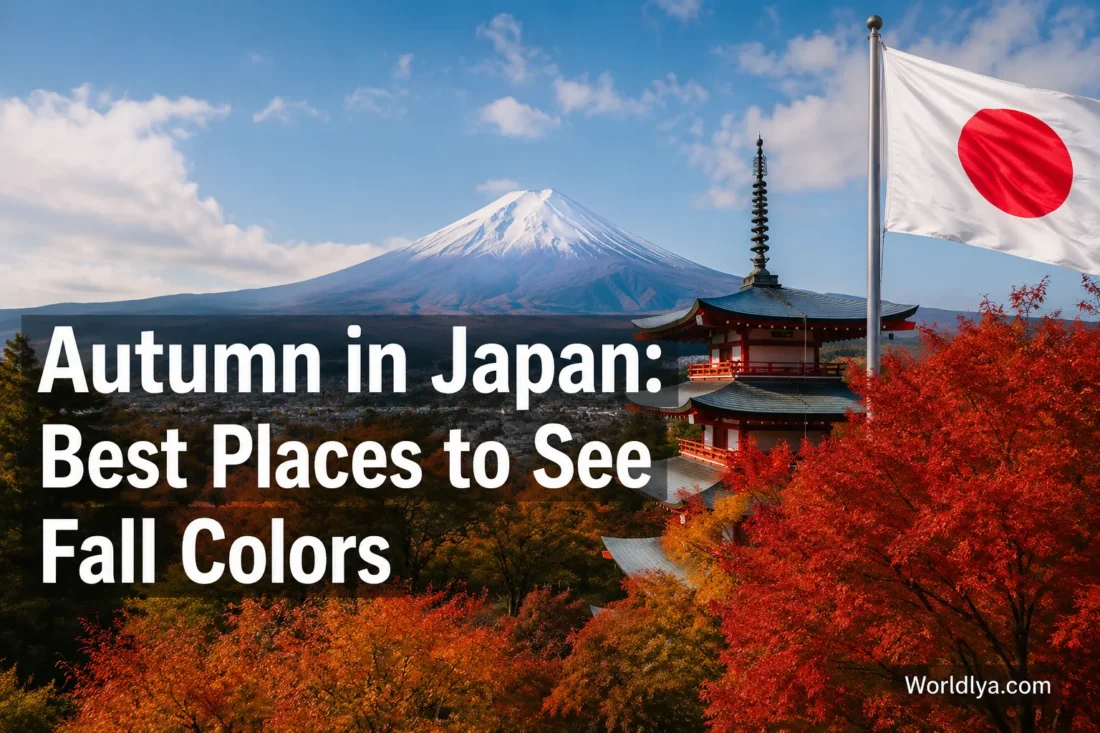
Autumn does not arrive in Japan on a single date. It travels. The first colors appear on the high mountains of Hokkaido, then move through northern forests, alpine valleys, lakeside towns and major cities before reaching western Japan. Follow that moving band of color and you can see scarlet maples, golden ginkgo trees and copper-toned larches from September into December.
The Japanese word kōyō describes leaves changing color, while momijigari means going out to admire them. The second term literally suggests “hunting for maple leaves,” though the experience is usually calm: a garden walk, a mountain trail, a lakeside cycle ride or a quiet pause beneath a red canopy.
Best Time For Autumn Colors
Mid-November through early December offers the widest choice for a first trip built around Tokyo, Kyoto, Nara and Osaka. Travelers heading to Hokkaido, Nikko or the Japanese Alps should plan earlier.
- September: high elevations in Daisetsuzan National Park
- October: Hokkaido, Tohoku, Nikko and mountain destinations
- November: Lake Kawaguchiko, Tokyo, Kanazawa, Kyoto and Nara
- Early December: later color in Tokyo, Kyoto, Osaka and parts of western Japan
These are planning windows rather than fixed promises. Temperatures, elevation, tree type and local weather can move the brightest period forward or backward.
When Autumn Colors Reach Each Region
Japan stretches a long way from north to south, and many of its best foliage areas sit well above sea level. That creates two overlapping movements: colors generally travel southward across the country and downward from mountain summits into valleys and cities.
A mountain may already be red and gold while the nearby city remains green. Within Nikko, for example, the forests around Lake Chuzenji usually change before the lower temple district. The same pattern appears in Nagano, where upper slopes can turn weeks ahead of lower valleys.
| Region or Destination | Usual Color Window | Typical Landscape |
|---|---|---|
| Daisetsuzan, Hokkaido | Early September to early October | Alpine slopes, ropeways and broad mountain views |
| Hokkaido Cities and Lower Valleys | Mid-October to early November | Parks, university avenues and mixed woodland |
| Nikko and Northern Mountain Areas | October to mid-November | Lakes, waterfalls, winding roads and wooded heritage sites |
| Kamikochi and The Japanese Alps | Late September to late October | Larches, river valleys and high mountain backdrops |
| Lake Kawaguchiko | Late October to mid-November | Maple-lined paths, lake views and Mount Fuji |
| Tokyo and Kanazawa | Mid-November to early December | Landscape gardens, city parks and ginkgo avenues |
| Kyoto, Nara and Osaka | Mid-November to early December | Temple gardens, parkland, rivers and forested hills |
| Miyajima and Parts of Western Japan | Mid-November to early December | Maple parks, coastal scenery and wooded walking routes |
Annual leaf forecasts become more useful closer to autumn. Use the table to choose travel dates, then check local color calendars before reserving day trips that depend on a narrow peak.
Best Places To See Fall Colors In Japan
1. Daisetsuzan National Park, Hokkaido
Daisetsuzan is the place to begin when you want Japan’s earliest autumn scenery. Its high mountains often start changing while much of the country still feels like summer. Red shrubs spread across alpine slopes, mountain ash adds orange tones and darker evergreen trees keep the landscape from becoming a single block of color.
The park is vast, so choosing the right access point matters. Asahidake offers a ropeway into high terrain, while Kurodake can be reached from Sounkyo by ropeway and chairlift. Ginsendai, at about 1,490 meters, is known for vivid mountain foliage from around mid-September.
Best For: Early-season travel, mountain scenery and active days
Plan It Well: Conditions change quickly at altitude. Check ropeway operations, trail information and local weather before setting out.
2. Nikko, Tochigi Prefecture
Nikko packs several kinds of autumn scenery into one area. Higher Oku-Nikko has lakes, marshes and waterfalls. Farther downhill, forests surround decorated buildings, stone paths and the red Shinkyo Bridge. This range of elevations can extend the local viewing season.
Start around Lake Chuzenji, Ryuzu Falls and the Senjogahara area when the upper landscape is changing. The color later moves toward central Nikko and its garden settings. The winding Irohazaka road connects the two zones, twisting through densely wooded slopes.
Nikko works as a day trip from Tokyo, but an overnight stay creates a calmer schedule. You can visit an upper lake or waterfall one day and walk through the central heritage district the next morning.
Good To Know: Roads and buses around the upper lake area can become busy during the brightest weekends. An early start leaves more room for walking and short scenic stops.
3. Kamikochi and Norikura, Nagano Prefecture
Kamikochi sits at about 1,500 meters in the Northern Japanese Alps. The clear Azusa River, pale river stones and steep mountain walls give the foliage a different character from Japan’s formal gardens. Larch trees turn gold, broadleaf trees add warmer tones and early snow may dust the highest peaks.
The classic walk follows the river around Kappa Bridge, with longer routes continuing toward Myojin Pond or Tokusawa. You do not need to complete a demanding hike to enjoy the setting. Several level or gently graded paths begin near the bus terminal.
Nearby Norikura Highlands adds waterfalls, ponds and mountain roads. Because the landscape covers several elevations, different sections may be colorful at different times.
Best base: Matsumoto, where the mountain trip can be paired with the city’s castle, traditional streets and local food.
4. Lake Kawaguchiko, Yamanashi Prefecture
Lake Kawaguchiko gives you one of autumn’s most recognizable combinations: red maple leaves, still water and Mount Fuji. The northern shore has several viewpoints where the mountain appears beyond the lake, though clear visibility always depends on the day’s weather.
The Maple Corridor follows both sides of the Nashigawa River and contains roughly 150 maple trees. Its usual viewing period runs from late October into mid-November. The area is walkable from a stop on the lake’s sightseeing bus route, and the corridor is commonly illuminated during the seasonal festival period.
Do not spend the entire visit waiting at one famous camera position. Rent a bicycle, follow the lakeside path or use the local bus to reach quieter stretches. Mount Fuji often appears most clearly earlier in the day, so place your main viewpoint first and leave the afternoon for gardens, museums or a relaxed lakeside walk.
Best For: Mount Fuji views, lakeside cycling and a one- or two-night break from Tokyo
5. Tokyo Gardens and Golden Ginkgo Avenues
Tokyo’s foliage arrives later than the mountain colors north and west of the city. That makes the capital useful at the beginning or end of a longer autumn route. Even when one garden is early or late, another park may be showing a different mix of maple, zelkova and ginkgo trees.
- Rikugien Garden: curved paths, a central pond and carefully arranged maple views
- Koishikawa Korakuen: bridges, water features and layered garden scenery
- Meiji Jingu Gaien: a straight avenue of golden ginkgo trees
- Showa Kinen Park: broad parkland with ginkgo rows and varied seasonal plantings
- Mount Takao: wooded trails and higher ground within reach of central Tokyo
For city gardens, arrive near opening time. Paths are calmer, the light is softer and you can appreciate the design before the busiest part of the day. Later, move to a larger park or ginkgo avenue where there is more room to stroll.
6. Kenrokuen Garden, Kanazawa
Kenrokuen is built for slow observation. Ponds, streams, bridges, carefully shaped pines and changing viewpoints unfold as you follow the paths. Autumn brings red and yellow leaves into that planned landscape without hiding the garden’s permanent structure.
Different tree species change at different times, allowing color to remain visible across much of November. The garden is beside Kanazawa Castle Park, so both can be explored in one outing. Seasonal evening openings may add illuminated foliage and reflections, though dates should be checked before visiting.
Kanazawa is a smart addition to a Tokyo–Kyoto trip. It offers a different visual rhythm from either city: compact historic districts, a celebrated landscape garden and easy access to indoor cultural sites when the weather changes.
7. Kyoto’s Temple Gardens and Forested Hills
Kyoto has no single autumn viewpoint. Its appeal comes from contrast: bright maples beside dark timber, leaves reflected in ponds, wooded hills behind temple roofs and narrow paths opening onto larger garden scenes. The city’s color often begins in cooler outer districts before becoming widespread in central and southern locations.
Places For A First Autumn Visit
- Eikando: known for dense maple planting and layered garden views
- Tofukuji: a broad view across a wooded valley from its bridge area
- Kiyomizu-dera: hillside scenery with wide views over surrounding trees and the city
- Arashiyama: river scenery, wooded slopes and nearby temple gardens
- Takao: a cooler mountain district where colors often arrive before central Kyoto
- Daigoji: garden and temple scenery on the southeastern side of the city
Trying to cross the city for four famous sites in one day usually produces more transit than leaf viewing. Choose one district for the morning and another nearby area for the afternoon. In eastern Kyoto, for example, several gardens and walking streets can be linked without repeatedly crossing the city.
A better Kyoto day is built around one landscape, not a checklist. Leave enough time to follow side paths, stop beside a pond and notice how the color changes as the light moves.
8. Nara Park and Southern Nara
Nara Park combines open lawns, wooded paths, ponds and temple approaches within a large walkable area. Red maples and yellow ginkgo trees appear among older evergreens, while views across Sarusawa Pond add water and reflected color to the city landscape.
Travelers with extra time can go beyond central Nara. Okadera is known for a maple-lined approach that becomes vivid from mid-November into early December. Odaigahara, much higher in the mountains, usually changes earlier, often from mid-October into early November.
This difference makes Nara more flexible than it first appears. Central parkland suits an easy day from Kyoto or Osaka, while the mountain and valley areas reward a slower trip with local transport planned in advance.
9. Minoh Park, Osaka Prefecture
Minoh Park offers a wooded escape within reach of central Osaka. Its main walking route follows a valley toward Minoh Falls, with maple trees appearing along the path and around the waterfall area. The usual color period is from mid-November into early December.
The outing works well when you want nature without changing hotels. Wear comfortable shoes, allow time for the uphill walk and return before rushing into an evening schedule. Nearby Katsuo-ji can also add garden scenery and seasonal color to a longer day.
Nearby Alternative: Koko-en Garden beside Himeji Castle presents red maples around ponds and traditional garden structures. Seasonal evening openings may be available.
10. Miyajima, Hiroshima Prefecture
Miyajima pairs autumn woodland with coastal scenery. Momijidani Park, a short walk from Itsukushima Shrine, contains around 700 maple trees. Paths continue toward the ropeway area, letting you combine a park walk with wider views from higher ground.
The island deserves more than a hurried stop between trains. Arrive early, walk through the lower park, explore the surrounding paths and stay long enough to see how the shoreline changes with the tide. Autumn color usually becomes strongest during November, with timing varying from year to year.
Choose A Destination By Travel Style
| What You Want | Strong Choices | Why They Fit |
|---|---|---|
| The Earliest Colors | Daisetsuzan | High elevation and an early start to the season |
| Mountains and Waterfalls | Nikko, Norikura, Minoh | Forest walks paired with lakes, valleys or falls |
| Mount Fuji Photography | Lake Kawaguchiko | Maples, lake reflections and open mountain views |
| Formal Japanese Gardens | Tokyo, Kanazawa, Kyoto | Ponds, bridges and planned viewpoints |
| Easy City-Based Day Trips | Tokyo gardens, Nara Park, Minoh | No need to move accommodation for every foliage outing |
| A Slower Cultural Route | Kanazawa, Kyoto, Nara, Miyajima | Autumn scenery mixed with walkable historic districts |
| Golden Ginkgo Trees | Tokyo and other major city parks | Bright yellow avenues and broad pedestrian spaces |
Autumn Routes Through Japan
Early-Season Route: Hokkaido Mountains and Cities
Suitable period: September into early October
- Begin in Asahikawa or Sounkyo.
- Use the Asahidake or Kurodake access route for high-elevation color.
- Continue to a lower Hokkaido destination as the season develops.
- Keep one flexible day for weather or transport changes.
This route suits travelers who care more about broad landscapes than temple gardens. Mountain temperatures can be much colder than city temperatures, even when the calendar still says early autumn.
Mid-Season Route: Tokyo, Nikko and Lake Kawaguchiko
Suitable period: Late October into mid-November
- Stay in Tokyo for convenient rail connections.
- Spend one or two nights in Nikko to follow color across different elevations.
- Return through Tokyo before continuing to Lake Kawaguchiko.
- Use city gardens as a flexible addition rather than assuming they will peak at the same time as the mountains.
This combination works because the destinations do not depend on one identical color date. If central Tokyo is still green, Nikko or Kawaguchiko may already be showing autumn tones.
Late-Season Route: Tokyo, Kanazawa, Kyoto and Nara
Suitable period: Mid-November into early December
- Begin with Tokyo gardens and ginkgo avenues.
- Travel to Kanazawa for Kenrokuen and the castle park area.
- Continue to Kyoto and divide your days by district.
- Visit Nara Park as a day trip or overnight stop.
- Add Minoh, Himeji or Miyajima when time allows.
This route offers the broadest mix of gardens, cities, parkland and heritage settings. It also leaves several indoor options nearby when rain interrupts an outdoor plan.
How To Time An Autumn Trip
Choose A Region Before A Peak Date
Do not build an entire trip around one predicted day. Choose a region that normally changes during your travel window and stay long enough to visit places at more than one elevation. A three-night base with several nearby options is safer than crossing the country for a single tree-lined path.
Check Local Color Calendars
Official tourism offices often publish color stages such as starting to change, approaching peak, peak and past peak. Review these updates shortly before travel. A location described as approaching peak can still be beautiful, especially when several tree species are present.
Keep One Day Flexible
A clear morning can matter more than an exact foliage stage, particularly around Mount Fuji or the Japanese Alps. Leave one day without a tightly timed long-distance reservation so you can respond to better weather or fresher local reports.
Visit Popular Sites Early
Gardens and temple grounds feel different shortly after opening. Paths are quieter, reflections are less disturbed and you can stop without blocking other visitors. Save larger parks, riverside routes and shopping streets for later in the day.
What To Wear In Japan During Autumn
Autumn packing depends on elevation as much as latitude. A pleasant afternoon in Tokyo does not tell you what to expect beside a mountain ropeway or before sunrise at Lake Kawaguchiko.
City Travel
- Light sweater or fleece
- Comfortable walking shoes
- Compact rain layer
- Thin scarf for cool evenings
Mountain Travel
- Warm insulating layer
- Wind-resistant outer layer
- Grippy walking footwear
- Hat and light gloves
Layers work better than one heavy coat. Trains, shops and hotels are often warmer than outdoor viewpoints, so you will want clothing that is easy to remove and carry.
Autumn Photography Without Rushing
- Use side light: Early morning and late afternoon can reveal texture in leaves that looks flat under strong midday light.
- Include green: Evergreen trees make red and yellow foliage appear more vivid.
- Look for water: Ponds, lakes and slow rivers can double the visible color through reflection.
- Photograph wider scenes: A bridge, roofline, path or mountain gives the leaves a sense of place.
- Step aside before stopping: Narrow garden and temple paths still need to serve everyone.
- Follow local equipment rules: Tripods and extended selfie sticks may be limited in compact or busy areas.
Useful Japanese Autumn Words
| Word | Meaning | How It Helps |
|---|---|---|
| Kōyō | Autumn leaves or the changing of leaf colors | Common on seasonal maps and tourism pages |
| Momiji | Maple, especially Japanese maple | Often appears in place names and event titles |
| Momijigari | Going out to admire autumn leaves | Describes the seasonal activity itself |
| Icho | Ginkgo | Useful when searching for golden ginkgo avenues |
| Migoro | Best viewing stage | Often used in live foliage reports |
| Raitoappu | Illumination or light-up | Appears in notices for seasonal evening openings |
Seasonal Foods To Try
Autumn travel is not limited to leaves. Markets, cafés, inns and station shops often feature ingredients associated with the season. Availability changes by region, but several flavors appear repeatedly.
- Chestnuts: used in rice dishes, sweets and cakes
- Sweet potatoes: roasted, baked or added to desserts
- Persimmons: served fresh or dried
- Matsutake mushrooms: offered in rice, soup and seasonal set meals
- Fresh soba: especially appealing in mountain areas during the buckwheat harvest period
- Apples and grapes: widely available in fruit-growing regions during early and mid-autumn
A warm bowl of noodles after a cool garden walk needs no grand ceremony. Sometimes that is the part of the day you remember most clearly.
Frequently Asked Questions
What Is The Best Month For Fall Colors In Japan?
November offers the widest range of well-known destinations. Tokyo, Lake Kawaguchiko, Kanazawa, Kyoto, Nara, Osaka and Miyajima may all show color during parts of the month. Hokkaido and high mountain areas usually need an earlier trip.
Is October Or November Better For Autumn In Japan?
Choose October for Hokkaido, Nikko and the Japanese Alps. Choose November for Tokyo, Lake Kawaguchiko, Kanazawa, Kyoto and Nara. Late November can also work well for Osaka and western destinations.
Can I See Autumn Colors In Tokyo and Kyoto On The Same Trip?
Yes. Their seasons often overlap from the second half of November into early December, though exact timing varies. Spending several nights in each city gives you access to multiple gardens and parks rather than relying on one location.
How Long Do Peak Autumn Colors Last?
The brightest stage at one tree or viewpoint can be brief. A larger district may remain colorful longer because different species and elevations change at different rates. Wind and rain can also shorten the viewing period.
Are Autumn Illuminations Held Every Year?
Many gardens and temple sites arrange seasonal evening openings, but dates, entry rules and operating hours can change. Check the venue’s current page before planning an evening around a light-up event.
Where Can I See Autumn Leaves Without A Long Hike?
Rikugien and Koishikawa Korakuen in Tokyo, Kenrokuen in Kanazawa, Nara Park, Koko-en in Himeji and many Kyoto gardens offer strong scenery without mountain hiking. Ropeways at Daisetsuzan and around Miyajima can also reduce the amount of climbing, subject to local access conditions.
Sources
- Japan National Tourism Organization: Autumn In Japan
- Japan National Tourism Organization: Places To See Autumn Leaves
- Hokkaido Official Tourism Site: Autumn Scenery
- Official Nikko Travel Guide: Autumn Leaves
- Matsumoto City Official Tourism Website: Seasonal Mountain Travel
- Fuji Kawaguchiko Official Tourism Site: Maple Corridor
- Tokyo Metropolitan Government: Tokyo Autumn Guide
- Kanazawa Official Travel Guide: Autumn Attractions
- Kyoto City Official Travel Guide: Autumn Leaves Calendar
- Official Nara Travel Guide: Autumn In Nara
- Osaka Official Tourism Site: Minoh Park
- Hiroshima Official Tourism Site: Momijidani Park