
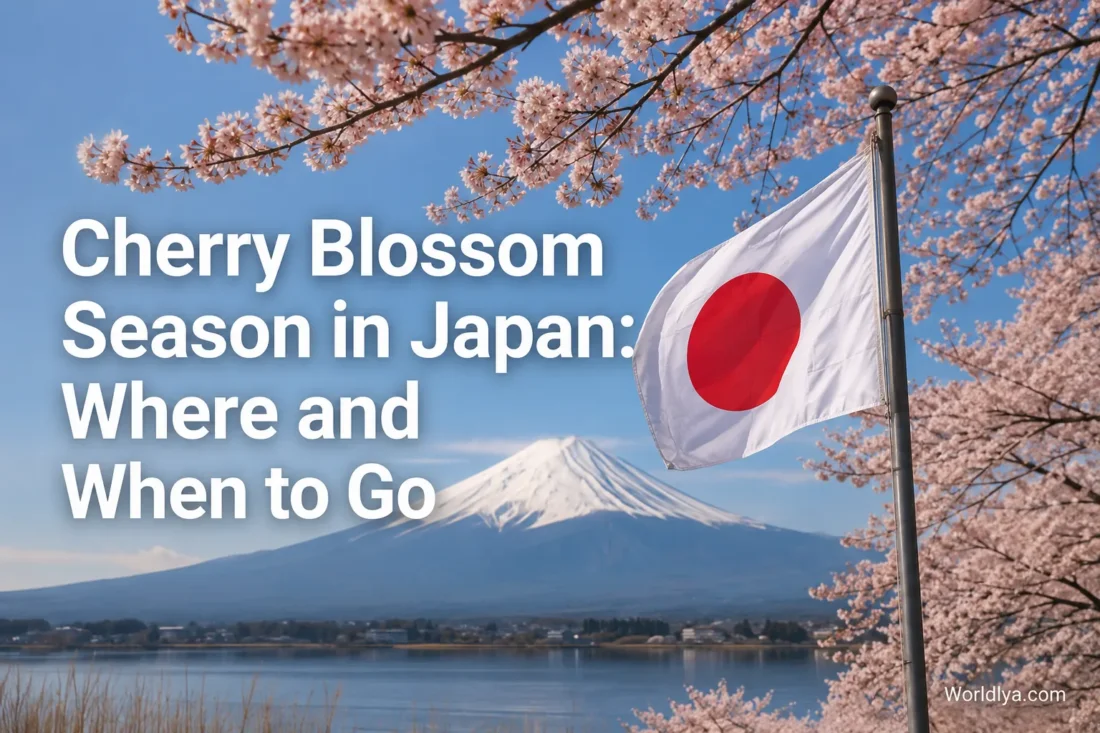
Cherry blossom season in Japan is not one national date. It is a moving wave of flowers that may begin with deep-pink early varieties in February, reach Tokyo and Kyoto around late March or early April, then continue north into Tohoku and Hokkaido through late April and early May. That broad window is helpful, but the real planning question is more personal: Do you want city parks, temple paths, mountain slopes, castle grounds, or a quieter northern spring?
The Date on Your Ticket Is Not the Bloom Date
A forecast usually gives two separate milestones: first bloom, when the official sample tree begins flowering, and full bloom, when most flowers on that tree are open. The most photogenic period often sits near full bloom, but local variety, elevation, sun exposure, temperature, rain, and wind can move the display forward or shorten it.
Treat any date published months ahead as a planning estimate. Check the national forecast again before departure, then use city or park bloom reports once you are in Japan.
When Does Cherry Blossom Season Start in Japan?
Japan’s main cherry blossom wave generally runs from the second half of March into early May. The warmer south and lower-elevation cities usually flower earlier. Northern regions and mountain areas follow later. This northward movement is often called the sakura front.
Early Blossom Window
February to early March: Kawazu in Shizuoka is known for Kawazu-zakura, a bright-pink variety that flowers roughly a month before the main Somei-Yoshino season around Tokyo.
Main Blossom Window
Late March to early April: Fukuoka, Hiroshima, Tokyo, Kyoto, Osaka, and nearby lowland destinations usually fall within the main travel period.
Late Blossom Window
Mid-April to early May: Tohoku, Hokkaido, and higher places in central Japan provide later options when petals have already fallen in Tokyo or Kyoto.
Japan Cherry Blossom Planning Calendar
The ranges below are practical travel windows rather than promises. They combine long-running seasonal patterns with official destination guidance. A warm spell may bring flowering forward; cooler days may slow it down.
| Area | Useful Planning Window | Good Match For | Planning Note |
|---|---|---|---|
| Kawazu, Shizuoka | Mid-February to early March | Early pink blossom | Kawazu-zakura flowers before the main Honshu wave. |
| Fukuoka, Kochi, Hiroshima | Late March to early April | Early main-season city stops | Useful for a south-to-north route. |
| Tokyo | Late March to early April | Urban parks, rivers, evening viewing | Choose several parks because varieties and conditions differ. |
| Kyoto, Osaka, Nara | Late March to early April | Temple walks, castle grounds, mountain blossom | Mt. Yoshino often peaks later than central Nara and Osaka. |
| Lake Kawaguchi and Fujiyoshida | Early to mid-April | Mt. Fuji views | Clear skies matter as much as open flowers. |
| Nagano and higher central areas | Early to mid-April | Later inland blossom | Elevation creates local timing differences. |
| Tohoku | Mid to late April | Castle parks, riverside avenues, later travel | Hirosaki often extends toward late April or early May. |
| Hakodate and southern Hokkaido | Late April to early May | Late-season park viewing | Goryokaku combines blossom with a star-shaped moat. |
| Central and eastern Hokkaido | Early to mid-May | The final part of the northward wave | Local forecasts are especially useful across the large island. |
A Better Date Strategy
Book for a regional window, not one famous tree on one afternoon. A six- or seven-night route that links two nearby areas gives you more chances than a short stay built around a single predicted peak.
Verified 2026 Bloom Dates for Major Cities
The table uses the final 2026 city forecast released by Japan Meteorological Corporation on April 23, 2026. It records the main Somei-Yoshino milestones and is useful as a real-season reference. Future seasons will not repeat these dates exactly.
| City | First Bloom in 2026 | Full Bloom in 2026 |
|---|---|---|
| Tokyo | March 19 | March 28 |
| Kyoto | March 23 | March 30 |
| Osaka | March 26 | April 3 |
| Hiroshima | March 19 | March 30 |
| Fukuoka | March 24 | April 3 |
| Kagoshima | March 27 | April 5 |
| Kanazawa | March 29 | April 3 |
| Nagano | March 31 | April 6 |
| Sendai | March 31 | April 4 |
| Aomori | April 13 | April 16 |
| Sapporo | April 18 | April 24 |
These city dates describe monitored sample trees, not every cherry tree across the wider destination. A park with later varieties may still have flowers after the main city tree has passed full bloom.
Where to See Cherry Blossoms in Tokyo
Tokyo works well for first-time visitors because its blossom sites are spread across different settings. You can walk beside a palace moat in the morning, sit beneath trees in a large park after lunch, then see illuminated branches beside a river after dark. The city’s usual main window is late March to early April, though gardens with many varieties can stretch the experience.
Chidorigafuchi for Water and Blossom Views
Chidorigafuchi pairs cherry trees with a broad moat and sloping stone banks. The water opens the view, so branches do not feel boxed in by nearby buildings. Walking paths offer several angles, while seasonal boat rides add a lower viewpoint when operating conditions allow.
Ueno Park for a Lively Hanami Atmosphere
Ueno is one of Tokyo’s most familiar blossom gathering places. Its main avenue becomes busy during the peak, but the park also gives you museums, Shinobazu Pond, and quieter edges within the same outing. Visit early in the day for easier movement, or come later when lanterns and evening activity change the mood.
Shinjuku Gyoen for More Varieties and a Longer Season
Shinjuku Gyoen has about 900 cherry trees representing roughly 70 varieties. That variety matters. Early trees, main-season Somei-Yoshino, and later double-flowered cherries do not all open together, so the garden can remain rewarding beyond one citywide peak. Entry rules and reservation periods may change during the busiest dates, so check the garden’s official page before visiting.
Meguro River for an Evening Walk
Branches lean over the narrow river through Nakameguro, creating a close urban corridor of flowers. The setting is most comfortable when you treat it as a slow walk rather than a picnic stop. Weekday mornings are calmer; evening lights make the area feel more social and animated.
Where to See Cherry Blossoms in Kyoto
Kyoto’s appeal comes from contrast: pale flowers beside temple roofs, garden walls, canals, and foothills. The city usually fits the late-March to early-April window, yet the exact pace differs by district, species, and elevation. Kyoto’s official tourism site runs a live blossom calendar during the season, which is far more useful than relying on a date saved months earlier.
- Philosopher’s Path: A canal-side walk suited to an early start, with easy access to nearby temples and side streets.
- Maruyama Park: Known for its large weeping cherry and evening viewing atmosphere.
- Kyoto Gyoen National Garden: Open lawns and varied trees give you more space than many compact temple sites.
- Okazaki and the Lake Biwa Canal area: Water, bridges, museums, and blossom can be combined in one walk.
- Ninna-ji: Its Omuro cherries flower later than many central Kyoto Somei-Yoshino trees, making it a useful late option.
- Hirano-jinja and Arashiyama: Two very different settings—one shrine-centered, the other shaped by river and hillside scenery.
Kyoto timing tip: Build one early-morning route and one later-bloom backup. A central path may be past peak while a higher or later-variety site is still opening.
Osaka and Himeji for Castle-Side Blossom
Osaka is practical for travelers who want blossom without changing hotels often. Osaka Castle Park offers broad lawns, stone walls, and many walking routes. Kema Sakuranomiya Park follows the Okawa River, giving you a long waterside option rather than one concentrated viewing point.
Himeji is an easy rail outing from Osaka or Kyoto. Around 1,600 cherry trees grow in and near the castle grounds, where white walls rise behind the flowers. The visual balance is clean and spacious, especially from Sannomaru Square. Seasonal nighttime entry and event details vary by year, so verify them through Himeji’s official tourism pages.
Mt. Yoshino for Layered Mountain Blossom
Mt. Yoshino in Nara Prefecture is not a single flat park. Its cherry trees spread across lower, middle, upper, and inner mountain areas, so flowering moves uphill in stages. The mountain is associated with about 30,000 cherry trees, and the main visit period is generally early to mid-April.
This is a strong choice when you want a full-day landscape rather than a short city stop. Expect slopes, stairs, village lanes, viewpoints, and changing distances between services. Wear shoes made for sustained walking. Start early, carry water, and check local transport arrangements because traffic controls and bus plans may change during peak days.
Lake Kawaguchi and Fujiyoshida for Mt. Fuji Views
Blossoms around Lake Kawaguchi and Fujiyoshida are often strongest from early to mid-April, later than central Tokyo. Here, blossom timing is only half the plan. Mt. Fuji may be hidden by cloud even when every tree is open.
Give the area at least one overnight stay if the mountain view matters to you. Morning skies are often worth prioritizing, and an overnight visit lets you try again if the first view is covered. Lake edges offer wider scenery, while Arakurayama Sengen Park and the Chureito Pagoda viewpoint create a more vertical composition with steps and elevation.
Tohoku for a Later Spring Route
Travelers arriving after the main Tokyo–Kyoto wave can follow the season north. Tohoku often flowers from early or mid-April into late April, with local variation between Sendai, inland towns, river valleys, and Aomori.
Hirosaki Park
Hirosaki is known for castle grounds, moats, evening illumination, petal-covered water, and a long-running spring festival. The usual festival period sits around late April to early May. Different varieties and careful tree management can create several distinct scenes: full branches, tunnels of blossom, reflections, then floating rafts of petals.
Kakunodate and Kitakami
Kakunodate is associated with weeping cherries along historic streets and a separate riverside avenue nearby. Kitakami Tenshochi offers a long riverbank setting. These places suit travelers who prefer a regional rail route with one or two overnight bases rather than a fast day trip from Tokyo.
Hokkaido for Late-April and May Blossom
Hokkaido carries the season into late April and May. Its size means one island-wide date is not useful; Hakodate, Sapporo, Shizunai, and eastern Hokkaido can differ markedly.
Goryokaku Park in Hakodate
Goryokaku places around 1,500 cherry trees around a star-shaped fort and moat. Ground-level walks show close branches and water, while Goryokaku Tower reveals the full geometric outline. The display commonly falls in late April or early May.
Shizunai’s Nijukken Road
Nijukken Road runs for about seven kilometers through an open rural landscape lined by roughly 2,000 cherry trees. Early May is the usual target. The scale rewards slow walking and an unhurried schedule rather than a brief photo stop.
Kawazu for Cherry Blossoms Before Spring’s Main Wave
Kawazu on the Izu Peninsula offers an earlier season, normally in February and sometimes into early March. Kawazu-zakura has larger, deeper-pink flowers than the pale Somei-Yoshino many visitors picture when they think of Tokyo or Kyoto.
This is not a substitute for the late-March main season; it is a different blossom experience. The riverside setting, yellow rapeseed flowers, and earlier calendar make Kawazu useful for travelers whose Japan dates cannot move into late March.
Choose a Destination by the Experience You Want
| Your Priority | Places to Consider | Why They Fit |
|---|---|---|
| Easy first visit | Tokyo | Many viewing styles linked by public transport. |
| Temple and garden setting | Kyoto | Canals, gardens, shrines, and foothills create varied walks. |
| Castle backdrop | Himeji, Hirosaki, Osaka | Large grounds and strong architectural context. |
| Mountain panorama | Mt. Yoshino | Flowers rise through several elevation zones. |
| Mt. Fuji photography | Lake Kawaguchi, Fujiyoshida | Blossom can be paired with lake, pagoda, and mountain views. |
| Late-season journey | Tohoku, Hokkaido | The northward wave continues after central Japan. |
| February travel | Kawazu | Early-flowering Kawazu-zakura provides a separate pink season. |
| More blossom varieties | Shinjuku Gyoen, Kyoto’s varied gardens | Different cultivars widen the viewing period. |
How Many Days Should You Allow?
Three or Four Nights
Stay in one major city and prepare several local choices. Tokyo is particularly suitable because rivers, parks, paid gardens, and later varieties can be reached without changing accommodation.
Six to Eight Nights
Link two nearby regions, such as Tokyo with Lake Kawaguchi, or Kyoto with Osaka and Nara. This gives the weather and the flowers room to shift without derailing the trip.
Ten Nights or More
A south-to-north route becomes realistic. You might begin in Kansai and finish in Tohoku, but allow travel days and avoid turning every morning into a race for one tree.
How to Read a Cherry Blossom Forecast
- Check the species. Most national city forecasts follow Somei-Yoshino. Kawazu-zakura, weeping cherries, and late double-flowered varieties use a different calendar.
- Separate first bloom from full bloom. First bloom does not mean every branch is pink. Full bloom may arrive several days later.
- Look below the city level. A city forecast is a reference point. Individual parks publish their own progress reports during the season.
- Account for elevation. Mountain slopes and higher neighborhoods may flower after nearby lowlands.
- Recheck close to travel. Compare the national forecast, local tourism updates, park notices, and the short-term weather outlook.
- Keep a petal-stage option. Falling petals on water or paths can be as memorable as full branches, especially at moat and riverside locations.
Planning Habits That Improve Your Chances
- Choose a flexible base: Stay near a useful rail line rather than beside only one viewing site.
- Save three options per day: One famous location, one garden with several varieties, and one neighborhood or riverside walk.
- Use mornings well: Popular paths are easier to enjoy soon after opening or around sunrise where public access permits.
- Check reservations: Paid gardens and seasonal evening events may introduce timed entry.
- Separate flower goals from event dates: Festivals are scheduled in advance; trees respond to weather.
- Leave one open half-day: Move it to the place reporting the strongest bloom during your stay.
- Stay overnight for Fuji or mountain areas: A second morning helps when clouds or local timing do not cooperate on day one.
What to Wear and Carry
Spring photos can look warm while the air still feels cool. Morning and evening temperatures may differ sharply from midday, particularly near water, in mountain areas, and in northern Japan.
- A light outer layer that blocks wind
- A warmer mid-layer for early starts and evening illumination
- Comfortable walking shoes with grip
- A compact umbrella or light rain shell
- A small picnic mat where sitting is allowed
- Water and a reusable bottle
- A portable phone battery for maps, tickets, and bloom updates
- A small bag for personal litter until you find the correct disposal point
Simple Hanami Etiquette
Hanami means flower viewing, and it can be as simple as a walk under the trees. Some parks allow picnics in marked areas; temple gardens and narrow riverside paths may not.
- Use only designated picnic areas and follow posted opening times.
- Do not pull branches closer for photographs or touch delicate flowers.
- Keep paths, steps, and emergency access clear.
- Take personal rubbish with you when bins are unavailable.
- Keep tripods and large equipment out of busy walking routes.
- Follow the local rules for food, drinks, pets, and nighttime access.
- Speak quietly in temple, shrine, garden, and residential settings.
Cherry Blossom Season Questions
What Month Is Cherry Blossom Season in Japan?
The broad season runs from February for early varieties through May in northern and higher areas. The main Somei-Yoshino travel period across Tokyo, Kyoto, Osaka, and much of western Japan is usually late March to early April.
Is Tokyo or Kyoto Better for Cherry Blossoms?
Tokyo offers easier transport between many types of viewing spots. Kyoto places the flowers beside temples, canals, gardens, and foothills. Neither city has one guaranteed date, so the choice should match your preferred setting and wider trip plans.
How Long Do Cherry Blossoms Stay in Full Bloom?
The peak display is brief and may last around several days to roughly a week, depending on the variety and weather. The full viewing experience is longer because you can see opening flowers, full branches, and falling petals.
Can I See Cherry Blossoms in Japan in February?
Yes. Kawazu-zakura on the Izu Peninsula and other early varieties can flower in February. They are deeper pink and follow a different schedule from the main late-March Somei-Yoshino wave.
Where Can I See Cherry Blossoms in Japan in May?
Hokkaido is the main region to consider, with places such as Goryokaku in Hakodate and Nijukken Road in Shizunai. Some northern and high-elevation locations may also retain later flowers, but current local reports should guide the final choice.
Should I Book My Trip Around the First-Bloom Date?
No. First bloom marks the start on a monitored tree, not the peak across an entire city. Travelers usually aim for a wider window around the expected full-bloom period and keep several nearby locations available.
Are Cherry Blossom Festival Dates the Same as Peak Bloom?
Not always. Event schedules are arranged in advance, while flowering responds to seasonal temperatures. Check both the event page and the latest bloom report before making a day plan.
Sources
- Japan National Tourism Organization: Cherry Blossom Forecast
- Japan Meteorological Corporation: Final 2026 Cherry Blossom Forecast
- Japan Weather Association: 2026 Bloom and Full-Bloom Forecast
- GO TOKYO: Cherry Blossom Season and Viewing Locations
- Kyoto City Official Travel Guide: Cherry Blossom Calendar
- Ministry of the Environment: Cherry Trees at Shinjuku Gyoen
- Japan National Tourism Organization: Yoshino Cherry Blossoms
- Japan National Tourism Organization: Hirosaki Cherry Blossom Festival
- Japan National Tourism Organization: Goryokaku Park Cherry Blossoms
- Japan National Tourism Organization: Kawazu Cherry Blossom Festival
- Visit Himeji: Himeji Castle Cherry Blossom Viewing Festival